Inklingo

How to Say "for" in Spanish

The most common Spanish word forforis parause 'para' when 'for' indicates the recipient or intended purpose of something, or a destination..

para🔊A1

Use 'para' when 'for' indicates the recipient or intended purpose of something, or a destination.

{ui.learnMore}
por🔊A1

Use 'por' when 'for' expresses the reason or motive behind an action, or when indicating an exchange of goods or services.

{ui.learnMore}
durante🔊A1

Use 'durante' to specify the duration of an action or event, similar to 'during'.

{ui.learnMore}
hace🔊A2

Use 'hace' followed by a time period to describe how long ago an action was completed.

{ui.learnMore}
contra🔊A2

Use 'contra' when 'for' means 'against' in the sense of opposition or disagreement.

{ui.learnMore}
pues🔊B1

Use 'pues' as a conjunction meaning 'for' or 'since' to introduce an explanation or reason, often in spoken language.

{ui.learnMore}
pa🔊B2

Use the informal contraction 'pa' (instead of 'para') in casual speech when indicating purpose or recipient.

{ui.learnMore}
hacer🔊A2

Use 'hace' followed by a time period to indicate a duration that extends up to the present moment.

{ui.learnMore}
English → Spanish

para

/PAH-rah//ˈpaɾa/

PrepositionA1General
Use 'para' when 'for' indicates the recipient or intended purpose of something, or a destination.
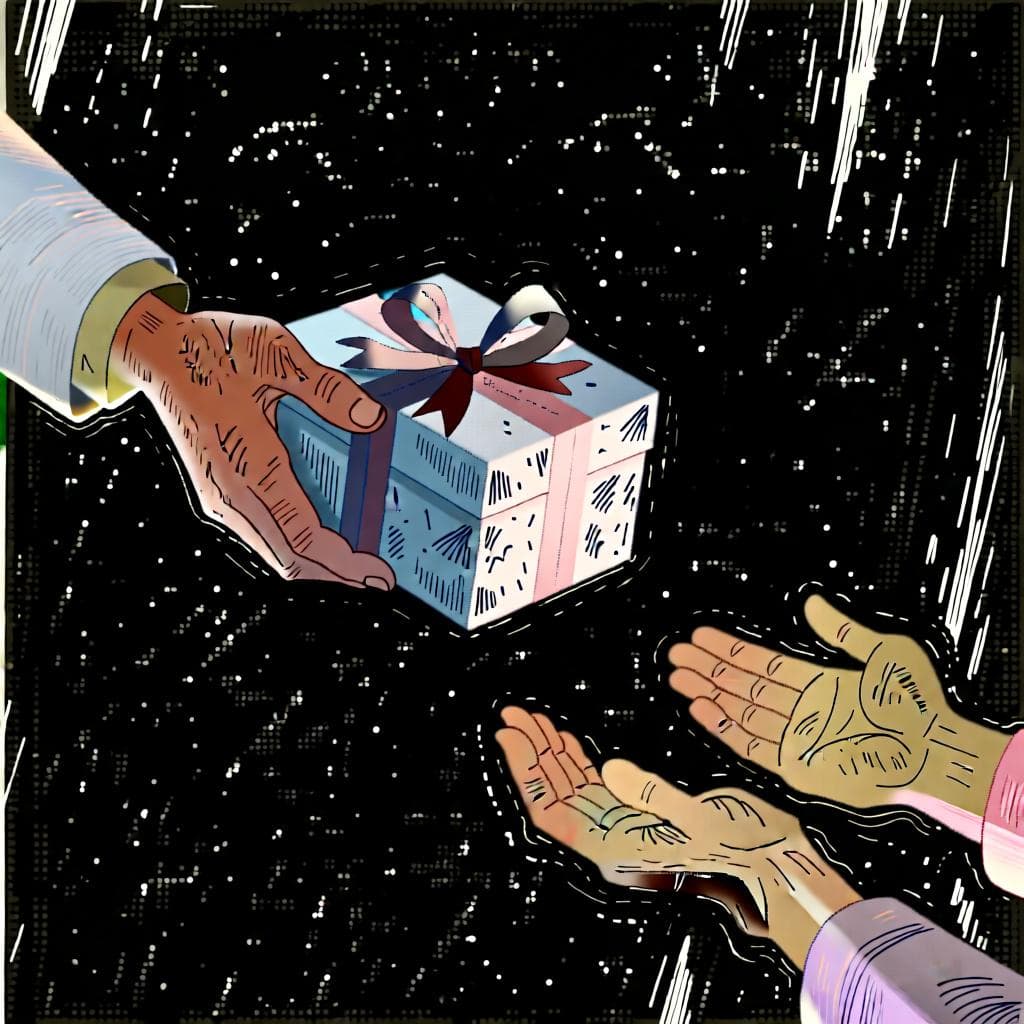
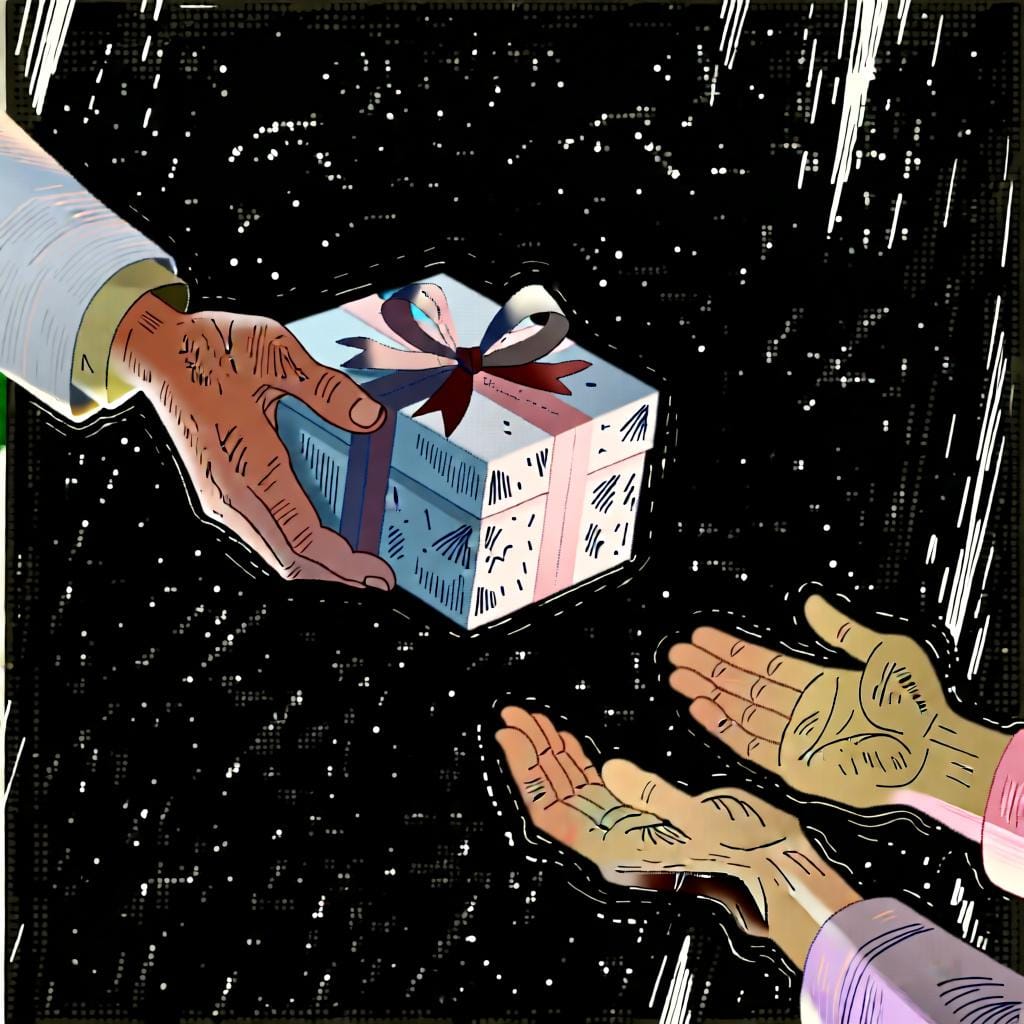
A hand giving a wrapped gift to another hand, showing who the gift is intended for.

Examples

Este regalo es para ti.

This gift is for you.

Cocino la cena para mi familia.

I'm cooking dinner for my family.

Compré un libro para mi amigo.

I bought a book for my friend.

Salgo para la oficina en cinco minutos.

I'm leaving for the office in five minutes.

Identifying the Recipient

Use 'para' to show who or what something is intended for. It answers the question, 'Who is this for?'

Setting a Destination

Use 'para' to talk about the final destination of a journey. While 'a' also means 'to', 'para' often emphasizes the endpoint of the trip.

Setting Deadlines

When you want to say when something is due, use 'para' followed by the day, date, or time.

Expressing Your Opinion

The phrase 'Para + [person]' (like 'para mí', 'para ti', 'para él') is a very common and natural way to introduce a personal opinion or perspective.

Making a Comparison

Use 'para' to compare someone or something against the normal standard for its group. It highlights that something is unusual or unexpected.

Recipient vs. Exchange

Mistake:Te doy $20 por el libro.

Correction: This is correct for an exchange! But if it's a gift, you'd say 'Este libro es para ti.' Use 'por' for trades and exchanges, and 'para' for final recipients.

Direction vs. Destination

Mistake:Camino para el parque. (If you just mean you're walking in that direction).

Correction: Camino hacia el parque. Use 'hacia' for 'towards' a general direction. Use 'para' when the park is your final, intended stop.

Deadline vs. Duration

Mistake:Estudié para tres horas.

Correction: Estudié por tres horas. Use 'por' to talk about how long you did something (duration). Use 'para' for a future deadline.

por

/por//poɾ/

PrepositionA1General
Use 'por' when 'for' expresses the reason or motive behind an action, or when indicating an exchange of goods or services.
A person holding an umbrella in the rain, illustrating 'por' used to show the reason for something.

Examples

Gracias por el regalo.

Thank you for the gift.

No salimos por el frío.

We didn't go out because of the cold.

Lo hice por ti.

I did it for you (on your behalf/because of you).

Trabajo por la mañana.

I work in the morning.

Explaining 'Why'

Use 'por' to answer the question '¿Por qué?' (Why?). It points back to the reason or motivation behind an action.

Talking About Duration

When you want to say how long something lasts, use 'por' followed by the period of time.

Showing an Exchange

Use 'por' to show that a trade is happening. This can be money for goods, one item for another, or even one person's work for another's.

Confusing with 'Para'

Mistake:When thanking someone, learners sometimes say: 'Gracias para tu ayuda.'

Correction: The correct way is: 'Gracias por tu ayuda.' Think of it as giving thanks *because of* the help you received. The reason for the thanks is the help, so you use 'por'.

Using 'Para' for Duration

Mistake:It's easy to mix up 'por' and 'para' here: 'Estudié para dos horas.'

Correction: Always use 'por' for duration: 'Estudié por dos horas.' 'Para' is used for deadlines (e.g., 'Necesito el informe para el viernes' - I need the report *by* Friday).

Using 'Para' for Purchases

Mistake:A frequent error in stores is: 'Quiero pagar para esta camisa.'

Correction: The correct phrase is: 'Quiero pagar por esta camisa.' You are giving money *in exchange for* the shirt, which is a classic use of 'por'.

durante

/doo-RAHN-teh//duˈɾan.te/

PrepositionA1General
Use 'durante' to specify the duration of an action or event, similar to 'during'.
A stylized image showing an open book spanning across a visual transition from a dark night sky to a bright morning sky, symbolizing an activity occurring over a duration of time.

Examples

Estudié durante toda la noche.

I studied during the whole night.

Hablamos durante dos horas.

We talked for two hours.

Durante el verano, la ciudad está llena de turistas.

During the summer, the city is full of tourists.

Telling 'How Long'

Use 'durante' to say how long something lasts or when something happens within a specific period of time. It answers the questions 'for how long?' or 'when?'

'Durante' vs. 'Mientras'

Mistake:Leí un libro durante mi hermana cocinaba.

Correction: Use 'mientras' for two actions happening at the same time: 'Leí un libro mientras mi hermana cocinaba.' (I read a book while my sister was cooking). 'Durante' is followed by a thing (a noun), like 'durante la película' (during the movie).

Using 'Por' for Duration

Mistake:Hablé por el teléfono durante una hora.

Correction: Often, you can use either 'por' or 'durante' for duration: 'Hablé por teléfono durante una hora' or 'Hablé por teléfono por una hora.' Both are correct and mean 'I talked on the phone for an hour.' 'Durante' can feel a bit more formal or precise.

hace

/ah-say//ˈase/

Verb (used for time)A2General
Use 'hace' followed by a time period to describe how long ago an action was completed.
A person waving goodbye as a car drives away down a long road, representing an event that happened in the past.

Examples

Terminé el libro hace dos días.

I finished the book two days ago.

Compramos esta casa hace diez años.

We bought this house ten years ago.

Hace mucho tiempo que no la veo.

I haven't seen her for a long time.

Two Ways to Say 'Ago'

You can put 'hace' before or after the main action. Both 'Llegué hace una hora' and 'Hace una hora que llegué' mean 'I arrived an hour ago'.

From 'Ago' to 'For'

If the action is still happening, 'hace' changes its meaning from 'ago' to 'for'. Compare: 'Fui a España hace un año' (I went to Spain one year ago) vs. 'Vivo en España hace un año' (I have lived in Spain for one year).

Translating 'Ago' Directly

Mistake:Learners sometimes try to find a separate word for 'ago' and place it at the end of the sentence like in English.

Correction: In Spanish, 'ago' is built into the phrase with 'hace'. Always use the structure 'hace + time period'.

para

/PAH-rah//ˈpaɾa/

PrepositionA2General
Use 'para' to indicate a deadline or a specific point in time when something is due.
A hand giving a wrapped gift to another hand, showing who the gift is intended for.

Examples

La tarea es para el lunes.

The homework is for (due on) Monday.

Este regalo es para ti.

This gift is for you.

Cocino la cena para mi familia.

I'm cooking dinner for my family.

Compré un libro para mi amigo.

I bought a book for my friend.

Identifying the Recipient

Use 'para' to show who or what something is intended for. It answers the question, 'Who is this for?'

Setting a Destination

Use 'para' to talk about the final destination of a journey. While 'a' also means 'to', 'para' often emphasizes the endpoint of the trip.

Setting Deadlines

When you want to say when something is due, use 'para' followed by the day, date, or time.

Expressing Your Opinion

The phrase 'Para + [person]' (like 'para mí', 'para ti', 'para él') is a very common and natural way to introduce a personal opinion or perspective.

Making a Comparison

Use 'para' to compare someone or something against the normal standard for its group. It highlights that something is unusual or unexpected.

Recipient vs. Exchange

Mistake:Te doy $20 por el libro.

Correction: This is correct for an exchange! But if it's a gift, you'd say 'Este libro es para ti.' Use 'por' for trades and exchanges, and 'para' for final recipients.

Direction vs. Destination

Mistake:Camino para el parque. (If you just mean you're walking in that direction).

Correction: Camino hacia el parque. Use 'hacia' for 'towards' a general direction. Use 'para' when the park is your final, intended stop.

Deadline vs. Duration

Mistake:Estudié para tres horas.

Correction: Estudié por tres horas. Use 'por' to talk about how long you did something (duration). Use 'para' for a future deadline.

por

/por//poɾ/

PrepositionA2General
Use 'por' to indicate a period of time during which an action takes place, often interchangeable with 'durante' but more common for parts of the day.
A person holding an umbrella in the rain, illustrating 'por' used to show the reason for something.

Examples

Trabajo por la mañana.

I work in the morning.

Gracias por el regalo.

Thank you for the gift.

No salimos por el frío.

We didn't go out because of the cold.

Lo hice por ti.

I did it for you (on your behalf/because of you).

Explaining 'Why'

Use 'por' to answer the question '¿Por qué?' (Why?). It points back to the reason or motivation behind an action.

Talking About Duration

When you want to say how long something lasts, use 'por' followed by the period of time.

Showing an Exchange

Use 'por' to show that a trade is happening. This can be money for goods, one item for another, or even one person's work for another's.

Confusing with 'Para'

Mistake:When thanking someone, learners sometimes say: 'Gracias para tu ayuda.'

Correction: The correct way is: 'Gracias por tu ayuda.' Think of it as giving thanks *because of* the help you received. The reason for the thanks is the help, so you use 'por'.

Using 'Para' for Duration

Mistake:It's easy to mix up 'por' and 'para' here: 'Estudié para dos horas.'

Correction: Always use 'por' for duration: 'Estudié por dos horas.' 'Para' is used for deadlines (e.g., 'Necesito el informe para el viernes' - I need the report *by* Friday).

Using 'Para' for Purchases

Mistake:A frequent error in stores is: 'Quiero pagar para esta camisa.'

Correction: The correct phrase is: 'Quiero pagar por esta camisa.' You are giving money *in exchange for* the shirt, which is a classic use of 'por'.

contra

/KON-tra//ˈkontɾa/

PrepositionA2General
Use 'contra' when 'for' means 'against' in the sense of opposition or disagreement.
Two stylized knights facing each other ready for a competition, symbolizing opposition.

Examples

Estoy en contra de esa idea.

I am against that idea.

El partido de hoy es Argentina contra Brasil.

Today's match is Argentina versus Brazil.

El coche chocó contra un árbol.

The car crashed into a tree.

Showing Opposition

Contra is your go-to word to show that one thing is opposed to, competing with, or physically up against another. Think of it as creating a 'versus' situation.

Using `contra` instead of `en contra de`

Mistake:Yo soy contra la decisión.

Correction: Yo estoy en contra de la decisión. When you're expressing your personal stance or opinion, it's more natural to say 'estoy en contra de'.

para

/PAH-rah//ˈpaɾa/

PrepositionA2General
Use 'para' to describe movement towards a destination or the beginning of a journey.
A hand giving a wrapped gift to another hand, showing who the gift is intended for.

Examples

Salgo para la oficina en cinco minutos.

I'm leaving for the office in five minutes.

Este regalo es para ti.

This gift is for you.

Cocino la cena para mi familia.

I'm cooking dinner for my family.

Compré un libro para mi amigo.

I bought a book for my friend.

Identifying the Recipient

Use 'para' to show who or what something is intended for. It answers the question, 'Who is this for?'

Setting a Destination

Use 'para' to talk about the final destination of a journey. While 'a' also means 'to', 'para' often emphasizes the endpoint of the trip.

Setting Deadlines

When you want to say when something is due, use 'para' followed by the day, date, or time.

Expressing Your Opinion

The phrase 'Para + [person]' (like 'para mí', 'para ti', 'para él') is a very common and natural way to introduce a personal opinion or perspective.

Making a Comparison

Use 'para' to compare someone or something against the normal standard for its group. It highlights that something is unusual or unexpected.

Recipient vs. Exchange

Mistake:Te doy $20 por el libro.

Correction: This is correct for an exchange! But if it's a gift, you'd say 'Este libro es para ti.' Use 'por' for trades and exchanges, and 'para' for final recipients.

Direction vs. Destination

Mistake:Camino para el parque. (If you just mean you're walking in that direction).

Correction: Camino hacia el parque. Use 'hacia' for 'towards' a general direction. Use 'para' when the park is your final, intended stop.

Deadline vs. Duration

Mistake:Estudié para tres horas.

Correction: Estudié por tres horas. Use 'por' to talk about how long you did something (duration). Use 'para' for a future deadline.

por

/por//poɾ/

PrepositionB1General
Use 'por' to indicate the price paid for something.
A person holding an umbrella in the rain, illustrating 'por' used to show the reason for something.

Examples

Pagué cinco euros por el café.

I paid five euros for the coffee.

Gracias por el regalo.

Thank you for the gift.

No salimos por el frío.

We didn't go out because of the cold.

Lo hice por ti.

I did it for you (on your behalf/because of you).

Explaining 'Why'

Use 'por' to answer the question '¿Por qué?' (Why?). It points back to the reason or motivation behind an action.

Talking About Duration

When you want to say how long something lasts, use 'por' followed by the period of time.

Showing an Exchange

Use 'por' to show that a trade is happening. This can be money for goods, one item for another, or even one person's work for another's.

Confusing with 'Para'

Mistake:When thanking someone, learners sometimes say: 'Gracias para tu ayuda.'

Correction: The correct way is: 'Gracias por tu ayuda.' Think of it as giving thanks *because of* the help you received. The reason for the thanks is the help, so you use 'por'.

Using 'Para' for Duration

Mistake:It's easy to mix up 'por' and 'para' here: 'Estudié para dos horas.'

Correction: Always use 'por' for duration: 'Estudié por dos horas.' 'Para' is used for deadlines (e.g., 'Necesito el informe para el viernes' - I need the report *by* Friday).

Using 'Para' for Purchases

Mistake:A frequent error in stores is: 'Quiero pagar para esta camisa.'

Correction: The correct phrase is: 'Quiero pagar por esta camisa.' You are giving money *in exchange for* the shirt, which is a classic use of 'por'.

pues

/pwess//pwes/

ConjunctionB1Informal
Use 'pues' as a conjunction meaning 'for' or 'since' to introduce an explanation or reason, often in spoken language.
A small child bundling up in a thick, warm coat and hat because a single large snowflake is falling near them, showing cause and effect.

Examples

Voy a abrigarme, pues hace frío afuera.

I'm going to bundle up, since it's cold outside.

No pudimos entrar, pues la puerta estaba cerrada.

We couldn't get in, because the door was locked.

'Pues' vs. 'Porque' for 'Because'

When giving a reason, 'porque' is your everyday choice. 'Pues' does the same job but often feels a little more planned or explanatory, and it usually comes after a comma.

para

/PAH-rah//ˈpaɾa/

PrepositionB1General
Use 'para' to express an opinion or perspective, similar to 'for me' or 'in my opinion'.
A hand giving a wrapped gift to another hand, showing who the gift is intended for.

Examples

Para mí, el español es un idioma hermoso.

For me, Spanish is a beautiful language.

Este regalo es para ti.

This gift is for you.

Cocino la cena para mi familia.

I'm cooking dinner for my family.

Compré un libro para mi amigo.

I bought a book for my friend.

Identifying the Recipient

Use 'para' to show who or what something is intended for. It answers the question, 'Who is this for?'

Setting a Destination

Use 'para' to talk about the final destination of a journey. While 'a' also means 'to', 'para' often emphasizes the endpoint of the trip.

Setting Deadlines

When you want to say when something is due, use 'para' followed by the day, date, or time.

Expressing Your Opinion

The phrase 'Para + [person]' (like 'para mí', 'para ti', 'para él') is a very common and natural way to introduce a personal opinion or perspective.

Making a Comparison

Use 'para' to compare someone or something against the normal standard for its group. It highlights that something is unusual or unexpected.

Recipient vs. Exchange

Mistake:Te doy $20 por el libro.

Correction: This is correct for an exchange! But if it's a gift, you'd say 'Este libro es para ti.' Use 'por' for trades and exchanges, and 'para' for final recipients.

Direction vs. Destination

Mistake:Camino para el parque. (If you just mean you're walking in that direction).

Correction: Camino hacia el parque. Use 'hacia' for 'towards' a general direction. Use 'para' when the park is your final, intended stop.

Deadline vs. Duration

Mistake:Estudié para tres horas.

Correction: Estudié por tres horas. Use 'por' to talk about how long you did something (duration). Use 'para' for a future deadline.

pa

/pah//pa/

ContractionB2Informal
Use the informal contraction 'pa' (instead of 'para') in casual speech when indicating purpose or recipient.
A close-up image showing a small, brightly wrapped red gift box being passed directly from one person's hand into the open palm of another person.

Examples

¿Tienes dinero pa' comprar eso?

Do you have money to buy that?

Voy pa' la casa de mi abuela.

I'm going to my grandma's house.

Esto es pa' ti, lo hice con cariño.

This is for you, I made it with love.

What 'pa' means

"Pa" is a quick, casual way of saying the preposition "para," which means "for," "to," or "in order to." Think of it like saying "gonna" instead of "going to" in English.

Use in Formal Settings

Mistake:Escribir 'pa' en un ensayo o correo electrónico formal.

Correction: Always use the full form 'para' in any written text or formal conversation. 'Pa' is strictly for quick, casual speaking.

para

/PAH-rah//ˈpaɾa/

PrepositionB2General
Use 'para' to make a comparison or a judgment based on a category, meaning 'for a [noun]'.
A hand giving a wrapped gift to another hand, showing who the gift is intended for.

Examples

Para ser un niño, lee muy bien.

For a child, he reads very well.

Este regalo es para ti.

This gift is for you.

Cocino la cena para mi familia.

I'm cooking dinner for my family.

Compré un libro para mi amigo.

I bought a book for my friend.

Identifying the Recipient

Use 'para' to show who or what something is intended for. It answers the question, 'Who is this for?'

Setting a Destination

Use 'para' to talk about the final destination of a journey. While 'a' also means 'to', 'para' often emphasizes the endpoint of the trip.

Setting Deadlines

When you want to say when something is due, use 'para' followed by the day, date, or time.

Expressing Your Opinion

The phrase 'Para + [person]' (like 'para mí', 'para ti', 'para él') is a very common and natural way to introduce a personal opinion or perspective.

Making a Comparison

Use 'para' to compare someone or something against the normal standard for its group. It highlights that something is unusual or unexpected.

Recipient vs. Exchange

Mistake:Te doy $20 por el libro.

Correction: This is correct for an exchange! But if it's a gift, you'd say 'Este libro es para ti.' Use 'por' for trades and exchanges, and 'para' for final recipients.

Direction vs. Destination

Mistake:Camino para el parque. (If you just mean you're walking in that direction).

Correction: Camino hacia el parque. Use 'hacia' for 'towards' a general direction. Use 'para' when the park is your final, intended stop.

Deadline vs. Duration

Mistake:Estudié para tres horas.

Correction: Estudié por tres horas. Use 'por' to talk about how long you did something (duration). Use 'para' for a future deadline.

hacer

/ah-sehr//a'seɾ/

VerbA2General
Use 'hace' followed by a time period to indicate a duration that extends up to the present moment.
An old-fashioned pocket watch resting on a stack of books, symbolizing the passage of time.

Examples

Llegué a España hace dos meses.

I arrived in Spain two months ago.

Comí hace una hora.

I ate an hour ago.

Hace dos años que vivo aquí.

I have been living here for two years.

Two Formulas for Time

To say 'ago', use: 'hace + time + que + verb in past' OR 'verb in past + hace + time'. To say 'for' (duration), use: 'hace + time + que + verb in present'.

Using the Wrong Verb Tense

Mistake:Hace un año, vivo en Madrid.

Correction: Hace un año, viví en Madrid. (A year ago, I lived in Madrid). When 'hace' means 'ago', the action is finished, so use a past tense. If you mean you *still* live there, say 'Hace un año que vivo en Madrid'.

Para vs. Por for Purpose and Reason

The most frequent confusion for learners is choosing between 'para' and 'por'. Remember: 'para' is generally for destination, purpose, or recipient ('going to the store', 'gift for you'), while 'por' is for reason, exchange, or duration ('thanks for the gift', 'paid for the book').

Learn Spanish with Inklingo

Interactive stories, personalized learning, and more.