How to Say "to bind" in Spanish
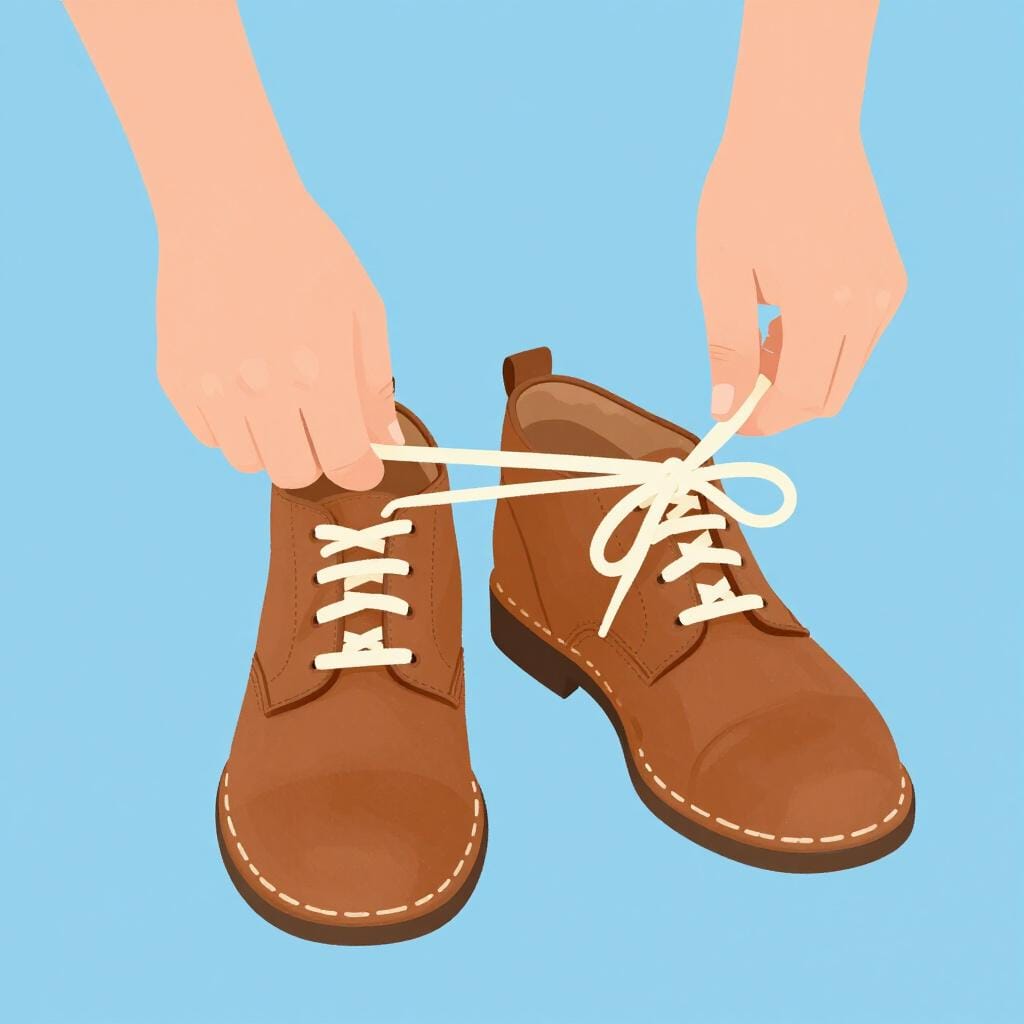
The most common Spanish word for “to bind” is “atar” — use 'atar' when you are physically wrapping or tying something, like shoelaces, ropes, or packages.




atar
ah-TAHRaˈtaɾ
Examples
Tengo que atar mis zapatos.
I have to tie my shoes.
Él ató el paquete con una cuerda roja.
He tied the package with a red string.
Ata al perro antes de entrar a la tienda.
Tie the dog up before going into the store.
Doing it to yourself
When you are tying something of your own, like your shoes or your hair, you add 'se' to the end (atarse). For example: 'Me ato el pelo' (I tie my hair).
Regular AR Pattern
This verb follows the standard rules for -ar verbs. If you know how to conjugate 'hablar', you already know how to conjugate 'atar'!
Tying vs. Wearing
Mistake: “Uso 'atar' para decir 'to wear clothes'.”
Correction: Use 'llevar' or 'ponerse' for wearing clothes. 'Atar' is strictly for the action of tying knots or strings.
enlazar
en-lah-SAHRenlaˈsaɾ

Examples
Debemos enlazar los dos párrafos con una transición.
We should link the two paragraphs with a transition.
El puente enlaza la isla con el continente.
The bridge links the island with the continent.
Es importante enlazar estos conceptos en tu mente.
It is important to connect these concepts in your mind.
The 'Z' to 'C' spelling change
When the verb ending starts with 'e', the 'z' in enlazar changes to 'c' to keep the soft 's' sound. For example, 'enlacé' (I linked).
Using the 'Personal A'
If you are 'linking' or 'joining' people together in a social sense, remember to use 'a' before the person you are linking.
Keeping the Z in the Preterite
Mistake: “Yo enlazé.”
Correction: Yo enlacé. (Spanish spelling rules don't like 'ze' or 'zi' in most words; 'ce' is the correct spelling for that sound.)
ligar
lee-GAHRliˈɣaɾ

Examples
Su éxito está ligado a su esfuerzo.
His success is linked to his effort.
Tienes que ligar bien los ingredientes.
You have to bind the ingredients well.
Añade un poco de harina para ligar la salsa.
Add a bit of flour to thicken the sauce.
Passive usage
This meaning is often used with 'estar' + 'ligado' (to be linked) to describe how two things are connected.
Abstract connections
You don't just bind physical objects; you use it to show how ideas or consequences are 'tied' together.
Confusing with 'leer'
Mistake: “Ligo el libro.”
Correction: Leo el libro. Be careful not to confuse the 'yo' form 'ligo' (I flirt/bind) with 'leo' (I read).
vincular
been-koo-larbiŋkuˈlaɾ

Examples
Es importante vincularse con la comunidad.
It is important to bond/engage with the community.
El estudio vincula el tabaquismo con el cáncer.
The study links smoking with cancer.
Este contrato te vincula legalmente a la empresa.
This contract binds you legally to the company.
The Reflexive Form
When people form a bond with each other, use 'vincularse'. It shows the action is happening between the people involved.
Physical vs. Abstract Connections
Related Translations
Learn Spanish with Inklingo
Interactive stories, personalized learning, and more.