How to Say "vibe" in Spanish
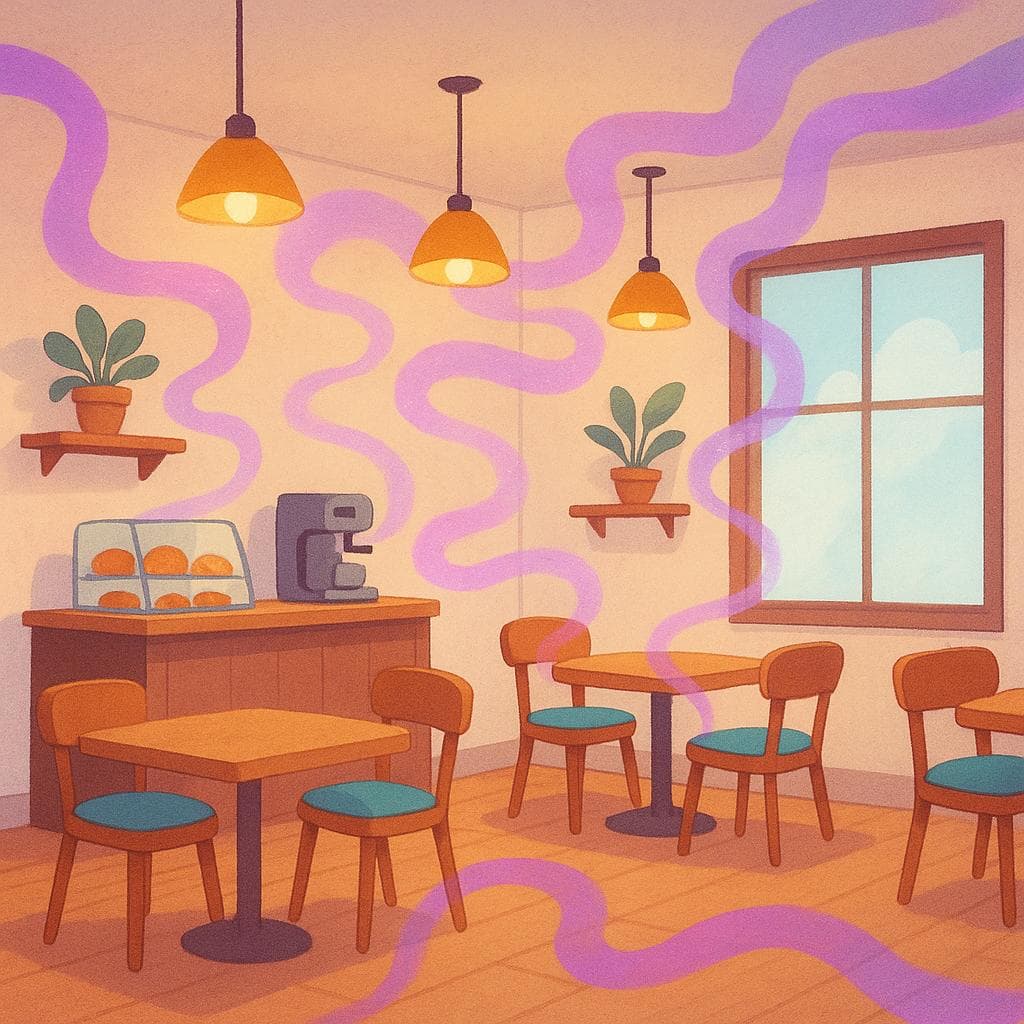
The most common Spanish word for “vibe” is “ambiente” — use 'ambiente' for the general, often informal, mood or character of a place, like a cafe or a party.









ambiente
ahm-BEE-ehn-tehamˈbjente

Examples
Me encanta el ambiente relajado de este café.
I love the relaxed atmosphere of this cafe.
La fiesta tenía un ambiente muy festivo y alegre.
The party had a very festive and cheerful vibe.
¿Qué tal el ambiente en tu nuevo trabajo?
How is the atmosphere (or 'vibe') in your new job?
Masculine Noun
Even though it ends in '-e', 'ambiente' is always masculine, so you must use 'el' or 'un' before it: 'El ambiente es bueno'.
Using 'La'
Mistake: “La ambiente es buena.”
Correction: El ambiente es bueno. ('Ambiente' is masculine.)
onda
OHN-dahˈon.da

Examples
El café tiene una onda muy relajada y acogedora.
The coffee shop has a very relaxed and cozy vibe.
¡Qué buena onda eres! Siempre me ayudas.
You're so cool/kind! You always help me.
¡Hola, amigo! ¿Qué onda?
Hey, friend! What's up?
Using 'Onda' as a compliment
When you say someone 'tiene buena onda' or 'es buena onda,' you are saying they are a good, kind, or cool person. It's a very high compliment in informal settings.
Using 'Onda' formally
Mistake: “Using 'onda' in a professional email or formal speech.”
Correction: Always keep 'onda' for casual, friendly conversations. For formal settings, use 'ambiente' (atmosphere) or 'actitud' (attitude).
energía
Examples
Después de tomar café, tengo más energía para trabajar.
After having coffee, I have more energy to work.
sensación
Examples
Al entrar, tuve la sensación de que algo andaba mal.
Upon entering, I had the feeling that something was wrong.
aire
ai-rehˈai.ɾe

Examples
Ese chico tiene un aire a su abuelo.
That boy has a look of his grandfather / looks a bit like his grandfather.
Llegó con un aire de superioridad.
He arrived with an air of superiority.
La decoración le da a la habitación un aire muy moderno.
The decoration gives the room a very modern vibe.
atmósfera
Examples
El café tiene una atmósfera muy acogedora y tranquila.
The cafe has a very cozy and calm atmosphere.
aura
OW-rahˈauɾa

Examples
Ella transmite un aura de mucha paz.
She gives off a very peaceful aura.
El viejo castillo tenía un aura de misterio.
The old castle had a vibe of mystery.
Algunas personas creen que pueden ver el aura de los demás.
Some people believe they can see other people's auras.
The 'El' vs 'La' Rule
Even though 'aura' is a feminine word, we use 'el' in the singular (el aura) because it starts with a stressed 'A' sound. This makes it easier to pronounce, like saying 'an' instead of 'a' in English.
Adjectives stay feminine
Even if you say 'el aura', any describing words (adjectives) must still be feminine. For example: 'el aura blancA' (the white aura).
Using 'La' in singular
Mistake: “La aura es brillante.”
Correction: El aura es brillante. We use 'el' for singular words starting with a strong 'A' sound.
clima
KLEE-mahˈkli.ma

Examples
Hay un clima de tensión en la sala de reuniones.
There is an atmosphere of tension in the meeting room.
El nuevo gerente ha mejorado mucho el clima laboral.
The new manager has greatly improved the work environment (or 'workplace atmosphere').
El clima político del país está muy dividido.
The political mood (or 'climate') of the country is very divided.
Figurative Use
Here, 'clima' is used figuratively, meaning the 'feeling' or 'mood' of a situation, similar to how we might say 'political climate' in English.
pinta
PEEN-tahˈpin.ta

Examples
Esa comida tiene muy buena pinta. ¡Quiero probarla!
That food looks really good (has a good appearance). I want to try it!
El nuevo entrenador tiene pinta de ser muy estricto.
The new coach looks like (has the appearance of being) very strict.
Llevas una pinta muy elegante hoy. ¿Tienes una reunión?
You have a very elegant look today. Do you have a meeting?
Using 'Tener'
We almost always use 'pinta' with the verb 'tener' (to have) to describe the appearance of something, like saying 'it has a good look' instead of 'it is good looking'.
Mixing with 'Parecer'
Mistake: “La comida parece buena pinta.”
Correction: La comida tiene buena pinta. ('Pinta' already means 'look,' so 'parecer' (to seem) is usually redundant here.)
química
Examples
Se nota la química entre ellos; ríen todo el tiempo.
You can notice the chemistry between them; they laugh all the time.
sabor
sah-BOARsaˈβoɾ

Examples
Esa canción tiene mucho sabor a los años 80.
That song has a lot of the feel/style of the 80s.
El festival le dio un sabor especial a la ciudad.
The festival gave a special character/vibe to the city.
La novela carece de sabor humano.
The novel lacks human essence/soul.
Using 'Sabor' Figuratively
When 'sabor' is used to describe a non-physical quality, it often means 'the feeling' or 'the spirit' of something. Think of it as the 'taste' of a mood or style.
electricidad
eh-lek-trih-see-dahdelek.tɾi.siˈðað

Examples
Había una electricidad palpable en el aire antes del concierto.
There was a palpable electricity (tension/excitement) in the air before the concert.
La electricidad entre los dos personajes en la película era increíble.
The chemistry (electricity) between the two characters in the movie was incredible.
Figurative Use
This meaning uses the word to describe a feeling or connection that is strong and energetic, similar to how a physical electric current flows.
roll
rrohlrol
Examples
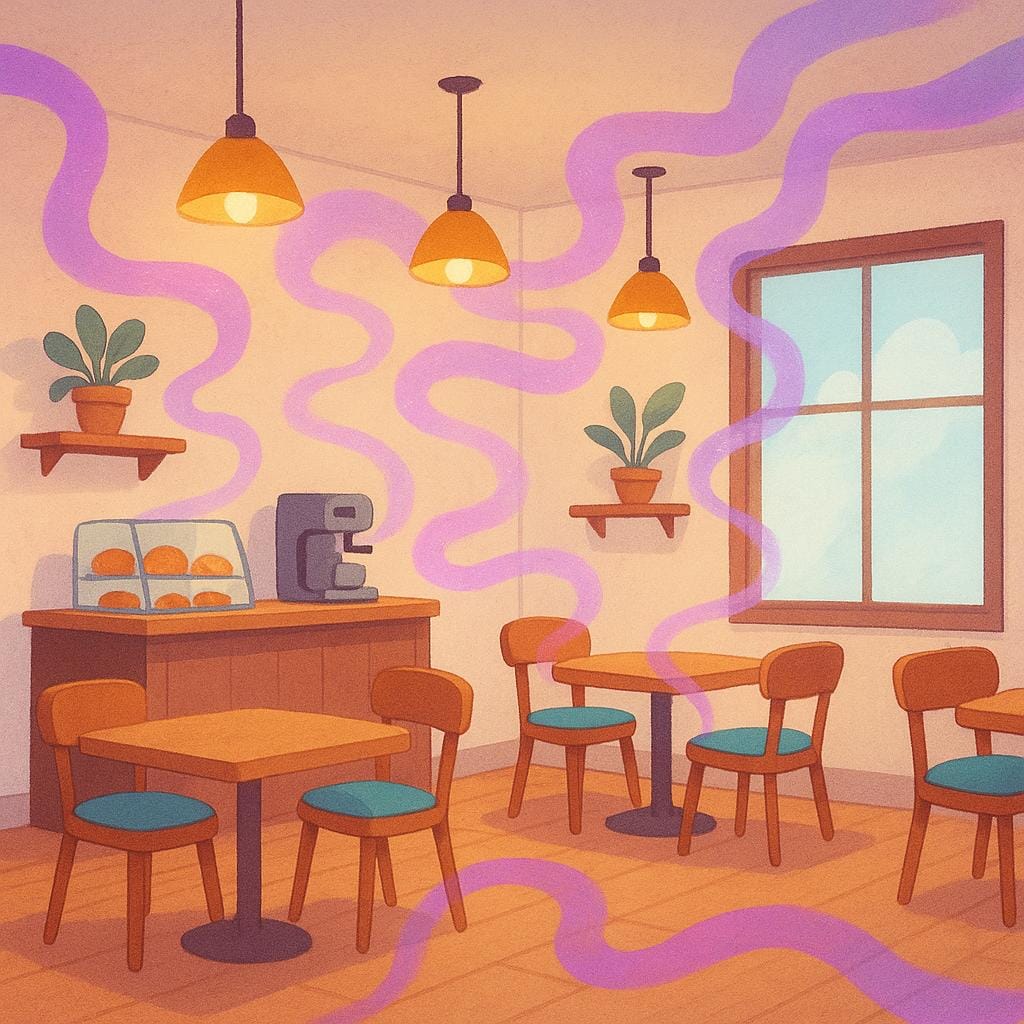
Me encanta el roll de este café; es muy relajante.
I love the vibe of this café; it's very relaxing.
¿Sabes si Marta y Pedro tienen un roll?
Do you know if Marta and Pedro have a thing going on?
No te preocupes por ese roll, ya se arreglará.
Don't worry about that situation, it will sort itself out.
Always Masculine
Even though this word is borrowed from English, treat it like a Spanish masculine noun. Always use 'el' or 'un' before it.
Using it outside of Spain
Mistake: “Using 'roll' to mean 'vibe' in most of Latin America.”
Correction: This slang is highly regional (Spain). Use 'ambiente' or 'atmósfera' instead for broader communication.
vibración
Examples
Este café tiene una vibración muy relajante.
This café has a very relaxing vibe.
marcha
MAR-chahˈmartʃa

Examples
Este barrio tiene mucha marcha, siempre hay bares abiertos.
This neighborhood has a lot of nightlife/buzz, there are always bars open.
Nos fuimos de marcha hasta las tres de la mañana.
We went out partying until three in the morning.
Ambiente vs. Onda vs. Energía
Related Translations
Learn Spanish with Inklingo
Interactive stories, personalized learning, and more.