Driving & Traffic in Spanish
Navigating the roads in a Spanish-speaking country can be an adventure! This vocabulary set will equip you with essential words for driving, understanding traffic, and discussing your journeys. Knowing these terms is super practical, whether you're renting a car, asking for directions, or just understanding road signs. Spanish often uses verbs like 'circular' for traffic flow, which is a neat difference from English.
Quick Reference
| Spanish | English | Example | Level |
|---|---|---|---|
autopista | highway | La autopista tiene tres carriles. | A2 |
carretera | road | La carretera nacional está muy transitada hoy. | A1 |
carril | lane | Tienes que conducir por el carril derecho. | A2 |
carro | car | Necesito comprar gasolina para mi carro. | A1 |
circulación | traffic | Hay mucha circulación en el centro de la ciudad hoy. | A2 |
circular | to circulate | La sangre circula por todo el cuerpo. | A2 |
conducción | driving | Tienes que mejorar tu conducción en condiciones de lluvia. | A2 |
conduciendo | driving | Mi padre está conduciendo a casa después del trabajo. | A2 |
conducir | to drive | ¿Puedes conducir un coche estándar? | A1 |
conductor | driver | El conductor del autobús fue muy amable. | A1 |
estacionado | parked | El coche azul está estacionado frente al hotel. | A2 |
estacionamiento | parking lot | El centro comercial tiene un estacionamiento muy grande. | A1 |
A1 — Beginner (10 words)

road
“La carretera nacional está muy transitada hoy.”

car
“Necesito comprar gasolina para mi carro.”

to drive
“¿Puedes conducir un coche estándar?”

driver
“El conductor del autobús fue muy amable.”

parking lot
“El centro comercial tiene un estacionamiento muy grande.”
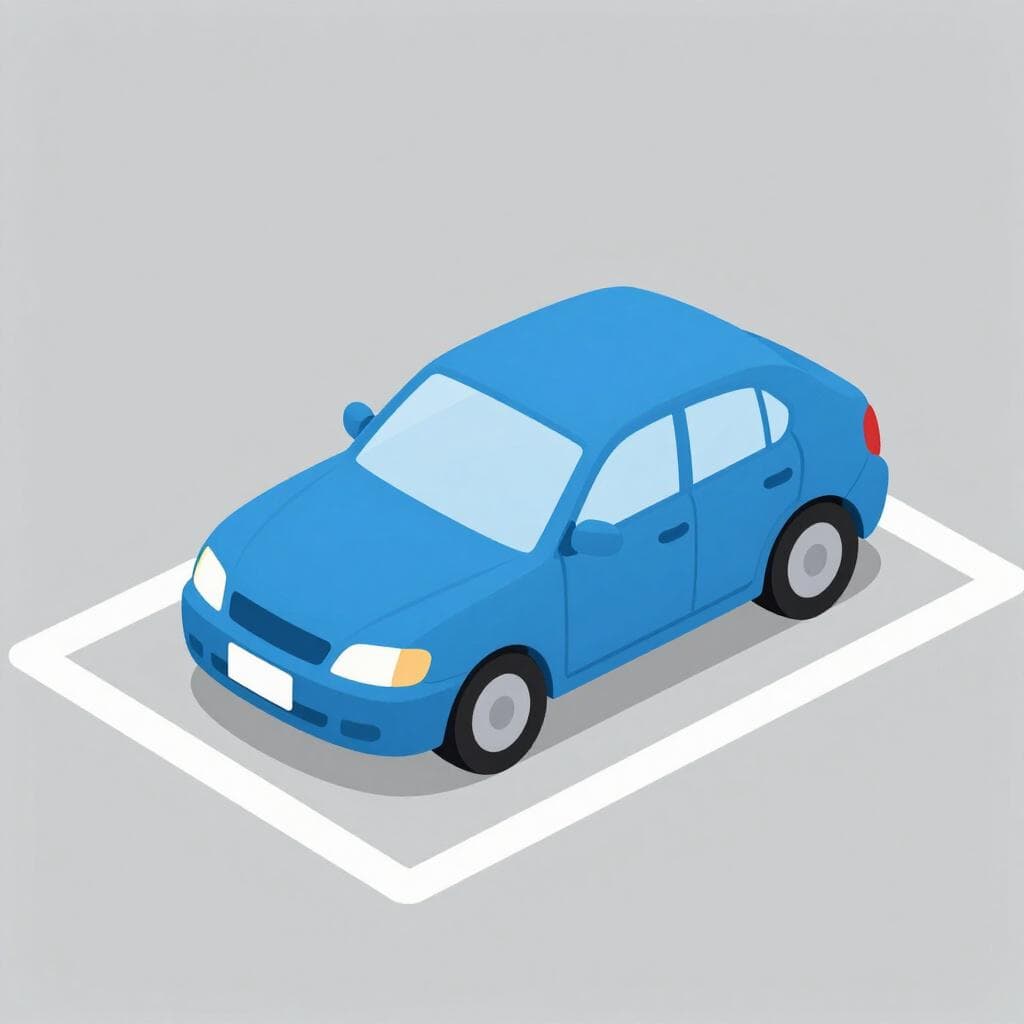
to park
“No puedes estacionar el coche aquí porque es una zona prohibida.”

gasoline
“Tenemos que parar en la gasolinera para poner gasolina.”

gas station
“Tengo que parar en la gasolinera para echar combustible.”

traffic light
“Gira a la izquierda cuando el semáforo se ponga en verde.”

traffic
“Hay mucho tráfico en la carretera principal a esta hora.”
A2 — Elementary (9 words)

highway
“La autopista tiene tres carriles.”

lane
“Tienes que conducir por el carril derecho.”
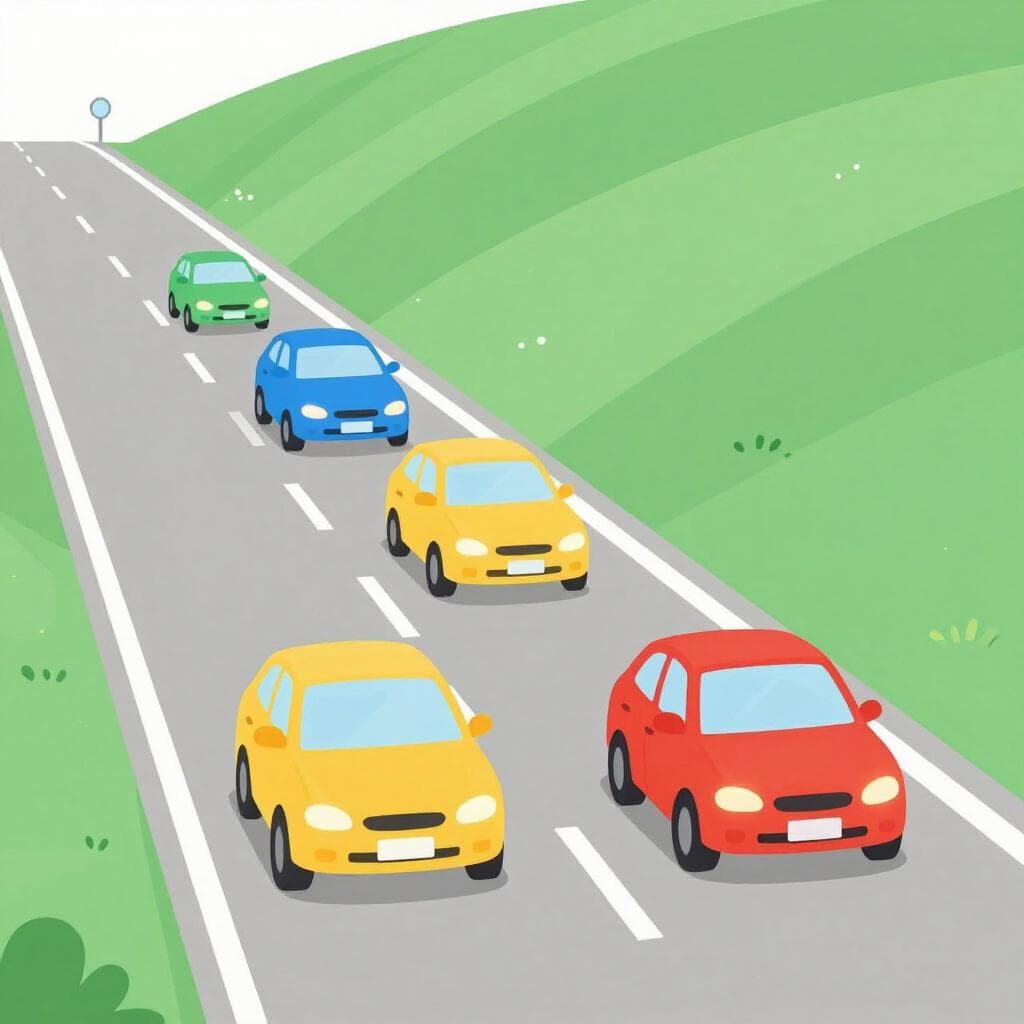
traffic
“Hay mucha circulación en el centro de la ciudad hoy.”
to circulate
“La sangre circula por todo el cuerpo.”

driving
“Tienes que mejorar tu conducción en condiciones de lluvia.”

driving
“Mi padre está conduciendo a casa después del trabajo.”
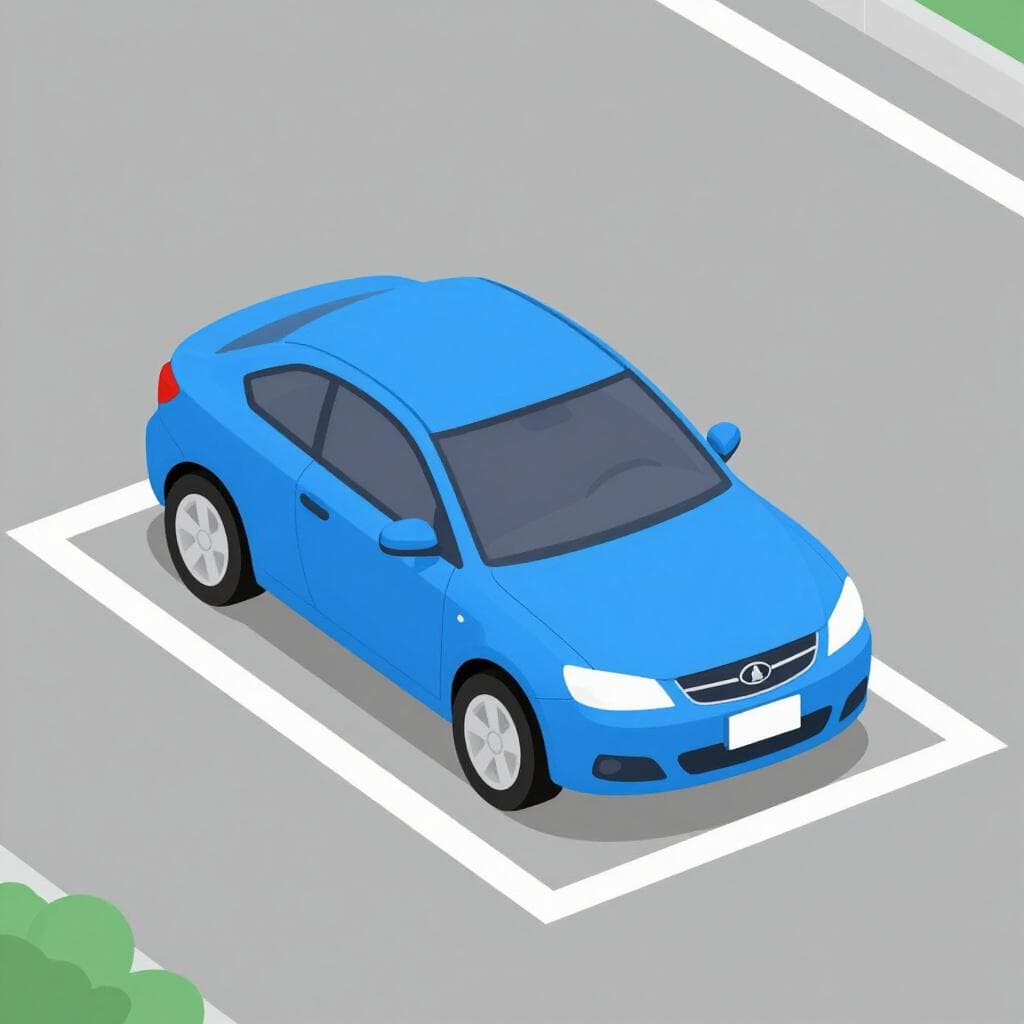
parked
“El coche azul está estacionado frente al hotel.”

to brake
“Tienes que frenar antes de llegar al semáforo.”
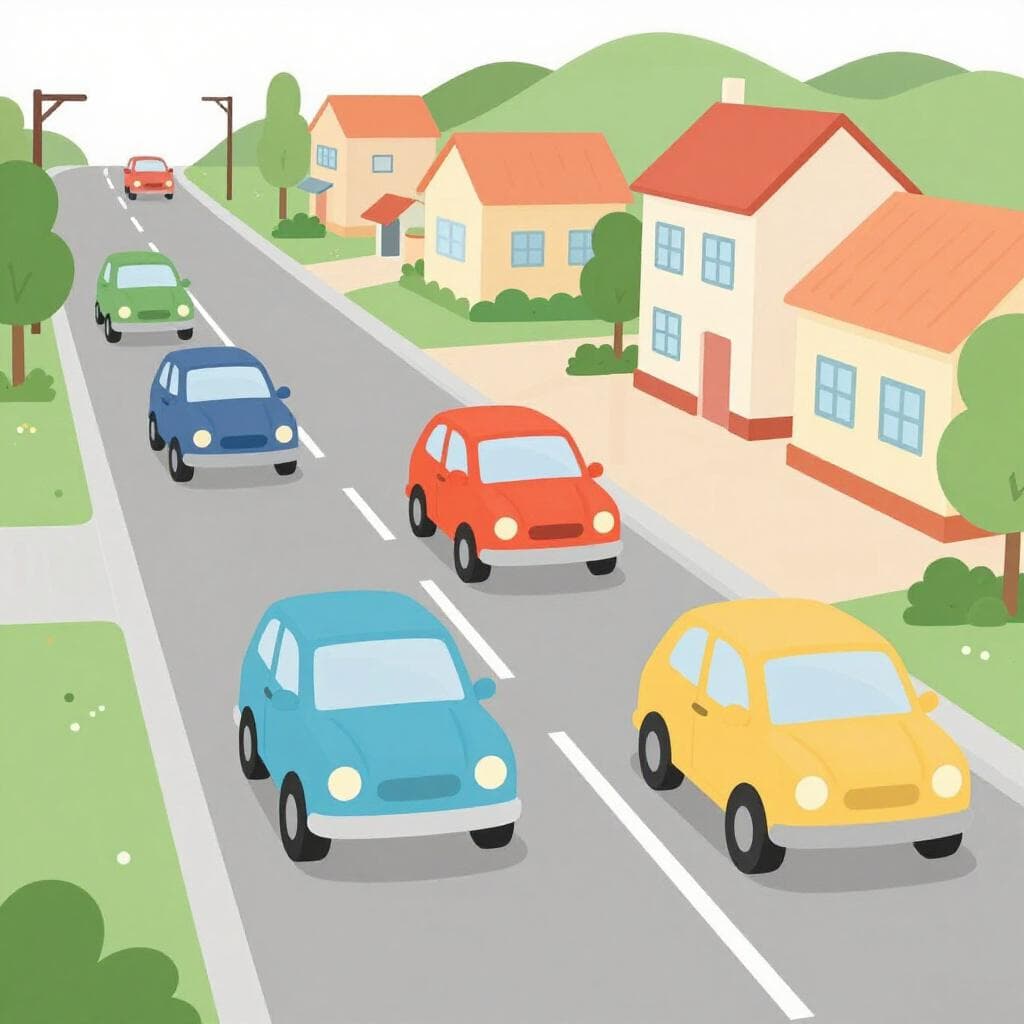
traffic
“El tránsito está muy lento esta mañana por la lluvia.”
Grammar Tips
Gender and Number for Vehicles
Nouns for vehicles and related terms often have gender and number. For example, 'el carro' (the car) is masculine singular, while 'los carros' (the cars) is masculine plural. 'La autopista' (the highway) is feminine singular, and 'las autopistas' (the highways) is feminine plural. Remember to match articles and adjectives!
Verbs for Driving Actions
Spanish uses specific verbs for driving actions. 'Conducir' is the infinitive 'to drive'. When you're in the act of driving, you might use the gerund 'conduciendo' (driving). 'Estacionar' means 'to park', and 'estacionado/a' is the past participle, meaning 'parked'.
Traffic Flow Verbs
Instead of just 'traffic', Spanish uses 'la circulación' for the general flow of vehicles. The verb 'circular' means 'to circulate' or 'to move along' and is commonly used to describe how traffic is moving, like 'La circulación es lenta hoy' (Traffic is slow today).
Common Mistakes
Incorrect Adjective Agreement
Mistake: “El carro es estacionado.”
Correction: El carro está estacionado. — Use 'estar' for temporary states like being parked. 'Ser' is for inherent qualities.
Confusing 'Conducir' and 'Manejar'
Mistake: “Yo conduzo mi carro.”
Correction: Yo conduzco mi carro. (or) Yo manejo mi carro. — The first-person singular of 'conducir' is 'conduzco'. 'Manejar' is another common verb for 'to drive', especially in Latin America, and its first-person singular is 'manejo'.
Pluralizing 'Traffic'
Mistake: “Las circulaciones son malas.”
Correction: La circulación es mala. — 'Circulación' is usually used as a singular, uncountable noun referring to the general flow of traffic.
Cultural Notes
Car vs. Auto
While 'carro' is common in many Latin American countries for 'car', in Spain, 'coche' is more frequently used. Both are understood, but using the local term can make you sound more natural.
Roundabouts: 'Roquetas'
Many Spanish-speaking countries use roundabouts (traffic circles). They are often called 'rotondas' or 'rotondas de tráfico'. Understanding how to navigate these is key, and you'll often see signs indicating 'Ceda el paso' (Yield).