escabullirse
“escabullirse” means “to slip away” in Spanish. It has 2 different meanings depending on context:


to slip away
Also: to sneak out, to scurry away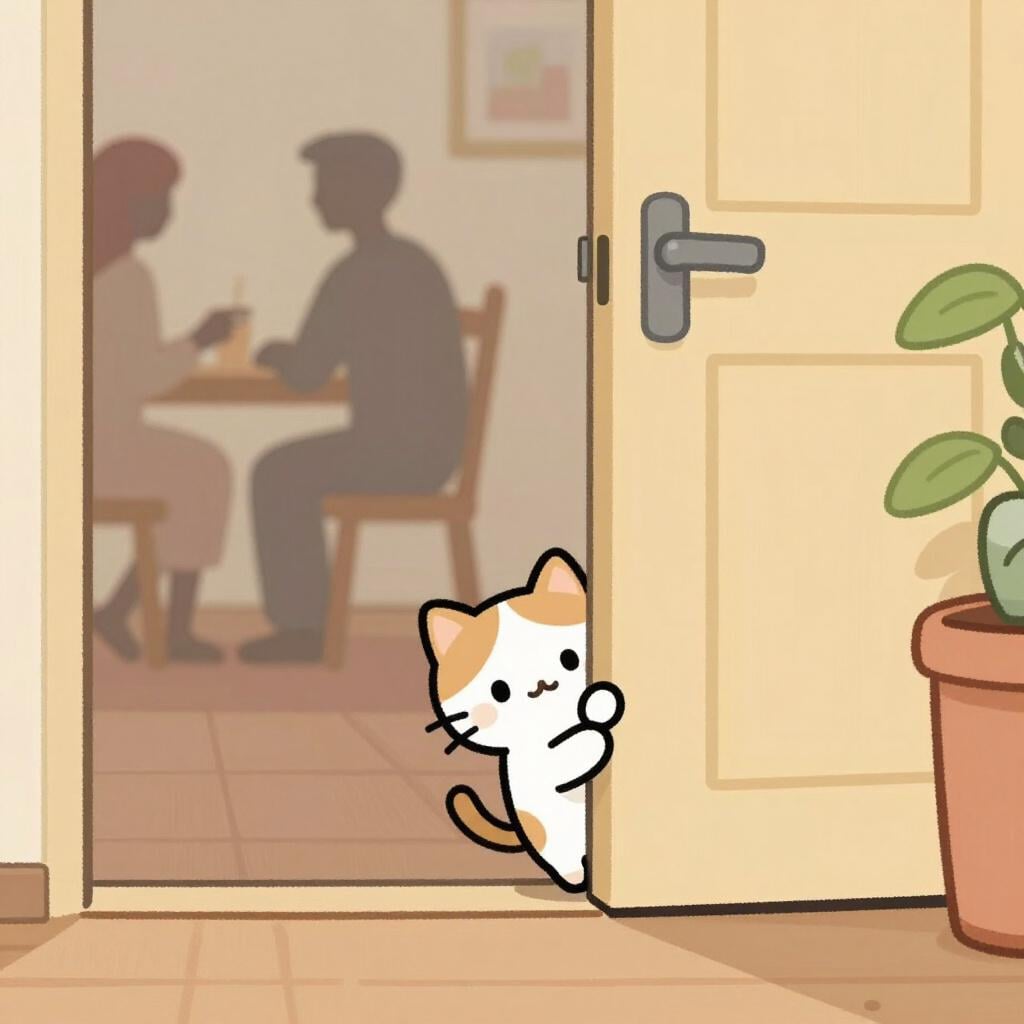
📝 In Action
El gato se escabulló por la ventana abierta.
A2The cat slipped away through the open window.
Me escabullí de la fiesta antes de que terminara.
B1I snuck out of the party before it ended.
Los ladrones se escabulleron entre la multitud.
B2The thieves slipped away through the crowd.
to duck out of
Also: to wiggle out of, to evade
📝 In Action
Siempre intenta escabullirse de sus obligaciones domésticas.
B2He always tries to duck out of his household chores.
El político se escabulló de la pregunta directa.
C1The politician evaded the direct question.
Subjunctive
Imperfect Subjunctive
Present Subjunctive
Indicative
Preterite
Imperfect
Present
Translate to Spanish
Words that translate to "escabullirse" in Spanish:
to evade→✏️ Quick Practice
Quick Quiz: escabullirse
Question 1 of 3
Which sentence describes someone sneaking out of a boring meeting?
📚 More Resources
👥 Word Family▼
🎵 Rhymes▼
📚 Etymology▼
Derived from the Spanish word 'bullir' (to boil or move restlessly), combined with prefixes. It creates an image of something moving so fast and restlessly that it disappears, much like bubbles in boiling water.
First recorded: 16th century
💡 Master Spanish
Take your Spanish to the next level. Read 200+ illustrated and narrated Spanish stories tailored to your level with the Inklingo app!
Frequently Asked Questions
What is the difference between 'escapar' and 'escabullirse'?
'Escapar' is a general word for escaping from danger or a place. 'Escabullirse' specifically implies doing it with stealth, like a mouse slipping through a crack.
Do I always have to use 'me, te, se' with this verb?
Yes! In its infinitive form, it is 'escabullirse.' You cannot use it without those little pronouns that show who is doing the 'slipping away'.
How do you pronounce the 'll' in this word?
In most parts of the Spanish-speaking world, the 'll' sounds like the 'y' in 'yes'.