quehacer
“quehacer” means “chore” in Spanish (household tasks).
chore, task
Also: business, occupation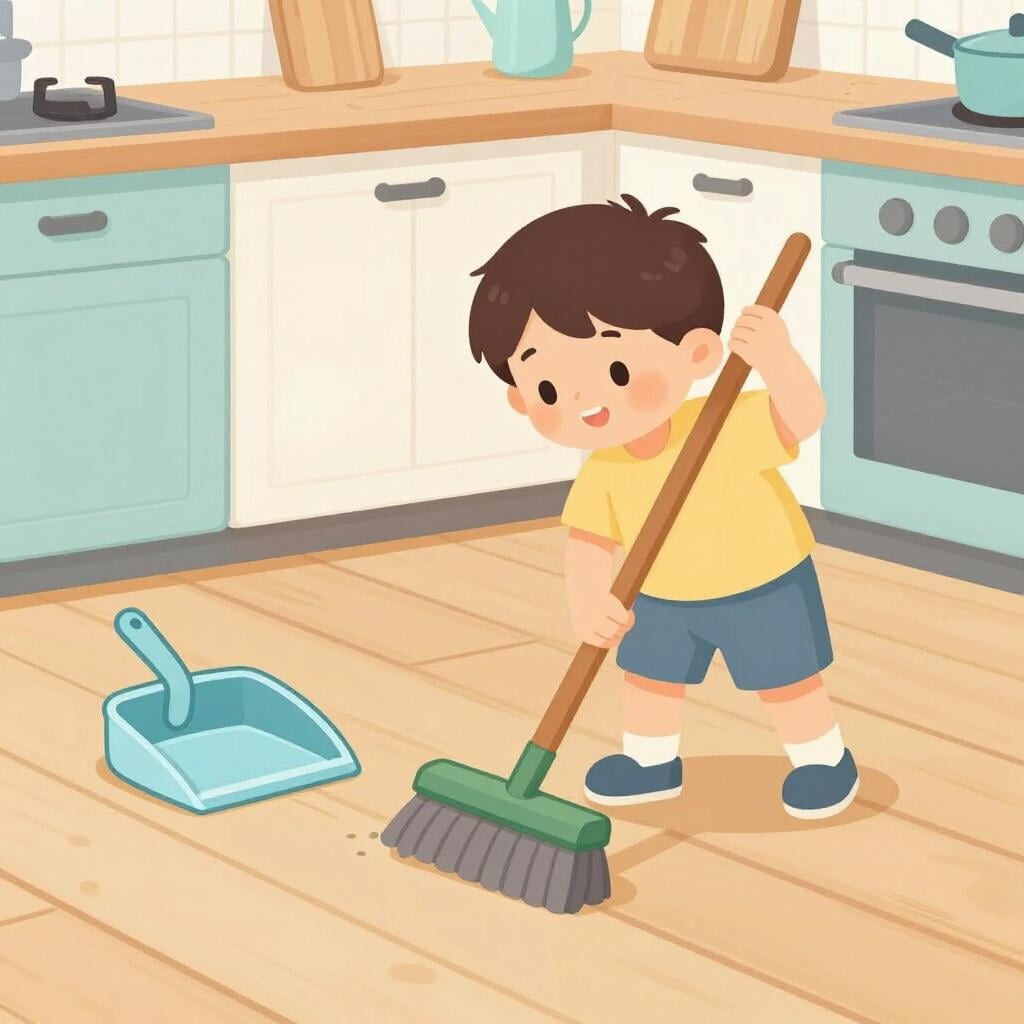
📝 In Action
Tengo muchos quehaceres domésticos hoy.
A2I have many household chores today.
El quehacer diario puede ser agotador.
B1The daily grind (daily tasks) can be exhausting.
Cada uno debe atender su propio quehacer.
C1Everyone should attend to their own business/tasks.
Translate to Spanish
✏️ Quick Practice
Quick Quiz: quehacer
Question 1 of 3
Which of these is the most common plural form used for household tasks?
📚 More Resources
👥 Word Family▼
📚 Etymology▼
Derived from the Spanish phrase 'que' (what) + 'hacer' (to do), which eventually merged into a single noun used to describe one's duties or tasks.
First recorded: 13th century
💡 Master Spanish
Take your Spanish to the next level. Read 200+ illustrated and narrated Spanish stories tailored to your level with the Inklingo app!
Frequently Asked Questions
Is 'quehacer' the same as 'tarea'?
They are very close! 'Tarea' is the general word for any task or homework. 'Quehacer' is specifically used for routine tasks, especially around the house.
Is it written as one word or two?
When it's a noun meaning 'chore,' it is always one word: 'quehacer'. If you are saying 'what to do' as part of a sentence (e.g., 'No sé qué hacer'), it is two words.
Does it have a feminine form?
No, 'quehacer' is always masculine (el quehacer), even if a woman is performing the chores.