sienta
“sienta” means “he/she/it seats” in Spanish. It has 2 different meanings depending on context:
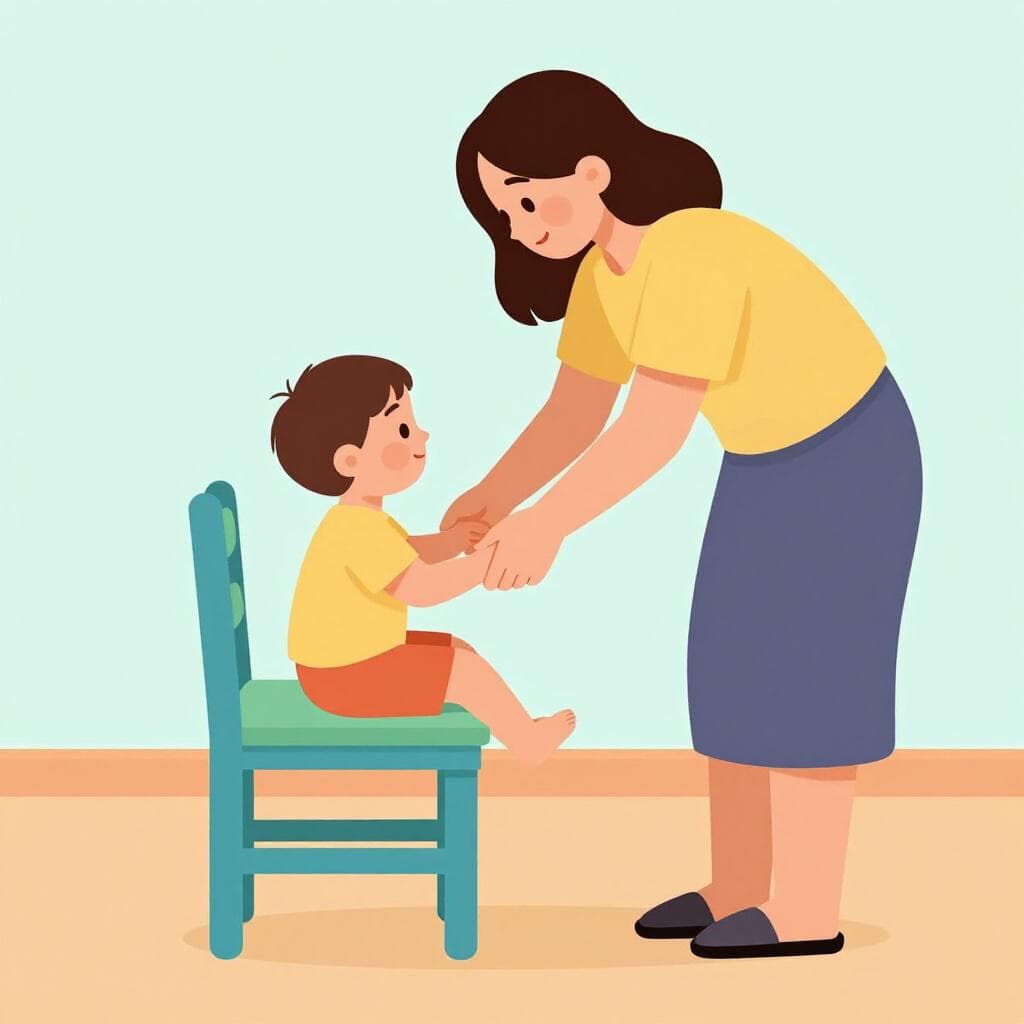

he/she/it seats, it suitsAlso: you sit down (formal), it fits
📝 In Action
Ella siempre sienta a los invitados en la sala.
A2She always seats the guests in the living room.
Esa chaqueta te sienta muy bien.
B1That jacket suits you very well.
La mesa sienta a seis personas cómodamente.
B1The table seats six people comfortably.
Word Connections
(that I/he/she/it) feelsAlso: (that you) feel (formal)

📝 In Action
Espero que se sienta mejor después de la siesta.
B1I hope he feels better after the nap.
No creo que yo sienta celos de su éxito.
B2I don't think I feel jealousy about his success.
Me molesta que usted no sienta remordimiento.
C1It bothers me that you (formal) don't feel remorse.
Word Connections
Subjunctive
Imperfect Subjunctive
Present Subjunctive
Indicative
Preterite
Imperfect
Present
✏️ Quick Practice
Quick Quiz: sienta
Question 1 of 2
Which sentence uses 'sienta' to talk about how clothes look?
📚 More Resources
👥 Word Family
🎵 Rhymes
📚 Etymology
Both 'sentar' and 'sentir' ultimately come from the Latin verb *sentīre*, meaning 'to feel,' 'to perceive,' or 'to be aware.' Over time, 'sentar' evolved to focus on the physical sensation of sitting or placing, while 'sentir' kept the meaning related to emotions and internal sensations.
First recorded: Both verbs trace back to Vulgar Latin forms in the early Romance period.
Cognates (Related words)
💡 Master Spanish
Take your Spanish to the next level. Read 200+ illustrated and narrated Spanish stories tailored to your level with the Inklingo app!
Frequently Asked Questions
Why does 'sienta' come from two different verbs, 'sentar' and 'sentir'?
This is a quirk of Spanish conjugation! 'Sienta' is the 3rd person singular present tense of 'sentar' (to seat/fit), but it is the 1st/3rd person singular of the *special verb form* (subjunctive) of 'sentir' (to feel). You figure out which one it is by the context of the sentence.
How can I tell if 'sienta' means 'to suit' or 'to feel'?
If 'sienta' is used with a piece of clothing or a color (e.g., 'el vestido sienta bien'), it means 'to suit' or 'to fit.' If it follows a phrase expressing emotion or doubt (e.g., 'Espero que se sienta...'), it means 'to feel' and usually includes the word 'se' before it.