How to Say "funeral" in Spanish
The most common Spanish word for “funeral” is “funeral” — use this word when referring to the overall ceremony or service for a deceased person, often held in a church or funeral home.
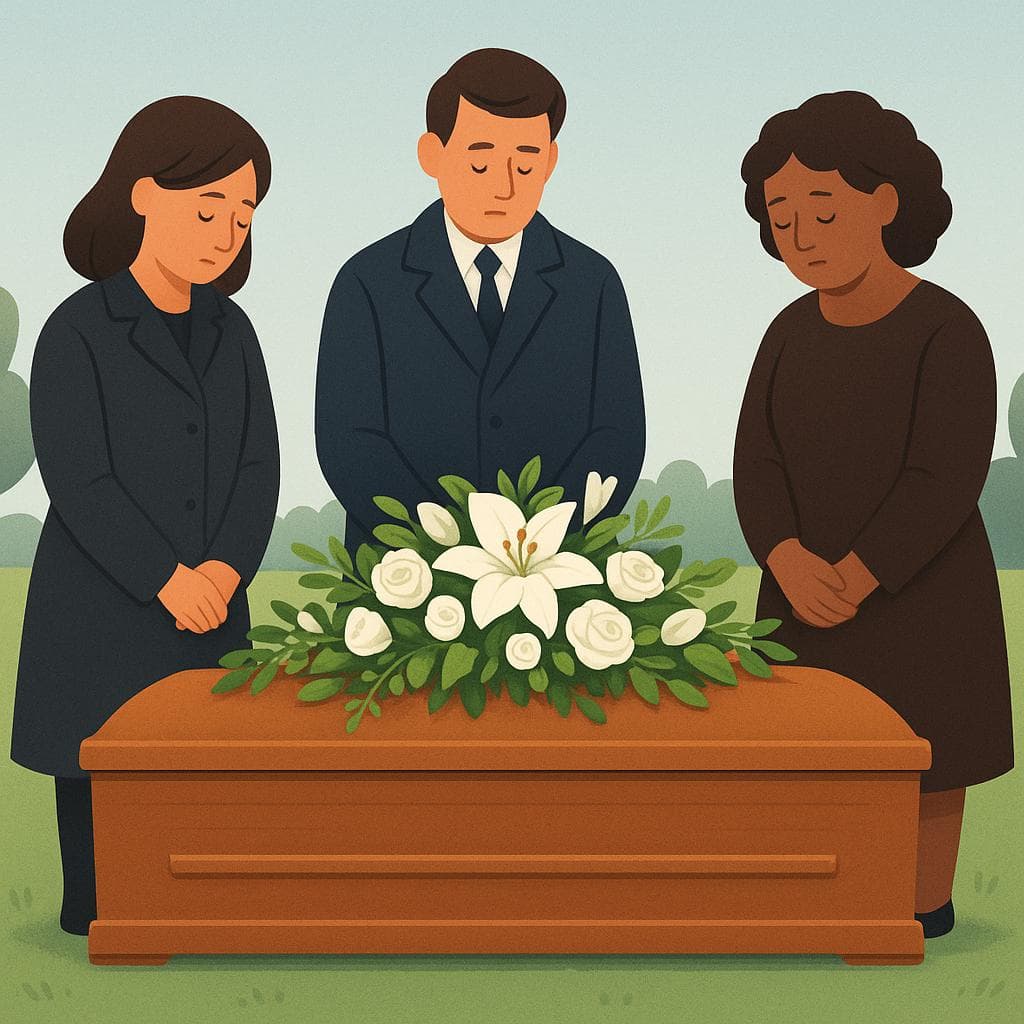


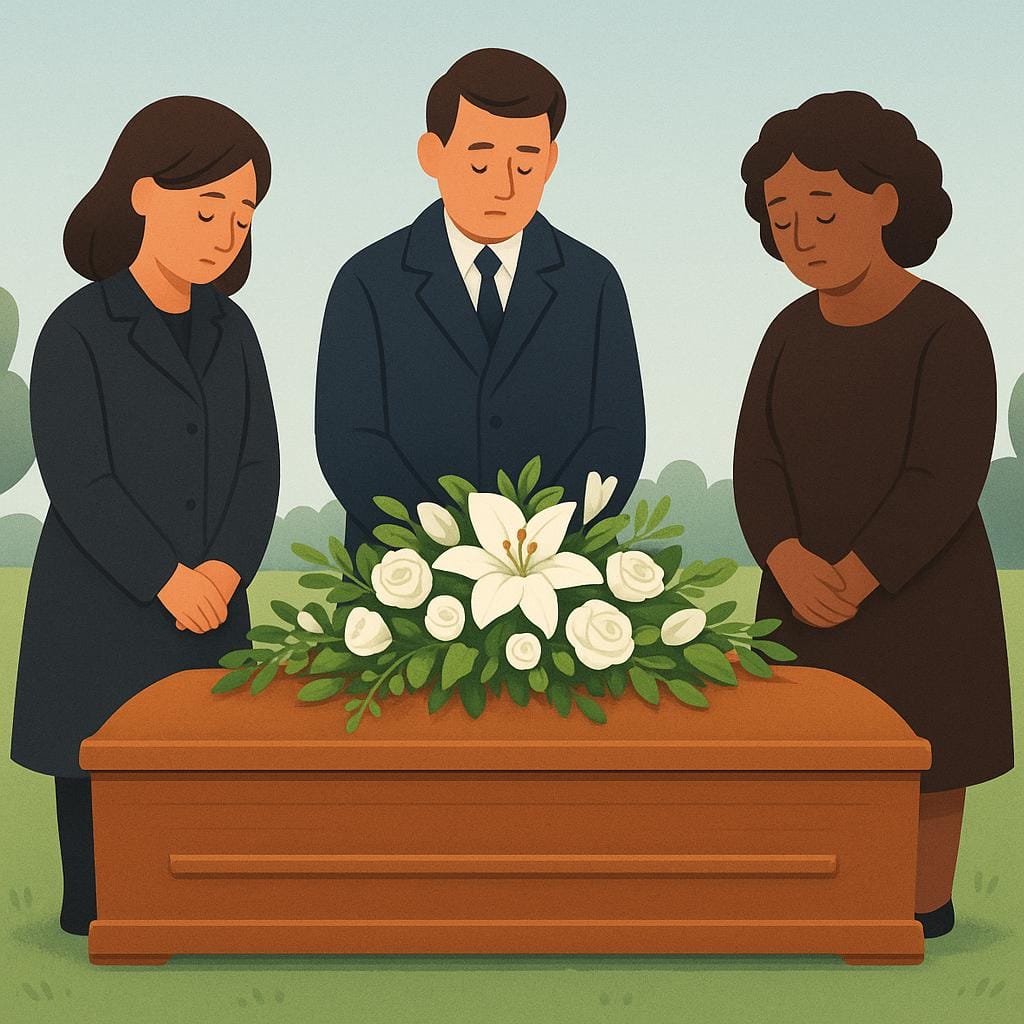
funeral
foo-neh-RAHLfu.neˈɾal
Examples
El funeral se celebrará en la iglesia principal.
The funeral will be held in the main church.
Llevaba ropa negra para asistir al funeral.
She wore black clothes to attend the funeral.
Los gastos funerales fueron muy altos.
The funeral expenses were very high.
La procesión funeral pasó por la calle principal.
The funeral procession passed down the main street.
Masculine Noun
Remember that 'funeral' is always masculine in Spanish, even though it ends in 'L'. You must use the masculine article: 'el funeral'.
Invariable Adjective
When used as an adjective, 'funeral' always keeps its '-al' ending, whether it describes a masculine ('gastos funerales') or feminine ('procesión funeral') noun.
Using the Wrong Article
Mistake: “La funeral.”
Correction: El funeral. (The ceremony is masculine in Spanish.)
Confusing Noun and Adjective
Mistake: “Compramos la casa funeral.”
Correction: Compramos la casa fúnebre. (Using the adjective 'fúnebre' is much more natural when describing things associated with death.)
entierro
en-TYEH-rrohenˈtje.ro

Examples
El entierro será mañana a las diez en el cementerio central.
The burial will be tomorrow at ten in the central cemetery.
Cuenta la leyenda que hay un entierro de oro bajo ese árbol.
Legend has it there is a buried treasure of gold under that tree.
Word Roots
Notice that 'entierro' has the word 'tierra' (earth/dirt) inside it. This helps you remember it means putting something into the earth.
One 'r' vs. Two
Mistake: “entiero”
Correction: entierro (with a double 'rr'). Spanish needs the double 'rr' for that strong rolling sound between vowels.
funerario
foo-neh-RAH-ryohfuneˈɾaɾjo

Examples
La empresa ofrece servicios funerarios completos.
The company offers complete funeral services.
Los arqueólogos descubrieron antiguos ritos funerarios en la zona.
Archaeologists discovered ancient funeral rites in the area.
El coche funerario avanzaba lentamente por la calle principal.
The hearse (funeral car) was moving slowly down the main street.
Gender Matching
This word changes its ending to match the person or thing it describes. Use 'funerario' for masculine words (el servicio funerario) and 'funeraria' for feminine words (la corona funeraria).
Adjective Placement
Just like most Spanish describing words, 'funerario' almost always comes after the noun it describes.
Funerario vs. Funeral
Mistake: “Voy a un funerario.”
Correction: Voy a un funeral.
fúnebre
FOO-neh-brehˈfunebɾe

Examples
El coche fúnebre avanzaba lentamente por la calle.
The funeral car (hearse) moved slowly down the street.
La orquesta tocó una marcha fúnebre muy emotiva.
The orchestra played a very emotional funeral march.
Los ritos fúnebres varían mucho entre las diferentes culturas.
Funeral rites vary a lot between different cultures.
One Form for All
This word ends in 'e', which means it doesn't change for masculine or feminine nouns. You can say 'el rito fúnebre' (masculine) and 'la marcha fúnebre' (feminine).
Word Order Matters
In Spanish, this adjective almost always comes AFTER the noun it describes to help specify the exact type of object (like 'coche fúnebre').
Don't use 'fúnebra'
Mistake: “La ceremonia fúnebra.”
Correction: La ceremonia fúnebre. Adjectives ending in 'e' stay the same for both genders.
funeral
foo-neh-RAHLfu.neˈɾal
Examples
Los gastos funerales fueron muy altos.
The funeral expenses were very high.
El funeral se celebrará en la iglesia principal.
The funeral will be held in the main church.
Llevaba ropa negra para asistir al funeral.
She wore black clothes to attend the funeral.
La procesión funeral pasó por la calle principal.
The funeral procession passed down the main street.
Masculine Noun
Remember that 'funeral' is always masculine in Spanish, even though it ends in 'L'. You must use the masculine article: 'el funeral'.
Invariable Adjective
When used as an adjective, 'funeral' always keeps its '-al' ending, whether it describes a masculine ('gastos funerales') or feminine ('procesión funeral') noun.
Using the Wrong Article
Mistake: “La funeral.”
Correction: El funeral. (The ceremony is masculine in Spanish.)
Confusing Noun and Adjective
Mistake: “Compramos la casa funeral.”
Correction: Compramos la casa fúnebre. (Using the adjective 'fúnebre' is much more natural when describing things associated with death.)
Noun vs. Adjective Confusion
Learn Spanish with Inklingo
Interactive stories, personalized learning, and more.