How to Say "outbreak" in Spanish
The most common Spanish word for “outbreak” is “brote” — use 'brote' for the sudden appearance or start of a disease, or any unwelcome phenomenon that emerges unexpectedly.





brote
BROH-tehˈbɾote

Examples
Hubo un brote de gripe en la escuela.
There was a flu outbreak at the school.
Las autoridades controlaron el brote rápidamente.
Authorities controlled the outbreak quickly.
El paciente sufrió un brote de su enfermedad crónica.
The patient suffered a flare-up of his chronic illness.
Using with 'De'
When talking about an outbreak, you almost always follow 'brote' with 'de' and the name of the problem (e.g., 'brote de violencia').
Brote vs. Epidemia
Mistake: “Hay una epidemia en mi casa.”
Correction: Hay un brote en mi casa. Use 'brote' for small, localized groups; 'epidemia' is for much larger areas like whole cities or countries.
epidemia
eh-pee-DEH-myahepiˈdemja

Examples
Hubo una epidemia de gripe el invierno pasado.
There was a flu epidemic last winter.
Los médicos trabajan duro para detener la epidemia.
The doctors are working hard to stop the epidemic.
La higiene es fundamental para prevenir cualquier epidemia.
Hygiene is fundamental to prevent any epidemic.
Always Feminine
The word 'epidemia' is a feminine naming word. You must always use 'la' or 'una' with it, even if the next word starts with a vowel.
Plural Form
To talk about more than one, simply add an 's' at the end: 'las epidemias'.
Gender confusion
Mistake: “el epidemia”
Correction: la epidemia (It ends in -a, which is a big clue that it's feminine!)
Epidemia vs. Pandemia
Mistake: “Using epidemia for a global event.”
Correction: Use 'epidemia' for a specific region or country; use 'pandemia' for the whole world.
estallido
es-ta-YEE-dohestaˈʝiðo

Examples
El estallido de la bomba se escuchó en toda la ciudad.
The explosion of the bomb was heard throughout the city.
Hubo un estallido social debido a los altos precios.
There was a social outbreak (uprising) due to the high prices.
Un estallido de risa rompió el silencio de la sala.
An outburst of laughter broke the silence in the room.
Always Masculine
Even though it ends in 'o' and looks standard, remember to always use 'el' or 'un' with this word.
Describing the Cause
Use the word 'de' (of) immediately after 'estallido' to explain what caused the noise or event, such as 'estallido de alegría' (outburst of joy).
Estallido vs. Explosión
Mistake: “Using 'explosión' for social movements.”
Correction: While 'explosión' works for bombs, use 'estallido social' for protests or sudden social changes to sound more natural.
foco
FOH-kohˈfoko

Examples
No podemos perder el foco de nuestra misión.
We cannot lose focus on our mission.
Los científicos encontraron el foco de la infección.
Scientists found the source/outbreak of the infection.
Esta zona es un foco de conflictos.
This area is a hotbed of conflicts.
Abstract Usage
Just like in English, the physical idea of light 'focusing' on a point is used to describe mental concentration or the central point of a problem.
Focus (the verb)
Mistake: “Yo foco en mi tarea.”
Correction: Say 'Me enfoco en mi tarea'. 'Foco' is the noun (the center), while 'enfocar' is the action (to focus).
incendio
een-SEN-dee-ohinˈθen.djo
Examples
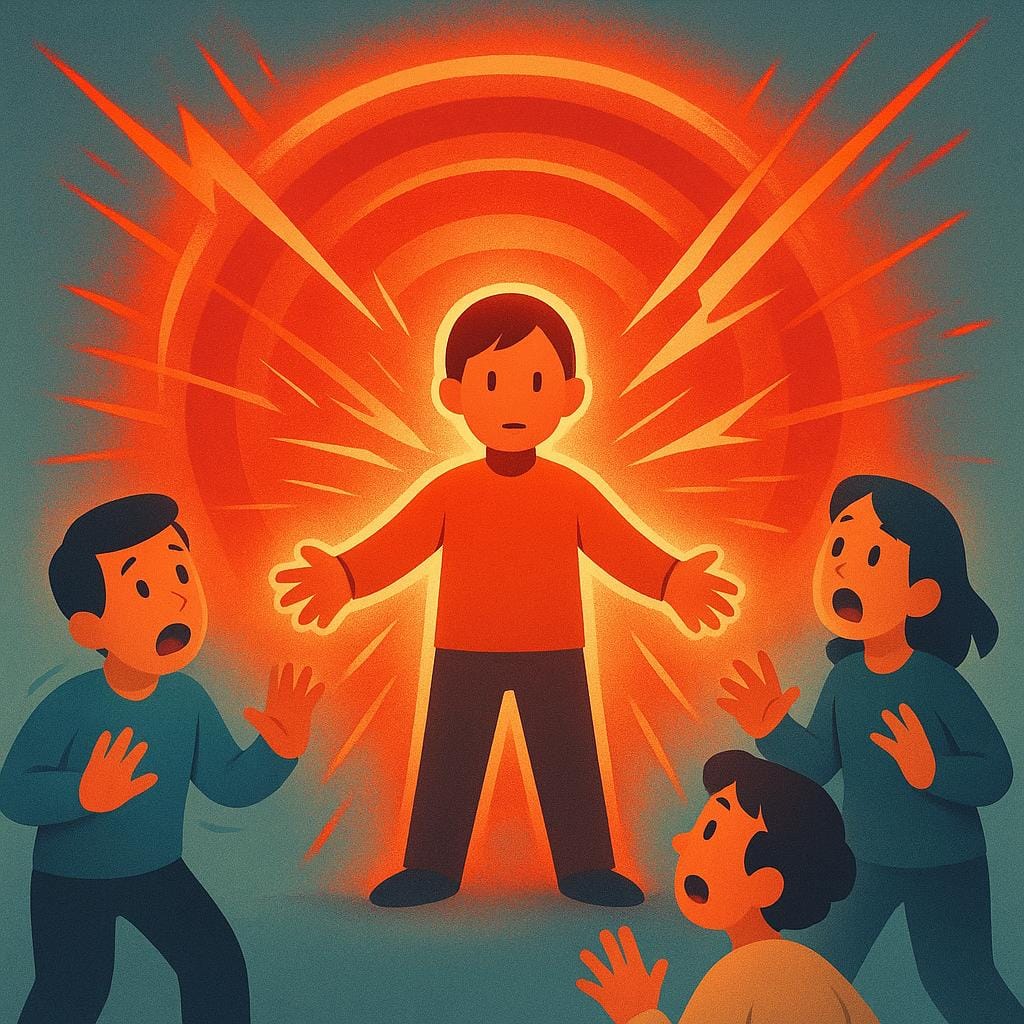
Las declaraciones del ministro causaron un incendio político.
The minister's statements caused a political firestorm.
Sentía un incendio de celos cada vez que ella hablaba con otro.
He felt a storm of jealousy every time she spoke to someone else.
Disease vs. Conflict Outbreaks
Related Translations
Learn Spanish with Inklingo
Interactive stories, personalized learning, and more.