How to Say "route" in Spanish
The most common Spanish word for “route” is “ruta” — use 'ruta' for a general physical course or journey, a direct equivalent to 'route' when the specific type of path is not the main focus.






ruta
ROO-tahˈruta

Examples
Perdimos la ruta y tuvimos que usar el GPS.
We lost the route and had to use the GPS.
Esta es la ruta más rápida para llegar al aeropuerto.
This is the fastest route to get to the airport.
La ruta de autobús número cinco pasa por el centro.
Bus route number five goes through downtown.
Verifica la ruta del archivo para asegurarte de que es correcto.
Check the file path to ensure it is correct.
Gender Reminder
Even though 'ruta' ends in -a, remember it is always feminine: 'la ruta' (the route).
carretera
cah-rreh-TAY-rahkareˈteɾa

Examples
La carretera nacional está muy transitada hoy.
The national highway is very busy today.
Necesitamos un mapa para seguir la carretera hasta la costa.
We need a map to follow the road to the coast.
El viaje por carretera nos llevó dos días enteros.
The road trip took us two whole days.
Feminine Noun Rule
Since 'carretera' ends in '-a', it is a feminine word. Always use the feminine article 'la' or 'una' with it, and make any adjectives agree: 'la carretera ancha' (the wide road).
Road vs. Street
Mistake: “Using 'carretera' for small roads inside a city or town.”
Correction: Use 'calle' for streets within a city. 'Carretera' is usually the larger road connecting different towns or cities.
línea
Examples
Tomo la línea 3 del metro todos los días.
I take line 3 of the subway every day.
itinerario
ee-tee-neh-rah-ryohitineˈɾaɾjo
Examples
El itinerario de nuestro viaje incluye tres ciudades.
Our trip itinerary includes three cities.
Tengo un itinerario muy apretado para mañana.
I have a very tight schedule for tomorrow.
Debemos seguir el itinerario para no perder el vuelo.
We must follow the route to avoid missing the flight.
A 'He' Word
Even though it is quite long, 'itinerario' is a masculine noun. Always use 'el' or 'un' with it.
Connecting with 'De'
To say what the itinerary is for, simply use the word 'de' (of/for). For example: 'itinerario de vuelo' (flight itinerary).
Using 'Agenda' instead
Mistake: “Mi agenda de viaje es larga.”
Correction: Mi itinerario de viaje es largo. Use 'itinerario' specifically for routes and travel plans; 'agenda' is usually for business meetings or a physical planner book.
recorrido
reh-koh-REE-dohrekoˈriðo
Examples
¿Cuál es el recorrido de la maratón?
What is the route of the marathon?
El recorrido por la ciudad duró tres horas.
The tour of the city lasted three hours.
Necesitamos revisar el recorrido total antes de salir.
We need to check the total distance before leaving.
Gender Reminder
As a noun, 'recorrido' is always masculine, so you use 'el' or 'un' with it.
trayecto
tra-yek-tohtɾaˈʝekto

Examples
El trayecto en autobús dura treinta minutos.
The bus journey takes thirty minutes.
Es un trayecto largo desde mi casa hasta el trabajo.
It is a long route from my house to work.
Durante el último trayecto del viaje, empezó a nevar.
During the final stretch of the trip, it started to snow.
Always Masculine
Even though it ends in 'o', just remember it stays masculine ('el trayecto') regardless of where you are going.
Trayecto vs. Viaje
Use 'viaje' for the whole experience of a trip (vacation, fun), but use 'trayecto' to focus specifically on the time or path spent moving from A to B.
Confusing with 'Trajectory'
Mistake: “Using 'trayecto' to mean a career path or a physical arc.”
Correction: Use 'trayectoria' for a career path or the flight path of a ball. Use 'trayecto' for travel routes.
circuito
seer-KWEE-tohsiɾˈkwito

Examples
El Gran Premio se celebrará en el circuito de Mónaco.
The Grand Prix will be held on the Monaco circuit (track).
Hicimos un circuito turístico por todas las capitales andinas.
We did a tourist route (circuit) through all the Andean capitals.
La carrera de caballos tiene un circuito muy desafiante.
The horse race has a very challenging track.
Gender Reminder
Remember that 'circuito' is always masculine, so you use 'el' or 'un' with it (e.g., 'el circuito grande').
Confusing with 'círculo'
Mistake: “Usar 'círculo' when referring to a race track.”
Correction: 'Círculo' means a geometric shape (circle); 'circuito' means the path or loop of a route or track.
canal
kah-NAHLkaˈnal

Examples
Debemos usar los canales oficiales para enviar esta información.
We must use the official channels to send this information.
La empresa distribuye sus productos por varios canales de venta.
The company distributes its products through various sales channels.
Figurative Use
This meaning extends the idea of a physical passage (like a river) to an abstract one (like a route for information or sales).
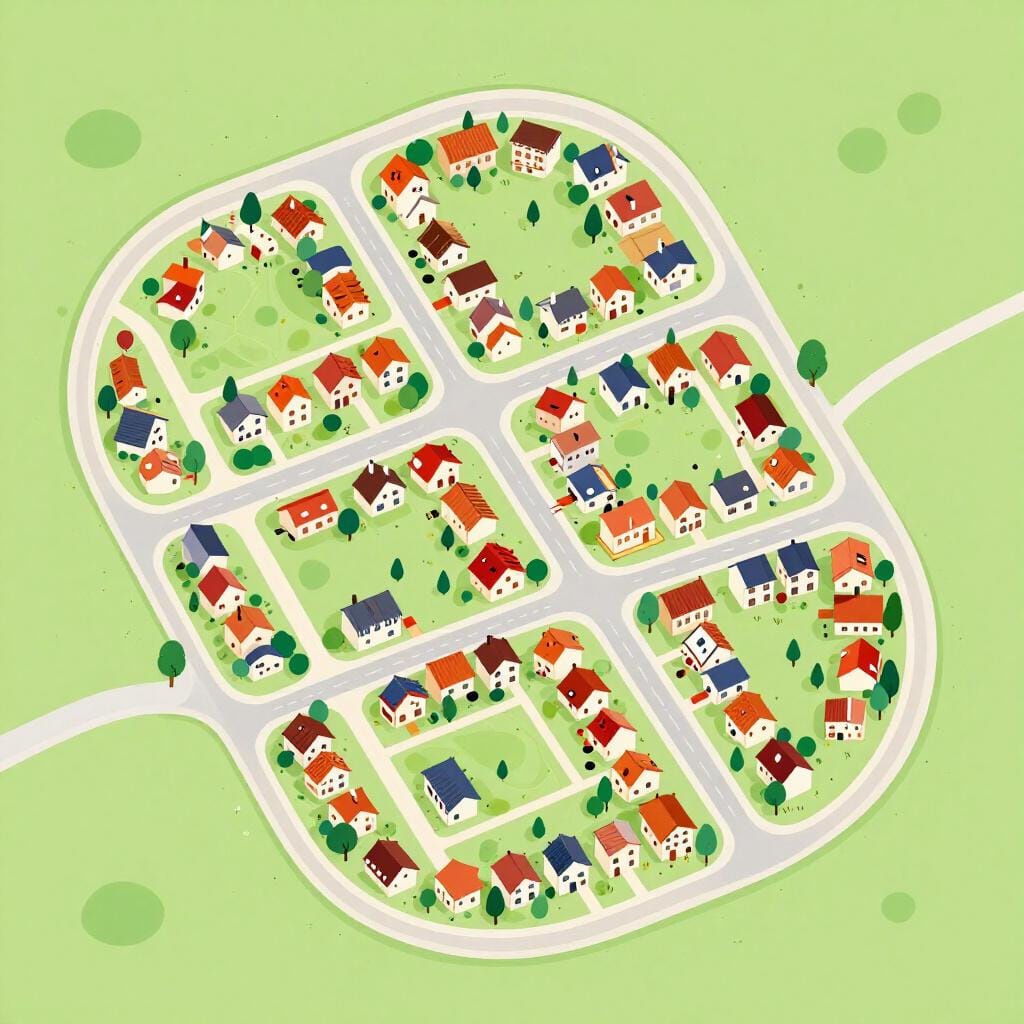
trazado
tra-SAH-dohtɾaˈsaðo
Examples
El trazado de la ciudad es medieval.
The layout of the city is medieval.
Están modificando el trazado de la nueva carretera.
They are modifying the route of the new highway.
El trazado original del mapa se ha borrado.
The original outline of the map has been erased.
Using 'el' with Trazado
Even though it comes from a verb, in this context it acts as a normal noun and always needs a masculine article like 'el' or 'un'.
Abstract vs. Concrete
It can refer to both a physical path (like a road) or an abstract plan (like the layout of a project).
Trazado vs. Trazo
Mistake: “Using 'trazado' to mean a single stroke of a pen.”
Correction: Use 'trazo' for a single mark or stroke, and 'trazado' for the overall plan or path.
vía
Examples
El medicamento se administra por vía oral.
The medication is administered orally (by mouth).
ruta
ROO-tahˈruta
Examples
Verifica la ruta del archivo para asegurarte de que es correcto.
Check the file path to ensure it is correct.
Perdimos la ruta y tuvimos que usar el GPS.
We lost the route and had to use the GPS.
Esta es la ruta más rápida para llegar al aeropuerto.
This is the fastest route to get to the airport.
La ruta de autobús número cinco pasa por el centro.
Bus route number five goes through downtown.
Gender Reminder
Even though 'ruta' ends in -a, remember it is always feminine: 'la ruta' (the route).
Ruta vs. Carretera
Learn Spanish with Inklingo
Interactive stories, personalized learning, and more.