How to Say "shift" in Spanish
The most common Spanish word for “shift” is “cambio” — use 'cambio' for a general change in position, direction, or state, or for a gear shift in a vehicle.







cambio
KAHM-byohˈkambjo

Examples
Necesito un cambio en mi vida.
I need a change in my life.
Perdón, ¿tiene cambio de un billete de 20 euros?
Excuse me, do you have change for a 20 euro bill?
El tipo de cambio hoy es favorable para el dólar.
The exchange rate today is favorable for the dollar.
Using 'a cambio de'
This little phrase is super useful. It means 'in exchange for'. You can say, 'Te ayudo con tu tarea a cambio de un café.' (I'll help you with your homework in exchange for a coffee.)
Forgetting its Gender
Mistake: “La cambio es bueno.”
Correction: El cambio es bueno. Remember that 'cambio' is a masculine word, so it uses 'el' and 'un'.
mueven
MWEH-vehnˈmwe.βen
Examples
Los trabajadores mueven las cajas pesadas al camión.
The workers move the heavy boxes to the truck.
¿Por qué no se mueven? Tenemos prisa.
Why aren't they moving? We are in a hurry.
Ustedes mueven la reunión a la tarde, ¿verdad?
You (plural, formal) are moving the meeting to the afternoon, right?
The 'O' to 'UE' Change
In the present tense, the 'o' inside the verb stem changes to 'ue' whenever the stress falls on that syllable (like in 'mueven'). The only exceptions are 'nosotros' and 'vosotros' (movemos, movéis).
turno
TOOR-nohˈtuɾ.no

Examples
Ella prefiere trabajar en el turno de la tarde porque hay menos tráfico.
She prefers to work the afternoon shift because there is less traffic.
Mi universidad ofrece clases en el turno matutino y vespertino.
My university offers classes in the morning session and the evening session.
Tenemos tres turnos: mañana, tarde y noche.
We have three shifts: morning, afternoon, and night.
Prepositions with Shifts
You generally use the preposition 'en' (in/on) when describing which shift someone works: 'trabajar en el turno de noche'.
Confusing 'turno' and 'tiempo'
Mistake: “Saying 'el tiempo de noche' for 'night shift'.”
Correction: Use 'turno' when referring to a specific block of time assigned for work or school. 'Tiempo' is a general term for time or weather.
jornada
hor-NA-dahxorˈnaða

Examples
Mi jornada laboral termina a las seis de la tarde.
My working day ends at six in the evening.
La empresa ofrece una jornada intensiva durante el verano.
The company offers a condensed workday during the summer.
Muchos padres piden una reducción de jornada para cuidar a sus hijos.
Many parents ask for a reduction in working hours to take care of their children.
Día vs. Jornada
While 'día' is the 24-hour period, 'jornada' refers specifically to the time spent on an activity, like work or a trip.
Gender and Articles
This is a feminine noun. Even though it ends in 'a', it stays feminine in plural form: 'las jornadas'.
Using 'día' for 'shift'
Mistake: “Tengo un día de ocho horas.”
Correction: Tengo una jornada de ocho horas. Use 'jornada' when talking about the duration of work or effort.
desplazamiento
des-pla-sah-MYEN-tohdesplaθaˈmjento

Examples
El desplazamiento de las placas tectónicas causa terremotos.
The movement of tectonic plates causes earthquakes.
Su desplazamiento en la pista de baile es muy elegante.
Their movement on the dance floor is very elegant.
Necesitamos medir el desplazamiento del objeto.
We need to measure the object's displacement.
The '-miento' Ending
When you see a word ending in '-miento,' it is almost always a masculine noun created from a verb. In this case, it comes from 'desplazar' (to move/shift).
Gender Identification
Since it ends in '-o,' it is masculine. Use 'el' or 'un' with it.
Moving House
Mistake: “Using 'desplazamiento' to mean moving to a new home.”
Correction: Use 'mudanza' for moving house. 'Desplazamiento' is just the physical act of traveling or shifting position.
giro
HEE-rohˈxi.ɾo

Examples
La crisis provocó un giro radical en la política económica del gobierno.
The crisis caused a radical shift in the government's economic policy.
El libro tiene un giro argumental que nadie espera.
The book has a plot twist that no one expects.
desviación
Examples
Cualquier desviación del plan original debe ser aprobada.
Any deviation from the original plan must be approved.
guardia
gwar-dyaˈɡwar.ðja
Examples
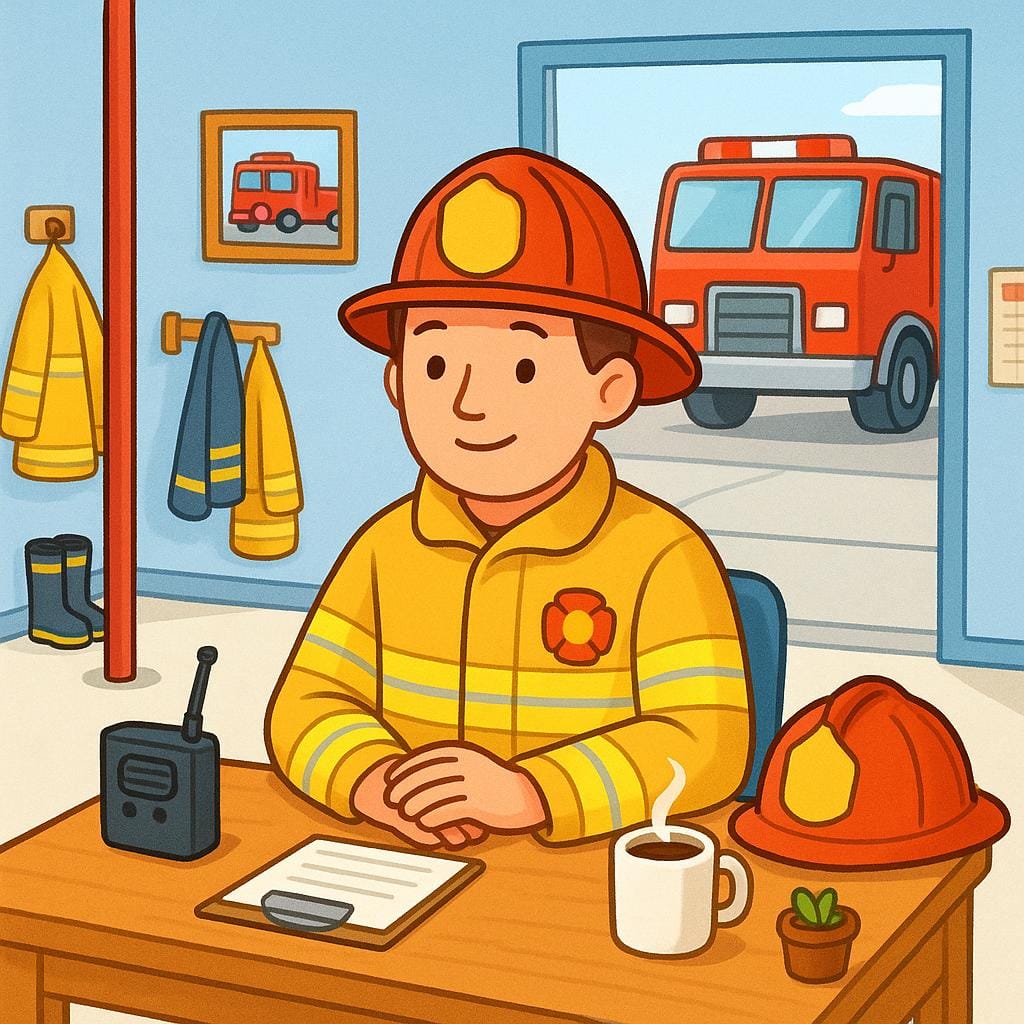
El médico está de guardia esta noche en urgencias.
The doctor is on duty tonight in the emergency room.
Mi próxima guardia es el sábado, así que no puedo ir a la fiesta.
My next shift is Saturday, so I can't go to the party.
Hicieron guardia en la frontera durante seis horas.
They kept watch at the border for six hours.
Using 'De Guardia'
To express that someone is currently working their shift or is available for emergencies, use the structure 'estar de guardia' (to be on duty).
mueva
MWEH-vahˈmwe.βa

Examples
Por favor, mueva el coche de aquí.
Please, move the car from here.
Mi jefe quiere que yo mueva la reunión al jueves.
My boss wants me to move the meeting to Thursday.
Dudo que la nueva ley mueva la economía tan rápido.
I doubt that the new law will move the economy so quickly.
Dual Role of 'Mueva'
'Mueva' has two main functions: it is the formal command (Usted, telling someone to move) and it is the special verb form (subjunctive) used after expressions of desire, doubt, or necessity (for 'yo', 'él/ella', and 'usted').
Stem Change E → UE
The base verb 'mover' is irregular. The 'o' changes to 'ue' in most present tense forms, but 'mueva' comes from the 'e' changing to 'ue' in the root, which then influences the subjunctive forms.
Forgetting the Subjunctive
Mistake: “Quiero que él mueve la caja.”
Correction: Quiero que él mueva la caja. (Spanish requires this special verb form when the subject of the desire is different from the subject of the action.)
muevan
MWEH-bahnˈmwe.βan

Examples
¡Muevan esos coches inmediatamente! No podemos pasar.
Move those cars immediately! We can't get through.
El jefe quiere que ustedes muevan la reunión a la tarde.
The boss wants you all to move the meeting to the afternoon.
Espero que los vientos no muevan las velas tan rápido.
I hope the winds don't move the sails so quickly.
Dual Role: Command or Wish
The form 'muevan' is used both as a formal command to a group of people (ustedes) and as the special verb form (subjunctive) when talking about what you want, doubt, or request that they (ellos/ellas) or you all (ustedes) do.
Stem Change Reminder
The base verb 'mover' changes its vowel 'o' to 'ue' whenever the stress is on that part of the word. This happens in 'muevan' but not in 'movamos' (we move).
Confusing Imperative Forms
Mistake: “Using 'mueven' (present tense) instead of 'muevan' for a command: 'Ustedes mueven la caja.'”
Correction: Use 'muevan' for the formal command: '¡Muevan la caja!' (Move the box!). 'Mueven' just states a fact; 'Muevan' gives the order.
rotación
Examples
Tenemos una rotación de tareas para que nadie se aburra.
We have a rotation of tasks so that no one gets bored.
Work Shift vs. General Change
Learn Spanish with Inklingo
Interactive stories, personalized learning, and more.