How to Say "touch" in Spanish
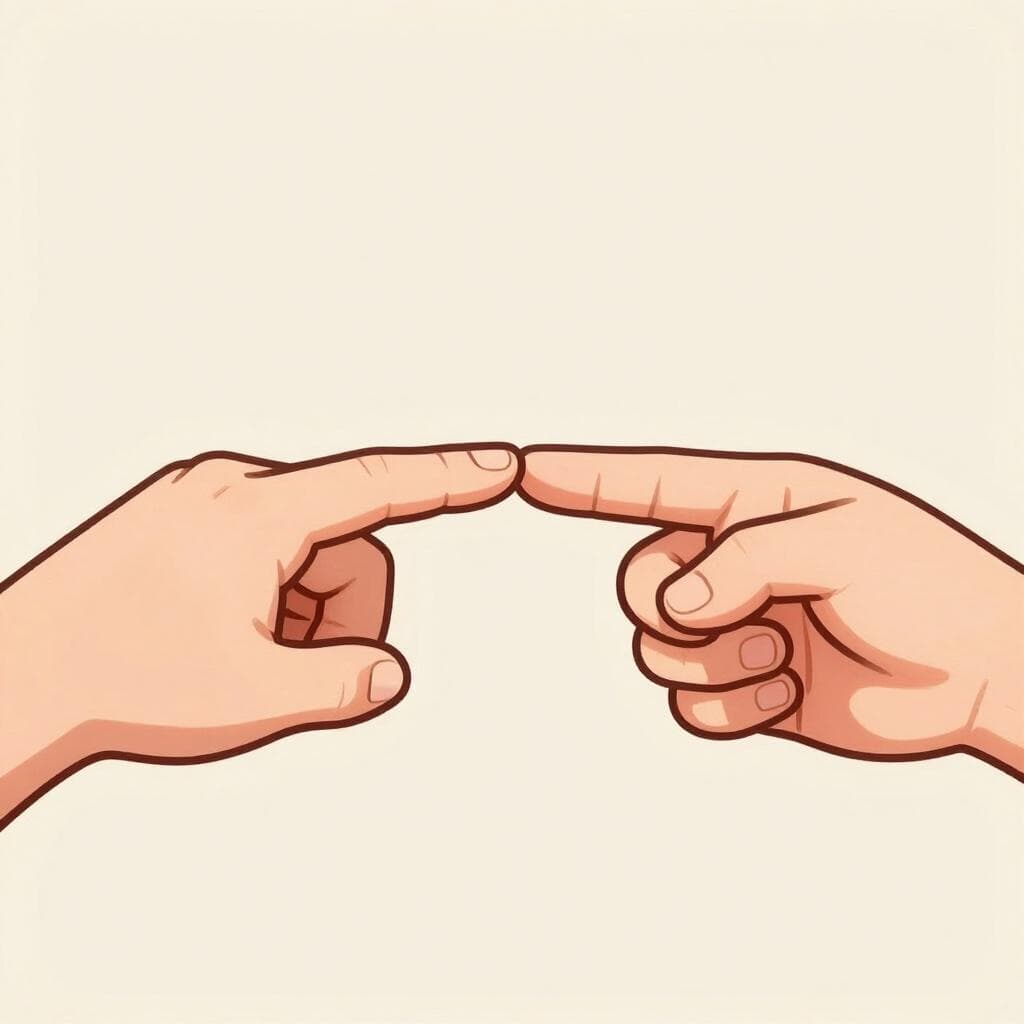
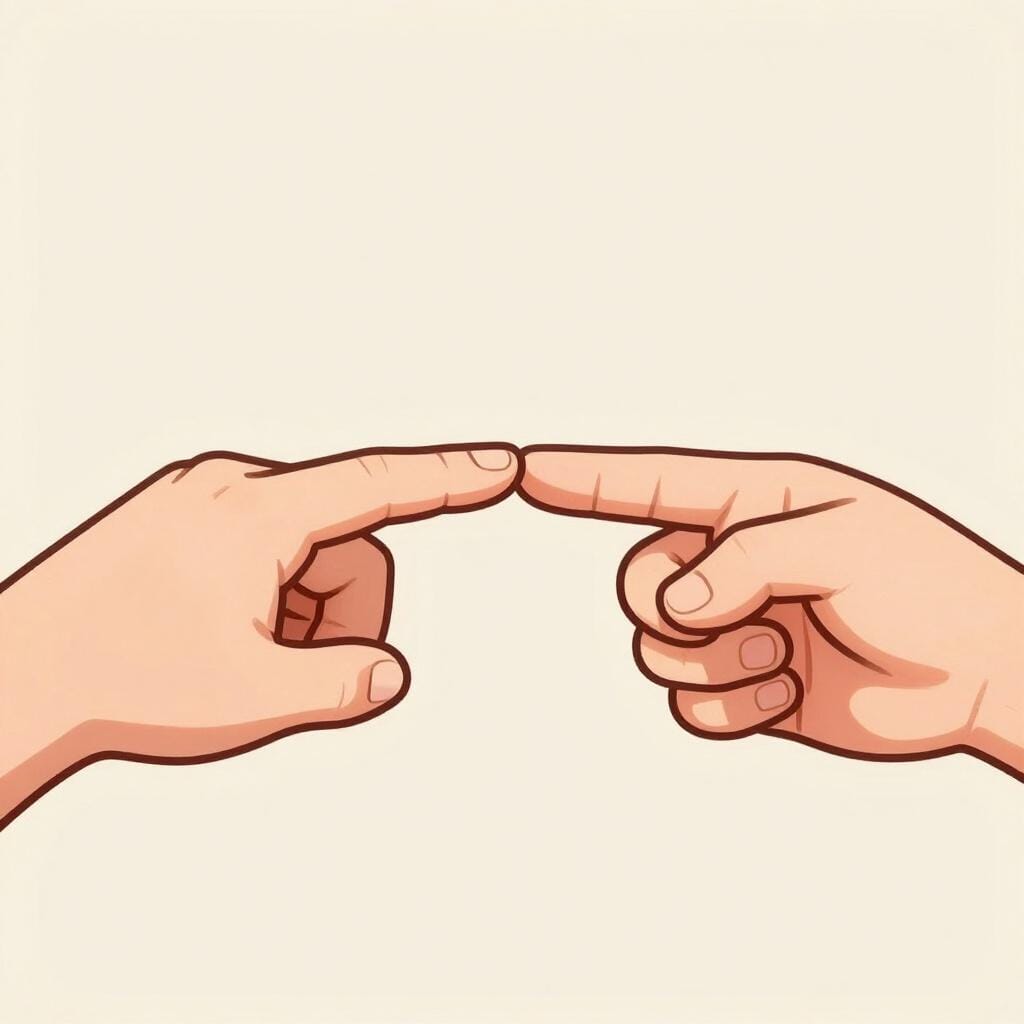
The most common Spanish word for “touch” is “toque” — use 'toque' for a light physical contact or a small, distinguishing addition that enhances something.







toque
TOH-kehˈto.ke
Examples
Sentí un toque en mi hombro y me giré.
I felt a touch on my shoulder and turned around.
Solo dale un toque suave al botón para encenderlo.
Just give the button a gentle tap to turn it on.
La salsa necesita un toque de limón para equilibrar el sabor.
The sauce needs a hint of lemon to balance the flavor.
Su apartamento tiene un toque moderno muy elegante.
Her apartment has a very elegant modern touch.
Connecting to the verb
This noun comes directly from the verb 'tocar' (to touch/play). Think of it as 'the action of touching.'
Part of a whole
When referring to a flavor or style, 'toque' is almost always followed by the word 'de' (of): 'un toque de sal' (a dash of salt).
toquen
TOH-kehnˈtoken

Examples
No toquen nada en el museo, por favor.
Don't touch anything in the museum, please.
Espero que ellos toquen mi canción favorita.
I hope they play my favorite song.
Diles que toquen la puerta antes de entrar.
Tell them to knock on the door before coming in.
Why the 'qu' spelling?
The letter 'c' sounds like an 's' when it is next to an 'e'. Since the original verb is 'tocar' (with a hard 'k' sound), we change the 'c' to 'qu' so the sound stays the same when we add the 'en' ending.
When to use 'toquen'
Use this form when you are giving a command to a group of people (you all) or when you are expressing a wish or doubt about 'them' or 'you all'.
Toquen vs. Tocan
Mistake: “Using 'tocan' for commands.”
Correction: Use 'toquen' for commands and 'tocan' for simple facts. Say '¡No toquen!' (Don't touch!) instead of '¡No tocan!'
contacto
kon-TAK-tohkonˈtak.to

Examples
Tengo un buen contacto en la empresa que te puede ayudar.
I have a good contact at the company who can help you.
Hemos perdido el contacto con los años.
We've lost contact over the years.
Evita el contacto directo del sol con tu piel.
Avoid direct contact of the sun with your skin.
Always Masculine
Even though it ends in '-o', it's good to remember that 'contacto' is always a masculine noun. So, you'll always say 'el contacto' or 'un contacto'.
Using 'contacto' as a Verb
Mistake: “Quiero contacto contigo mañana.”
Correction: Quiero ponerme en contacto contigo mañana. The noun 'contacto' needs a verb like 'ponerse en' (to put oneself in) or 'tener' (to have) to show action.
tacto
TAK-tohˈtakto

Examples
El tacto de esta cobija es muy suave.
The feel of this blanket is very soft.
El sentido del tacto nos permite sentir la temperatura.
The sense of touch allows us to feel temperature.
Perdió el tacto en las manos debido al frío extremo.
He lost the sense of touch in his hands due to the extreme cold.
Using 'al tacto'
To describe how something feels when you touch it, use the phrase 'al tacto' after an adjective. For example: 'rugoso al tacto' (rough to the touch).
Always Masculine
The word 'tacto' is always masculine. Even if you are talking about a woman's sense of touch, you use 'el tacto'.
Tacto vs. Toque
Mistake: “Me gusta el toque de esta tela.”
Correction: Me gusta el tacto de esta tela.
mueva
MWEH-vahˈmwe.βa

Examples
Ojalá que esta película mueva conciencias sobre el tema.
Hopefully this movie stirs consciences about the issue.
No creo que su súplica mueva al juez.
I don't think his plea will move (influence) the judge.
Subjunctive for Influence
When using 'mover' to mean influence or emotional impact, it almost always requires the special verb form ('mueva') because it expresses uncertainty, emotion, or desire, not a simple fact.
muevan
MWEH-bahnˈmwe.βan

Examples
Esperamos que sus palabras muevan a la acción a los asistentes.
We hope that their words inspire the attendees to take action.
Dudo que las noticias muevan su corazón de piedra.
I doubt the news will touch their heart of stone.
Subjunctive for Influence
When 'mover' means 'to inspire' or 'to motivate,' it almost always requires the special verb form ('muevan') because it follows a phrase expressing desire, doubt, or influence (e.g., 'Espero que...' or 'Dudo que...').
dosis
DOH-seesˈdo.sis

Examples
Su presentación tenía una dosis de humor muy necesaria.
His presentation had a much-needed bit of humor.
A veces solo necesitamos una dosis de motivación para empezar.
Sometimes we just need a measure of motivation to start.
Figurative Use
When used figuratively, 'dosis' usually refers to a small, specific amount of a quality, like patience, cynicism, or energy.
dejo
DEH-hohˈdexo

Examples
Aunque vive en Madrid, todavía tiene un dejo gallego.
Even though he lives in Madrid, he still has a Galician accent/lilt.
El café dejó un dejo amargo en mi paladar.
The coffee left a bitter residual taste on my palate.
Su estilo de baile tiene un dejo de flamenco clásico.
Her dancing style has a touch/flair of classic flamenco.
Always Masculine
When used as a noun meaning 'accent' or 'trace,' 'dejo' is always masculine, so you use 'el' or 'un' before it.
Confusing Noun and Verb
Mistake: “Yo no dejo acento.”
Correction: This doesn't make sense. The correct structure is 'Yo no noto el dejo' (I don't notice the accent). Remember the verb form is 'I leave/allow,' while the noun is the 'trace left behind.'
Physical Touch vs. Figurative Influence
Learn Spanish with Inklingo
Interactive stories, personalized learning, and more.