How to Say "sprout" in Spanish
The most common Spanish word for “sprout” is “brote” — use 'brote' for the general term referring to a new shoot or bud on any plant, especially when it first appears in spring.

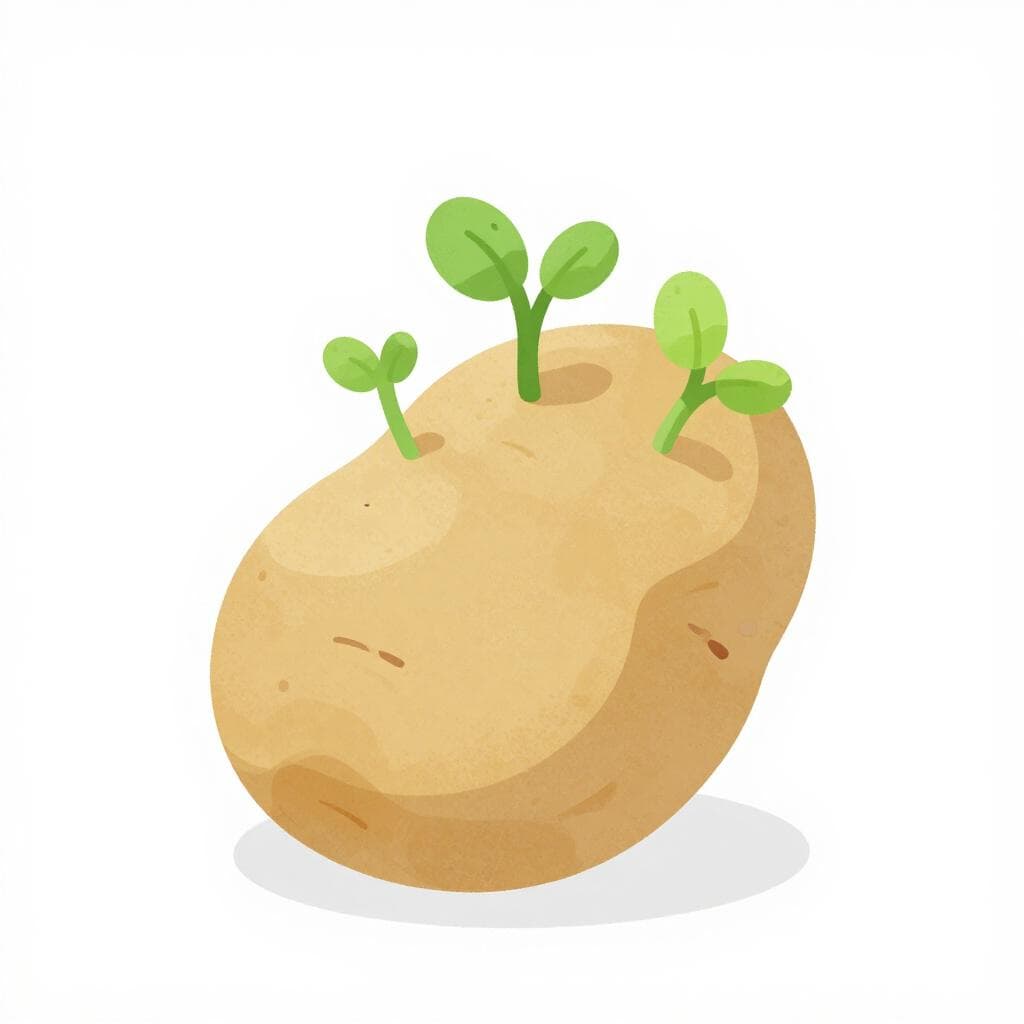
brote
BROH-tehˈbɾote

Examples
Los primeros brotes aparecen en primavera.
The first sprouts appear in spring.
Añadí brotes de soja a la ensalada.
I added soy sprouts to the salad.
El jardinero cortó los brotes secos del rosal.
The gardener cut the dry shoots off the rose bush.
Always Masculine
Even though it ends in -e, 'brote' is always masculine. You must say 'el brote' or 'un brote'.
Noun vs. Action
'Brote' is the thing that grows. If you want to say 'to sprout,' use the action word 'brotar'.
Confusing with Brócoli
Mistake: “Quiero comer brote.”
Correction: Quiero comer brócoli (if you mean broccoli) or Quiero comer brotes (if you mean sprouts). Use the plural for food.
grillo
GREE-yohˈɡɾiʝo

Examples
No te comas esa patata, que ya le han salido grillos.
Don't eat that potato; it has already grown sprouts.
Tengo que plantar estas cebollas porque tienen grillos muy largos.
I have to plant these onions because they have very long sprouts.
Plural Usage
This meaning is almost always used in the plural ('grillos') because vegetables usually grow more than one sprout at a time.
Not for Plants
Mistake: “Using 'grillo' for a flower bud.”
Correction: Use 'capullo' for flowers. 'Grillo' is specifically for those little white or green shoots on old vegetables.
eche
AY-chayˈe.t͡ʃe
Examples
Las raíces del árbol ya han empezado a echarse.
The tree's roots have already started to sprout/take root.
¡Eche más leña al fuego, por favor!
Please, throw more wood onto the fire!
Mi madre quiere que yo eche menos sal a la sopa.
My mother wants me to put less salt in the soup.
No creo que eche gasolina hoy, el tanque está lleno.
I don't think I'll put gas in today, the tank is full.
A Form of the Verb 'echar'
'Eche' is the special verb form (subjunctive) used when you express a wish, a doubt, or a command directed at 'yo' (I), 'él/ella' (he/she), or 'usted' (the formal 'you').
Formal Command (Usted)
When giving a polite command to an adult or someone you don't know well, you use 'eche': 'Eche la basura' (Throw the garbage).
Confusing Eche and Echa
Mistake: “Using 'Echa usted la sal' (using the informal command form 'echa' for the formal 'usted').”
Correction: The formal command must use the subjunctive form: 'Eche usted la sal' (Please put in the salt).
General Sprouts vs. Vegetable Sprouts
Learn Spanish with Inklingo
Interactive stories, personalized learning, and more.