How to Say "to crush" in Spanish
The most common Spanish word for “to crush” is “aplastar” — use 'aplastar' when you mean to physically press something until it breaks or loses its shape, or to completely defeat an opponent, especially in a sports context.

Use 'aplastar' when you mean to physically press something until it breaks or loses its shape, or to completely defeat an opponent, especially in a sports context.
Learn more →
Choose 'machacar' when you need to break something down into smaller pieces or a paste, often with a tool like a mortar and pestle, like preparing ingredients.
Learn more →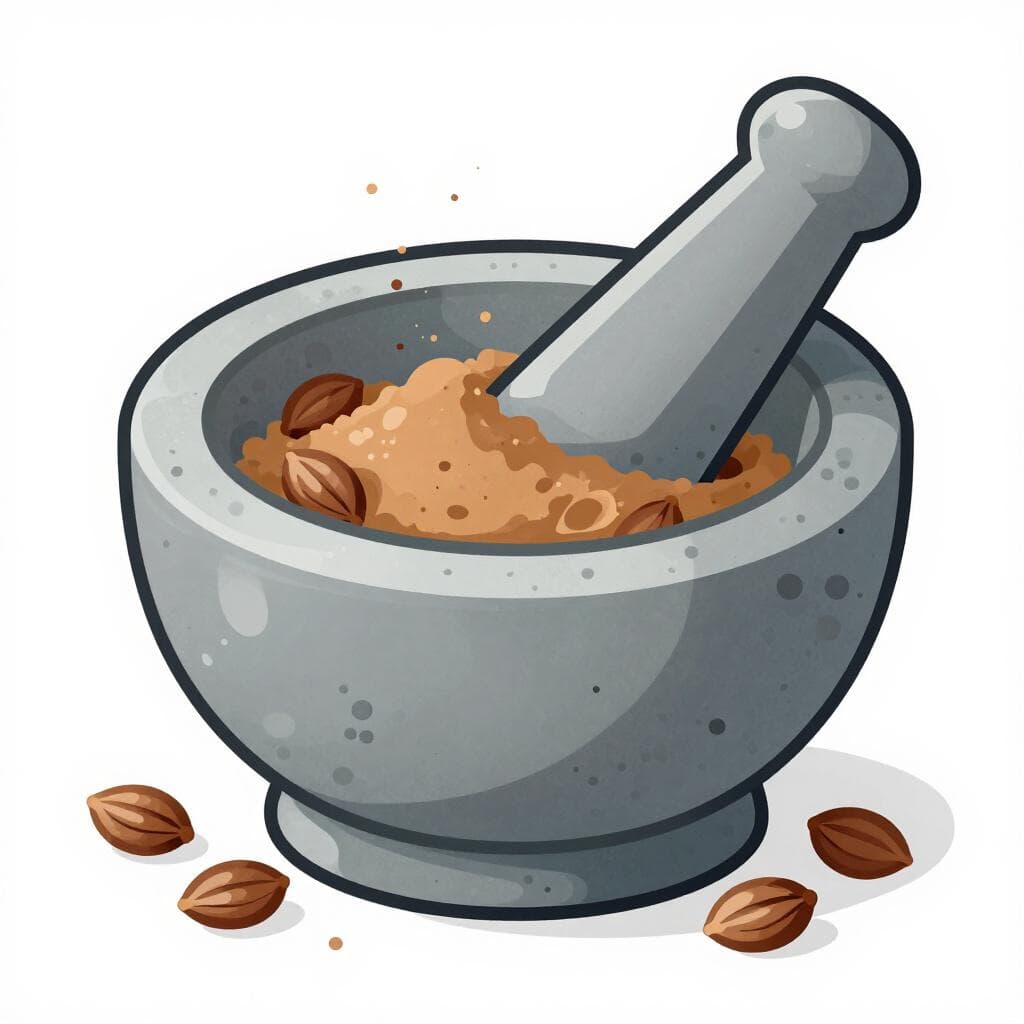
Use 'moler' for the process of grinding solid materials into smaller particles or powder, such as coffee beans or spices.
Learn more →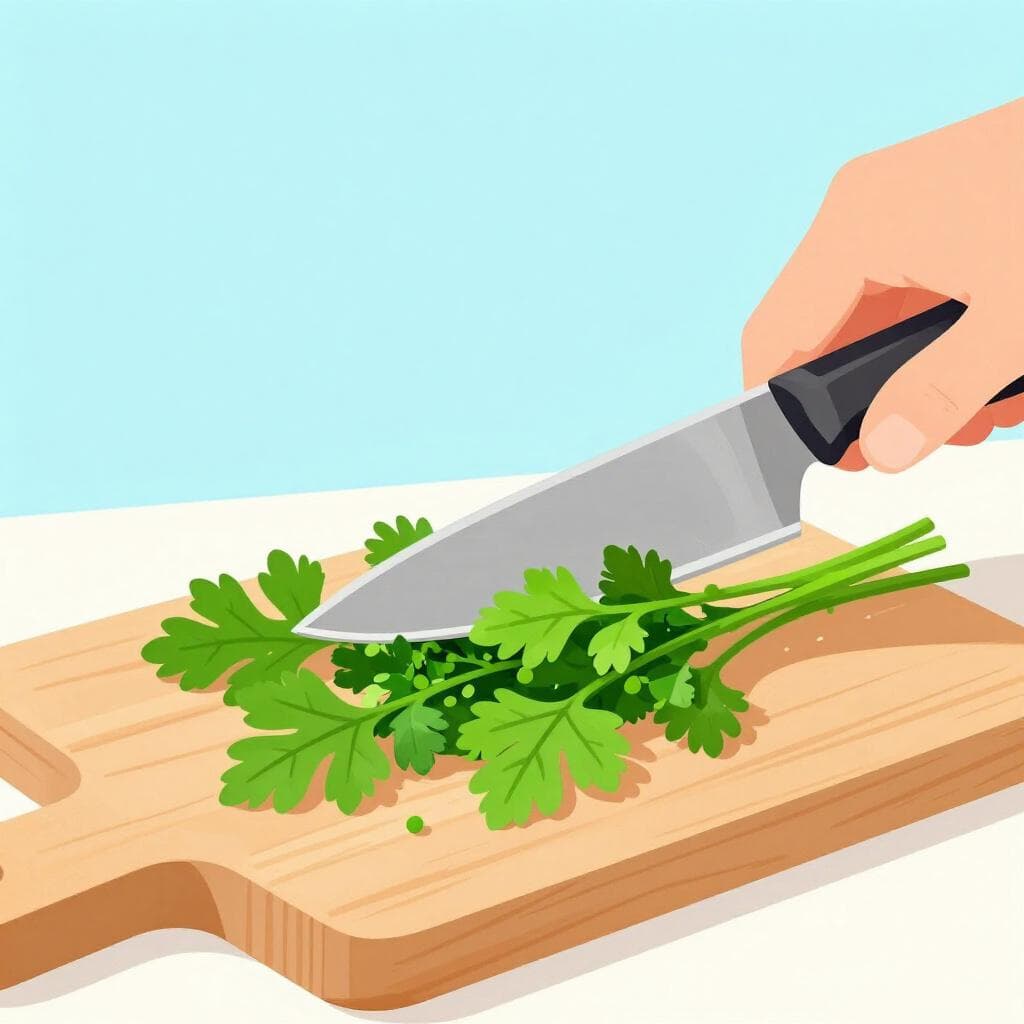
Use 'picar' when referring to finely chopping or mincing ingredients like onions or herbs, or to break down hard substances like ice or stone into small pieces.
Learn more →
Employ 'masacrar' when describing a very easy and overwhelming victory, often in a competitive context like sports, where one side heavily defeats the other.
Learn more →
Use 'destrozar' metaphorically to describe causing severe emotional damage or ruining someone's spirit or hope.
Learn more →
Use 'aniquilar' for a total and utter defeat, implying complete destruction or annihilation of an opponent, often in a strategic or overwhelming sense.
Learn more →ah-plahs-taraplasˈtaɾ
Examples
El equipo local aplastó a los visitantes por un marcador de 6-0.
The home team crushed the visitors by a score of 6-0.
Tienes que aplastar los ajos para la salsa.
You have to crush the garlic for the sauce.
Cuidado, vas a aplastar la caja de cartón.
Careful, you're going to squash the cardboard box.
El coche aplastó la lata de refresco.
The car flattened the soda can.
A perfectly regular verb
Good news! This verb follows the standard rules for all '-ar' verbs. It never changes its spelling in the middle.
Using the personal 'a'
When you use 'aplastar' to mean defeating a person or a specific team, remember to put 'al' (a + el) or 'a' before their name. Example: 'Aplastamos a los Leones'.
Crushing vs. Stepping
Mistake: “Using 'pisar' when you mean you flattened something.”
Correction: Use 'aplastar'. 'Pisar' just means to step on something, but 'aplastar' means the thing actually got crushed or flattened by the weight.
mah-chah-karmatʃaˈkaɾ
Examples
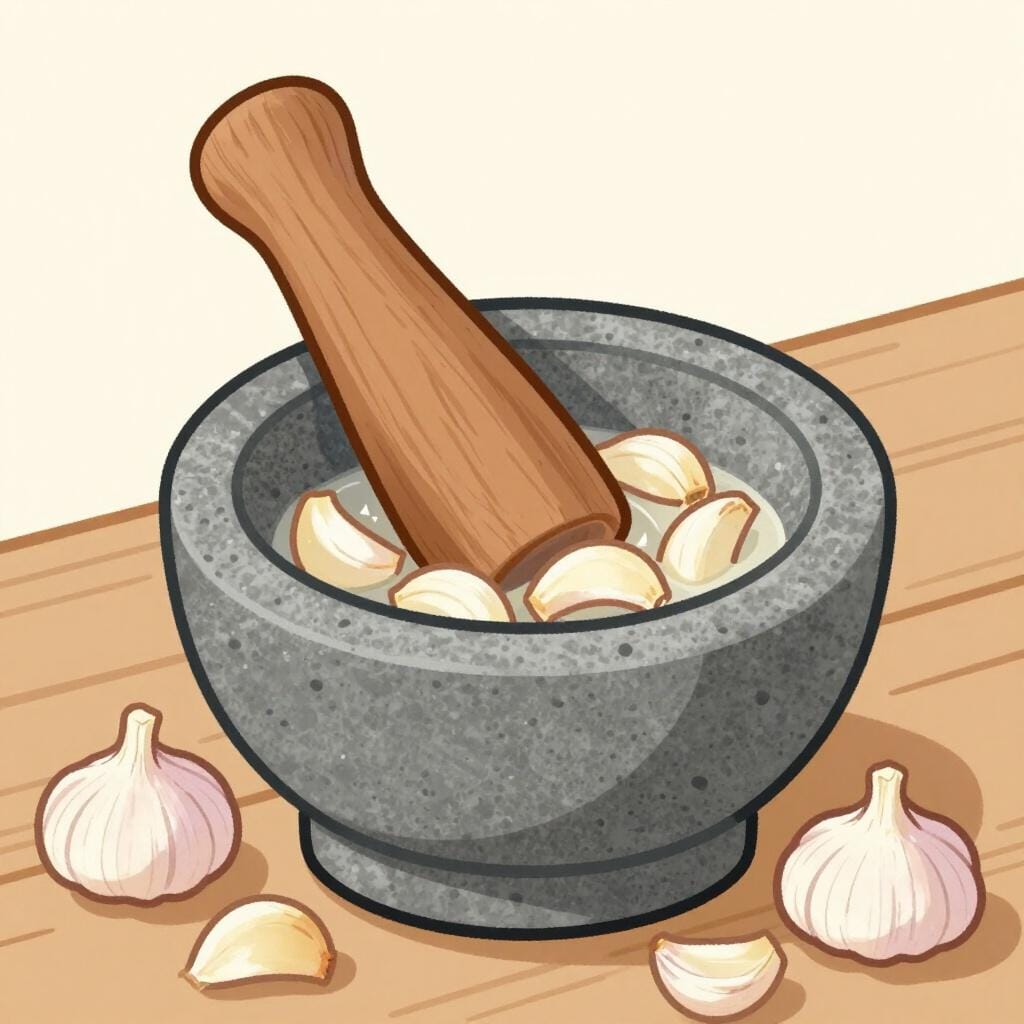
Machaca los ajos con sal para hacer una pasta.
Crush the garlic with salt to make a paste.
Tienes que machacar el ajo con un poco de sal.
You have to mash the garlic with a bit of salt.
Machacaron las piedras para construir el camino.
They crushed the stones to build the path.
Me machaqué el dedo con el martillo.
I crushed/smashed my finger with the hammer.
The 'C' to 'QU' Spelling Rule
When 'c' meets an 'e' in Spanish, it usually sounds like 's'. To keep the hard 'k' sound of 'machacar', we change the 'c' to 'qu' in forms like 'machaque'.
Avoid saying 'machacé'
Mistake: “Yo machacé el ajo.”
Correction: Yo machaque el ajo. (We use 'qu' to keep the hard 'k' sound before an 'e'.)
mo-LEHRmoˈleɾ

Examples
Voy a moler los granos de café para obtener un aroma más fresco.
I am going to grind the coffee beans for a fresher aroma.
Necesito moler los granos de café para el desayuno.
I need to grind the coffee beans for breakfast.
El antiguo molino muerde el trigo para hacer harina.
The old mill grinds the wheat to make flour.
Muele la pimienta directamente sobre la carne.
Grind the pepper directly onto the meat.
The 'O' to 'UE' Swap
For this verb, the 'o' changes to 'ue' whenever you stress that syllable (like in 'yo muelo'), but it stays as 'o' in the 'we' (nosotros) and 'you all' (vosotros) forms.
Don't forget the stem change
Mistake: “Yo molo el café.”
Correction: Yo muelo el café. (Remember the o-to-ue change in the present tense!)
pee-KAHRpiˈkaɾ

Examples
Pica la carne finamente para los tacos.
Crush the meat finely for the tacos.
Pica la cebolla muy fina para la ensalada.
Chop the onion very finely for the salad.
Necesitamos picar hielo para los refrescos.
We need to crush ice for the sodas.
El carnicero está picando la carne.
The butcher is mincing the meat.
Chipped vs Chopped
In Spanish, the same word covers chopping food, crushing ice, and even pecking like a bird!
mah-sah-krarmasaˈkɾaɾ

Examples
El equipo favorito masacró a sus oponentes en la primera ronda.
The favorite team crushed their opponents in the first round.
Nuestro equipo de fútbol los masacró 5-0.
Our soccer team crushed them 5-0.
En el videojuego, mi hermano siempre me masacra.
In the video game, my brother always annihilates me.
La prensa masacró al político después de su discurso.
The press tore the politician apart after his speech.
Figurative Direct Objects
Even in sports, you still use the 'personal a' for the opponent. 'Masacramos a su equipo' (We crushed their team).
des-tro-SARdes.tɾoˈθaɾ

Examples
El rechazo de su novela destrozó sus sueños de ser escritor.
The rejection of his novel crushed his dreams of being a writer.
Esa noticia me destrozó el corazón.
That news broke my heart.
Ella quedó destrozada después de la ruptura.
She was devastated after the breakup.
Sus críticas destrozaron mi confianza.
His criticisms crushed my confidence.
Using the past form as an adjective
The word 'destrozado' is very common to describe a person who is extremely sad or physically exhausted. You use it with 'estar' because it's a state of being.
ah-nee-kee-lahranikiˈlaɾ

Examples
La nueva estrategia militar busca aniquilar las fuerzas enemigas.
The new military strategy seeks to crush the enemy forces.
El Real Madrid aniquiló al rival con cinco goles.
Real Madrid crushed their rival with five goals.
Ese examen me dejó aniquilado.
That exam left me totally wiped out.
Su crítica lo aniquiló emocionalmente.
Her criticism crushed him emotionally.
Using the Past Participle
When you say 'I am wiped out,' you use 'Estoy aniquilado'. The word changes to 'aniquilada' if you are female.
Subject-Verb Agreement
Mistake: “Nosotros aniquiló al otro equipo.”
Correction: Nosotros aniquilamos al otro equipo. Make sure the verb ending matches 'we' (nosotros).
Physical vs. Figurative 'Crush'
Learners often confuse literal and figurative meanings. 'Aplastarr', 'machacar', 'moler', and 'picar' are generally for physical actions (breaking, grinding, chopping). 'Aniquilar', 'aplastar' (in a competitive sense), 'masacrar', and 'destrozar' are often used figuratively for defeating someone or destroying their spirit.
Related Translations
Learn Spanish with Inklingo
Interactive stories, personalized learning, and more.