How to Say "to emphasize" in Spanish
The most common Spanish word for “to emphasize” is “acentuar” — use 'acentuar' when specifically referring to stressing a syllable or sound in spoken language, or for the grammatical mark of an accent.






acentuar
ah-sen-twahrasenˈtwaɾ
Examples
El profesor pidió acentuar correctamente la última sílaba.
The teacher asked to correctly stress the last syllable.
Tienes que acentuar la última sílaba en la palabra 'café'.
You have to put an accent on the last syllable of the word 'café'.
Aprender a acentuar correctamente toma tiempo.
Learning how to use accent marks correctly takes time.
Él suele acentuar mucho las palabras cuando está enojado.
He usually emphasizes his words a lot when he is angry.
The 'u' change
When you use this verb in the present, the 'u' gets a little accent mark in all forms except 'we' and 'you all' (acentúo vs acentuamos).
Writing vs Speaking
In Spanish, this word covers both the physical writing of an accent mark and the way you stress a syllable when talking.
Missing the 'u' accent
Mistake: “Yo acentuo la palabra.”
Correction: Yo acentúo la palabra. (The 'u' needs the accent mark to show the sound is separated).
insistir
een-sees-TEERinsi'stir
Examples
Ella insiste en que debemos llegar a tiempo.
She insists that we must arrive on time.
Ella insiste en pagar la cena.
She insists on paying for dinner.
Mis padres insistieron en que fuera a la universidad.
My parents insisted that I go to college.
No quiero ser pesado, pero debo insistir en este punto.
I don't want to be annoying, but I must insist on this point.
The 'En' Connection
Unlike in English where we say 'insist on', in Spanish, you almost always need the word 'en' after 'insistir' when followed by a noun or an action.
Triggering the Subjunctive
When you insist that someone else does something, the second verb needs a special form (the subjunctive). For example: 'Insisto en que tú lo hagas' (I insist that you do it).
Missing the 'en'
Mistake: “Insisto que vengas.”
Correction: Insisto EN que vengas. (Spanish requires the 'en' before the 'que' when using this verb to link ideas.)
Using the wrong 'on' translation
Mistake: “Insisto sobre ir.”
Correction: Insisto en ir. (Even though 'sobre' can mean 'on', 'insistir' always pairs with 'en'.)
destacar
des-tah-KAHRdestaˈkaɾ

Examples
Destacó la importancia de la puntualidad en su discurso.
He highlighted the importance of punctuality in his speech.
El profesor destacó los puntos más importantes de la lección.
The teacher highlighted the most important points of the lesson.
Ella destaca por su inteligencia y amabilidad.
She stands out for her intelligence and kindness.
Cabe destacar que el proyecto terminó a tiempo.
It is worth noting that the project finished on time.
The 'QU' Spelling Change
To keep the hard 'K' sound, the 'c' changes to 'qu' whenever it is followed by an 'e'. This happens in the 'yo' form of the past (destaqué) and all forms of the present subjunctive (destaque).
Standing out vs. Highlighting
If you are using the word to say someone is better than others, use the preposition 'por' to explain why: 'Destaca por su voz' (She stands out for her voice).
Misspelling in the Past
Mistake: “Yo destacé.”
Correction: Yo destaqué. Remember that in Spanish, 'ce' sounds like 'se', so we need 'que' to keep the hard 'K' sound from the original word.
enfatizar
en-fah-tee-SAHReɱfatiˈsaɾ
Examples
Quiero enfatizar que la seguridad es nuestra prioridad número uno.
I want to emphasize that safety is our number one priority.
Quiero enfatizar que este paso es muy importante.
I want to emphasize that this step is very important.
El informe enfatiza los beneficios de la nueva dieta.
The report highlights the benefits of the new diet.
El director enfatizó la necesidad de trabajar en equipo.
The director stressed the need for teamwork.
The 'Z' to 'C' Spelling Rule
When the verb ends in '-zar', the 'z' changes to a 'c' whenever it's followed by an 'e'. This happens in the 'yo' form of the past tense and in all forms of the subjunctive.
No Preposition Needed
In English, we sometimes say 'emphasize on,' but in Spanish, you go straight to the object. Use 'enfatizar algo' directly.
Don't add 'en'
Mistake: “Quiero enfatizar en el problema.”
Correction: Quiero enfatizar el problema. Spanish doesn't use the word 'on' (en) after this verb.
Spelling the Past Tense
Mistake: “Yo enfatizé la idea.”
Correction: Yo enfaticé la idea. Remember that 'z' always turns into 'c' before the letter 'e'.
recalcar
reh-kahl-KAHRre.kalˈkaɾ

Examples
Debo recalcar que esta oferta solo dura hasta mañana.
I must emphasize that this offer only lasts until tomorrow.
Quiero recalcar que esta es una oportunidad única.
I want to emphasize that this is a unique opportunity.
El director recalcó la importancia de trabajar en equipo.
The director stressed the importance of working as a team.
No hace falta que lo recalques, ya lo entendí.
You don't need to stress it, I already understood.
Spelling Change Alert
When you say 'I emphasized' (recalqué), the 'c' changes to 'qu'. This is just to keep the hard 'K' sound, because in Spanish, 'ce' would sound like 'se'.
Using it with 'que'
If you want to emphasize a full sentence or idea, follow 'recalcar' with the word 'que' (e.g., Recalco que es tarde).
Avoiding 'sobre'
Mistake: “Él recalcó sobre la importancia.”
Correction: Él recalcó la importancia. In Spanish, you emphasize 'the thing' directly, without adding 'on' or 'over'.
subrayar
soo-brah-yahrsubraˈʝar

Examples
El director subrayó la importancia de la colaboración entre departamentos.
The director emphasized the importance of collaboration between departments.
El director subrayó la necesidad de trabajar en equipo.
The director emphasized the need for teamwork.
Quiero subrayar que este es solo el primer paso.
I want to highlight that this is only the first step.
El informe subraya los riesgos del cambio climático.
The report stresses the risks of climate change.
Figurative Meaning
Just like in English, 'underlining' a point means you are making it stand out metaphorically, even if you aren't using a pen.
marca
MAR-cahˈmaɾka
Examples
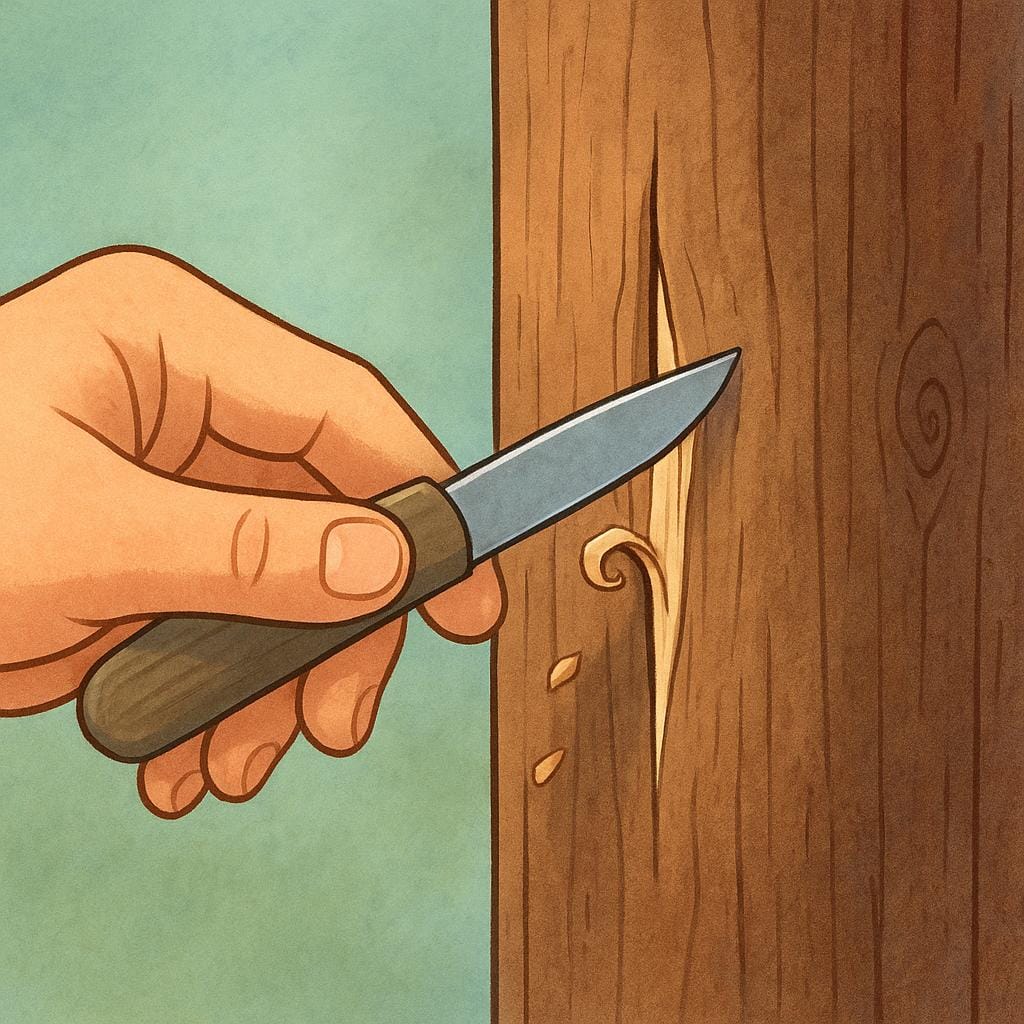
La profesora marca los errores con un bolígrafo rojo.
The teacher marks the errors with a red pen.
Ella marca los errores en el papel.
She marks the errors on the paper. (This uses the form 'marca')
Tienes que marcar el número antes de hablar.
You have to dial the number before speaking.
El delantero marcó un gol en el último minuto.
The striker scored a goal in the last minute.
The 'Car' Change Rule
Verbs ending in -car (like marcar) must change the 'c' to 'qu' when followed by an 'e'. This happens in the 'yo' form of the past tense (marqué) and in the special verb forms (subjunctive and commands) to keep the hard 'k' sound.
Preterite Error
Mistake: “Yo marcí (instead of marqué)”
Correction: The correct past tense 'I marked' is 'Yo marqué'. If you used 'marcí', it would change the sound, which is incorrect.
resaltar
rre-sal-TARresalˈtaɾ

Examples
El informe resalta los logros del equipo durante el último año.
The report highlights the team's achievements during the last year.
El profesor resaltó los errores más comunes.
The teacher highlighted the most common mistakes.
Quiero resaltar que esta es una oportunidad única.
I want to emphasize that this is a unique opportunity.
Puedes usar negrita para resaltar las palabras clave.
You can use bold to highlight the keywords.
Pointing to Ideas
When using this word to point out a fact, you usually follow it with 'que' and then the full thought you want to emphasize.
Highlighting text vs items
Mistake: “Subrayar la importancia.”
Correction: Resaltar la importancia. While both are used, 'resaltar' is slightly more common for abstract ideas.
incidir
een-see-DEERinsiˈðiɾ

Examples
Quisiera incidir en la necesidad de una mayor inversión en educación.
I would like to emphasize the need for greater investment in education.
Quisiera incidir en un punto importante antes de terminar.
I would like to emphasize an important point before finishing.
El autor incide en la necesidad de proteger el medio ambiente.
The author highlights the need to protect the environment.
Focusing on a topic
Just like the 'impact' meaning, when you want to say you are emphasizing something, you use 'incidir en'. Example: 'Quiero incidir en esto' (I want to stress this).
Confusing 'Enfatizar' with More Specific Verbs
Related Translations
Learn Spanish with Inklingo
Interactive stories, personalized learning, and more.