How to Say "to rise" in Spanish
The most common Spanish word for “to rise” is “levantarme” — use this reflexive verb when referring to the general physical act of getting out of bed or moving oneself upwards from a resting position.

Use this reflexive verb when referring to the general physical act of getting out of bed or moving oneself upwards from a resting position.
Learn more →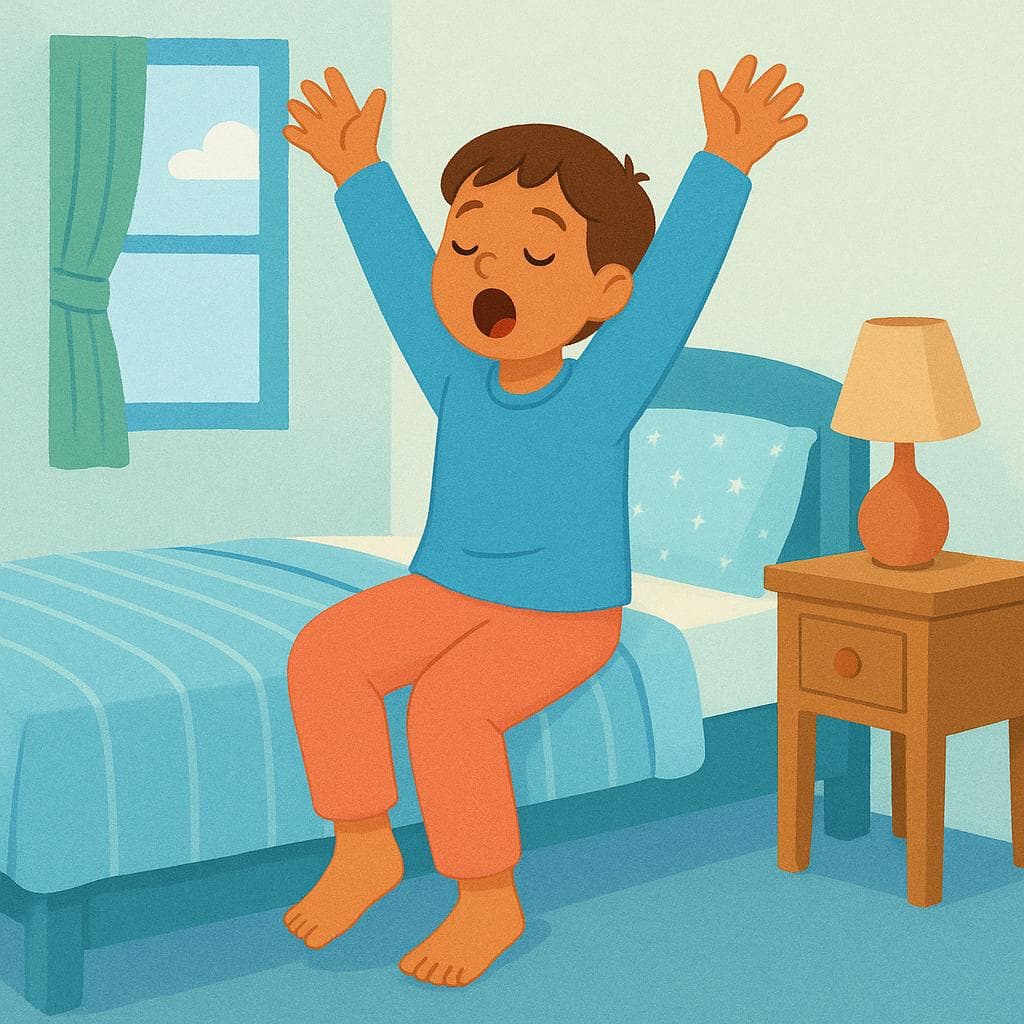
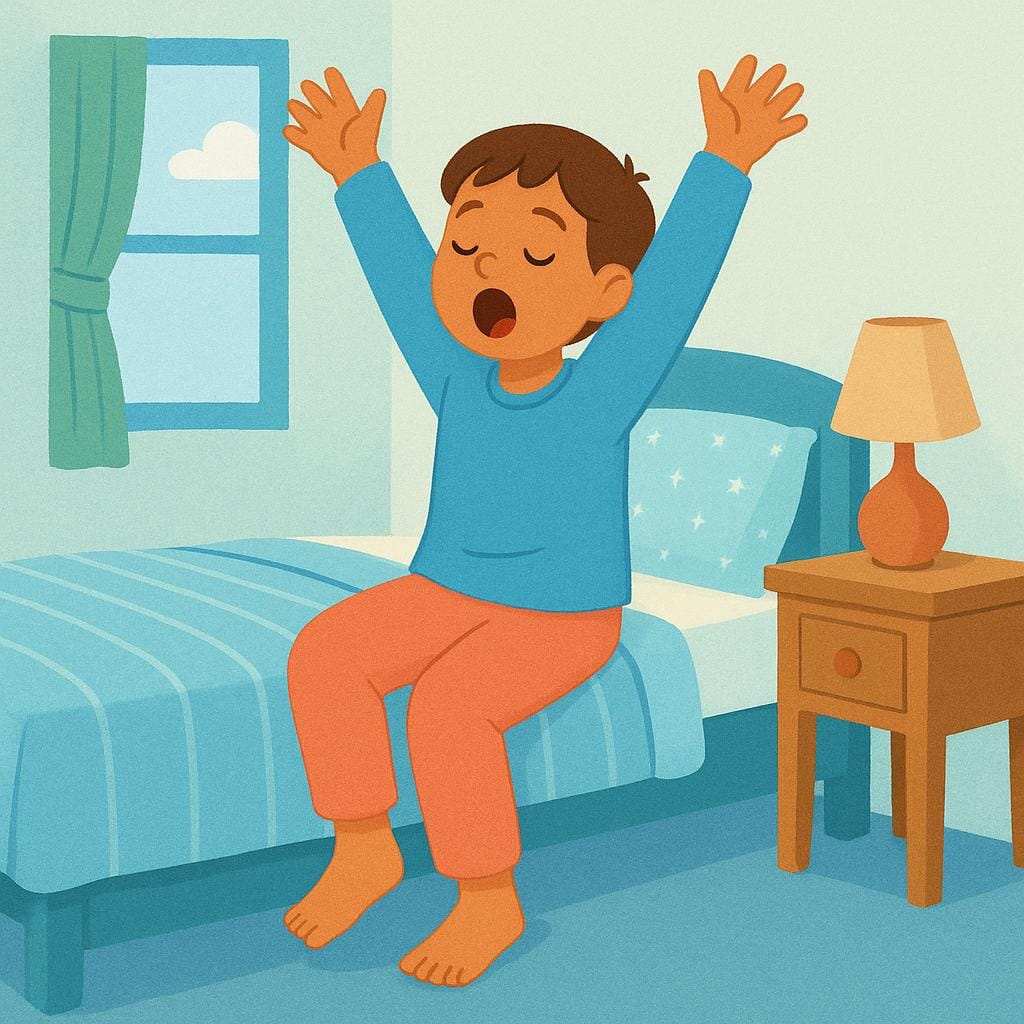
This reflexive verb is specifically used for the act of getting up from sleep, often referring to waking up and getting out of bed at a particular time.
Learn more →
Use this verb to describe an increase in quantity, size, or intensity, commonly applied to things like prices, levels of water, or volume.
Learn more →
This verb is used for the physical movement of something upwards, such as smoke, a balloon, or an object moving vertically.
Learn more →
Use this verb to indicate growth or an increase in magnitude, often applied to abstract concepts like demand, or levels of sound.
Learn more →
This verb refers to advancing or moving up in a hierarchical system, such as a career path or social standing.
Learn more →leh-vahn-TAR-mehleβanˈtaɾme

Examples
Necesito levantarme a las seis para tomar el tren.
I need to get up at six to catch the train.
No puedo levantarme, la silla es muy baja.
I can't stand up; the chair is very low.
Quiero levantarme y estirar las piernas un poco.
I want to get up and stretch my legs a little.
The attached 'me'
The 'me' at the end tells you that I am doing the action to myself. The base verb is 'levantar' (to lift something else), but 'levantarme' is 'to lift myself' (to get up).
When to attach the pronoun
The pronoun 'me' is attached to the end of the verb when the verb is in the infinitive (like here) or the affirmative command form: '¡Levántate!' (Get up!).
Forgetting the 'me'
Mistake: “Yo necesito levantar mi cama.”
Correction: Yo necesito levantarme. If you say 'levantar,' it means you are lifting something else (like a box or a blanket), not yourself.
leh-bahn-TAHR-sehleβanˈtaɾse
Examples
Me levanto a las siete todos los días.
I get up at seven every day.
Por favor, levántate, la reunión va a empezar.
Please, stand up, the meeting is going to start.
¿A qué hora se levantan ustedes los fines de semana?
What time do you all get up on the weekends?
Reflexive Action
This verb is reflexive, meaning the action comes back to the person doing it (I lift myself). That's why we must use the little pronoun (me, te, se, nos, os) before the verb.
Stem Change
In the present tense, the 'e' in the stem changes to 'ie' (levantar → lievanta) for most subjects, but not for 'nosotros' or 'vosotros'.
Forgetting the Reflexive Pronoun
Mistake: “Yo levanto a las siete. (I lift something at seven.)”
Correction: Yo me levanto a las siete. (I get myself up at seven.)
ow-men-TARaw.menˈtaɾ

Examples
El nivel del río aumentó después de la lluvia.
The river level rose after the rain.
La población ha aumentado dramáticamente en la última década.
The population has grown dramatically in the last decade.
El costo de la vida sigue aumentando.
The cost of living keeps rising.
Intransitive Use (No Direct Object)
In this sense, 'aumentar' is intransitive. The subject of the sentence (e.g., 'the river level') is the thing that is doing the increasing, and no other person or thing is causing the action.
The Role of 'Se' (Aumentarse)
Sometimes you will see 'aumentarse' (reflexive form) when the increase is perceived as happening automatically or affecting the subject directly, especially related to personal things like family or weight: 'Mi familia se ha aumentado' (My family has grown).
Misusing 'Crecer'
Mistake: “El precio creció. (The price grew.)”
Correction: El precio aumentó. (The price increased.) – 'Crecer' is usually for living things (people, plants); 'aumentar' is better for numbers, prices, and abstract concepts.
ah-sen-DEHRasθenˈdeɾ

Examples
El globo empezó a ascender lentamente al amanecer.
The balloon began to rise slowly at dawn.
Tardamos tres horas en ascender hasta la cima de la montaña.
It took us three hours to climb to the top of the mountain.
Vimos cómo el humo ascendía por la chimenea.
We watched how the smoke rose through the chimney.
The 'e' to 'ie' Swap
This verb is a 'shoe verb.' In the present tense, the 'e' in the middle changes to 'ie' for everyone except 'nosotros' and 'vosotros'.
Use with 'a'
When you are rising TO a specific place, always follow the verb with the word 'a'.
Using it for everything
Mistake: “Voy a ascender las escaleras.”
Correction: Voy a subir las escaleras. Use 'subir' for simple things like stairs and 'ascender' for more impressive climbs or formal contexts.
kreh-SEHRkɾeˈseɾ

Examples
La demanda de energía solar ha crecido exponencialmente.
The demand for solar energy has grown exponentially.
El nivel del agua creció tras la tormenta.
The water level rose after the storm.
es-kah-LAHReskaˈlaɾ

Examples
Ella logró escalar posiciones rápidamente en la empresa.
She managed to rise through the ranks quickly in the company.
Queremos escalar nuestro modelo de negocio a otros países.
We want to scale our business model to other countries.
Physical vs. Abstract Rising
Learners often confuse verbs for physical movement (like 'ascender') with those indicating an increase in abstract quantities (like 'aumentar' or 'crecer'). Remember that 'ascender' is for literal upward movement, while 'aumentar' and 'crecer' are for increases in numbers, levels, or intensity.
Related Translations
Learn Spanish with Inklingo
Interactive stories, personalized learning, and more.