How to Say "to score" in Spanish
The most common Spanish word for “to score” is “anotar” — use 'anotar' when referring to scoring points or a goal in sports like soccer, basketball, or in games.

anotar
ah-noh-TAHRanoˈtaɾ
Examples
¡El equipo local anotó dos puntos en el último cuarto!
The home team scored two points in the last quarter!
¡Messi anotó un gol increíble!
Messi scored an incredible goal!
Él anotó veinte puntos en el partido de ayer.
He scored twenty points in yesterday's game.
Es difícil anotar contra este equipo.
It is difficult to score against this team.
Winning the Game
When used in sports, 'anotar' is usually followed directly by what was scored (a goal, a point) without needing extra small words like 'en'.
meter
meh-TEHRmeˈteɾ
Examples
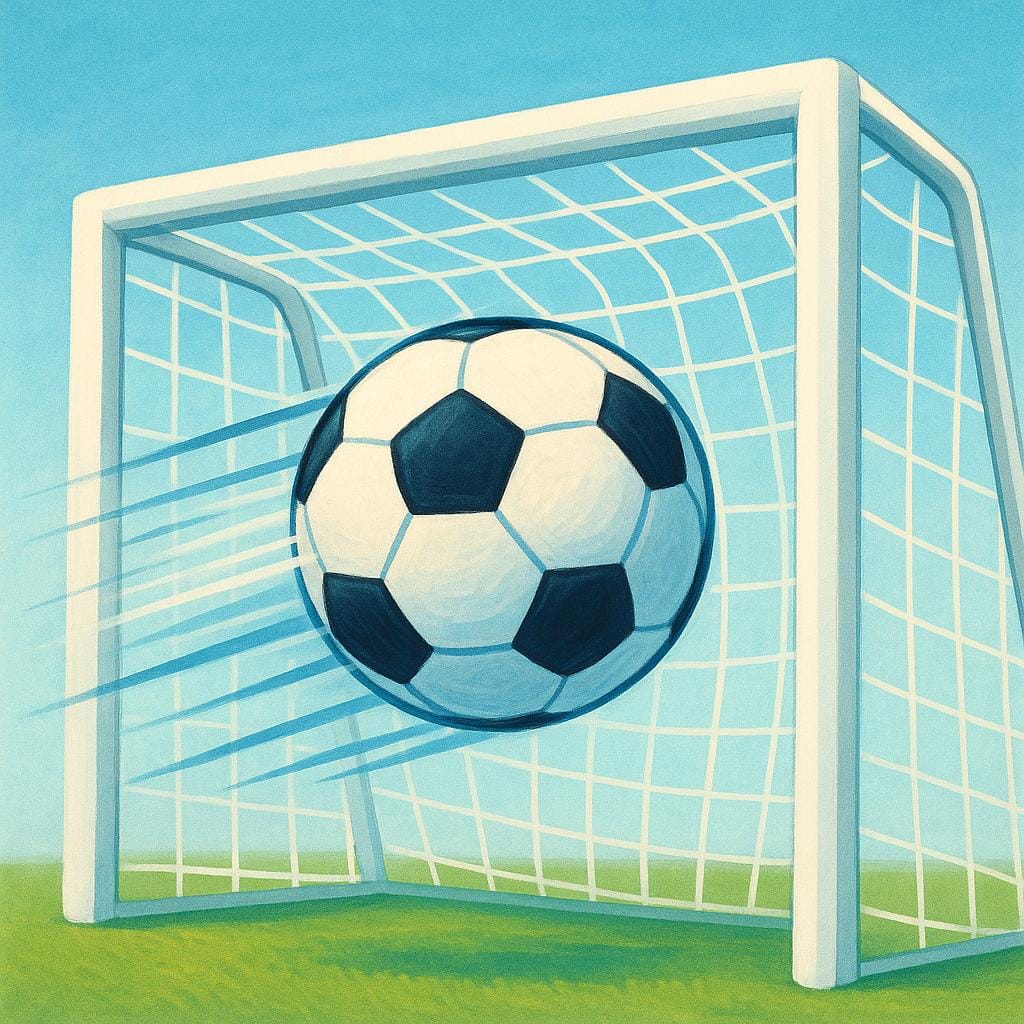
El delantero metió un golazo que le dio la victoria a su equipo.
The striker scored a great goal that gave his team the victory.
El delantero logró meter un gol en el último minuto.
The striker managed to score a goal in the last minute.
Vamos a meter todo nuestro esfuerzo en este proyecto.
We are going to put all our effort into this project.
Metieron varios millones de dólares en la nueva empresa.
They invested several million dollars in the new company.
Figurative Use
This meaning is an extension of the basic 'put inside' idea—you are putting the goal into the net, or putting money/effort into a venture.
Overusing 'Meter'
Mistake: “Hicimos un gol.”
Correction: Metimos un gol. ('Hacer un gol' is understandable, but 'meter un gol' is the most natural and common way to express scoring in football/soccer in many Spanish-speaking countries.)
marca
MAR-cahˈmaɾka
Examples
El árbitro marcó un penal en el minuto 80.
The referee scored/called a penalty in the 80th minute.
Ella marca los errores en el papel.
She marks the errors on the paper. (This uses the form 'marca')
Tienes que marcar el número antes de hablar.
You have to dial the number before speaking.
El delantero marcó un gol en el último minuto.
The striker scored a goal in the last minute.
The 'Car' Change Rule
Verbs ending in -car (like marcar) must change the 'c' to 'qu' when followed by an 'e'. This happens in the 'yo' form of the past tense (marqué) and in the special verb forms (subjunctive and commands) to keep the hard 'k' sound.
Preterite Error
Mistake: “Yo marcí (instead of marqué)”
Correction: The correct past tense 'I marked' is 'Yo marqué'. If you used 'marcí', it would change the sound, which is incorrect.
calificar
kah-lee-fee-kahrkalifiˈkaɾ

Examples
La profesora necesita calificar los ensayos de los estudiantes antes del viernes.
The teacher needs to grade the students' essays before Friday.
El profesor todavía tiene que calificar nuestros exámenes de historia.
The teacher still has to grade our history exams.
Me calificaron con un ocho en el proyecto final.
They gave me a score of eight on the final project.
Es difícil calificar el desempeño de un artista.
It is difficult to score an artist's performance.
The 'C' to 'QU' Swap
When 'c' is followed by 'e' in Spanish, it sounds like an 's' or 'th'. To keep the hard 'k' sound in the past tense (Preterite) 'I' form, we change 'c' to 'qu': 'califiqué' instead of 'calificé'.
Spelling the Past Tense
Mistake: “Yo calificé la tarea.”
Correction: Yo califiqué la tarea. Always use 'qu' before 'e' to keep that hard 'k' sound from the original word.
Sports vs. Grading
Learn Spanish with Inklingo
Interactive stories, personalized learning, and more.