How to Say "dear" in Spanish
The most common Spanish word for “dear” is “estimado” — use this formal adjective to begin letters or emails to clients, colleagues, or anyone you address respectfully and impersonally.







estimado
es-tee-MAH-dohes.tiˈma.ðo

Examples
Estimado señor Pérez, le agradecemos su consulta.
Dear Mr. Perez, we appreciate your inquiry.
Estimado cliente, le escribimos para informarle de una actualización.
Dear client, we are writing to inform you of an update.
Estimada Sra. López, adjunto encontrará el documento solicitado.
Dear Mrs. López, attached you will find the requested document.
Gender Agreement
Remember to change the ending to match the person you are addressing: 'Estimado' (masculine singular), 'Estimada' (feminine singular), 'Estimados' (masculine plural/mixed group), 'Estimadas' (feminine plural).
querido
keh-REE-dohkeˈɾiðo

Examples
Querida María, ¿cómo estás?
Dear Maria, how are you?
Querido papá: Te escribo para contarte mis noticias.
Dear Dad: I'm writing to tell you my news.
Es un profesor muy querido por todos sus alumnos.
He is a professor beloved by all his students.
Mis queridas amigas, ¡qué alegría verlas!
My dear friends, what a joy to see you!
Matching the Noun
Like many describing words in Spanish, 'querido' changes its ending to match the person or thing it's describing. Use 'querido' for masculine (querido amigo) and 'querida' for feminine (querida amiga). For groups, use 'queridos' or 'queridas'.
Word Order
When used to mean 'dear' out of affection, 'querido' usually comes before the person's name or title (e.g., 'mi querido Juan'). This placement adds an emotional touch.
Confusing with 'Caro'
Mistake: “'Mi caro amigo' to mean 'my dear friend'.”
Correction: Use 'Mi querido amigo'. While 'caro' can sometimes mean 'dear', it usually means 'expensive'. 'Querido' is the best choice for affection.
tesoro
teh-SOH-rohteˈsoro

Examples
Hola, tesoro, ¿qué quieres para cenar?
Hello, darling, what do you want for dinner?
¡Hola, tesoro! ¿Cómo te fue en la escuela?
Hello, darling! How was school?
No te preocupes, mi tesoro, todo estará bien.
Don't worry, my sweetheart, everything will be fine.
Gender Consistency
Even when calling a girl or woman 'tesoro,' the word itself remains masculine: 'Tú eres mi tesoro.' (You are my treasure/darling).
Using the Feminine Form
Mistake: “Using *tesora* when referring to a woman.”
Correction: The word *tesoro* does not change gender when used as a term of endearment. Always use *tesoro* for both men and women.
hijito
ee-HEE-tohiˈxito

Examples
Ven aquí, hijito, te tengo una sorpresa.
Come here, little son, I have a surprise for you.
Ven aquí, hijito, vamos a comer.
Come here, little son, we are going to eat.
Mi hijito mayor ya va a la universidad.
My dear son is already going to university.
No llores, hijito, todo va a estar bien.
Don't cry, sweetie, everything is going to be okay.
The Power of '-ito'
In Spanish, adding '-ito' to the end of a word is like giving it a hug. It makes the word 'hijo' (son) sound smaller, cuter, or more loved.
Gender Matters
This word ends in 'o', so it only refers to males. If you are talking to or about a girl, you must change it to 'hijita'.
Not Just for Kids
Mistake: “Only using 'hijito' for toddlers.”
Correction: You can use 'hijito' for a 40-year-old man! Parents use it for their children regardless of their age to show affection.
amada
ah-MAH-dahaˈmaða
Examples
Mi amada patria es un lugar de gran belleza.
My beloved homeland is a place of great beauty.
Esta es mi amada ciudad natal, donde crecí.
This is my beloved hometown, where I grew up.
La reina era amada por todo su pueblo.
The queen was loved by all her people.
Encontramos la amada receta de nuestra abuela.
We found our grandmother's cherished recipe.
Agreement is Key
Since 'amada' is an adjective, it must match the thing it describes. Use 'amada' only when the thing is feminine and singular (like 'la casa amada'). Use 'amado' for masculine things.
Using the wrong ending
Mistake: “La ciudad amado.”
Correction: La ciudad amada. Remember, 'ciudad' (city) is feminine, so the adjective must end in -a.
gatito
gah-TEE-tohɡaˈtito

Examples
¡Hola, gatito! ¿Me extrañaste?
Hello, sweetie! Did you miss me?
Ven aquí, gatito, y dame un abrazo.
Come here, sweetie, and give me a hug.
¿Estás cansado, gatito? Deberías ir a dormir.
Are you tired, dear? You should go to sleep.
Affectionate Diminutives
In Spanish, adding '-ito' or '-ita' often turns a noun into a loving nickname, even when referring to people. It signals warmth and closeness.
guapo
gwah-pohˈɡwapo

Examples
Buenos días, guapo. ¿Listo para empezar?
Good morning, dear. Ready to start?
¡Buenos días, guapo! ¿Dormiste bien?
Good morning, dear! Did you sleep well?
Mi guapo me trajo flores.
My handsome man (or 'my sweetheart') brought me flowers.
Using 'Guapo' as a Noun
When used as a noun, 'guapo' acts like a person's name or title, often preceded by 'mi' (my) or used directly to call someone (like 'Hey, handsome!').
niñita
nee-NYEE-tahniˈɲita
Examples
Qué linda estás hoy, niñita.
How pretty you are today, little one.
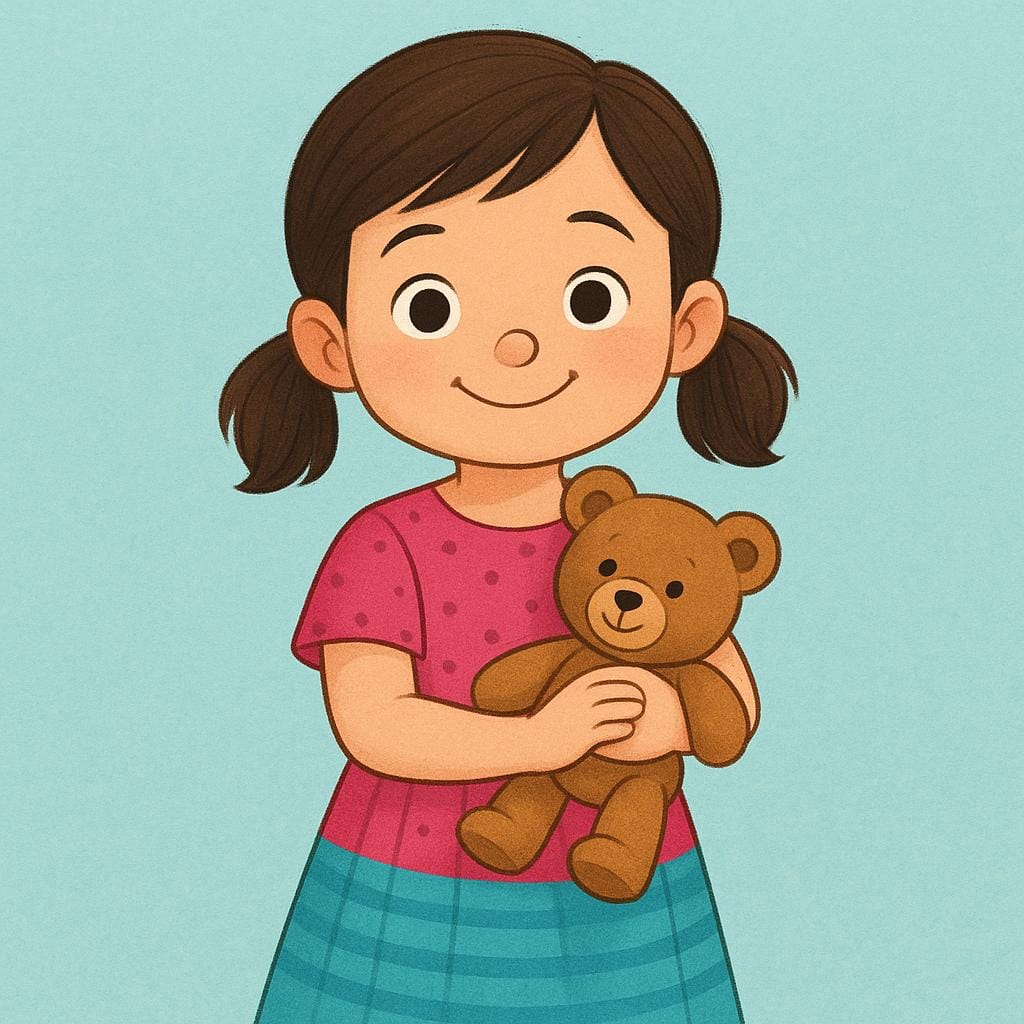
La niñita estaba jugando con su oso de peluche.
The little girl was playing with her teddy bear.
¡Qué niñita tan inteligente! Respondió todas las preguntas.
What a smart little girl! She answered all the questions.
Mi abuela siempre me llama niñita, aunque ya tengo veinte años.
My grandmother always calls me 'niñita' (sweetie), even though I'm already twenty years old.
The Diminutive Suffix -ita
This word is formed by taking 'niña' (girl) and adding '-ita'. This ending is called a diminutive suffix, and it makes the word mean 'small' or adds a feeling of affection and tenderness.
Confusing Size and Affection
Mistake: “Using 'niñita' only for children of small physical stature.”
Correction: While it means 'little girl,' it is often used as a term of endearment regardless of the child's actual size. The affectionate tone is usually more important than the literal size.
bendito
ben-DEE-tohbenˈdito
Examples
Gracias, mi bendito amigo, por tu ayuda.
Thank you, my blessed friend, for your help.
El sacerdote roció agua bendita sobre la multitud.
The priest sprinkled blessed water over the crowd.
¡Qué bendito día hemos tenido! El sol brilló toda la mañana.
What a blessed day we've had! The sun shone all morning.
Mi bendito abuelo siempre me cuenta las mismas historias.
My dear grandfather always tells me the same stories.
Gender and Number
As an adjective, 'bendito' must change its ending to match the thing it describes: 'bendita' (f), 'benditos' (m plural), 'benditas' (f plural).
Mixing up the Adjective and the Exclamation
Mistake: “Using '¡Bendito!' as a regular adjective after a noun (e.g., 'un hombre bendito').”
Correction: While technically correct, 'bendito' usually comes before the noun when used emotionally ('un bendito hombre'). The exclamation '¡Bendito!' is a fixed phrase.
caro
káh-rohˈkaɾo

Examples
Mi más caro anhelo es verte feliz.
My dearest wish is to see you happy.
Mi más caro deseo es que volvamos a vernos pronto.
My dearest wish is that we see each other again soon.
Cara amiga, espero que esta carta te encuentre bien.
Dear friend, I hope this letter finds you well.
Ella guarda un recuerdo caro de su infancia.
She keeps a precious memory of her childhood.
Position Change
When 'caro' is placed before the noun (e.g., 'mi cara familia'), it almost always means 'dear' or 'beloved' (emotional value). When placed after the noun (e.g., 'una cena cara'), it usually means 'expensive' (monetary value).
hija
ee-khahˈixa

Examples
Ven, hija, siéntate un momento.
Come, dear, sit down for a moment.
Ven aquí, hija, que te ayudo con eso.
Come here, dear, let me help you with that.
¡Pero hija, cómo se te ocurre hacer eso!
Oh honey, how could you even think of doing that!
Ella es hija de su tiempo, con ideas muy modernas.
She is a daughter of her time, with very modern ideas.
The Contraction 'Mija'
You'll often hear 'mija', which is just 'mi' (my) + 'hija' (daughter) squished together. It's a very common and warm way to address a daughter or a younger woman you feel close to.
Not Always Literal
Mistake: “Thinking an older stranger calling you 'hija' is your actual mother.”
Correction: When an older person calls you 'hija', it's usually a friendly, motherly gesture, like saying 'dear' or 'sweetie' in English. They're not claiming to be your parent!
preciosa
preh-SYOH-sahpɾeˈθjosa

Examples
Te quiero mucho, mi preciosa.
I love you very much, my darling.
Hola, mi preciosa. ¿Cómo te fue el día?
Hello, my darling. How was your day?
Gracias por la ayuda, preciosa.
Thank you for the help, sweetheart.
Using 'Mi'
When using 'preciosa' as a noun (sweetheart), it is often preceded by 'mi' (my) to make it sound more affectionate: 'mi preciosa'.
Formal vs. Affectionate 'Dear'
Related Translations
Learn Spanish with Inklingo
Interactive stories, personalized learning, and more.