How to Say "eye" in Spanish
The most common Spanish word for “eye” is “ojo” — use 'ojo' when referring to the body part used for sight, or the opening in a needle or certain tools.
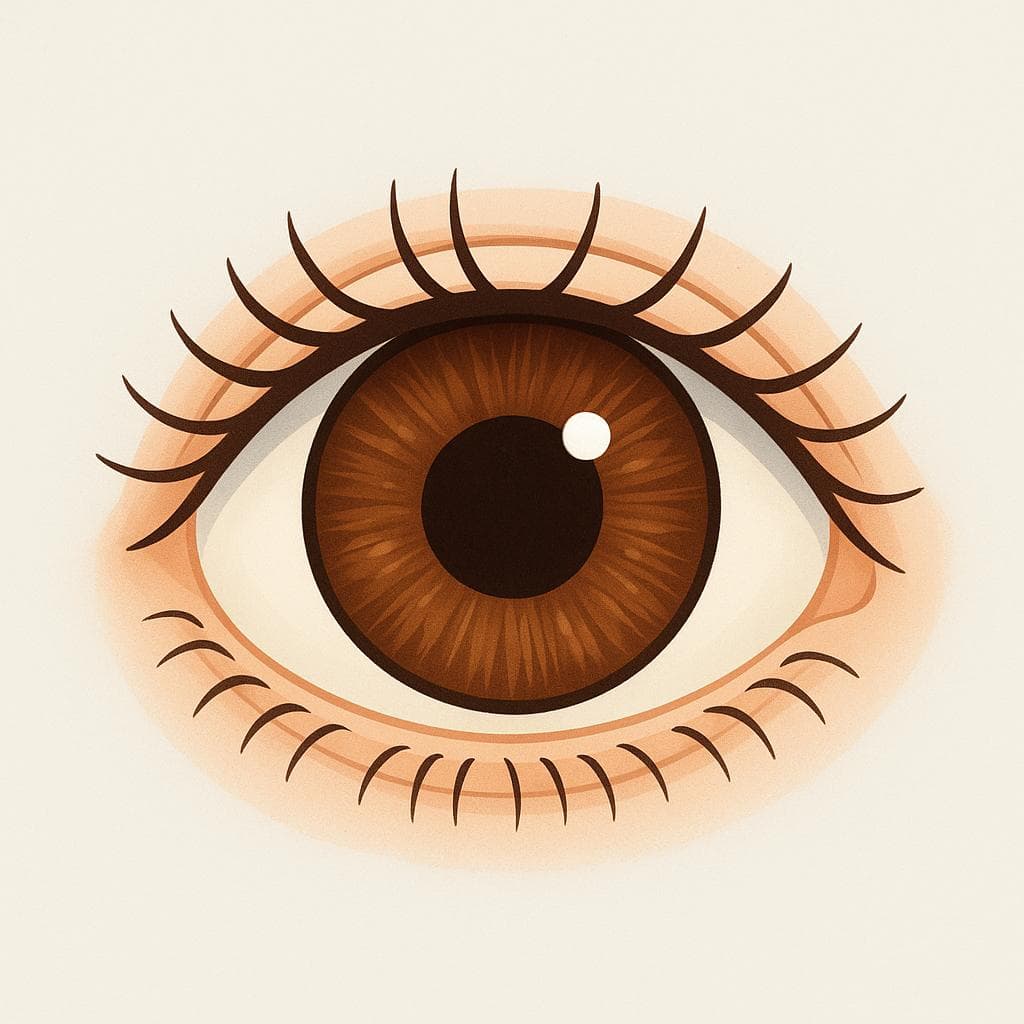


ojo
OH-hohˈoxo
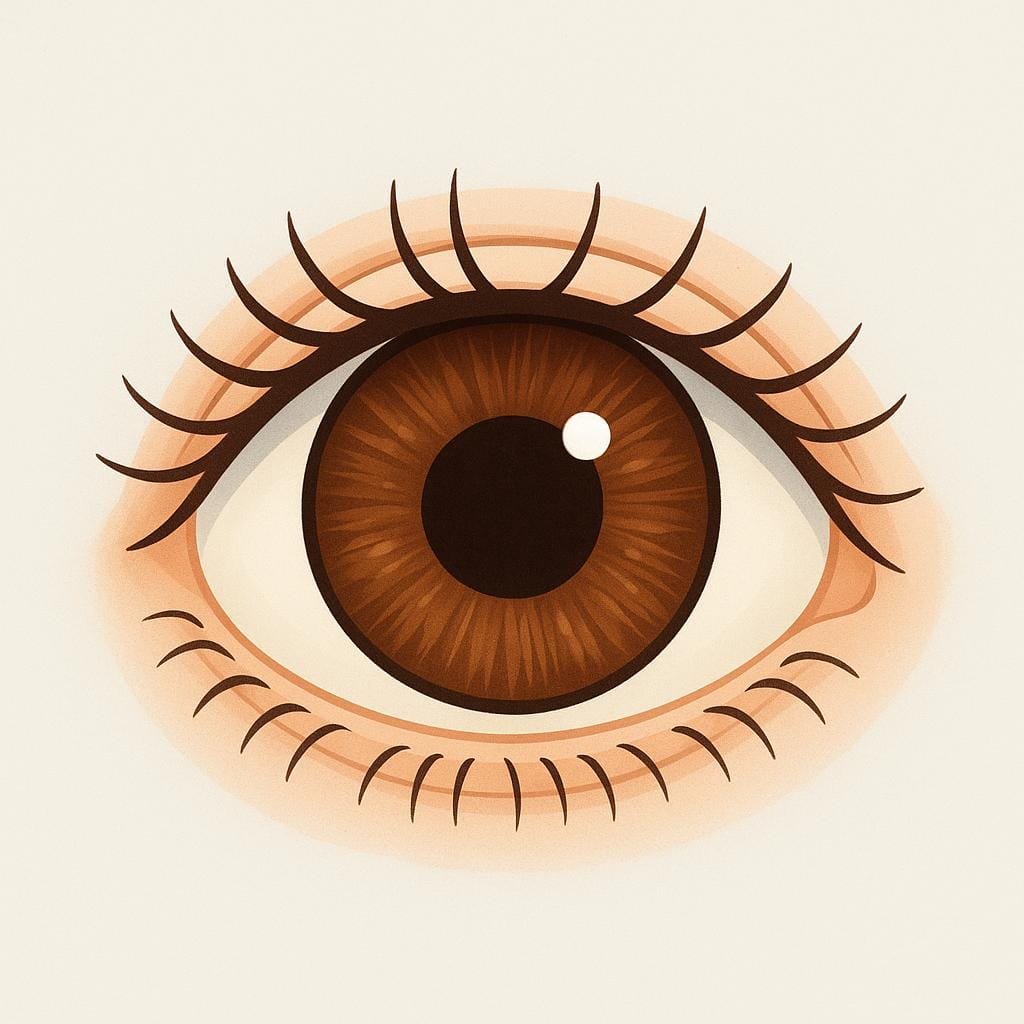
Examples
Tengo que comprar una aguja nueva porque el ojo de esta está muy pequeño.
I have to buy a new needle because the eye of this one is too small.
Tienes un ojo verde y el otro azul. ¡Qué peculiar!
You have one green eye and the other blue. How peculiar!
Me duele el ojo izquierdo después de leer tanto.
My left eye hurts after reading so much.
Es muy difícil meter el hilo por el ojo de la aguja.
It is very difficult to put the thread through the eye of the needle.
Masculine Noun
Even though many body parts are feminine (like 'la mano' or 'la cabeza'), 'ojo' is always masculine: 'el ojo' (the eye).
Figurative Use
This meaning extends the concept of the 'eye' as a small, central viewing point or passage, such as in tools or mechanisms.
Using the definite article
Mistake: “Me duele mi ojo.”
Correction: Me duele el ojo. (Spanish often uses 'el' or 'la' instead of 'mi' or 'tu' when talking about body parts, especially with verbs like 'doler'.)
pupila
poo-PEE-lahpuˈpila

Examples
Sus pupilas se dilataron al ver la belleza del paisaje.
Her pupils dilated upon seeing the beauty of the landscape.
Las pupilas se dilatan cuando hay poca luz.
The pupils dilate when there is little light.
El médico examinó su pupila con una linterna pequeña.
The doctor examined her pupil with a small flashlight.
Sus pupilas brillaban de emoción al ver el regalo.
Her eyes (pupils) sparkled with excitement upon seeing the gift.
Always Feminine
The word 'pupila' is always feminine, regardless of whether you are talking about a man's eye or a woman's eye.
Plural Form
To talk about both eyes, simply add an 's' to make 'pupilas'. It follows the standard pattern for words ending in a vowel.
Confusing with 'Student'
Mistake: “Using 'pupila' to mean a regular classroom student.”
Correction: Use 'alumna' or 'estudiante' for school settings. 'Pupila' for a person is very formal or refers to a legal ward.
hembra
EM-brah (like 'em' in 'ember' followed by 'brah')ˈem.bɾa

Examples
Asegúrate de que la hembra del broche esté bien sujeta.
Make sure the female part of the clasp is well secured.
Necesitas alinear el macho con la hembra para cerrar la cerradura.
You need to align the male part with the female part (socket) to close the lock.
La conexión tiene una cabeza macho y una hembra.
The connection has a male head and a female head (receptacle).
Technical Gender Analogy
In technical Spanish, 'hembra' (female) is used for the part that receives or contains something, while 'macho' (male) is the part that inserts or connects.
Confusing 'ojo' with 'hembra' or 'pupila'
Learn Spanish with Inklingo
Interactive stories, personalized learning, and more.