How to Say "group" in Spanish
The most common Spanish word for “group” is “grupo” — use 'grupo' for a general collection of people or things, including musical bands and organizational units.

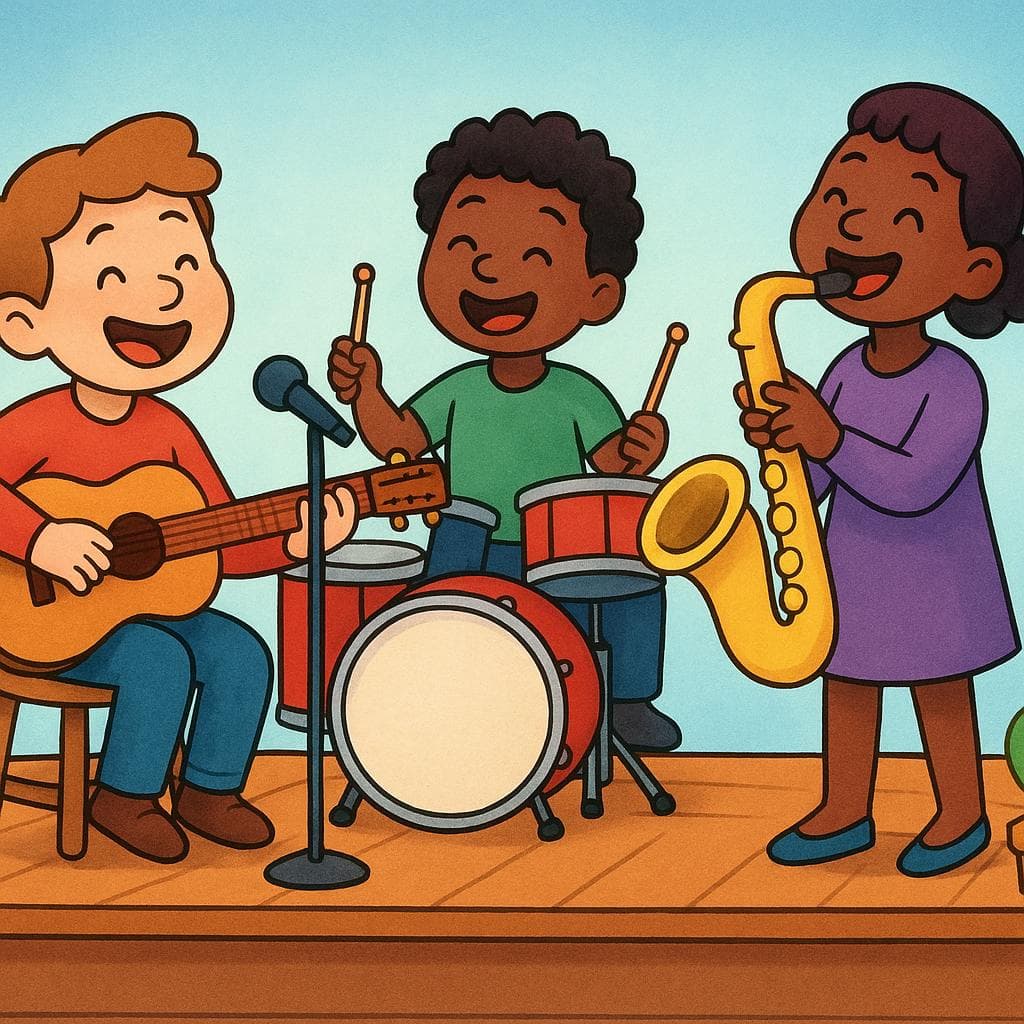






grupo
GROO-pohˈɡɾupo

Examples
Un grupo de turistas espera el autobús.
A group of tourists is waiting for the bus.
Hay un grupo de llaves sobre la mesa.
There is a bunch of keys on the table.
Vamos a trabajar en grupos de tres personas.
We are going to work in groups of three people.
¿Te gusta este grupo de música?
Do you like this music group/band?
One Group IS, Not ARE
Even though a 'grupo' has many members, Spanish treats the word itself as one single thing. So, you use the singular form of the verb. For example, say 'El grupo es grande' (The group is big), not 'El grupo son grande'.
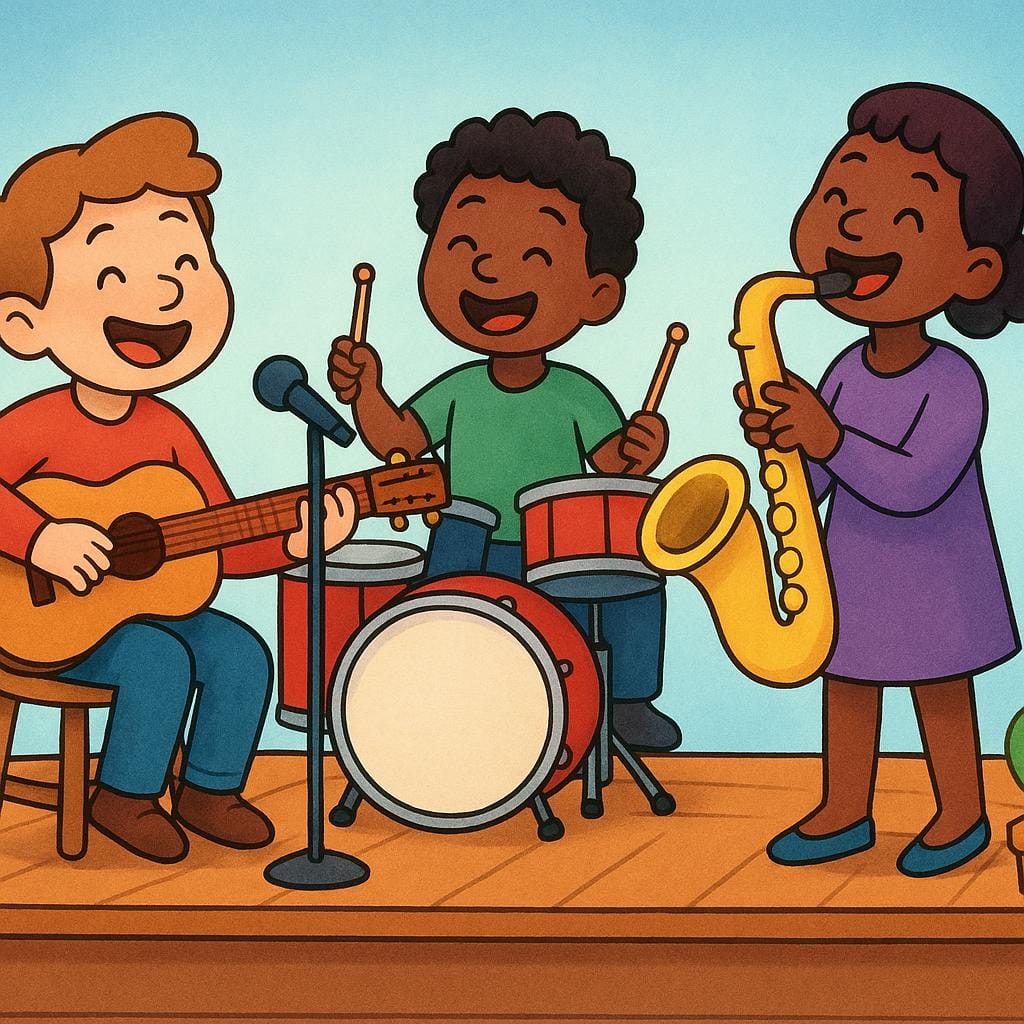
banda
BAHN-dahˈbanda
Examples
Mi banda favorita dará un concierto este sábado.
My favorite band is giving a concert this Saturday.
La banda municipal tocó marchas en la plaza principal.
The municipal band played marches in the main square.
Estuve en la banda de la escuela por tres años.
I was in the school band for three years.
Confusing 'banda' and 'pulsera'
Mistake: “Using 'banda' for a wrist accessory.”
Correction: Use 'pulsera' or 'brazalete' for a wristband or arm band, reserving 'banda' for groups or long strips of material.
conjunto
kon-HOON-tohkonˈxunto

Examples
El conjunto de reglas es simple.
The set of rules is simple.
Necesitamos analizar el conjunto de datos antes de decidir.
We need to analyze the data set before deciding.
El conjunto de edificios antiguos es muy bonito.
The group of old buildings is very beautiful.
Masculine Noun
Remember that 'conjunto' is always masculine, so you must use 'el' or 'un' before it, and any adjectives describing it must also end in -o (e.g., 'el conjunto grande').
colectivo
ko-lek-TEE-bokolekˈtiβo

Examples
Necesitamos un esfuerzo colectivo para limpiar el parque.
We need a collective effort to clean the park.
La seguridad es una responsabilidad colectiva.
Safety is a shared responsibility.
Los trabajadores firmaron un contrato colectivo.
The workers signed a group contract.
El colectivo de artistas organizó una exposición.
The artist collective organized an exhibition.
Matching with Objects
This word must change its ending to match the thing it describes. Use 'colectivo' for masculine items (un esfuerzo) and 'colectiva' for feminine items (una decisión).
Singular vs. Plural Action
Even though a 'colectivo' contains many people, the word itself is singular. The verb that follows it should be in the singular form (e.g., El colectivo decidió, not decidieron).
Confusion with 'Group'
Mistake: “Un grupo esfuerzo.”
Correction: Un esfuerzo colectivo. (Use the adjective 'colectivo' to describe the type of effort, rather than the noun 'group').
agrupación
Examples
La agrupación musical tocó en la plaza.
The musical group played in the square.
rueda
RWEH-dahˈrweða

Examples
El periodista preguntó en la rueda de prensa.
The journalist asked a question at the press conference (circle of press).
Hicimos una rueda para discutir el proyecto.
We formed a circle/group to discuss the project.
¡Invito yo la próxima rueda de cervezas!
I'll buy the next round of beers!
colectivo
ko-lek-TEE-bokolekˈtiβo
Examples
El colectivo de artistas organizó una exposición.
The artist collective organized an exhibition.
Necesitamos un esfuerzo colectivo para limpiar el parque.
We need a collective effort to clean the park.
La seguridad es una responsabilidad colectiva.
Safety is a shared responsibility.
Los trabajadores firmaron un contrato colectivo.
The workers signed a group contract.
Matching with Objects
This word must change its ending to match the thing it describes. Use 'colectivo' for masculine items (un esfuerzo) and 'colectiva' for feminine items (una decisión).
Singular vs. Plural Action
Even though a 'colectivo' contains many people, the word itself is singular. The verb that follows it should be in the singular form (e.g., El colectivo decidió, not decidieron).
Confusion with 'Group'
Mistake: “Un grupo esfuerzo.”
Correction: Un esfuerzo colectivo. (Use the adjective 'colectivo' to describe the type of effort, rather than the noun 'group').
bloque
BLO-kehˈblo.ke

Examples
Los países formaron un bloque comercial para negociar mejor.
The countries formed a trade bloc to negotiate better.
El bloque opositor votó en contra de la nueva ley.
The opposition bloc voted against the new law.
La computadora procesa los datos en bloques de información.
The computer processes the data in blocks of information.
panda
PAN-dahˈpan.da

Examples
Salí a cenar con toda mi panda.
I went out to dinner with my whole gang of friends.
Esa panda de gamberros siempre hace ruido.
That bunch of hooligans is always making noise.
No te juntes con esa panda, no son buena influencia.
Don't hang out with that crew; they aren't a good influence.
Singular Word, Multiple People
Even though 'panda' refers to a group of people, the word itself is singular. You should say 'la panda es...' not 'la panda son...'
Positive vs. Negative
Mistake: “Using it formally.”
Correction: This meaning of 'panda' is informal and can sometimes be insulting (like 'a bunch of...'). Use 'grupo' if you want to be polite.
corro
KOH-rrohˈko.ro
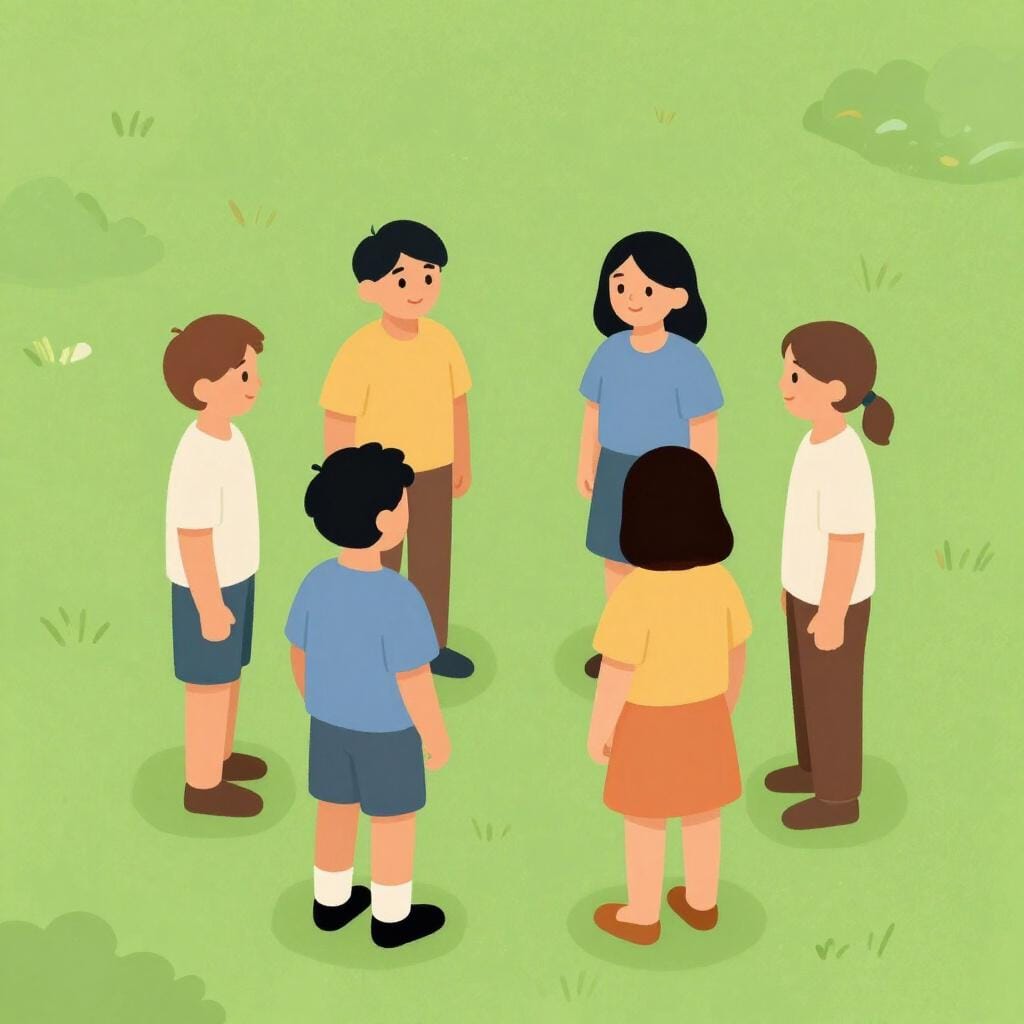
Examples
Los niños hicieron un corro para jugar.
The children made a circle to play.
Se formó un pequeño corro de gente para escuchar al músico.
A small circle of people formed to listen to the musician.
En el corro de la bolsa, los precios subieron rápidamente.
On the stock market floor, prices rose quickly.
Using 'Hacer' and 'Formar'
This word is almost always used with the verbs 'hacer' (to make) or 'formar' (to form).
Not for geometric circles
Mistake: “Dibuja un corro en el papel.”
Correction: Dibuja un círculo en el papel. Use 'corro' for groups of people, but 'círculo' for the mathematical shape.
familia
fa-MEE-lee-ahfaˈmi.lja

Examples
El español pertenece a la familia de las lenguas romances.
Spanish belongs to the family of Romance languages.
Los leones y los tigres son de la misma familia.
Lions and tigers are from the same family.
Este software viene con una nueva familia de tipografías.
This software comes with a new family of fonts.
manada
mah-NAH-dahmaˈnaða

Examples
Una manada de turistas invadió la plaza, gritando y haciendo fotos.
A horde of tourists invaded the square, shouting and taking photos.
Se movieron como una manada, sin escuchar a nadie.
They moved like a pack (or mob), without listening to anyone.
General vs. Specific Groupings
Related Translations
Learn Spanish with Inklingo
Interactive stories, personalized learning, and more.