Inklingo

How to Say "maid" in Spanish

The most common Spanish word formaidis empleadause 'empleada' for a general term for a female employee, including someone who cleans or performs domestic duties, especially in a more formal or professional context. It's often used when discussing hiring someone for regular cleaning..

empleada🔊A2

Use 'empleada' for a general term for a female employee, including someone who cleans or performs domestic duties, especially in a more formal or professional context. It's often used when discussing hiring someone for regular cleaning.
{ui.learnMore}
criada🔊B1

Choose 'criada' to refer to a domestic worker, often implying live-in service or a more traditional household role. It can sometimes carry a slightly older-fashioned or more subservient connotation than 'empleada'.

{ui.learnMore}
sirvienta🔊A2

Use 'sirvienta' for a female domestic servant, emphasizing the service aspect. This term is also somewhat traditional and can imply a hierarchical relationship within the household.

{ui.learnMore}
muchacha🔊B1

'Muchacha' can be used for a young female domestic helper, especially when emphasizing her youth or a less formal arrangement. It's similar to 'girl' or 'young woman' employed for chores.

{ui.learnMore}
English → Spanish

empleada

/em-ple-AH-dah//empeˈlaða/

nounA2general
Use 'empleada' for a general term for a female employee, including someone who cleans or performs domestic duties, especially in a more formal or professional context. It's often used when discussing hiring someone for regular cleaning.
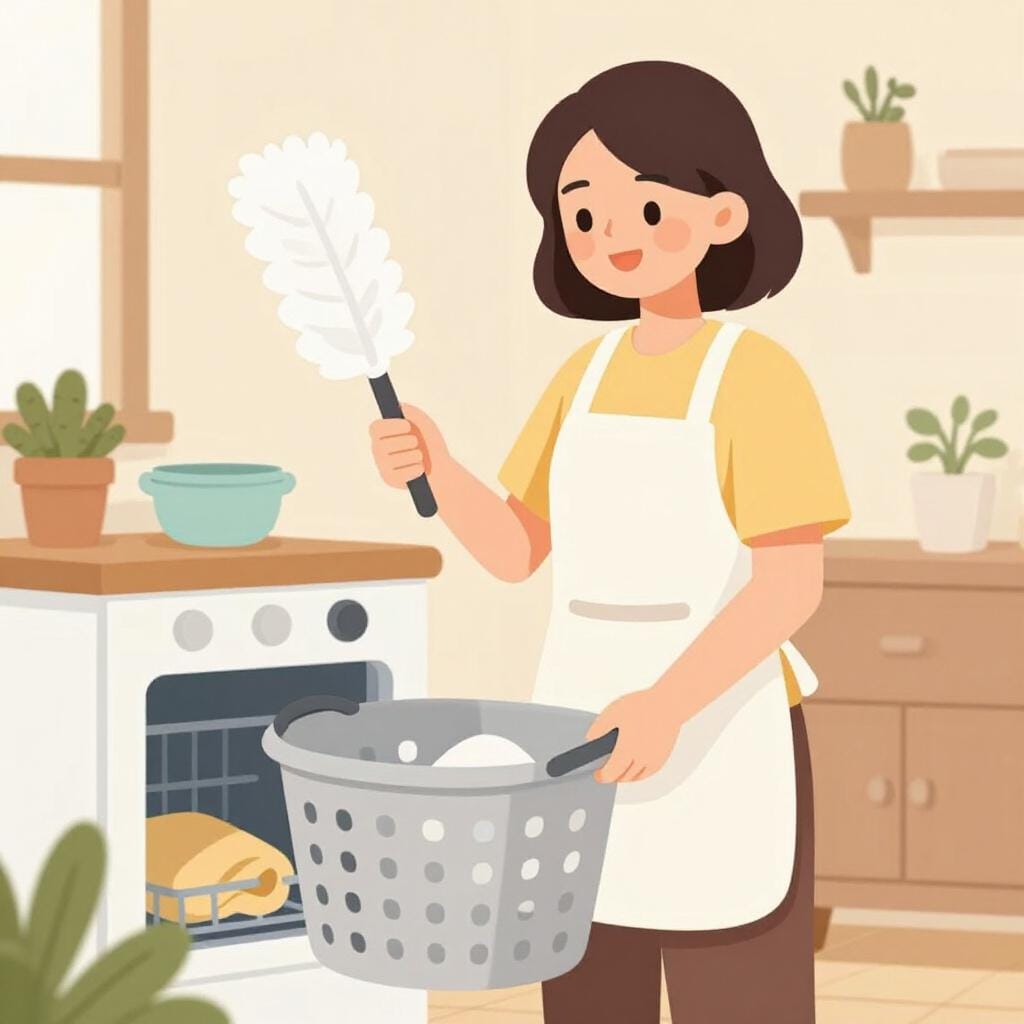
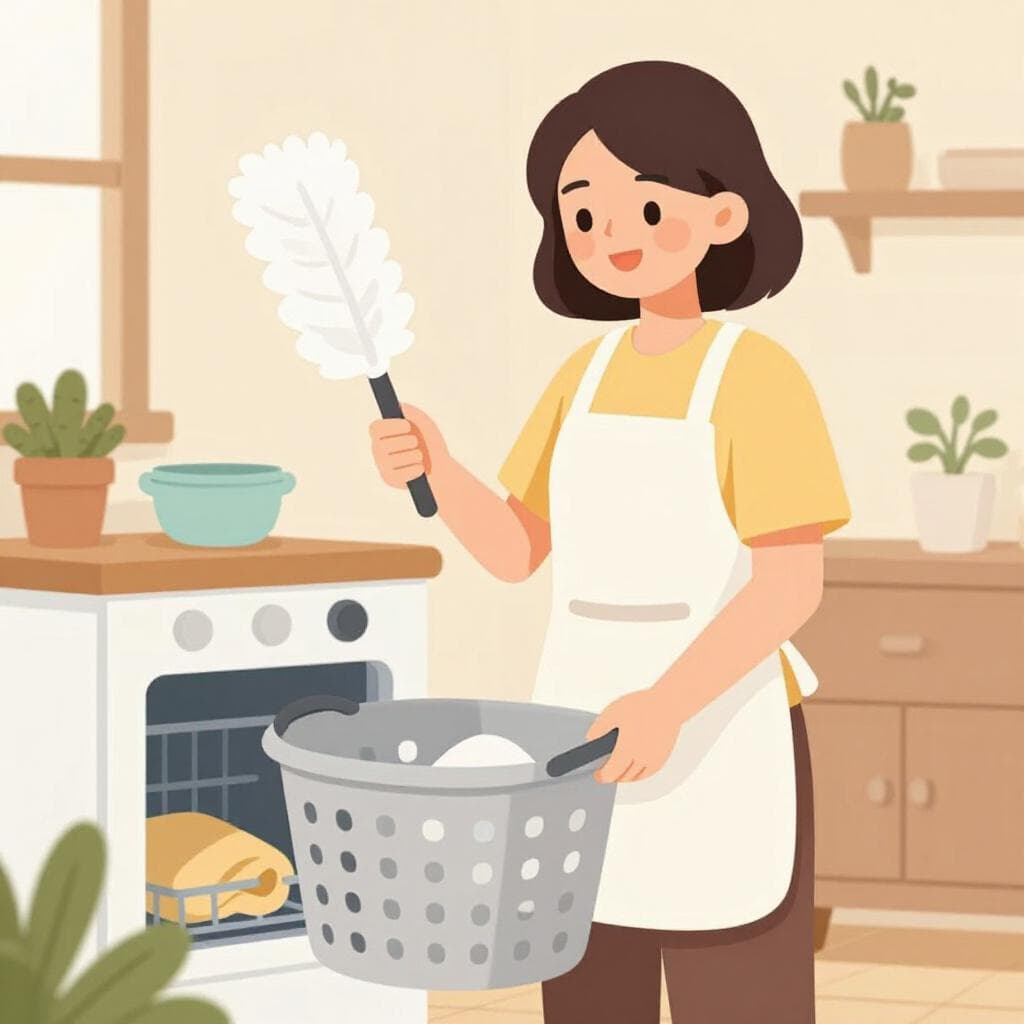
A woman in a clean apron holding a feather duster and a basket of laundry in a cozy living room.

Examples

La empleada viene los lunes para limpiar.

The housekeeper comes on Mondays to clean.

Shortened forms

In many Spanish-speaking homes, people simply say 'la empleada' to refer to the person who helps with cleaning and housework.

criada

kree-AH-dah/kɾiˈaða/

nounB1general
Choose 'criada' to refer to a domestic worker, often implying live-in service or a more traditional household role. It can sometimes carry a slightly older-fashioned or more subservient connotation than 'empleada'.
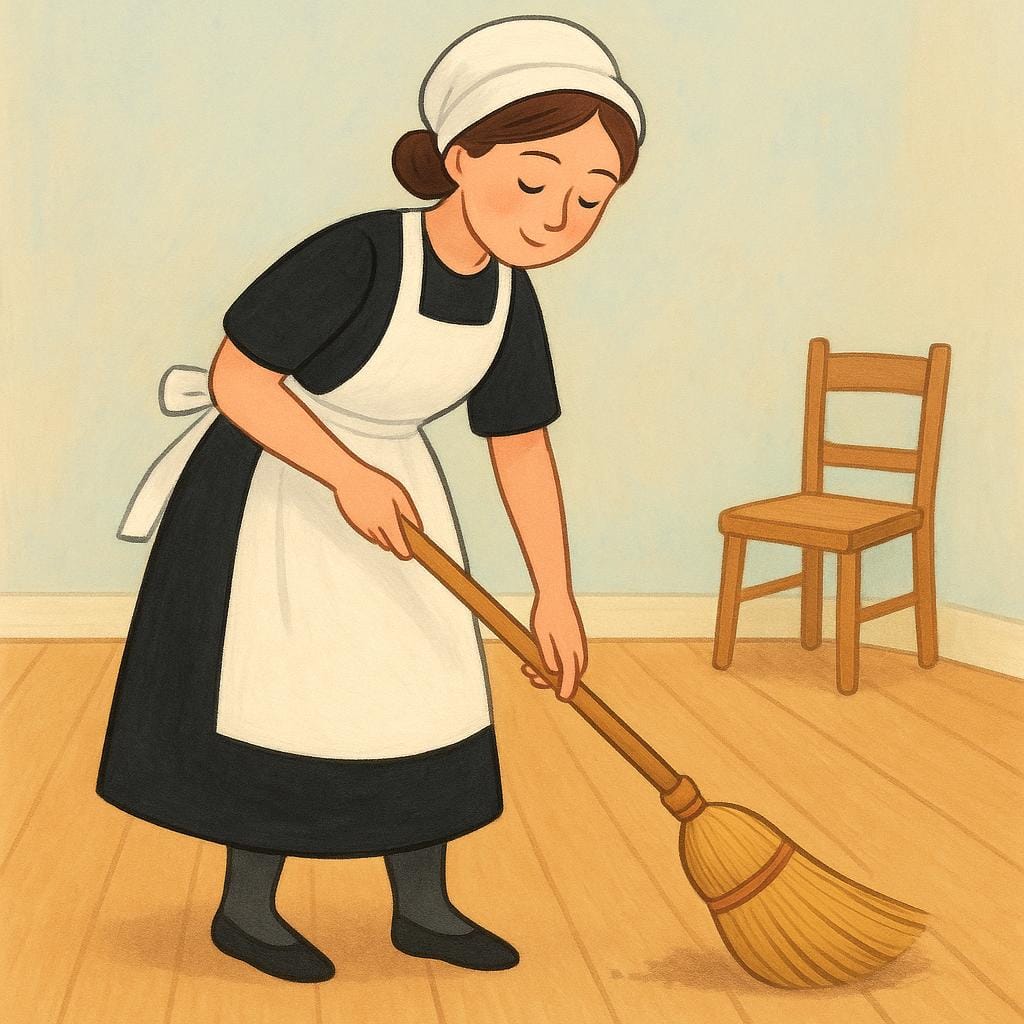
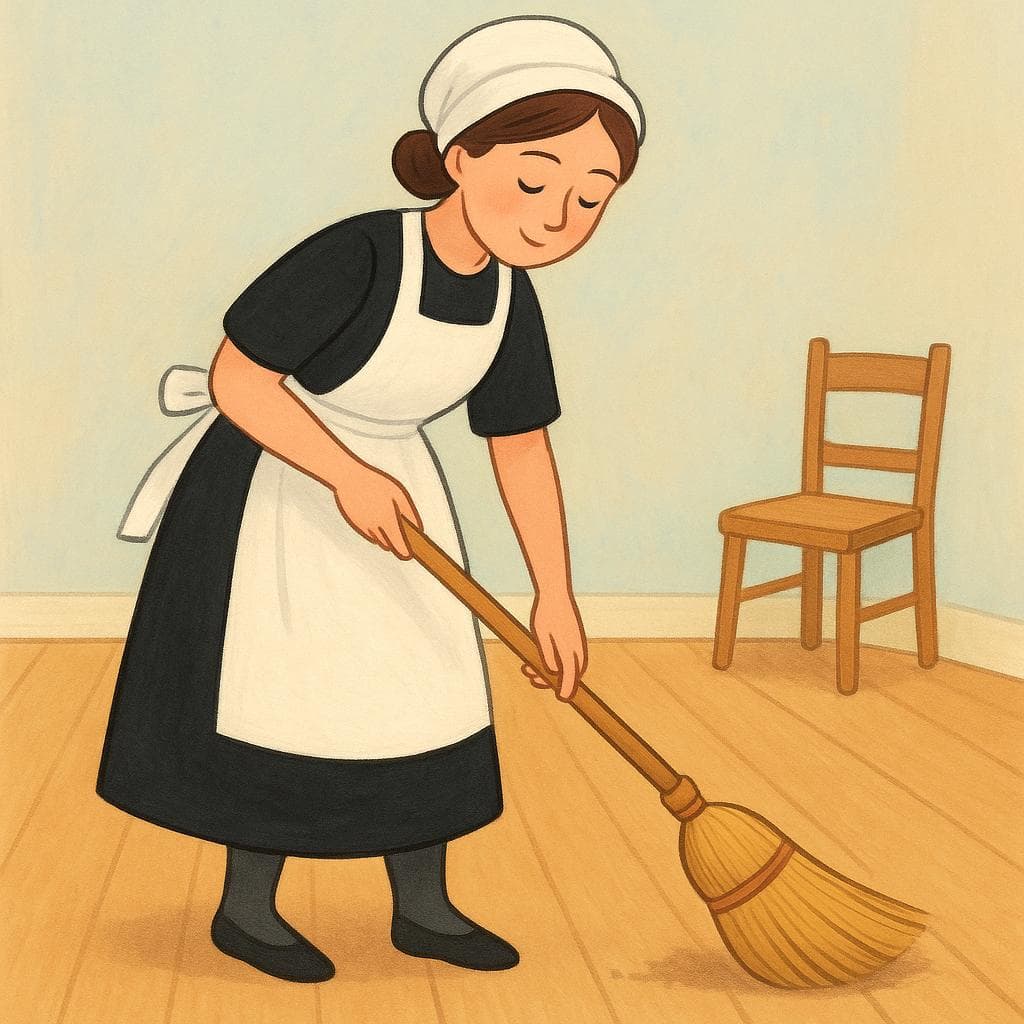
A simple illustration of a woman dressed as a maid, holding a broom while sweeping a clean, stylized floor.

Examples

La criada preparó el desayuno antes de que saliera el sol.

The maid prepared breakfast before the sun came out.

En la película, la criada era la única que sabía el secreto.

In the movie, the servant was the only one who knew the secret.

sirvienta

/seer-BYEN-tah//siɾˈβjenta/

nounA2general
Use 'sirvienta' for a female domestic servant, emphasizing the service aspect. This term is also somewhat traditional and can imply a hierarchical relationship within the household.
A woman in a classic maid uniform holding a feather duster and a cleaning bucket.

Examples

La sirvienta preparó el desayuno temprano.

The maid prepared breakfast early.

En esa película antigua, la sirvienta lleva un uniforme blanco.

In that old movie, the maid wears a white uniform.

Mi abuela tenía una sirvienta que vivía en la casa.

My grandmother had a maid who lived in the house.

Gender and Endings

This word ends in -a because it refers specifically to a woman. If you were talking about a man, you would use 'sirviente'.

Using 'sirvienta' in modern settings

Mistake:Calling a modern domestic worker 'sirvienta' in a formal city setting.

Correction: Use 'empleada del hogar' or 'asistente' instead. In many places, 'sirvienta' can sound a bit old-fashioned or even slightly disrespectful today.

muchacha

/moo-CHAH-chah//muˈtʃa.tʃa/

nounB1informal
'Muchacha' can be used for a young female domestic helper, especially when emphasizing her youth or a less formal arrangement. It's similar to 'girl' or 'young woman' employed for chores.
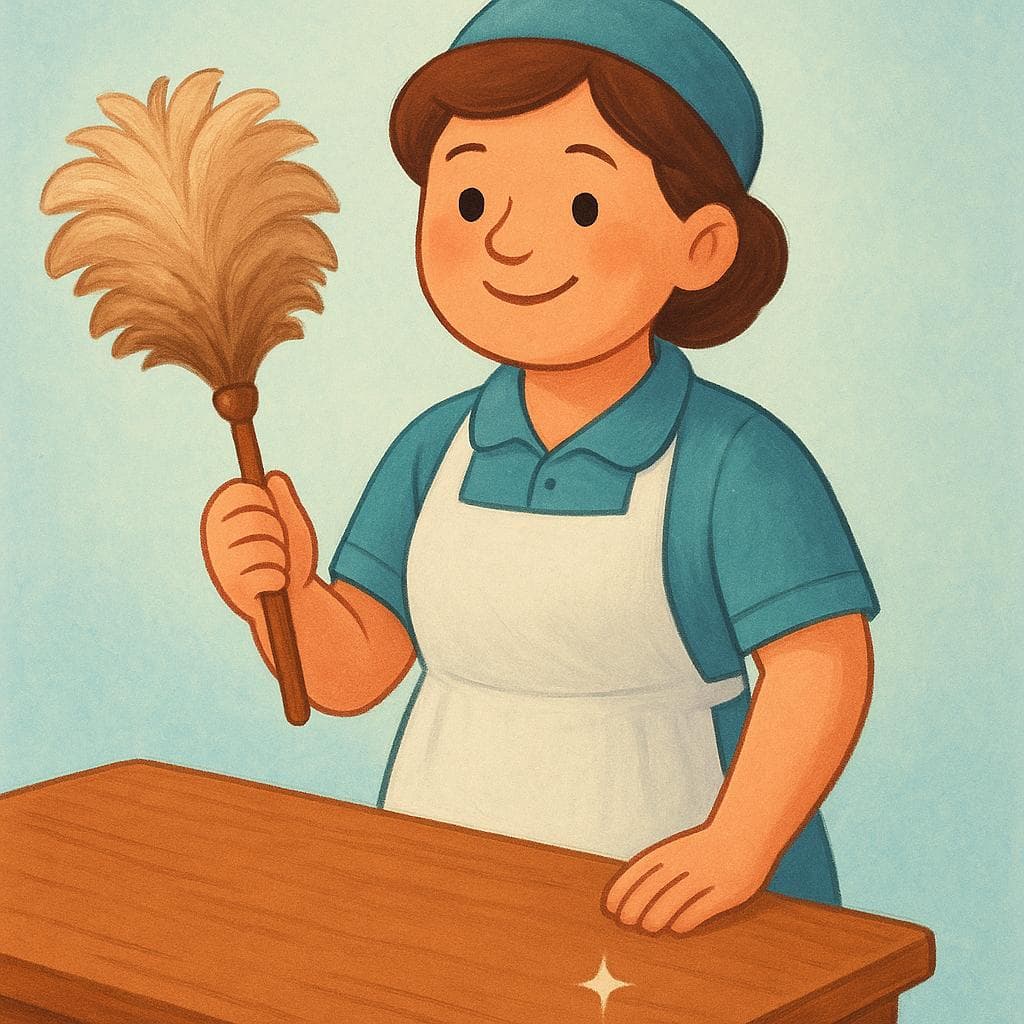
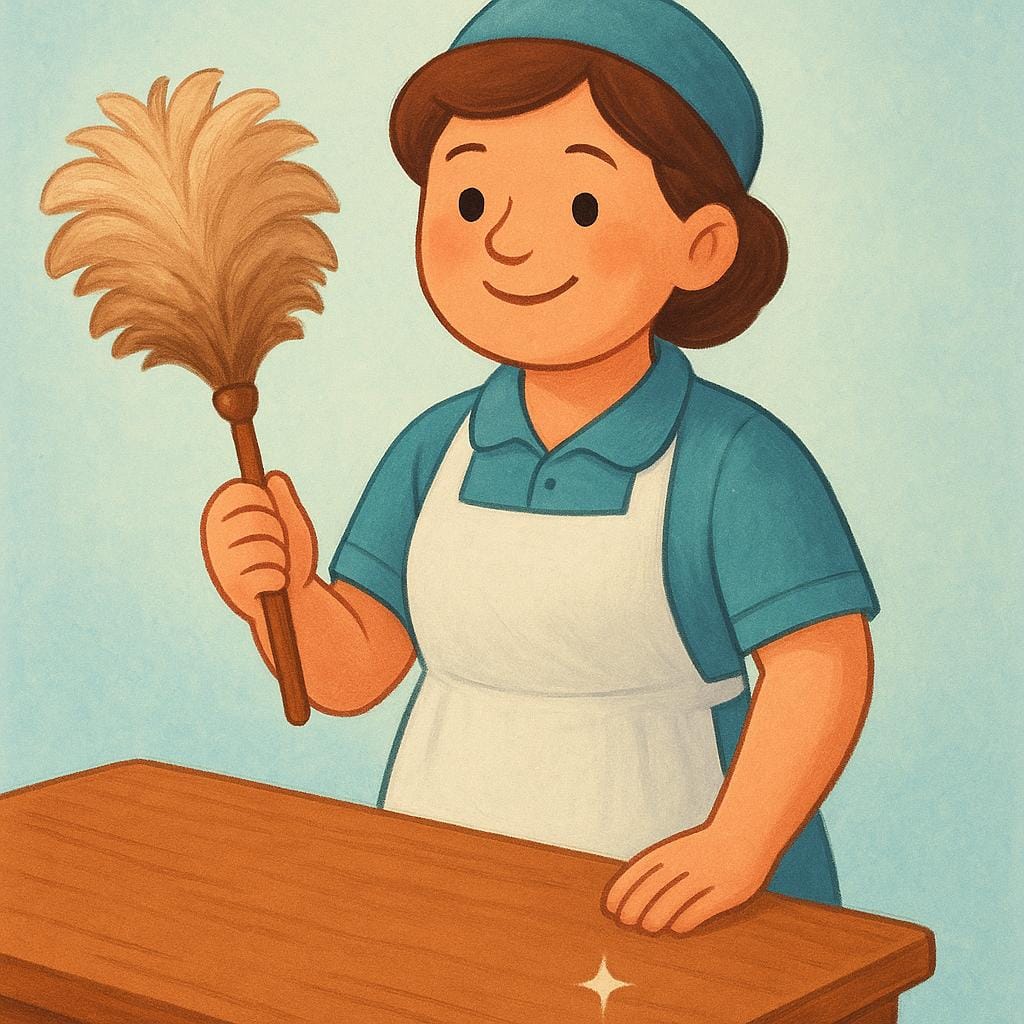
A person wearing a simple uniform and an apron, holding a feather duster and smiling next to a cleaned table.

Examples

Necesitamos una muchacha que sepa cocinar y limpiar.

We need a maid who knows how to cook and clean.

La muchacha se encarga de la ropa sucia.

The housekeeper takes care of the laundry.

Choosing between 'empleada' and 'criada'

Learners often confuse 'empleada' and 'criada'. 'Empleada' is more modern and general for any female employee doing domestic work, while 'criada' can sound more traditional or even a bit dated, sometimes implying a live-in role. When in doubt, 'empleada' is usually a safer, more contemporary choice.

Learn Spanish with Inklingo

Interactive stories, personalized learning, and more.