How to Say "poor" in Spanish
The most common Spanish word for “poor” is “pobre” — use this when referring to a lack of money or material wealth, often describing people or families.








pobre
PO-brehˈpo.βɾe

Examples
Es una familia muy pobre, no tienen mucho dinero.
They are a very poor family, they don't have much money.
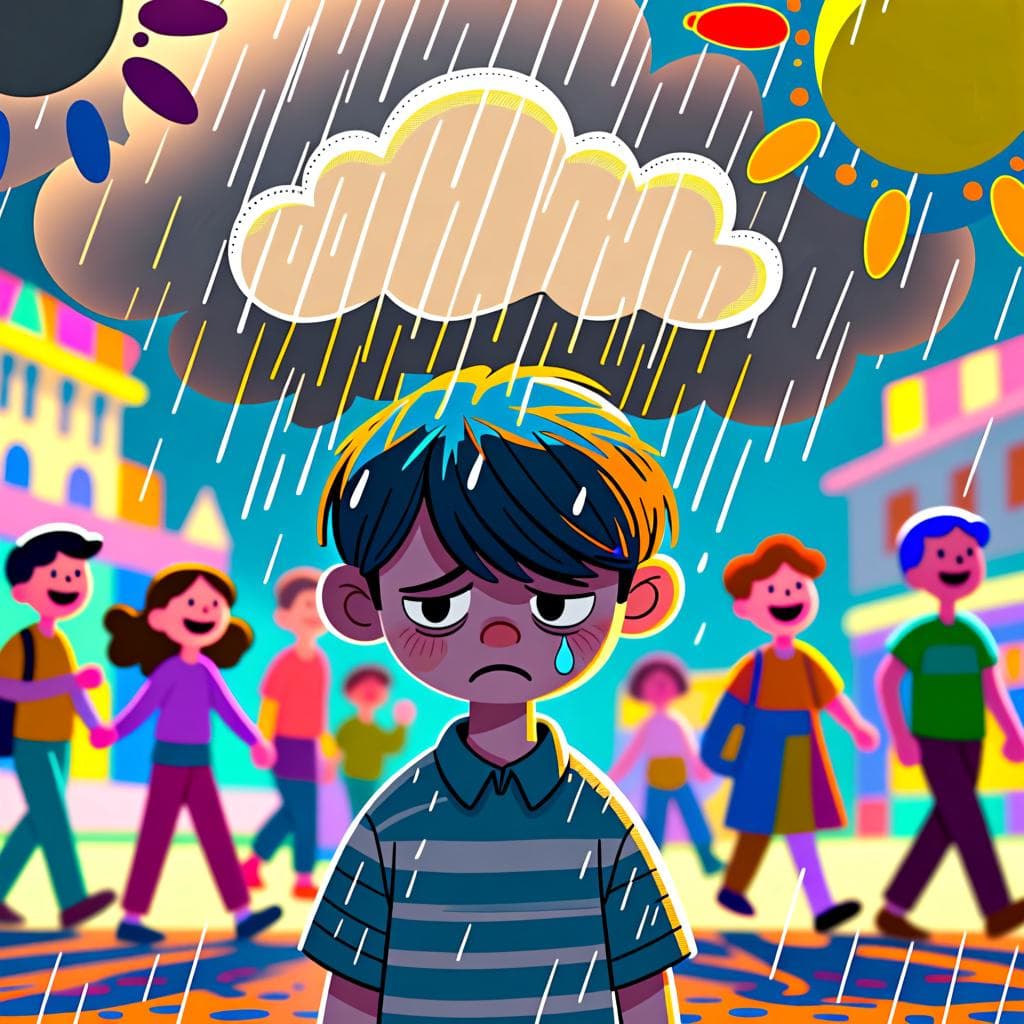
¡Pobre niño! Se cayó de la bicicleta.
Poor kid! He fell off his bike.
La cena fue un poco pobre, solo sopa y pan.
The dinner was a bit meager, just soup and bread.
Position Changes Everything!
The meaning of 'pobre' changes depending on where you put it. Before a person or thing, it means 'unfortunate' or 'pitiful' (¡Pobre Juan!). After it, the word usually means 'lacking money' (Un hombre pobre).
Same for Him and Her
'Pobre' doesn't change for masculine or feminine things. You say 'un hombre pobre' and 'una mujer pobre'. Just add an 's' for plural: 'los niños pobres'.
Sympathy vs. Money
Mistake: “Vi un hombre pobre en la calle. (when you mean you felt sorry for him)”
Correction: Vi a un pobre hombre en la calle. (To show you feel sympathy, put 'pobre' first. Saying 'hombre pobre' just describes his financial status.)
malo
MAH-loh'malo
Examples
Este es un libro malo; no me gusta.
This is a bad book; I don't like it.
Tuve un mal día en el trabajo.
I had a bad day at work.
La película tiene un final muy malo.
The movie has a very bad ending.
Shortening 'malo' to 'mal'
When 'malo' comes right before a masculine word, it shortens to 'mal'. For example, you say 'un mal día' (a bad day), not 'un malo día'.
Matching the Noun
Like most adjectives, 'malo' changes to match the thing it describes: 'malo' (masculine singular), 'mala' (feminine singular), 'malos' (masculine plural), and 'malas' (feminine plural).
Forgetting to shorten to 'mal'
Mistake: “Tengo un malo presentimiento.”
Correction: Tengo un mal presentimiento. (I have a bad feeling.) Remember to drop the '-o' before a single masculine thing.
mal
malmal
Examples
Hoy es un mal día para ir a la playa.
Today is a bad day to go to the beach.
Fue un malentendido.
It was a misunderstanding.
El lobo es el mal personaje del cuento.
The wolf is the bad character in the story.
The Shortening Rule
The adjective 'malo' changes to 'mal' ONLY when it comes right before a masculine noun. For example, 'un día malo' becomes 'un mal día'.
Using `mal` after the noun
Mistake: “Es un día mal.”
Correction: Es un día malo. The short form 'mal' can only go before the noun. If you put the adjective after, you must use the full form 'malo'.
deficiente
deh-fee-thyehn-tehdefiˈθjente

Examples
El servicio de atención al cliente es deficiente en esta tienda.
The customer service is poor in this store.
Muchos niños sufren de una nutrición deficiente en esa región.
Many children suffer from inadequate nutrition in that region.
El informe fue considerado deficiente porque le faltaban datos importantes.
The report was considered substandard because it was missing important data.
One Form for Everyone
This word ends in -e, which means it doesn't change to 'deficienta' for feminine things. You use 'deficiente' for both men and women, or masculine and feminine objects.
Placement Matters
When you put this word after a noun (like 'servicio deficiente'), you are emphasizing that the quality is objectively below standard.
The 'A' Mistake
Mistake: “La comida es deficienta.”
Correction: La comida es deficiente. Words ending in -ente usually stay the same regardless of gender.
delicado
deh-lee-KAH-dohdeliˈkaðo

Examples
Mi tío está delicado de salud desde la operación.
My uncle has been in poor health since the operation.
Tuvimos que manejar el tema con mucho tacto porque era una cuestión delicada.
We had to handle the topic with great care because it was a sensitive issue.
Describing Health
When talking about someone's health, use the verb 'estar' (to be temporarily) with 'delicado' to mean they are currently ill or frail: 'Ella está delicada'.
Using 'Ser' for Temporary Health
Mistake: “Mi abuelo es delicado de salud.”
Correction: Mi abuelo está delicado de salud. ('Ser' implies a permanent trait; 'estar' implies a current state.)
flojo
FLO-hoˈflox o

Examples
Este café está muy flojo, parece agua.
This coffee is very weak; it tastes like water.
La película tuvo un final muy flojo.
The movie had a very weak ending.
Las ventas han estado flojas este mes.
Sales have been sluggish this month.
Abstract Weakness
While 'débil' describes physical weakness (like a sick person), 'flojo' describes a lack of quality, effort, or intensity in things like movies, arguments, or coffee.
precario
pre-KAH-ryohpɾeˈkaɾjo

Examples
Viven en condiciones precarias sin agua corriente.
They live in poor conditions without running water.
Su salud es precaria desde el accidente.
His health has been poor/fragile since the accident.
Los medios económicos del hospital son precarios.
The hospital's financial resources are meager.
Describing groups
When describing a group of people in poor conditions, use 'precarios' for men/mixed groups and 'precarias' for all-women groups.
Precario vs Pobre
Mistake: “Thinking 'precario' is just another word for 'poor'.”
Correction: While similar, 'precario' implies that the situation is likely to break or fail, while 'pobre' just means there is no money.
miserable
mee-seh-RAH-blehmi.seˈɾa.βle

Examples
El salario que me ofrecieron era realmente miserable.
The salary they offered me was truly miserable (meager/inadequate).
Vivían en condiciones miserables, sin agua potable.
They lived in wretched conditions, without drinking water.
Describing Resources
When talking about money, living situations, or food, using 'miserable' emphasizes how desperately poor or insufficient the resource is.
humilde
oo-MEEL-dehuˈmil.de

Examples
A pesar de su origen humilde, llegó a ser presidente.
Despite his humble origin, he became president.
Viven en una casa humilde, pero es muy acogedora.
They live in a simple/modest house, but it is very cozy.
Pidió un trabajo humilde para empezar a ganar dinero.
He asked for a lowly job to start earning money.
Describing Things
When describing things like houses or backgrounds, 'humilde' means 'simple' or 'not fancy' rather than lacking self-confidence.
Confusing 'Pobre' and 'Malo/Mal'
Learn Spanish with Inklingo
Interactive stories, personalized learning, and more.