How to Say "remains" in Spanish
The most common Spanish word for “remains” is “resto” — use 'resto' when referring to the part of something that is left over, especially in a general or historical context, or when talking about the remaining part of a group.





resto
RREHS-toh'resto

Examples
El resto de la comida se lo llevó a casa.
He took the rest of the food home.
El resto del grupo llegará más tarde.
The rest of the group will arrive later.
Puedes comerte el resto de la pizza si quieres.
You can eat the rest of the pizza if you want.
Guardamos los restos de la cena para el almuerzo de mañana.
We saved the leftovers from dinner for tomorrow's lunch.
Always Use 'el resto de'
When you want to say 'the rest of something', you always need to add 'de' after 'el resto'. For example, 'el resto del día' (the rest of the day) or 'el resto de la gente' (the rest of the people).
'el resto' vs. 'los restos'
Mistake: “Usé el resto para hablar de la comida que sobró.”
Correction: Generally, for 'leftovers' (food), it's better to use the plural form: 'Guardé los restos de la cena'. 'El resto' refers to the remaining part of a single thing, like 'el resto de la película' (the rest of the movie).
permanece
per-mah-NEH-sehpeɾ.maˈne.θe

Examples
La tienda permanece abierta hasta las diez.
The store remains open until ten.
Ella permanece en casa estudiando para el examen.
She remains at home studying for the exam.
El museo permanece abierto hasta las seis de la tarde.
The museum stays open until six in the evening.
¡Permanece aquí hasta que yo regrese!
Stay here until I return!
Dual Role of 'Permanece'
This single form can mean two things: 'He/She/It stays' (statement of fact) or 'Stay!' (a command directed at 'tú,' an informal friend).
Forgetting the 'zc' Change
Mistake: “Saying 'yo permaneco' instead of 'yo permanezco' in the present tense.”
Correction: Verbs ending in -ecer often follow a pattern where the 'c' changes to 'zc' before 'o' or 'a' sounds (like in the 'yo' form and all of the special subjunctive forms). This change is only present in certain forms.
sigue
see-gehˈsi.ɣe

Examples
El debate sigue activo en las redes sociales.
The debate remains active on social media.
La tienda sigue abierta hasta las diez.
The store is still open until ten.
¿Tu amigo sigue enojado conmigo?
Is your friend still mad at me?
El problema sigue sin solución.
The problem remains without a solution.
Saying 'Still' in Spanish
While you can use 'todavía' (still), it's very natural to use 'seguir' + an adjective or description. 'Él está enfermo' means 'He is sick'. 'Él sigue enfermo' means 'He is still sick'.
residuos
rre-SEE-dwosreˈsiðwos

Examples
Los residuos nucleares son un problema peligroso.
Nuclear waste remains a dangerous problem.
Debemos separar los residuos orgánicos de los plásticos.
We must separate organic waste from plastics.
La ciudad tiene un nuevo plan para la gestión de residuos.
The city has a new plan for waste management.
No dejes residuos de comida en la mesa.
Don't leave food remains on the table.
Always Masculine
Even though it ends in 's', this word is masculine. Always use 'los' or 'unos' with it.
Plural vs. Singular
While you can say 'residuo' for a single bit of leftover material, we almost always use the plural 'residuos' when talking about trash or environmental issues.
Residuos vs. Basura
Mistake: “Using 'residuos' for the small kitchen bin.”
Correction: Use 'basura' for everyday kitchen trash and 'residuos' for more formal, technical, or large-scale waste (like factory or city-wide waste).
cadáver
Examples
El forense examinó el cadáver.
The coroner examined the corpse.
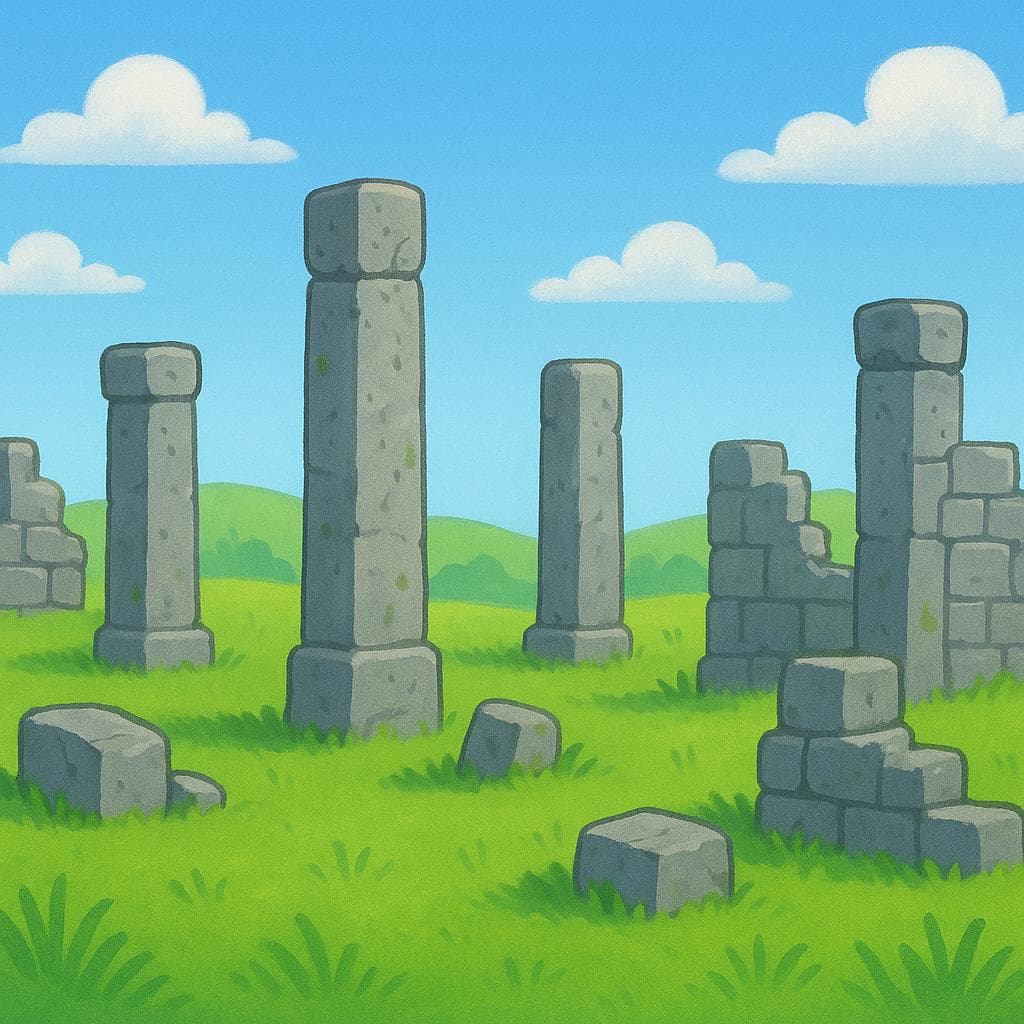
ruinas
rwee-nahsˈrwinas

Examples
Las ruinas del antiguo castillo son impresionantes.
The remains of the old castle are impressive.
Fuimos a visitar las ruinas de Machu Picchu.
We went to visit the ruins of Machu Picchu.
Las ruinas romanas están muy bien conservadas.
The Roman ruins are very well preserved.
Always Feminine
This word is always feminine. Use 'las' or 'unas' when talking about them.
Gender confusion
Mistake: “los ruinas”
Correction: las ruinas (it is a feminine word).
cadáveres
Examples
Se encontraron varios cadáveres en la fosa común.
Several corpses were found in the mass grave.
ceniza
the-NEE-sah/ or /se-NEE-sahθeˈniθa

Examples
Las cenizas de su abuela están en una urna.
His grandmother's ashes remain in an urn.
Limpié la ceniza de la chimenea.
I cleaned the ash from the fireplace.
El volcán lanzó una gran nube de ceniza.
The volcano threw out a large cloud of ash.
Sus cenizas fueron esparcidas en el mar.
Their ashes were scattered in the sea.
Always Feminine
Even if you are talking about a large amount of ash, the word is feminine: 'la ceniza'.
Singular vs. Plural
Use 'la ceniza' (singular) for the general substance, and 'las cenizas' (plural) when referring to the remains of a person or a specific pile of burnt remnants.
Gender confusion
Mistake: “El ceniza está en el suelo.”
Correction: La ceniza está en el suelo. (The word is feminine, so use 'la'.)
Confusing Body Parts with Leftovers
Learn Spanish with Inklingo
Interactive stories, personalized learning, and more.