How to Say "to clear" in Spanish
The most common Spanish word for “to clear” is “aprobar” — use 'aprobar' when you mean to pass a test, exam, or meet a requirement successfully.

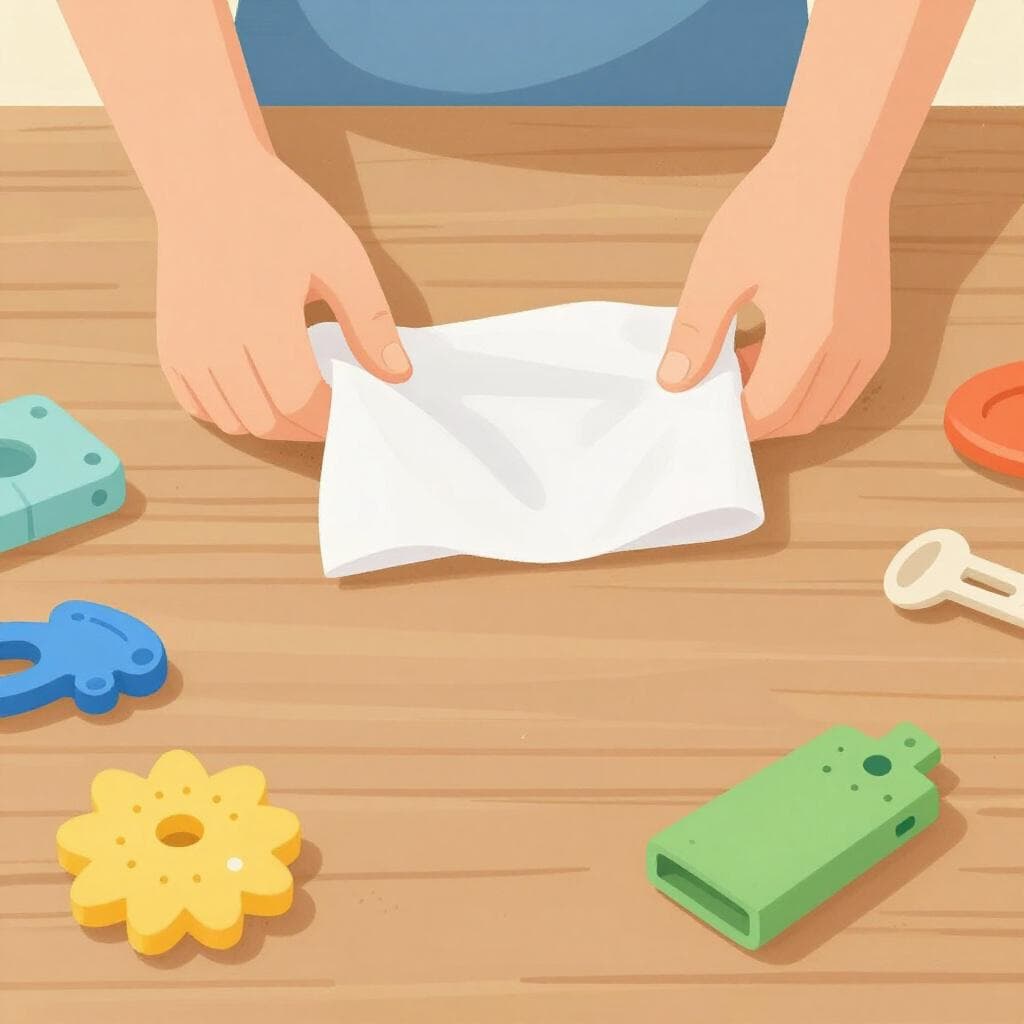



aprobar
ah-pro-BARapɾoˈbaɾ

Examples
¡Aprobé el examen de conducir!
I passed my driving test!
Tienes que estudiar mucho para aprobar matemáticas.
You have to study a lot to pass math.
Si no apruebas el curso, tendrás que repetirlo.
If you don't pass the course, you will have to repeat it.
The Boot Change
This is a 'boot verb,' meaning the 'o' changes to 'ue' in all present forms except for the 'we' (nosotros) and 'you all' (vosotros) forms.
Direct Passing
In Spanish, you pass 'the' exam directly. You don't need a preposition like 'in' or 'at' before the subject name.
Don't use 'pasar' for grades
Mistake: “Pasé el examen.”
Correction: Aprobé el examen. While 'pasar' is sometimes understood, 'aprobar' is the correct academic term for passing a test.
despejar
des-peh-HARdespeˈxaɾ

Examples
La policía tuvo que despejar la calle para la ambulancia.
The police had to clear the street for the ambulance.
Por favor, despeja la mesa para que podamos comer.
Please, clear off the table so that we can eat.
Despejaron el edificio por una amenaza de bomba.
They cleared the building because of a bomb threat.
Tienes que despejar la 'x' para resolver la ecuación.
You have to solve for 'x' to resolve the equation.
Using 'despejar' vs 'limpiar'
Use 'limpiar' for cleaning dirt or dust, but use 'despejar' when you are moving objects out of the way to create open space.
Don't use 'claro' as a verb
Mistake: “Voy a claro la mesa.”
Correction: Voy a despejar la mesa. (To clear space, you need the verb despejar, not the adjective claro).
liberar
lee-beh-RAHRliβeˈɾaɾ

Examples
Borré muchos archivos para liberar espacio en mi teléfono.
I deleted many files to free up space on my phone.
Si terminamos temprano, podemos liberar tiempo para otras tareas.
If we finish early, we can free up time for other tasks.
Necesitamos liberar la mesa para la próxima reunión.
We need to clear the table for the next meeting.
Using the Infinitive
It is very common to use 'liberar' right after a verb of necessity (like 'necesitar' or 'querer') combined with the preposition 'para' (in order to): 'Quiero liberar espacio.'
salvar
sal-BARsalˈβaɾ

Examples
Tuvo que salvar muchos obstáculos para lograr su sueño.
She had to overcome many obstacles to achieve her dream.
El nuevo puente salva el río, conectando las dos ciudades.
The new bridge crosses (bridges) the river, connecting the two cities.
Salvando las distancias, nuestros problemas son similares.
Bridging the differences (or 'differences aside'), our problems are similar.
desahogar
deh-sah-oh-GARdesa.oˈɣaɾ

Examples
Este dinero extra nos ayudará a desahogar las cuentas un poco.
This extra money will help us ease our bills a bit.
Necesitamos desahogar el tráfico en la avenida principal.
We need to clear the traffic on the main avenue.
Mañana tendré tiempo porque se ha desahogado mi agenda.
I'll have time tomorrow because my schedule has cleared up.
Physical vs. Emotional
When used for space or money, the word usually describes the 'thing' being cleared, whereas emotional venting usually focuses on the 'person'.
Don't confuse with 'desahuciar'
Mistake: “Saying 'desahogar' when you mean to evict someone from a house.”
Correction: Use 'desahuciar' for eviction. 'Desahogar' is about relief, not kicking someone out!
Physical vs. Digital Space
Related Translations
Learn Spanish with Inklingo
Interactive stories, personalized learning, and more.