How to Say "to pour" in Spanish
The most common Spanish word for “to pour” is “echar” — use 'echar' when you are adding a general amount of something, often a liquid or ingredient, to a larger mixture or dish.

Use 'echar' when you are adding a general amount of something, often a liquid or ingredient, to a larger mixture or dish.
Learn more →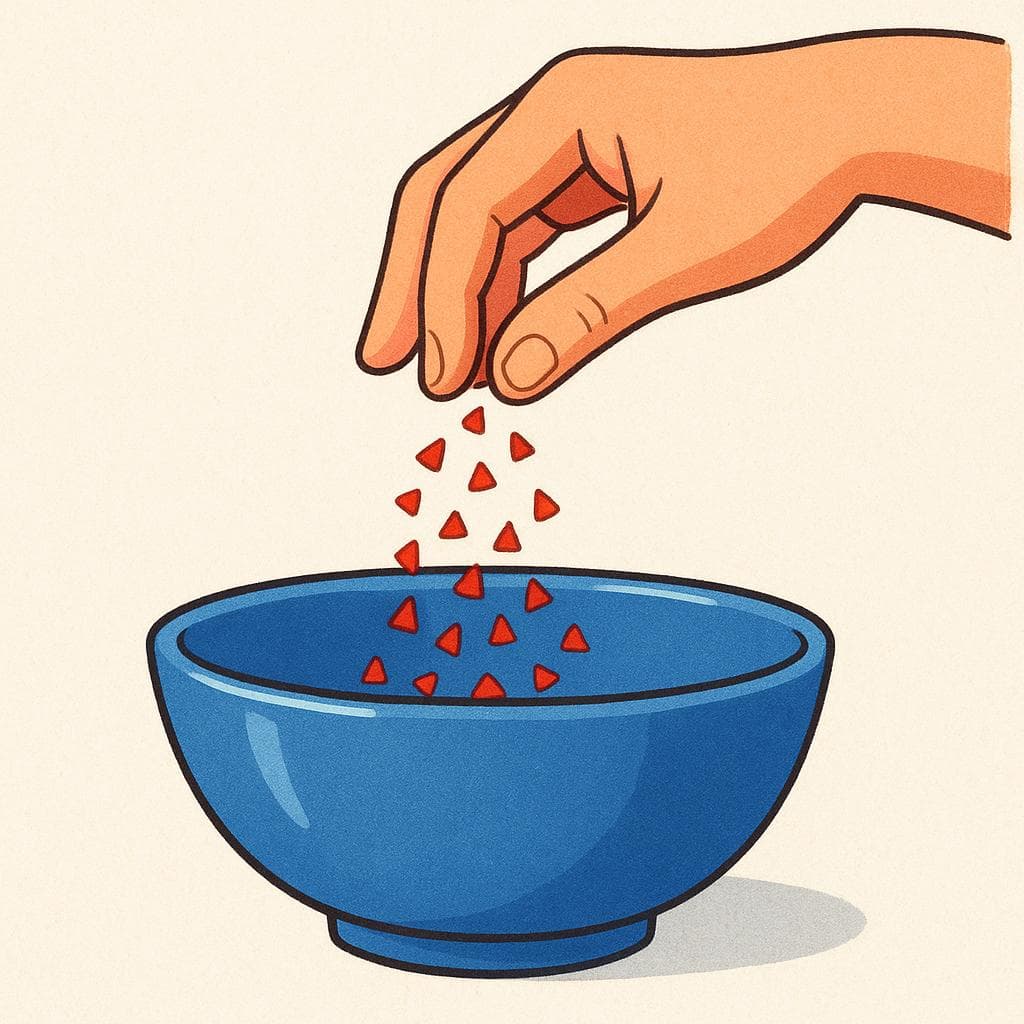
Use 'echarle' when you are pouring a liquid *into* something specific, often implying adding more to an existing amount.
Learn more →
Use 'llenar' specifically when the action is to fill a container completely or to its capacity with a liquid.
Learn more →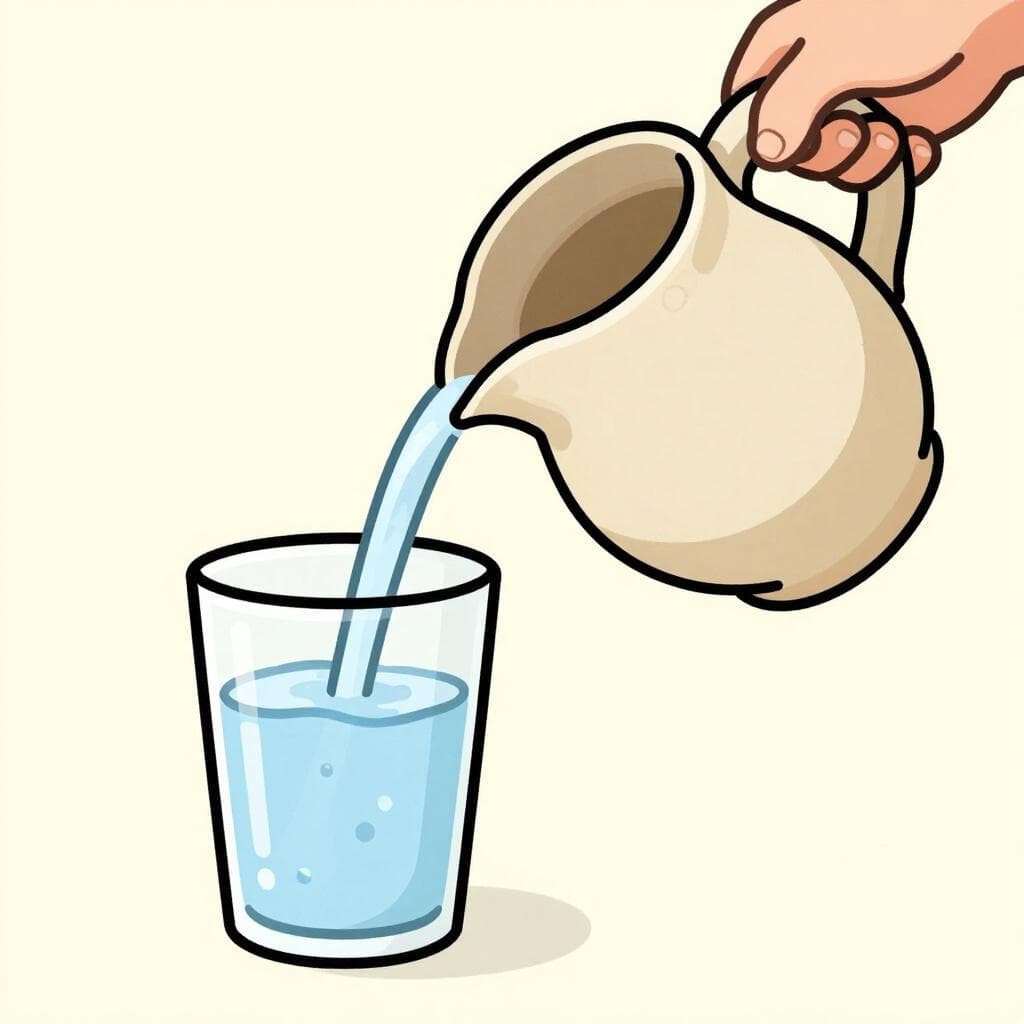
Use 'verter' when you are carefully transferring a liquid from one container to another, often with more precision.
Learn more →eh-CHAReˈt͡ʃaɾ

Examples
Voy a echarle un poco de sal a la sopa.
I'm going to add a little salt to the soup.
¿Puedes echar más gasolina al coche, por favor?
Can you put more gas in the car, please?
Echa el agua caliente en la tetera.
Pour the hot water into the kettle.
Use with Indirect Objects (Le/Les)
When you add something to something else (like salt to soup), you often use the indirect object pronoun 'le' or 'les': 'Le echo sal' (I add salt to it).
eh-CHAR-leheˈtʃaɾle
Examples
¿Puedes echarle más azúcar al café, por favor?
Can you add more sugar to the coffee, please?
No le eches tanta sal a la sopa, ya tiene suficiente.
Don't put so much salt in the soup; it already has enough.
Hay que echarle gasolina al coche antes de salir.
We have to put gas in the car before leaving.
The attached 'le'
When you see 'echarle', the 'le' means 'to it' or 'to him/her'. It's an indirect object pronoun showing what receives the addition (e.g., the coffee, the soup).
yeh-NAHRʎeˈnaɾ

Examples
Necesitas llenar el tanque de gasolina antes de viajar.
You need to fill the gas tank before traveling.
La camarera llenó mi taza de café otra vez.
The waitress filled my coffee cup again.
Vamos a llenar la piscina con agua de la manguera.
We are going to fill the pool with water from the hose.
Simple Regular Verb
This is a regular -AR verb, making its conjugation very predictable. Just follow the standard pattern for all tenses!
Confusing 'Llenar' and 'Llevar'
Mistake: “Using 'llevar' (to take/carry) when you mean 'llenar' (to fill).”
Correction: Remember the 'n' in 'llenar' sounds like 'in' in 'inundate' (to flood/fill up). Use 'Llené el cubo' (I filled the bucket).
behr-TEHRbeɾˈteɾ

Examples
Tienes que verter la leche en el tazón con cuidado.
You have to pour the milk into the bowl carefully.
Ella vertió un poco de vino en mi copa.
She poured a bit of wine into my glass.
Al escuchar la noticia, vertió lágrimas de emoción.
Upon hearing the news, she shed tears of emotion.
The 'E' to 'IE' Change
In the present tense, the 'e' in the middle of 'verter' changes to 'ie' whenever that part of the word is stressed. This happens for everyone except 'we' (nosotros) and 'you all' (vosotros).
Verter vs. Echar
While both mean to pour, 'verter' is often used for a controlled movement of liquid or in more formal contexts, whereas 'echar' is used for almost anything from pouring salt to throwing out trash.
Don't forget the stem change
Mistake: “Yo verto el agua.”
Correction: Yo vierto el agua. (The 'e' must change to 'ie' in the present tense).
Echar vs. Verter
Learners often confuse 'echar' and 'verter'. Remember that 'echar' is more general for adding or putting things in, while 'verter' implies a more deliberate transfer of liquid from one place to another.
Related Translations
Learn Spanish with Inklingo
Interactive stories, personalized learning, and more.