How to Say "warden" in Spanish
The most common Spanish word for “warden” is “guarda” — use 'guarda' when referring to someone responsible for a public area like a forest, park, or a building such as a museum or historical site.


guarda
GWAR-dahˈɡwaɾða

Examples
El guarda forestal vigila que no se produzcan incendios en el bosque.
The forest warden watches to ensure no fires occur in the woods.
El guarda del museo nos pidió que no tocáramos las obras.
The museum guard asked us not to touch the works.
La guarda forestal encontró un nido de águilas.
The forest warden found an eagle's nest.
Gender Invariant
When referring to the person, the word 'guarda' itself doesn't change based on gender, but the article (el or la) and any accompanying adjectives must match the person's gender.
Confusing Gender
Mistake: “Using 'guarda' with the incorrect article for the person's gender (e.g., calling a woman 'el guarda').”
Correction: Use 'el guarda' for a man and 'la guarda' for a woman. The word 'guarda' stays the same.
cuidador
kwee-dah-DORkwiðaˈðoɾ

Examples
El cuidador del acuario alimenta a los peces dos veces al día.
The aquarium keeper feeds the fish twice a day.
El cuidador del zoológico alimenta a los leones cada mañana.
The zookeeper feeds the lions every morning.
El cuidador de la finca vive en una casa pequeña cerca de la entrada.
The caretaker of the estate lives in a small house near the entrance.
Los cuidadores del parque mantienen los senderos limpios.
The park keepers keep the trails clean.
Using 'de' for connection
To specify what someone takes care of, always use the word 'de' (of). For example: 'cuidador de caballos' (horse keeper).
Confusing with 'Conserje'
Mistake: “Calling a building janitor a 'cuidador'.”
Correction: A building janitor is usually a 'conserje' or 'portero'. Use 'cuidador' for estates, parks, or animals.
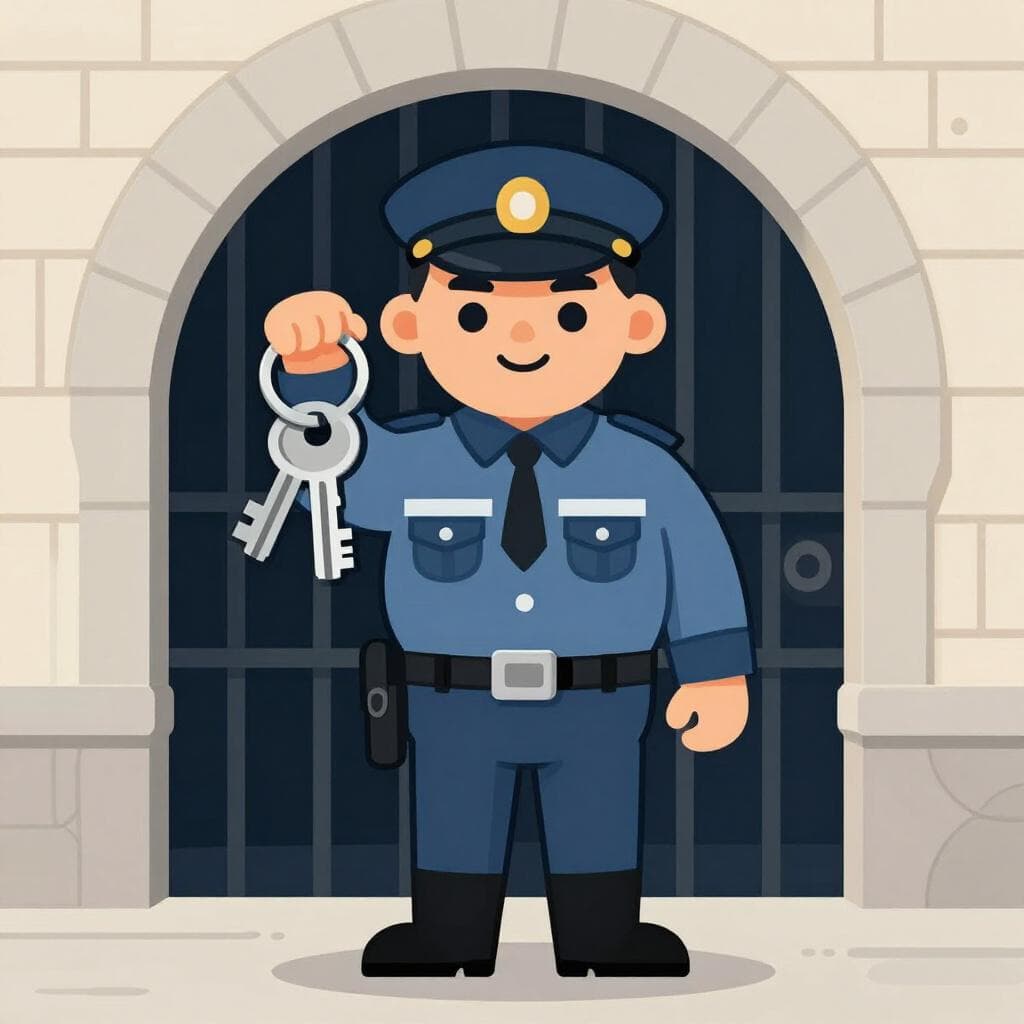
alcaide
ahl-KY-dehalˈkaide

Examples
El alcaide anunció nuevas medidas de seguridad en la prisión.
The warden announced new security measures at the prison.
El alcaide de la prisión supervisa todas las actividades diarias.
The prison warden supervises all daily activities.
En las novelas antiguas, el alcaide del castillo siempre era un caballero leal.
In old novels, the governor of the castle was always a loyal knight.
Los prisioneros pidieron hablar directamente con el alcaide.
The prisoners asked to speak directly with the warden.
Gender and Endings
While 'alcaide' usually refers to a man, the word 'alcaidesa' exists to specifically describe a woman holding this position.
Using 'alcaide' vs 'director'
In many modern Spanish-speaking countries, people use 'director de la cárcel' for everyday conversation. 'Alcaide' sounds more official or old-fashioned.
The 'Alcaide' vs 'Alcalde' Mix-up
Mistake: “Using 'alcaide' to mean the mayor of a city.”
Correction: Use 'alcalde' for the mayor. An 'alcaide' runs a prison or a fortress, not a city.
Guarda vs. Cuidador vs. Alcaide
Related Translations
Learn Spanish with Inklingo
Interactive stories, personalized learning, and more.