Restaurant & Ordering in Spanish
Navigating a restaurant in Spanish is a fantastic way to practice your language skills! This vocabulary set will help you order food and drinks, understand the menu, and interact with staff. You'll learn key terms for everything from starters to desserts, making your dining experiences much smoother and more enjoyable.
Quick Reference
| Spanish | English | Example | Level |
|---|---|---|---|
bar | bar | Quedamos en el bar de la esquina a las ocho. | A1 |
barra | bar | Pedimos dos cervezas directamente en la barra. | A1 |
café | coffee | Quiero un café con leche, por favor. | A1 |
cafetería | coffee shop | Quedamos en la cafetería de la esquina para hablar. | A1 |
camarero | waiter | Disculpe, camarero, ¿me trae la cuenta, por favor? | A1 |
cliente | customer | El cliente siempre tiene la razón. | A1 |
clientes | customers | Todos los clientes de la tienda salieron contentos con sus compras. | A1 |
entrada | entrance | La entrada al museo es por la puerta de cristal. | A1 |
entrante | starter | ¿Qué vamos a pedir de entrante? | A1 |
especialidad | specialty | ¿Cuál es tu especialidad en la universidad? | A2 |
menú | menu | ¿Podemos ver el menú, por favor? | A1 |
pedido | order | Mi pedido de zapatos llega mañana por la tarde. | A2 |
A1 — Beginner (17 words)
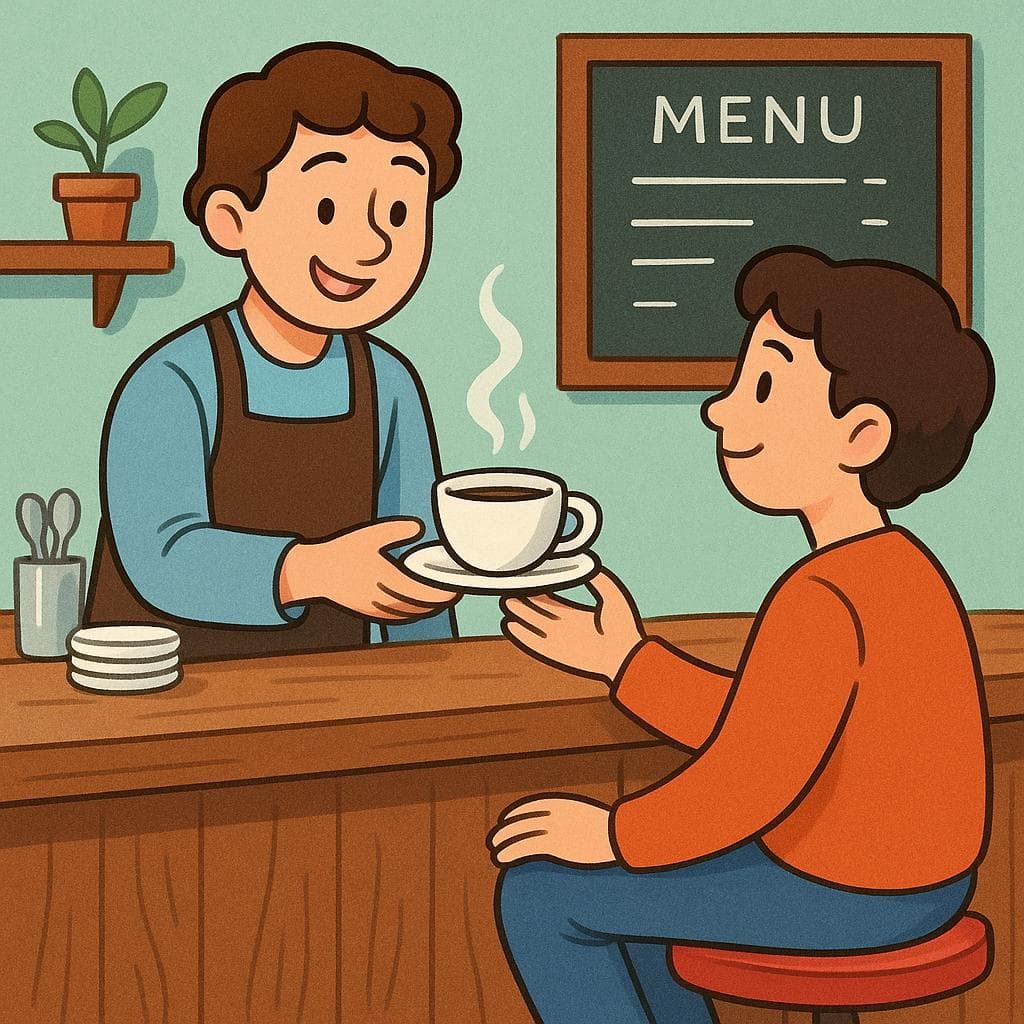
bar
“Quedamos en el bar de la esquina a las ocho.”
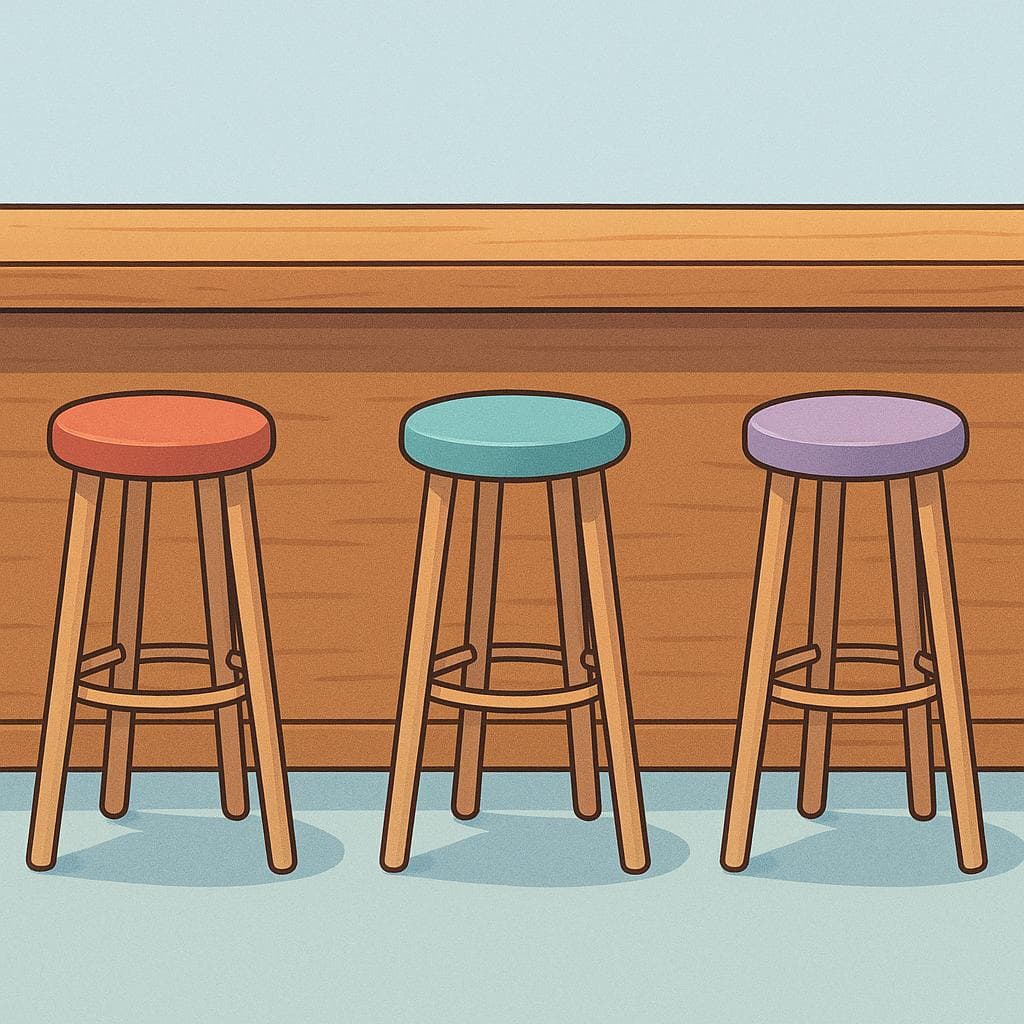
bar
“Pedimos dos cervezas directamente en la barra.”
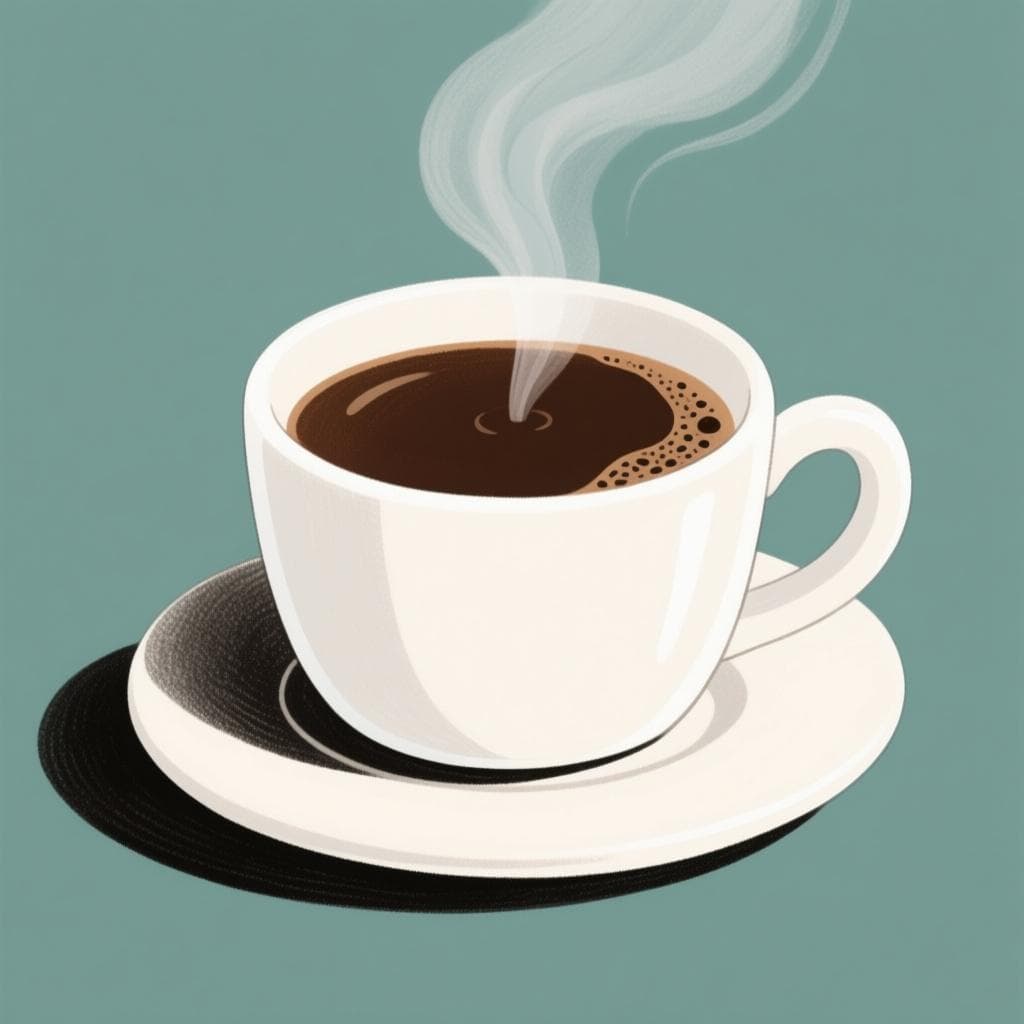
coffee
“Quiero un café con leche, por favor.”

coffee shop
“Quedamos en la cafetería de la esquina para hablar.”

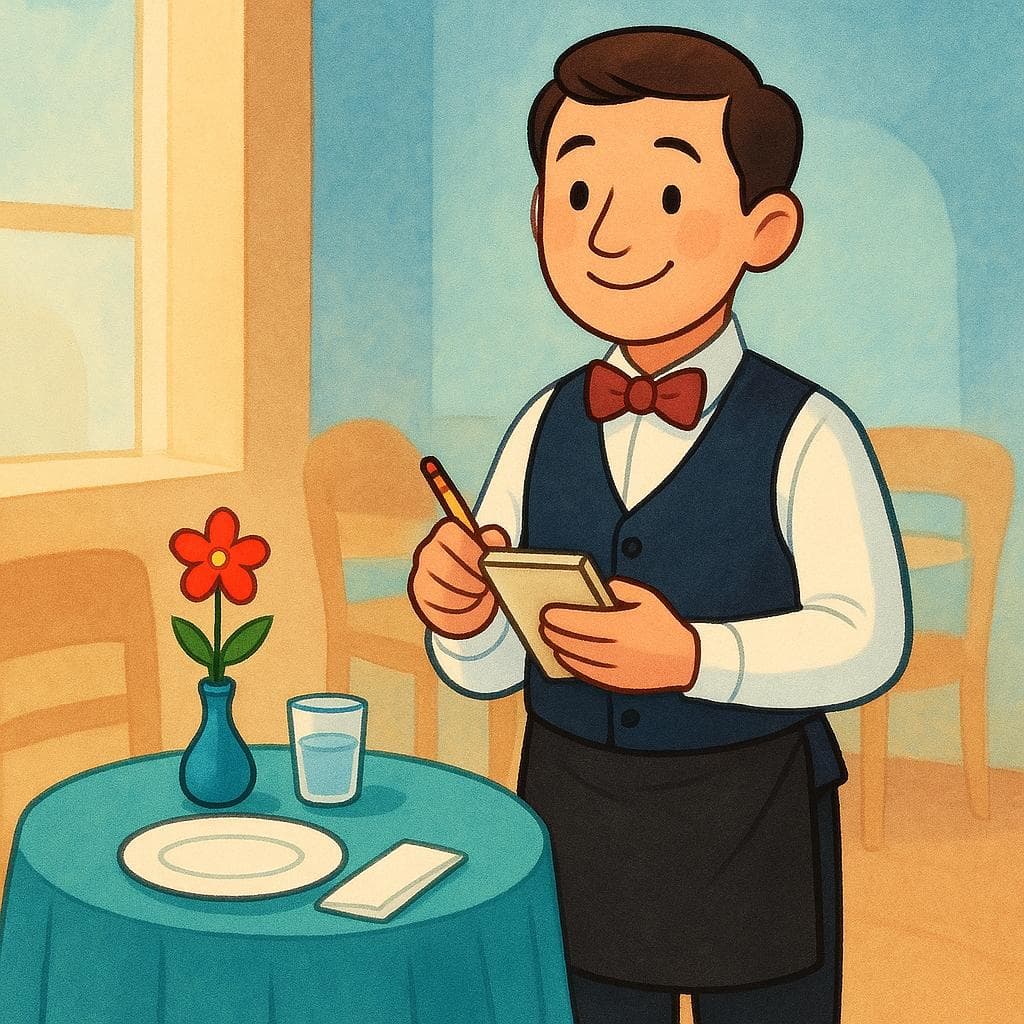
waiter
“Disculpe, camarero, ¿me trae la cuenta, por favor?”

customer
“El cliente siempre tiene la razón.”

customers
“Todos los clientes de la tienda salieron contentos con sus compras.”

entrance
“La entrada al museo es por la puerta de cristal.”
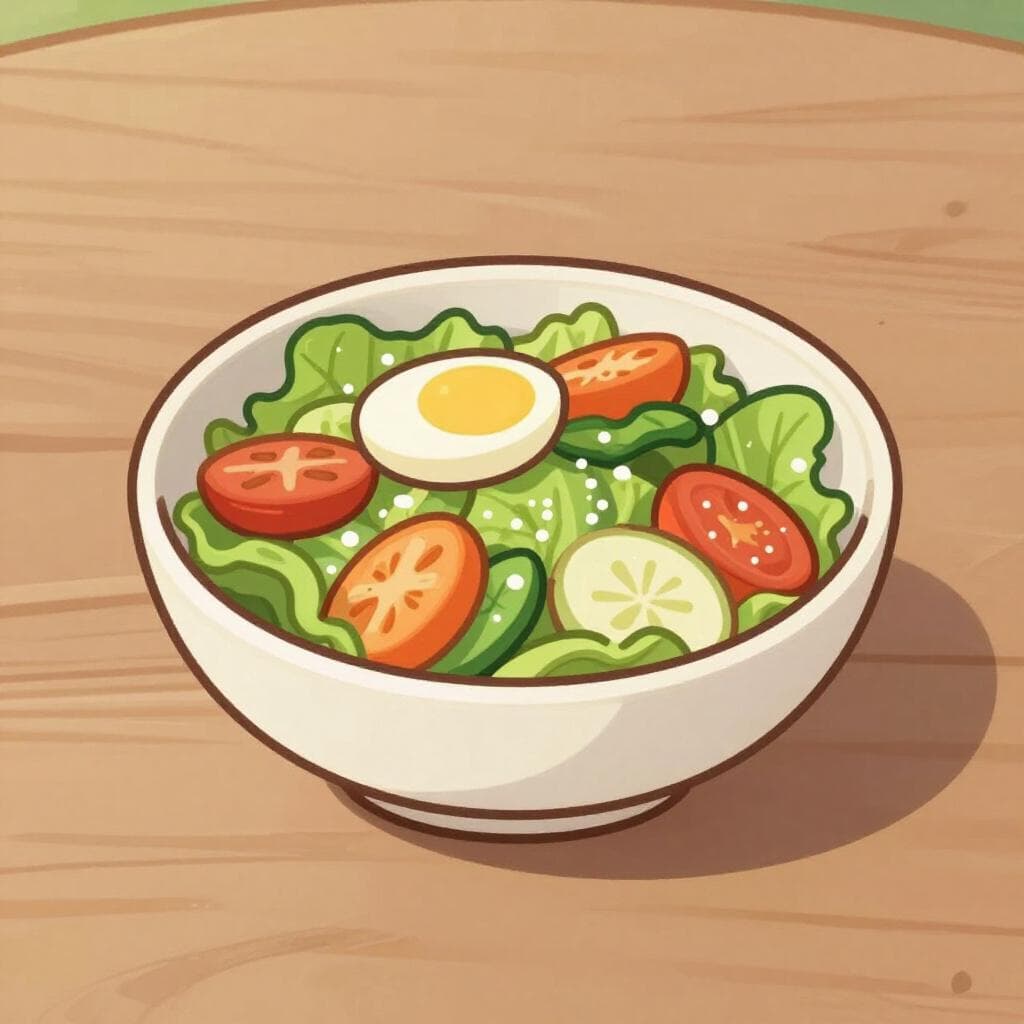
starter
“¿Qué vamos a pedir de entrante?”
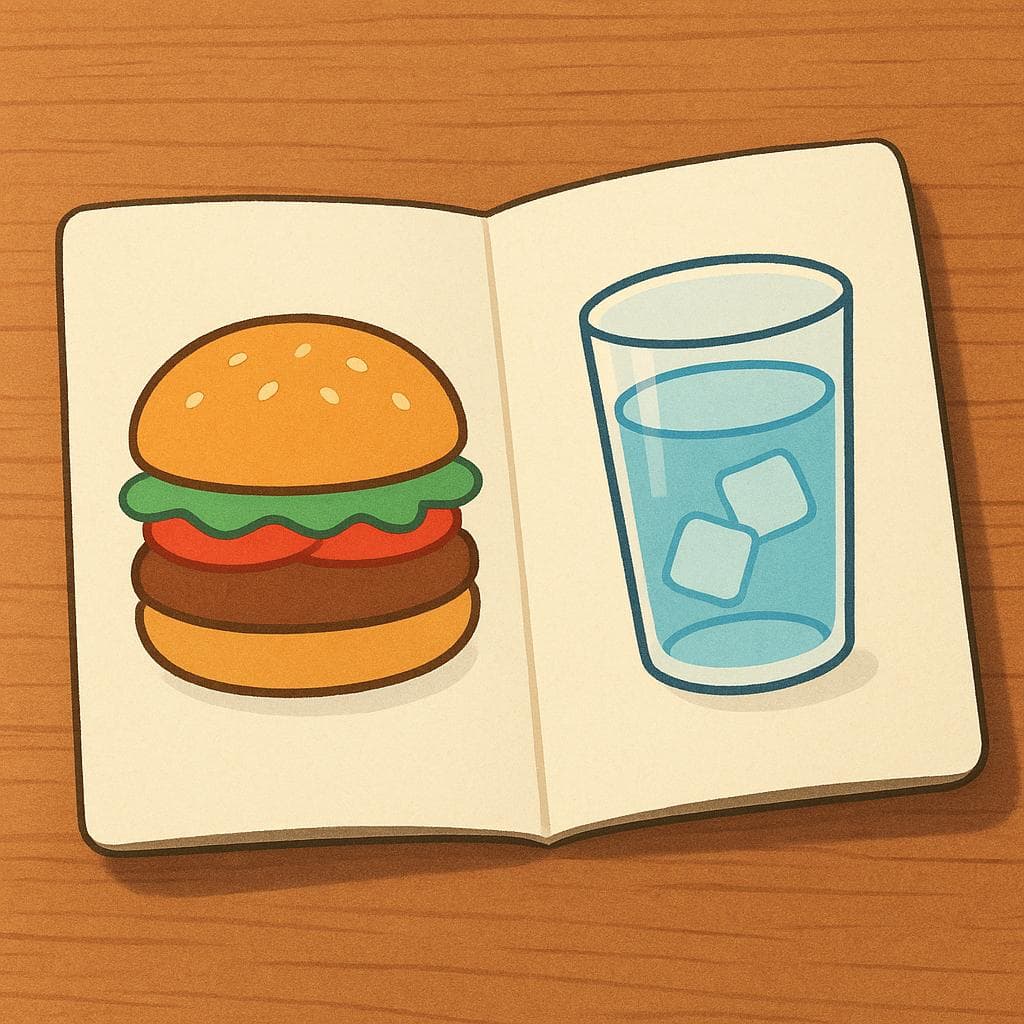
menu
“¿Podemos ver el menú, por favor?”

to ask for
“Voy a pedir ayuda con mi tarea.”
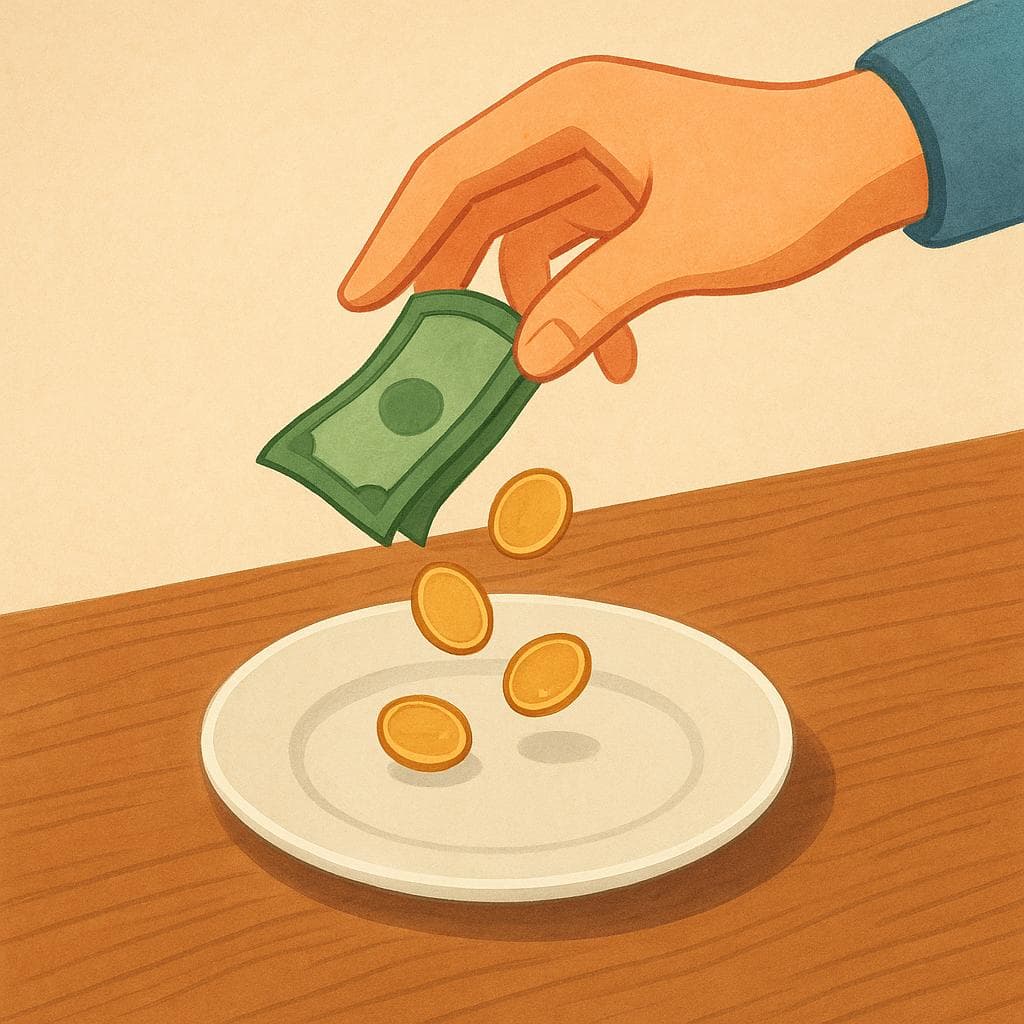
tip
“¿Dejamos una propina del diez por ciento?”
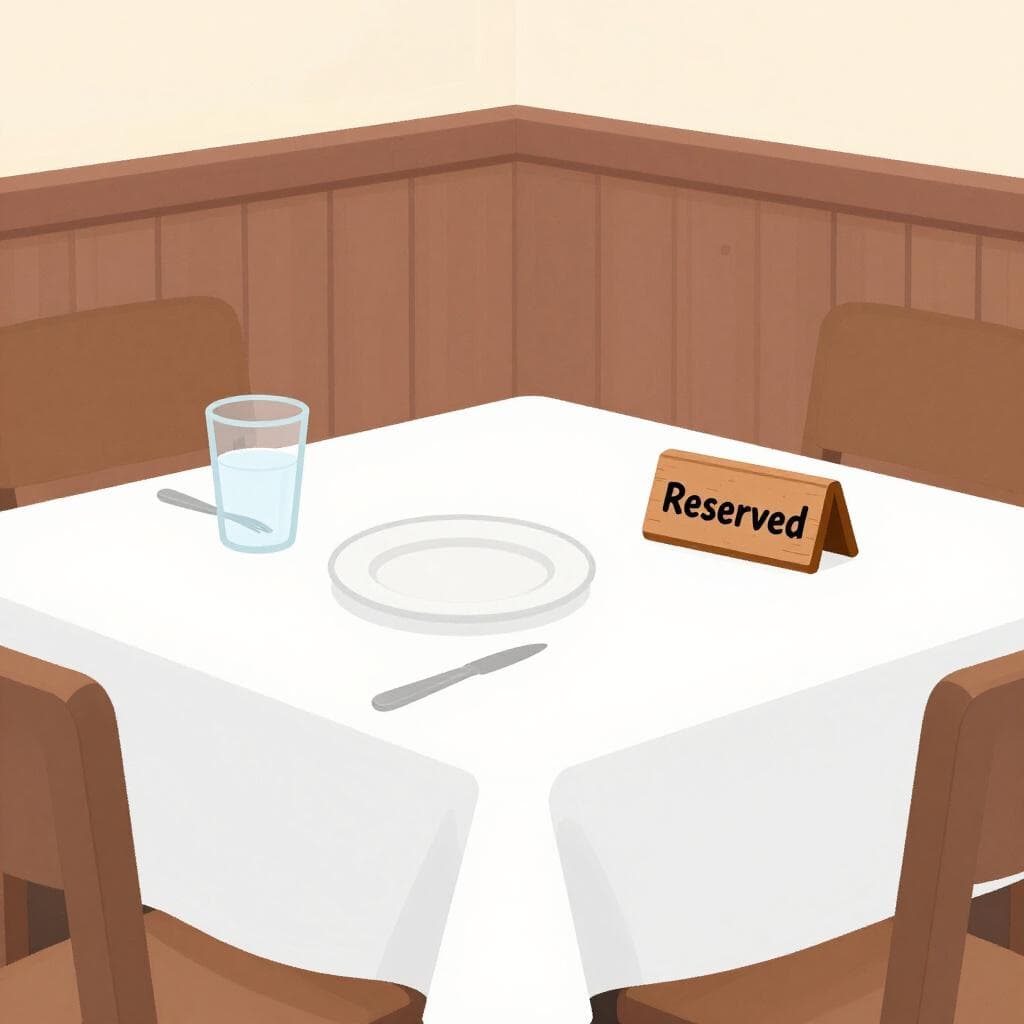
to book
“Quiero reservar una mesa para dos personas.”
restaurant
“¿Conoces un buen restaurante de comida mexicana cerca de aquí?”
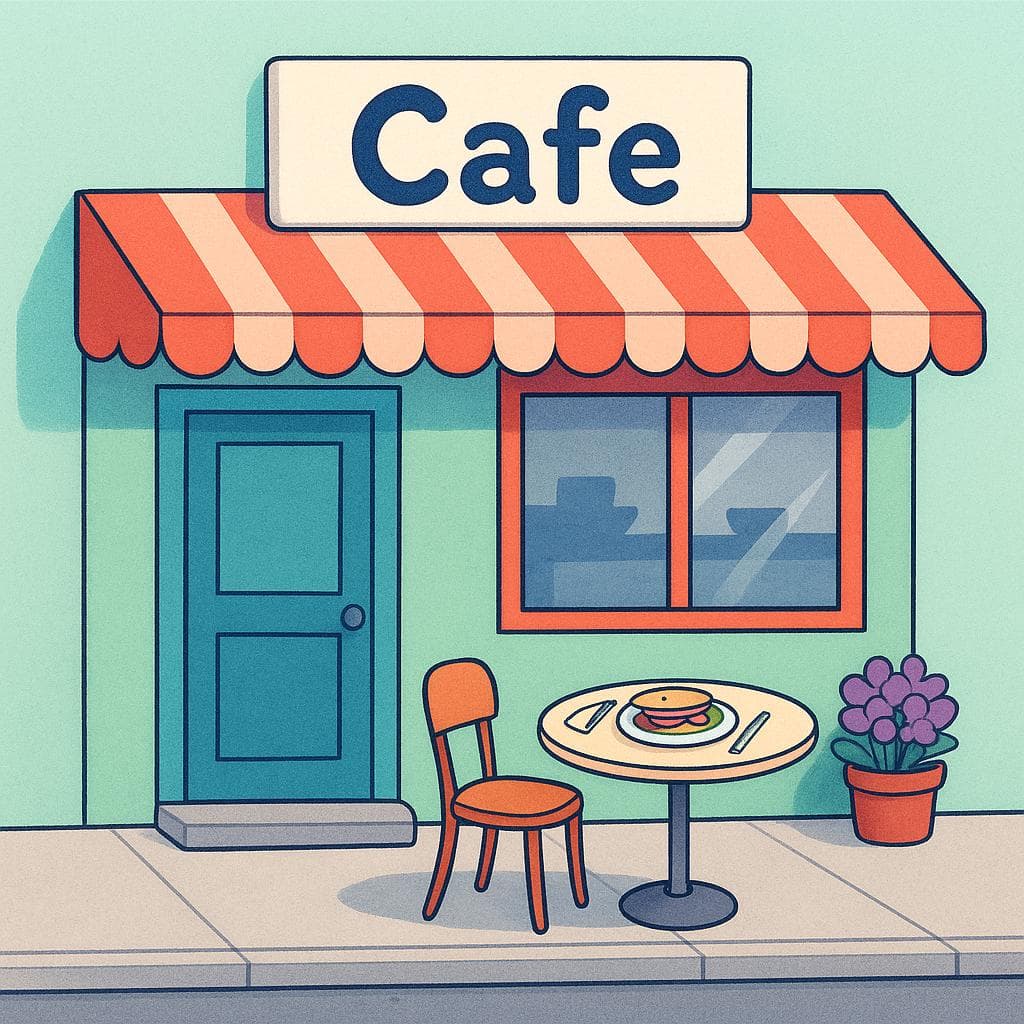
restaurants
“Hay muchos restaurantes italianos en esta ciudad.”
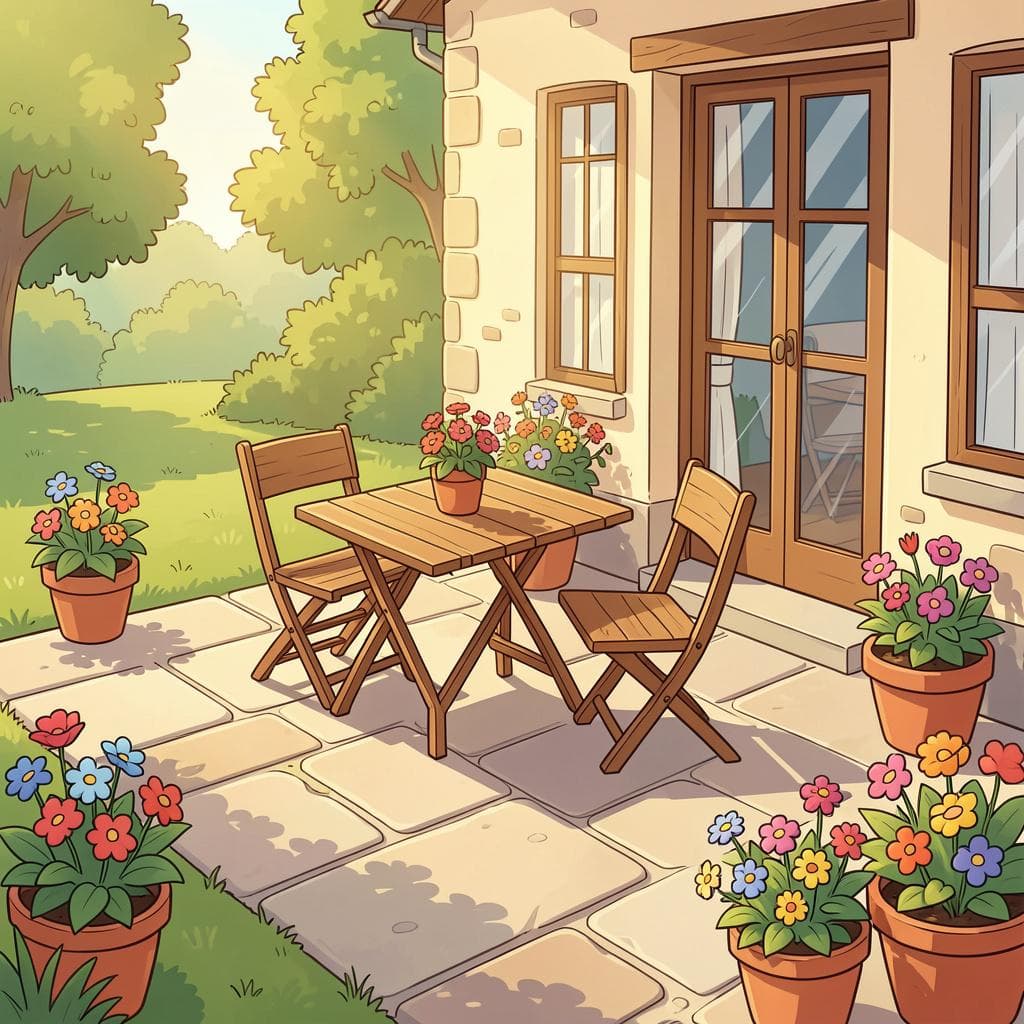
terrace
“Mi apartamento tiene una terraza con vistas al mar.”
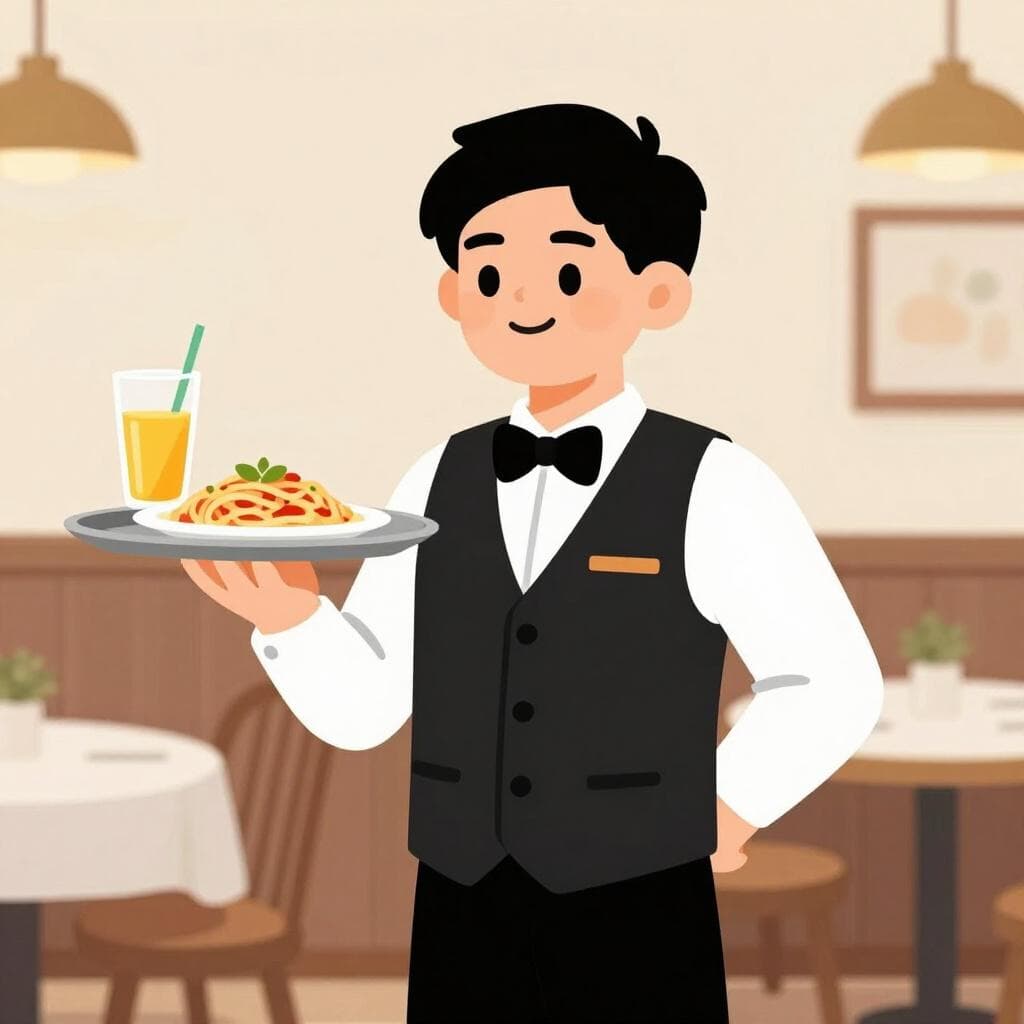
waiter
“El mesero trae la cuenta.”
A2 — Elementary (8 words)
specialty
“¿Cuál es tu especialidad en la universidad?”
order
“Mi pedido de zapatos llega mañana por la tarde.”
reservation
“¿Tienes una reserva a mi nombre?”
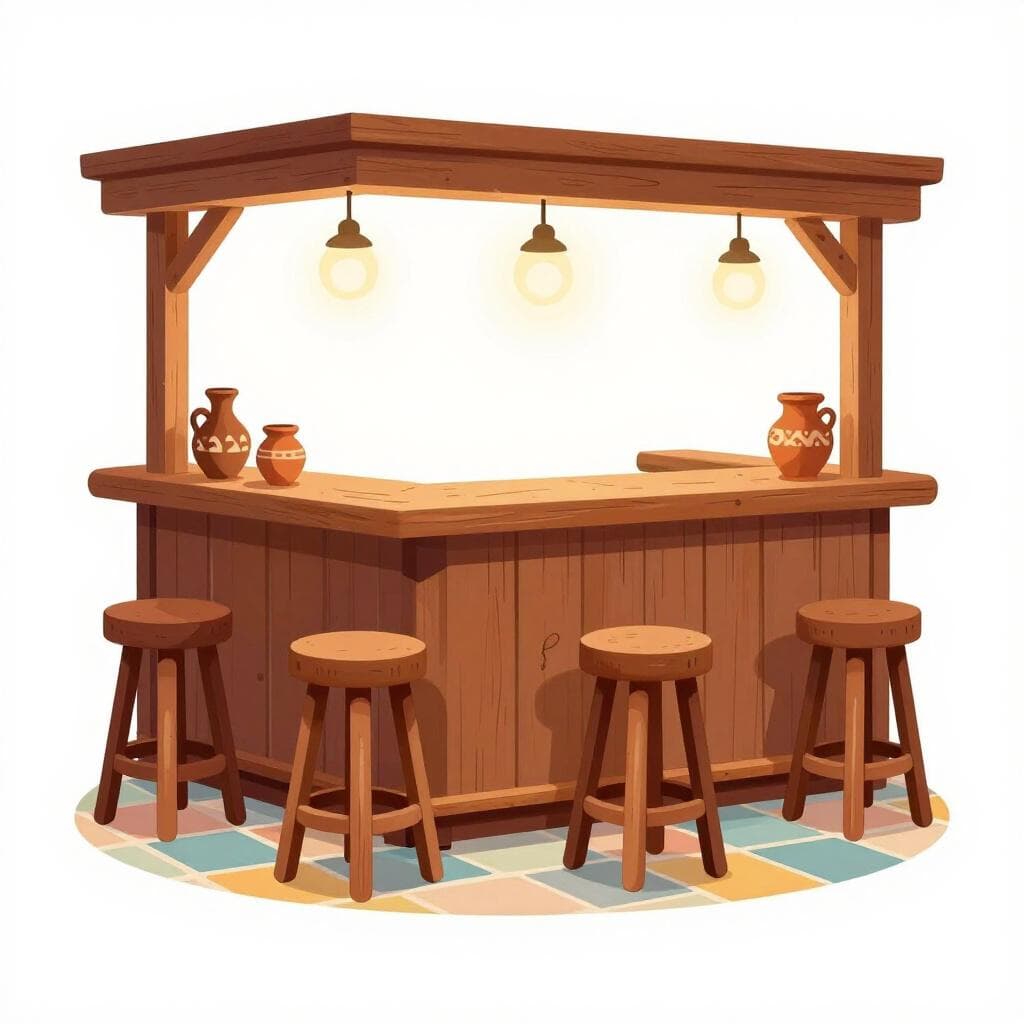
bar
“Vamos a la cantina para tomar unos tequilas y comer botanas.”

chef
“El chef preparó un plato delicioso con mariscos frescos.”
counter
“Por favor, deje su maleta en el mostrador.”
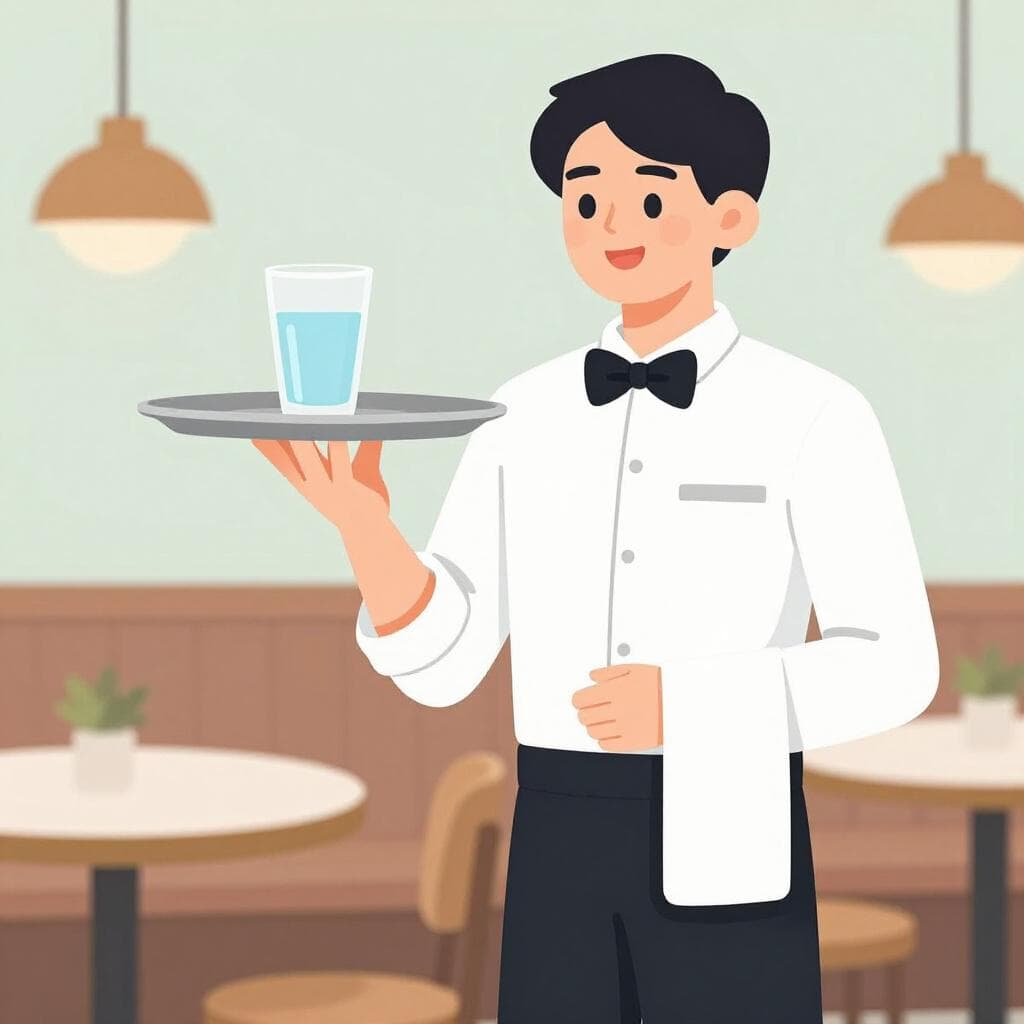
waiter
“¡Mozo! ¿Nos trae la cuenta, por favor?”
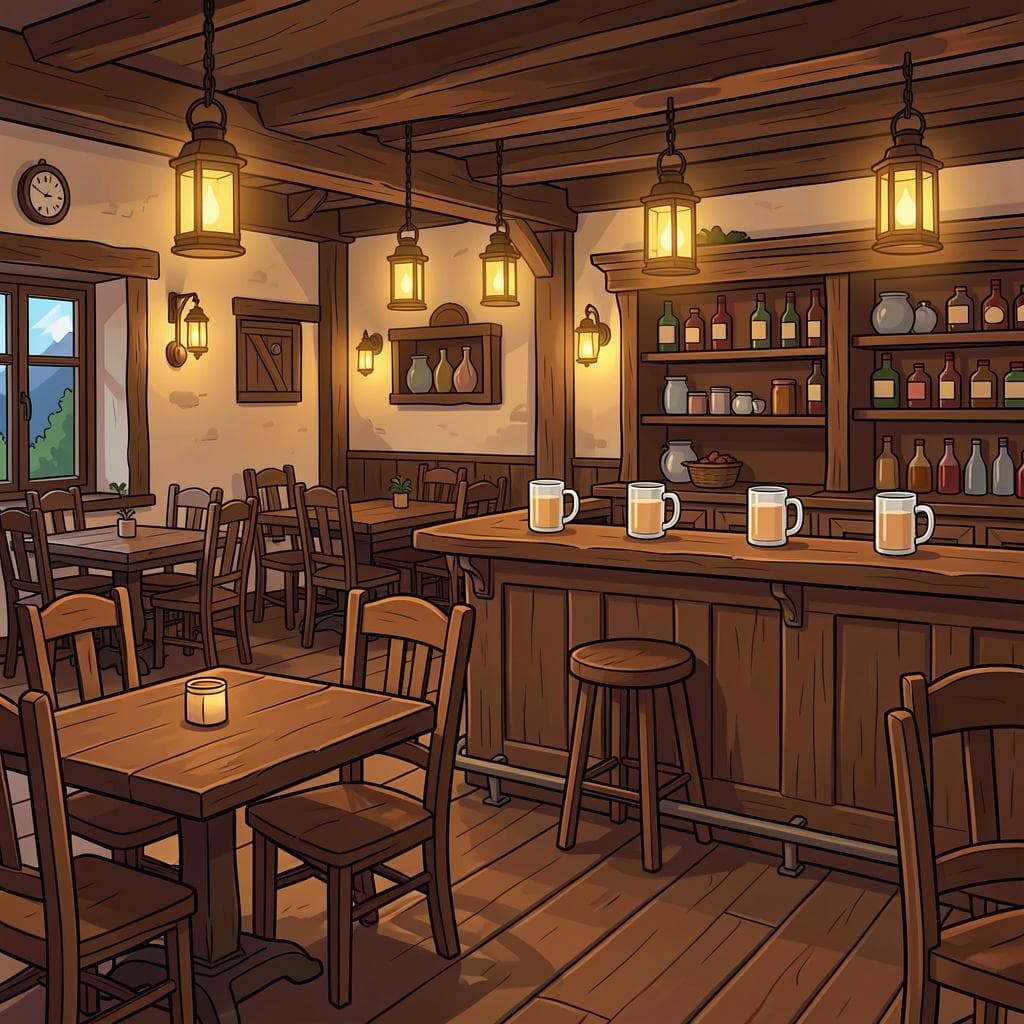
tavern
“Quedamos en la taberna de la esquina para tomar un vino.”
B1 — Intermediate (1 words)

clientele
“Este café tiene una clientela muy fiel.”
Grammar Tips
Gender Agreement for Food Items
Remember that most nouns in Spanish have a gender. For food, 'el plato' (dish) and 'el postre' (dessert) are masculine, while 'la sopa' (soup) and 'la ensalada' (salad) are feminine. Adjectives describing them must agree, like 'el plato principal' (the main dish) or 'la sopa caliente' (the hot soup).
Pluralizing Menu Items
When ordering multiple items or referring to a list, use plurals. For example, 'entrante' (starter) becomes 'entrantes' (starters). This applies to most nouns: 'el camarero' (waiter) to 'los camareros' (the waiters), 'el vino' (wine) to 'los vinos' (the wines).
Asking for 'Some' or 'A Bit'
Instead of 'some', you often use the partitive article 'un poco de' (a little bit of) or just the noun itself when ordering. For instance, 'Quiero un poco de agua' (I want some water) or simply 'Quiero agua'.
Common Mistakes
Incorrectly using 'entrance'
Mistake: “Quiero la entrada de atún.”
Correction: Quiero el entrante de atún. 'Entrada' usually refers to a ticket or admission, while 'entrante' is the correct term for a starter or appetizer on a menu.
Confusing 'bar' and 'counter'
Mistake: “Me siento en la barra del bar.”
Correction: Me siento en la barra. 'Barra' refers to the counter itself, whether it's in a bar or a restaurant. 'Bar' is the establishment.
Wrong gender for 'specialty'
Mistake: “La especialidad es muy bueno.”
Correction: La especialidad es muy buena. 'Especialidad' is a feminine noun, so the adjective 'bueno' must also be feminine ('buena') to agree.
Cultural Notes
Tipping Customs
Tipping culture varies significantly between Spain and Latin America. In Spain, service is often included, and a small tip (around 5-10%) is appreciated for excellent service, usually left on the table. In many Latin American countries, tipping is more customary, often around 10-15%, and sometimes a service charge is already added to the bill.
Meal Times
Spanish meal times are typically later than in many English-speaking countries. Lunch ('la comida') is often between 2-4 PM, and dinner ('la cena') can be as late as 9-11 PM. Restaurants might close for a few hours in the afternoon before reopening for dinner.