How to Say "grudge" in Spanish
The most common Spanish word for “grudge” is “rencor” — use 'rencor' for a deep-seated, often bitter feeling of ill will or resentment stemming from a past wrong or injury.



rencor
rren-korreŋˈkoɾ

Examples
Ella todavía siente rencor por cómo la trataron en ese trabajo.
She still feels resentment over how they treated her at that job.
No puedes vivir feliz si guardas tanto rencor en tu corazón.
You cannot live happily if you hold so much bitterness in your heart.
Después de años, el rencor entre los hermanos se había disipado finalmente.
After years, the grudge between the siblings had finally faded away.
Always Masculine
Even though many abstract nouns ending in '-or' are masculine, remember that 'rencor' always uses the masculine article ('el rencor').
Always Singular
'Rencor' is treated as an uncountable feeling, like 'anger' or 'love.' You almost never use it in the plural form.
Using the wrong preposition
Mistake: “Tener rencor *a* alguien. (Incorrect use of 'a')”
Correction: Tener rencor *hacia* alguien (or *contra* alguien). Use 'hacia' or 'contra' to show who the negative feeling is directed toward.
resentimiento
reh-sen-tee-mee-en-tohresentiˈmjento

Examples
No guardo ningún resentimiento hacia él.
I don't hold any resentment toward him.
Su voz estaba llena de resentimiento.
Her voice was full of bitterness.
Es difícil superar el resentimiento después de una traición.
It is hard to overcome resentment after a betrayal.
Always Masculine
Even though it ends in '-miento', it's a masculine noun. Always use 'el' or 'un' with it.
Using 'por' to show cause
When you want to say why someone feels resentment, use the word 'por' (because of). For example: 'resentimiento por el pasado'.
Using 'en' for targets
Mistake: “Siento resentimiento en él.”
Correction: Siento resentimiento hacia él (or 'contra él'). Use 'hacia' (toward) or 'contra' (against) to point the emotion at a person.
bronca
BRON-kahˈbɾoŋka
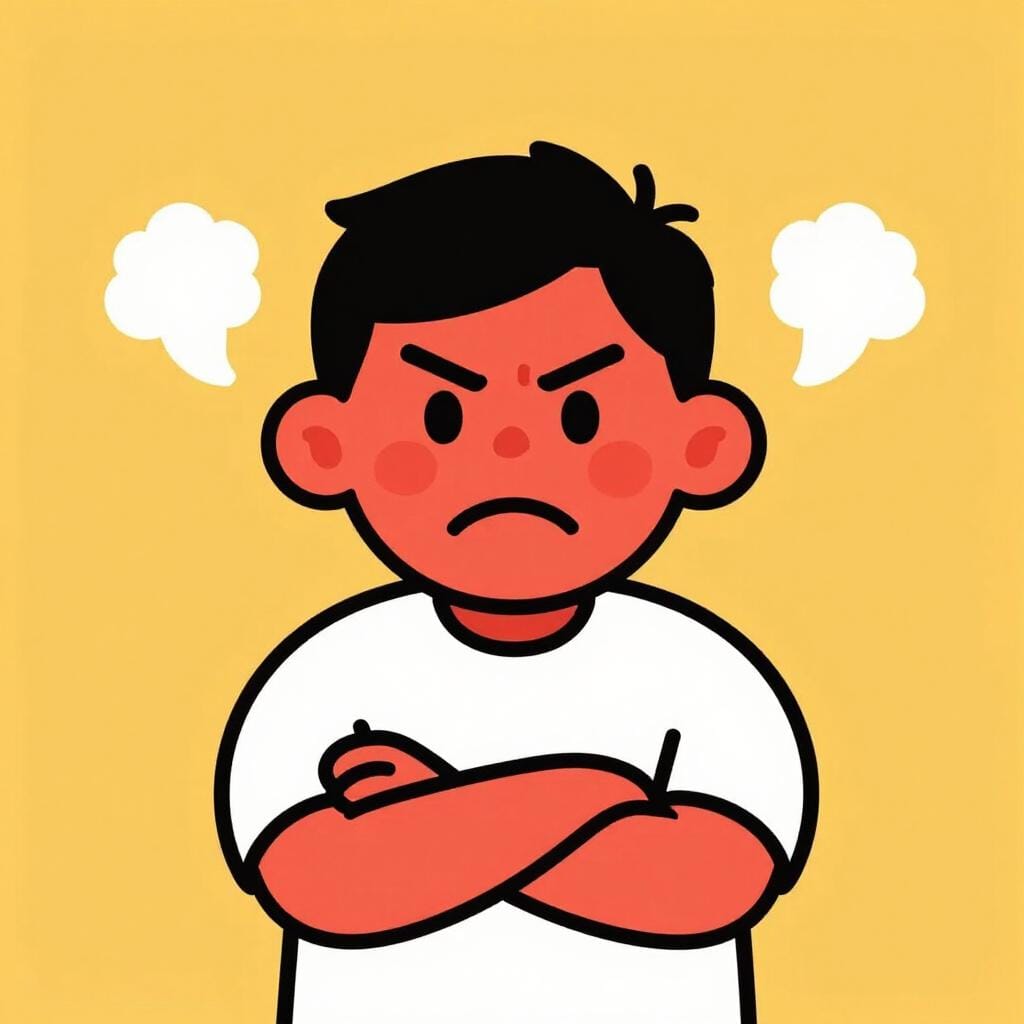
Examples
Me da bronca que siempre mienta.
It makes me angry that he always lies.
Le tengo bronca desde aquel día.
I've had a grudge against him since that day.
¡Qué bronca! Se me rompió el teléfono.
How frustrating! My phone broke.
The 'Gustar' Pattern
When using 'dar bronca' (to make angry), the sentence structure is like 'gustar.' You say 'Me da bronca...' (To me, it gives anger...).
Expressing Feelings
When followed by 'que' (that), use the special 'wishes and feelings' verb form: 'Me da bronca que él NO VENGA' (It angers me that he isn't coming).
Using the wrong verb
Mistake: “Yo soy bronca.”
Correction: Tengo bronca. (Anger is something you have or feel, not something you are).
manía
Examples
Creo que el profesor me tiene manía porque siempre me pregunta a mí.
I think the teacher has it in for me because he always asks me questions.
Rencor vs. Resentimiento
Related Translations
Learn Spanish with Inklingo
Interactive stories, personalized learning, and more.