How to Say "hoarse" in Spanish
The most common Spanish word for “hoarse” is “tomada” — use 'tomada' when referring to a voice that is temporarily hoarse, often due to a cold, overuse, or shouting, implying it's 'taken' or affected.
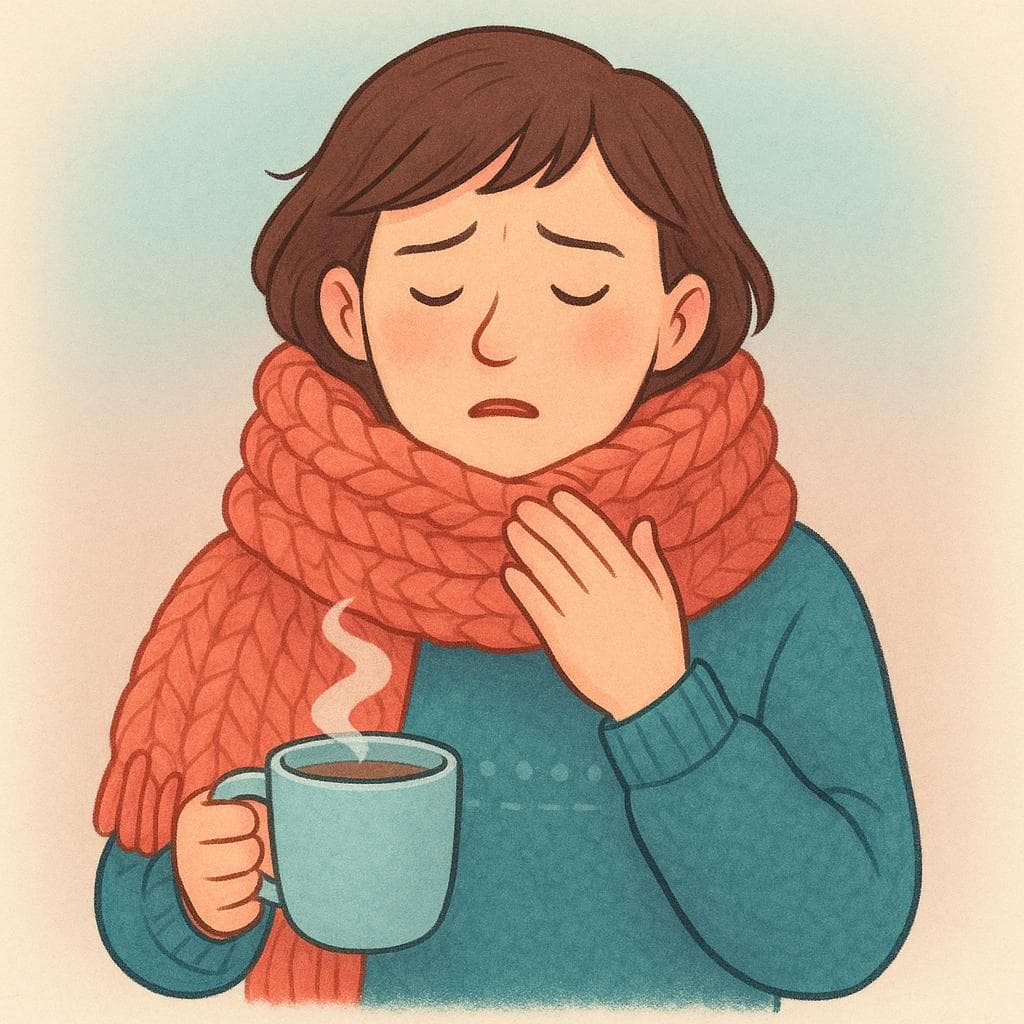

tomada
toh-MAH-dahtoˈmaða

Examples
Después de gritar en el concierto, tengo la voz tomada.
After shouting at the concert, my voice is hoarse.
No puedo cantar hoy, tengo la voz tomada.
I can't sing today, my voice is hoarse.
Describing the Voice
Since 'voz' (voice) is a feminine word in Spanish, we always use the feminine 'tomada' to describe it.
bronca
BRON-kahˈbɾoŋka

Examples
Su voz bronca añadía un aire de misterio a sus historias.
His hoarse voice added an air of mystery to his stories.
Hablaba con una voz bronca y profunda.
He spoke with a harsh and deep voice.
La superficie era bronca al tacto.
The surface was rough to the touch.
Escuché una risa bronca al final del pasillo.
I heard a coarse laugh at the end of the hallway.
Adjective Agreement
Since this is the feminine form of 'bronco,' it must match the word it describes (like 'la voz').
Confusing with the Noun
Mistake: “Tengo una voz de bronca.”
Correction: Tengo una voz bronca. (Don't use 'de' here; 'bronca' is the adjective describing the voice).
Hoarse vs. Hoarse
Learn Spanish with Inklingo
Interactive stories, personalized learning, and more.