How to Say "leader" in Spanish
The most common Spanish word for “leader” is “jefe” — use 'jefe' when referring to someone in charge of a team, department, or project, often in a work or organizational setting.






jefe
HEH-fehˈxefe

Examples
Mi jefe es muy amable y comprensivo.
My boss is very kind and understanding.
Tengo una reunión con el jefe de departamento.
I have a meeting with the department head.
Ella es la jefa del equipo de marketing.
She is the head of the marketing team.
Male and Female Bosses: 'Jefe' vs. 'Jefa'
To talk about a female boss, you use 'la jefa'. The word changes its ending to match the person's gender: 'el jefe' for a man, 'la jefa' for a woman. The same goes for the plural: 'los jefes' and 'las jefas'.
Confusing 'Jefe' with 'Patrón'
Mistake: “Using 'patrón' to mean 'boss' in every situation.”
Correction: 'Jefe' is the standard, modern word for a boss or manager. 'Patrón' can also mean boss, but it often has an older feel, like 'master' or 'owner' of a small business or farm. Stick with 'jefe' for most office and work situations.
líder
Examples
El presidente es el líder del país.
The president is the leader of the country.
capitán
Examples
El capitán del equipo marcó el gol de la victoria.
The team captain scored the winning goal.
guía
Examples
El guía del museo explicó las obras de arte.
The museum guide explained the works of art.
gobernante
go-ber-NAN-teɡoβerˈnante

Examples
El pueblo eligió a un nuevo gobernante.
The people chose a new ruler.
Es una gobernante muy respetada en toda la región.
She is a very respected leader in the whole region.
Los gobernantes deben trabajar por el bienestar de los ciudadanos.
Rulers must work for the well-being of the citizens.
One word for both genders
This word stays the same whether you are talking about a man or a woman. Just change the 'el' to 'la' (el gobernante / la gobernante).
Plural form
To make it plural, just add an 's' at the end: 'los gobernantes'.
Gobernante vs. Gobernador
Mistake: “Using 'gobernador' to mean any world leader.”
Correction: Use 'gobernante' for a general leader or ruler. Use 'gobernador' specifically for a person in charge of a province or a state (like the Governor of California).
The 'Gobernanta' Trap
Mistake: “Saying 'la gobernanta' for a female political leader.”
Correction: Say 'la gobernante'. In Spanish, 'una gobernanta' usually refers to a head housekeeper in a hotel, not a politician!
dirigente
dee-ree-hen-tehdiɾiˈxente

Examples
La dirigente del sindicato convocó a una reunión.
The union leader called a meeting.
Los dirigentes del club están contentos con los resultados.
The club officials are happy with the results.
Es un joven dirigente con mucho futuro en la política.
He is a young leader with a great future in politics.
One ending for everyone
This word doesn't change its ending to 'a' for women. You simply change the 'el' to 'la' (el dirigente vs. la dirigente).
The '-nte' pattern
The ending '-nte' in Spanish is like adding '-er' in English. It describes the person doing the action (the one who directs).
Avoid 'dirigenta'
Mistake: “La dirigenta del grupo.”
Correction: La dirigente del grupo. While 'dirigenta' exists in some very informal regional speech, 'la dirigente' is the standard and most accepted form.
cabeza
ka-BEH-sakaˈβeθa

Examples
Mi madre es la cabeza de la familia.
My mother is the head of the family.
El equipo está a la cabeza de la liga.
The team is at the top of the league.
El director es la cabeza visible de la empresa.
The director is the visible head of the company.
referente
reh-feh-REHN-tehrefeˈɾente

Examples
Esta empresa es un referente en el sector de la tecnología.
This company is a benchmark in the technology sector.
Ella se convirtió en un referente para las jóvenes científicas.
She became a role model for young female scientists.
Necesitamos un referente claro para medir nuestro progreso.
We need a clear point of reference to measure our progress.
One word for both genders
Even though 'referente' ends in 'e', it is usually used as a masculine noun ('un referente') when referring to an abstract concept or a group, but you can say 'una referente' if you are specifically talking about a woman as a role model.
Don't confuse with 'referencia'
Mistake: “Usar 'una referencia' para hablar de una persona que admiras.”
Correction: Use 'un referente' for a person or entity that serves as a model. 'Referencia' is better for citations in a book or directions to a place.
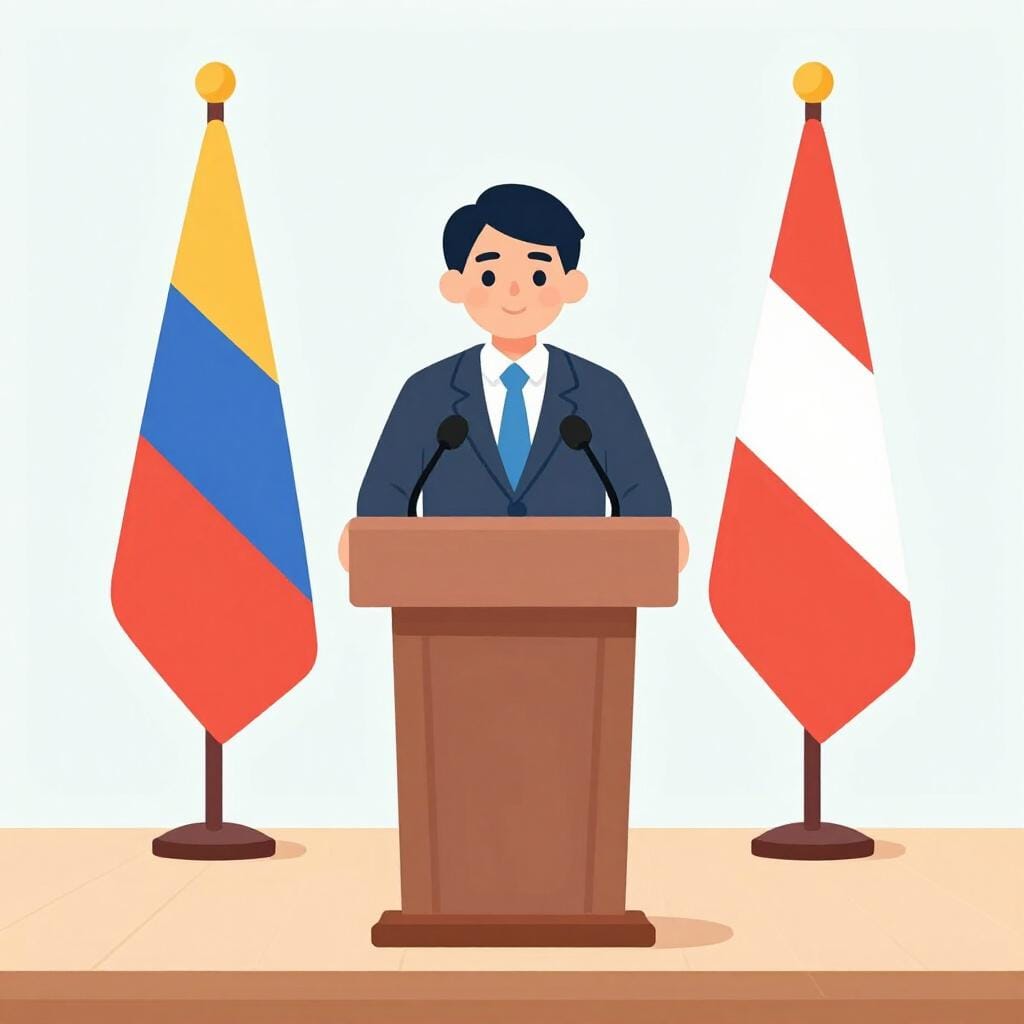
mandatario
man-dah-TAH-ryohman.da.ˈta.ɾjo
Examples
El mandatario dio un discurso sobre la economía.
The head of state gave a speech about the economy.
Los mandatarios de la región se reunieron en la cumbre.
The regional leaders met at the summit.
El primer mandatario insistió en la necesidad de paz.
The president/top leader insisted on the need for peace.
Gendered Ending
This specific form ends in -o and refers to a man. To talk about a female leader, change the ending to -a to make 'mandataria'.
Not for 'Boss'
Mistake: “Using 'mandatario' to describe your boss at work.”
Correction: Use 'jefe' for a work boss; 'mandatario' is only for top political or legal roles.
Choosing Between 'Jefe' and 'Líder'
Related Translations
Learn Spanish with Inklingo
Interactive stories, personalized learning, and more.