How to Say "to check" in Spanish
The most common Spanish word for “to check” is “asegurar” — use 'asegurarse' when you want to ensure or make certain that something is true or in a particular state, often before proceeding.

asegurar
ah-seh-goo-RAHRaseɣuˈɾaɾ
Examples
Asegúrate de que tienes las llaves antes de cerrar.
Make sure that you have the keys before closing up.
Me aseguré de que todos estuvieran bien después del accidente.
I made sure that everyone was okay after the accident.
Reflexive Action
When using 'asegurarse,' the 'se' tells us that the action of checking or verifying is directed back at the speaker ('I make sure myself').
Using 'Que'
This meaning is almost always followed by 'de que' (or just 'que' in some regions) and then the information you are verifying.
Dropping the Pronoun
Mistake: “Asegura de que tienes el dinero. (Missing reflexive pronoun)”
Correction: Asegúrate de que tienes el dinero. (The pronoun 'te' is needed because you are telling the person to check for themselves.)
chequear
che-ke-ARt͡ʃe.keˈaɾ

Examples
Dame un minuto, tengo que chequear mi correo.
Give me a minute, I have to check my email.
Por favor, chequea si la puerta está cerrada.
Please, check if the door is closed.
El mecánico chequeó los frenos del coche.
The mechanic checked the car's brakes.
A Borrowed Word
This word is an 'anglicism,' meaning it was borrowed from the English word 'check.' It behaves exactly like a regular Spanish -ar verb.
Direct Action
Unlike some verbs that need a small word like 'de' or 'a' after them, you can go straight to the object: 'chequear algo' (check something).
Using it in Spain
Mistake: “Using 'chequear' in a formal meeting in Madrid.”
Correction: In Spain, it's better to use 'revisar' or 'comprobar' as 'chequear' is seen as a very informal Latin American term.
comprobar
kom-proh-BARkom.pɾoˈβaɾ
Examples
Necesitas comprobar la hora de salida del tren en la pantalla.
You need to check the train's departure time on the screen.
El policía comprobó mi identidad antes de dejarme pasar.
The police officer verified my identity before letting me pass.
Compruebo dos veces el correo electrónico antes de enviarlo.
I double-check the email before sending it.
Stem Change 'O' to 'UE'
In the present tense, the 'o' changes to 'ue' when the stress falls on the root word (e.g., 'yo compruebo'). This change skips the 'nosotros' and 'vosotros' forms.
Confusing 'comprobar' and 'chequear'
Mistake: “Using 'chequear' (a Spanglish verb) when 'comprobar' is more formal and appropriate for verifying facts or documents.”
Correction: Use 'comprobar' when the action involves confirming accuracy or validity; use 'revisar' or 'mirar' for a simple look-over.
verificar
beh-ree-fee-KAHRbeɾifiˈkaɾ
Examples
Por favor, verifica tu correo electrónico para activar la cuenta.
Please check your email to activate the account.
El sistema tiene que verificar tu contraseña.
The system needs to verify your password.
Debemos verificar los datos antes de publicar el informe.
We must verify the data before publishing the report.
The Spelling Swap
In the 'I' form of the past (preterite) and in all 'wish' forms (subjunctive), the 'c' changes to 'qu'. This is just to keep the hard 'K' sound: 'verifiqué' instead of 'verificé'.
Verificar vs. Revisar
Mistake: “Using 'verificar' when you just want to look over something casually.”
Correction: Use 'revisar' for browsing or reviewing, and 'verificar' when you specifically need to prove something is correct or true.
consultar
kon-sool-tahrkonsulˈtaɾ
Examples
Debes consultar el diccionario para esa palabra.
You should check the dictionary for that word.
Consulté el mapa para encontrar la calle.
I checked the map to find the street.
Antes de viajar, consulto siempre el clima.
Before traveling, I always check the weather.
Direct Checking
When checking a thing like a book or a website, you don't need a word in between. Just 'consultar' + the thing.
Using 'mirar' for data
Mistake: “Mirar el diccionario.”
Correction: Consultar el diccionario. Use 'consultar' when you are looking for specific information inside a source.
averiguar
ah-veh-ree-GWAHRaβeɾiˈɣwaɾ

Examples
Necesito averiguar a qué hora sale el tren de mañana.
I need to find out what time the train leaves tomorrow.
La policía está averiguando la causa del incendio.
The police are investigating the cause of the fire.
Cuando averigüe la verdad, te lo diré inmediatamente.
When I find out the truth, I will tell you immediately.
When to use Subjunctive
Since 'averiguar' means to gain knowledge, it often introduces a factual statement, usually triggering the normal (indicative) verb form: 'Averiguo que está aquí.' However, if you use it in a time phrase (like 'cuando') about the future, you must use the special form (subjunctive): 'Cuando lo averigüe...'
Spelling the Preterite 'Yo' Form
Mistake: “Using 'yo averigué' (pronouncing 'averi-GEH')”
Correction: You must write 'yo averigüé' (with the dots, called a 'diéresis' or umlaut) to keep the 'gwah' sound. If you don't add the dots, the word changes pronunciation to 'geh,' which is incorrect.
examinar
ex-ah-mee-NAReksa.miˈnaɾ
Examples
El doctor examinó mi brazo herido.
The doctor examined my injured arm.
Tienes que examinar el contrato antes de firmar.
You have to inspect the contract before signing.
A regular -AR verb
This verb follows the standard pattern for all -ar verbs. If you know how to conjugate 'hablar', you can conjugate 'examinar'!
Confusing 'taking' vs 'giving' a test
Mistake: “Using 'examinar' to say you are taking a test as a student.”
Correction: As a student, use 'examinarse' or 'hacer un examen'. 'Examinar' is what the teacher or doctor does to you.
mirar
mee-RAHRmiˈɾaɾ
Examples
Voy a mirar el horario del autobús.
I'm going to check the bus schedule.
¿Puedes mirar si dejé las llaves en la mesa?
Can you check if I left the keys on the table?
Tengo que mirar una palabra en el diccionario.
I have to look up a word in the dictionary.
asegurarse
ah-seh-goo-RAHR-sehaseɣuˈɾaɾse
Examples
Asegúrate de que la puerta esté cerrada antes de salir.
Make sure the door is closed before leaving.
Me aseguré de tener todo lo necesario para el viaje.
I made sure I had everything necessary for the trip.
Ella siempre se asegura de que sus invitados estén cómodos.
She always ensures her guests are comfortable.
The Reflexive Pronoun ('se')
Since this is 'asegurarse,' you must use the little pronoun (me, te, se, nos, os, se) that matches the person doing the action. The action of making sure is directed back at the person doing the checking.
Using 'de que'
When you use 'asegurarse' to confirm a fact, it is usually followed by 'de que' (or sometimes just 'que'), like: 'Me aseguré de que todo estuviera bien.' (I made sure that everything was fine.)
Forgetting the Reflexive Part
Mistake: “Aseguro la puerta.”
Correction: Me aseguro de la puerta. (Unless you mean 'I lock/fasten the door' which is the non-reflexive verb 'asegurar'.) When you mean 'make sure,' you must use the 'se' form.
arrestar
ah-rrehs-TAHRa.resˈtaɾ
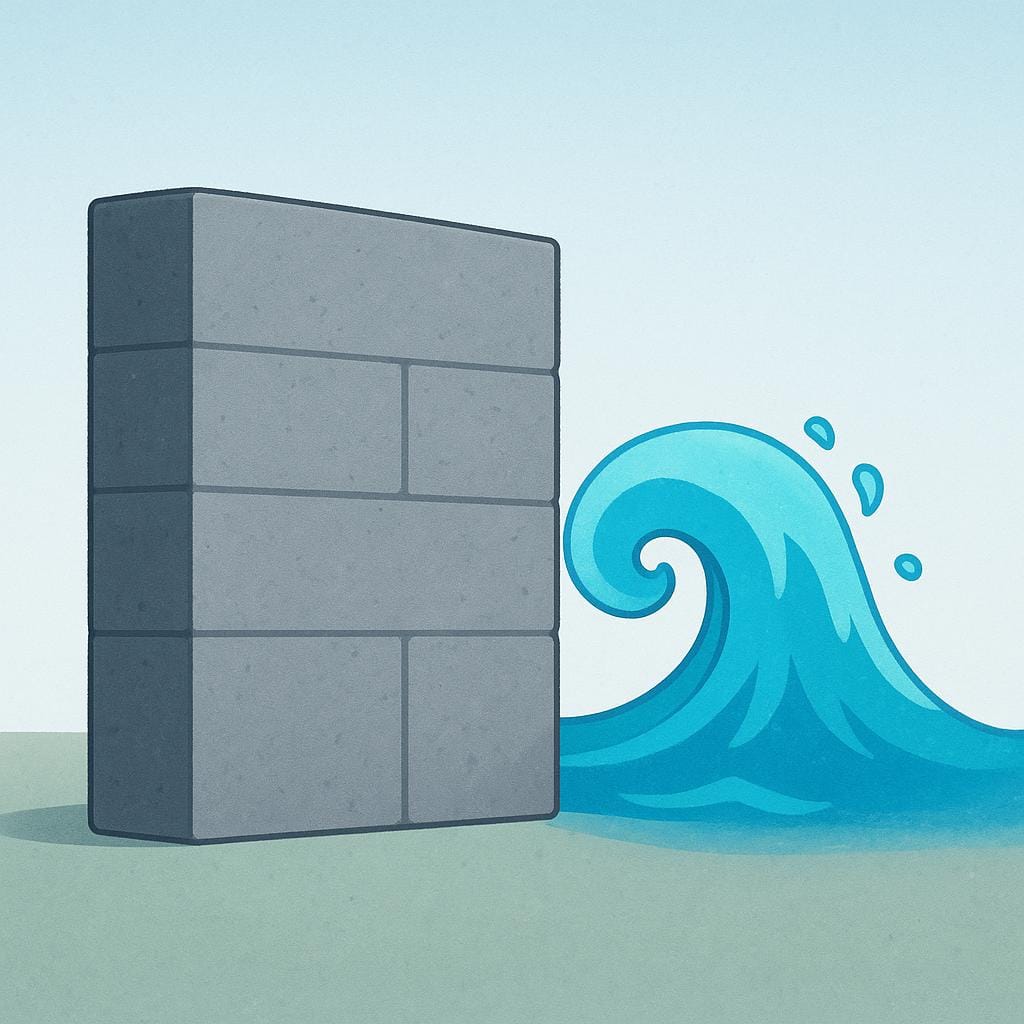
Examples
Los médicos intentaron arrestar el avance de la enfermedad.
The doctors tried to halt the advance of the disease.
El gobierno debe arrestar el deterioro del sistema educativo.
The government must check the deterioration of the educational system.
Formal Usage
This meaning is usually found in written reports, scientific papers, or very formal speeches. In everyday conversation, you would typically use 'parar' or 'detener' instead.
Choosing Between Verification Verbs
Related Translations
Learn Spanish with Inklingo
Interactive stories, personalized learning, and more.