How to Say "to haul" in Spanish
The most common Spanish word for “to haul” is “cargar” — use 'cargar' when you are loading items onto a vehicle or into a space, especially if they are heavy.

Use 'cargar' when you are loading items onto a vehicle or into a space, especially if they are heavy.
Learn more →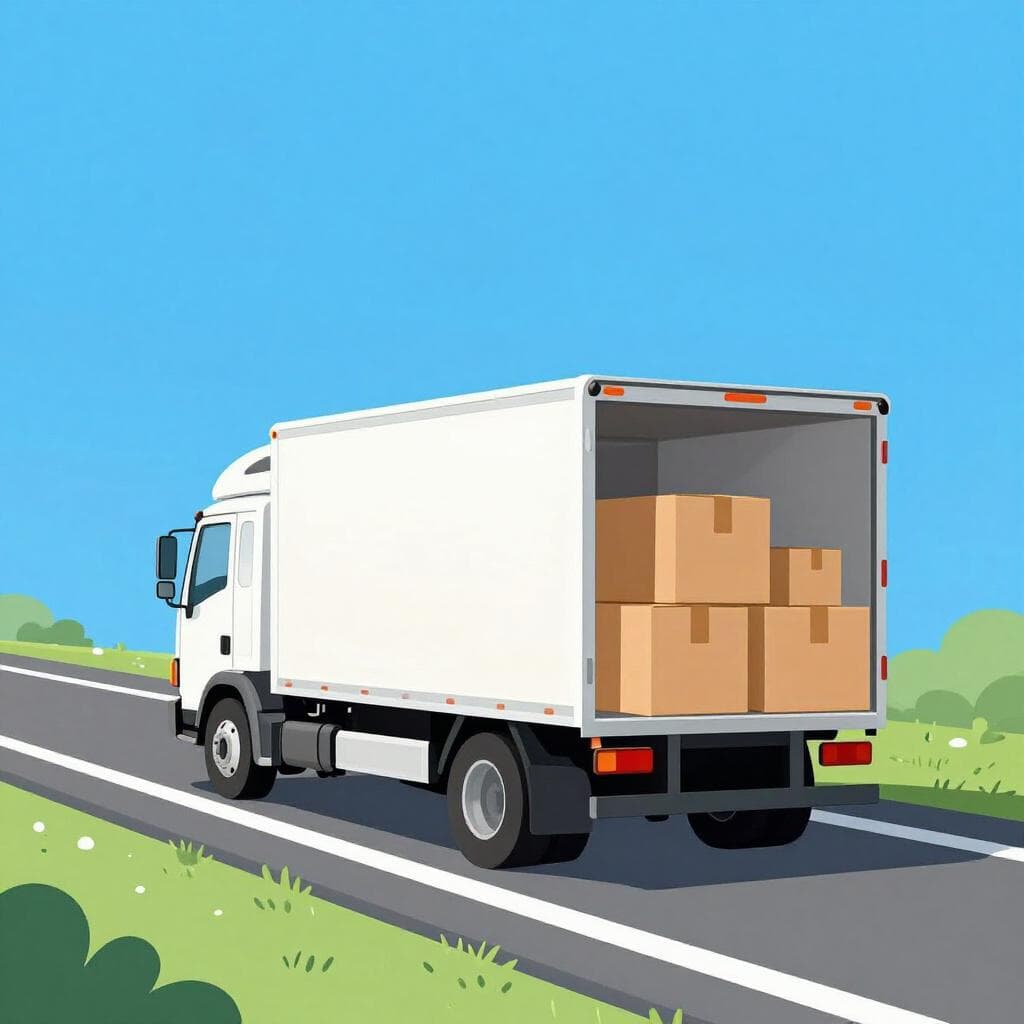
Use 'transportar' when referring to the act of moving large quantities of goods from one place to another, often commercially.
Learn more →
Use 'acarrear' specifically for transporting heavy goods over a distance, often implying a continuous or laborious process.
Learn more →
Use 'jalar' when the action of 'hauling' involves pulling something heavy towards you or along the ground.
Learn more →
Use 'halar' when the action of 'hauling' involves pulling something heavy, similar to 'jalar', often used with ropes or similar objects.
Learn more →kar-GARkaɾˈɣaɾ

Examples
Tengo que cargar estas cajas pesadas al camión.
I have to load these heavy boxes onto the truck.
Ella siempre carga con la responsabilidad de la casa.
She always bears the responsibility for the house.
El bebé quiere que su mamá lo cargue en brazos.
The baby wants his mother to carry him in her arms.
Spelling Change for Sound
In the simple past (preterite) 'yo' form and all forms of the present subjunctive, the 'g' changes to 'gu' (e.g., 'yo cargué', 'que yo cargue'). This is just to keep the hard 'g' sound consistent, otherwise it would sound like an 'h' (like 'car-HEH').
trahns-por-TARtɾansporˈtar

Examples
El camión transporta la fruta al mercado cada mañana.
The truck transports the fruit to the market every morning.
Necesitamos un barco más grande para transportar todos estos contenedores.
We need a bigger ship to transport all these containers.
Es difícil transportar a tanta gente en un solo autobús.
It is difficult to transport so many people in a single bus.
Adding 'A' for People
When you are transporting people (the ones receiving the action), you must put 'a' before them. Example: 'Transportar a los niños'.
Using it with Vehicles
Use the word 'en' to say what you are using to transport something. Example: 'Transportar en tren'.
Using 'Mover' incorrectly
Mistake: “Mover los productos a la tienda.”
Correction: Transportar los productos a la tienda.
ah-kah-rreh-ahraka.reˈaɾ

Examples
Los camiones pasan el día acarreando arena a la obra.
The trucks spend the day hauling sand to the construction site.
Antiguamente, tenían que acarrear el agua desde el pozo.
In the old days, they had to haul the water from the well.
Necesitamos a alguien para acarrear estos bultos.
We need someone to carry these bundles.
Connection to 'Carro'
The word comes from 'carro' (cart), so it literally describes moving something using a vehicle or a heavy-duty method.
Hauling vs. Carrying by hand
Mistake: “Acarreé mi teléfono a la cocina.”
Correction: Llevé mi teléfono. Use 'acarrear' for bulky, heavy items or large quantities.
hah-LAHRxaˈlaɾ

Examples
Jala la puerta para abrirla.
Pull the door to open it.
El niño jaló el juguete de las manos de su hermano.
The boy pulled the toy from his brother's hands.
No jales tanto la cuerda o se va a romper.
Don't pull the rope so much or it's going to break.
Jalar vs. Tirar
In many Latin American countries, 'jalar' is the standard word for pulling. In Spain, 'tirar' is much more common for this physical action.
Confusing Pull and Push
Mistake: “Using 'empujar' when you want someone to bring the door toward them.”
Correction: Use 'jalar' for 'pull' and 'empujar' for 'push'. A common memory trick: 'Pull' has two 'L's like 'jalar' (if you stretch your imagination!), and 'Push' is the other one.
ah-LAHRaˈlaɾ

Examples
Hala la cuerda con fuerza.
Pull the rope hard.
Para abrir esta puerta, tienes que halar, no empujar.
To open this door, you have to pull, not push.
Los pescadores halan las redes llenas de peces.
The fishermen haul in the nets full of fish.
The Silent H
Just like 'hola' or 'hablar,' the 'H' in 'halar' is completely silent. Start the sound with the 'a' like 'ah-LAHR'.
Halar vs. Tirar
While both mean 'to pull,' 'halar' is often preferred for mechanical or maritime contexts (like pulling a boat), while 'tirar' is the everyday word in Spain.
Confusing Halar and Empujar
Mistake: “I always push when the sign says 'hala'.”
Correction: Remember: 'Halar' sounds like 'Haul' (pull), while 'Empujar' is like 'to Push' (both start with a P sound internally).
Loading vs. Pulling
The most common confusion is between 'cargar' (to load) and the pulling verbs 'jalar'/'halar'. Remember that 'cargar' is about placing items onto something, while 'jalar' and 'halar' are about exerting force to move something by pulling it.
Related Translations
Learn Spanish with Inklingo
Interactive stories, personalized learning, and more.