How to Say "to pass" in Spanish
The most common Spanish word for “to pass” is “pasar” — use 'pasar' for general movement (like a car passing), for time passing quickly, or for handing an object to someone. It's also used for succeeding in exams or courses, especially at a basic level.






pasar
pa-sarpaˈsaɾ

Examples
El tiempo pasa muy rápido cuando te diviertes.
Time passes very quickly when you're having fun.
Vimos pasar un tren por la ventana.
We saw a train pass by the window.
Para ir al banco, tienes que pasar el puente.
To get to the bank, you have to cross the bridge.
¿Me puedes pasar la sal, por favor?
Can you pass me the salt, please?
Who are you passing it to?
This use of 'pasar' almost always comes with a little word like 'me', 'te', 'le' to show who is receiving the item. 'Pása-me' literally means 'Pass-to-me'.
aprobar
ah-pro-BARapɾoˈbaɾ

Examples
¡Aprobé el examen de conducir!
I passed my driving test!
Tienes que estudiar mucho para aprobar matemáticas.
You have to study a lot to pass math.
Si no apruebas el curso, tendrás que repetirlo.
If you don't pass the course, you will have to repeat it.
The Boot Change
This is a 'boot verb,' meaning the 'o' changes to 'ue' in all present forms except for the 'we' (nosotros) and 'you all' (vosotros) forms.
Direct Passing
In Spanish, you pass 'the' exam directly. You don't need a preposition like 'in' or 'at' before the subject name.
Don't use 'pasar' for grades
Mistake: “Pasé el examen.”
Correction: Aprobé el examen. While 'pasar' is sometimes understood, 'aprobar' is the correct academic term for passing a test.
adelantar
ah-deh-lahn-tahraðelanˈtaɾ

Examples
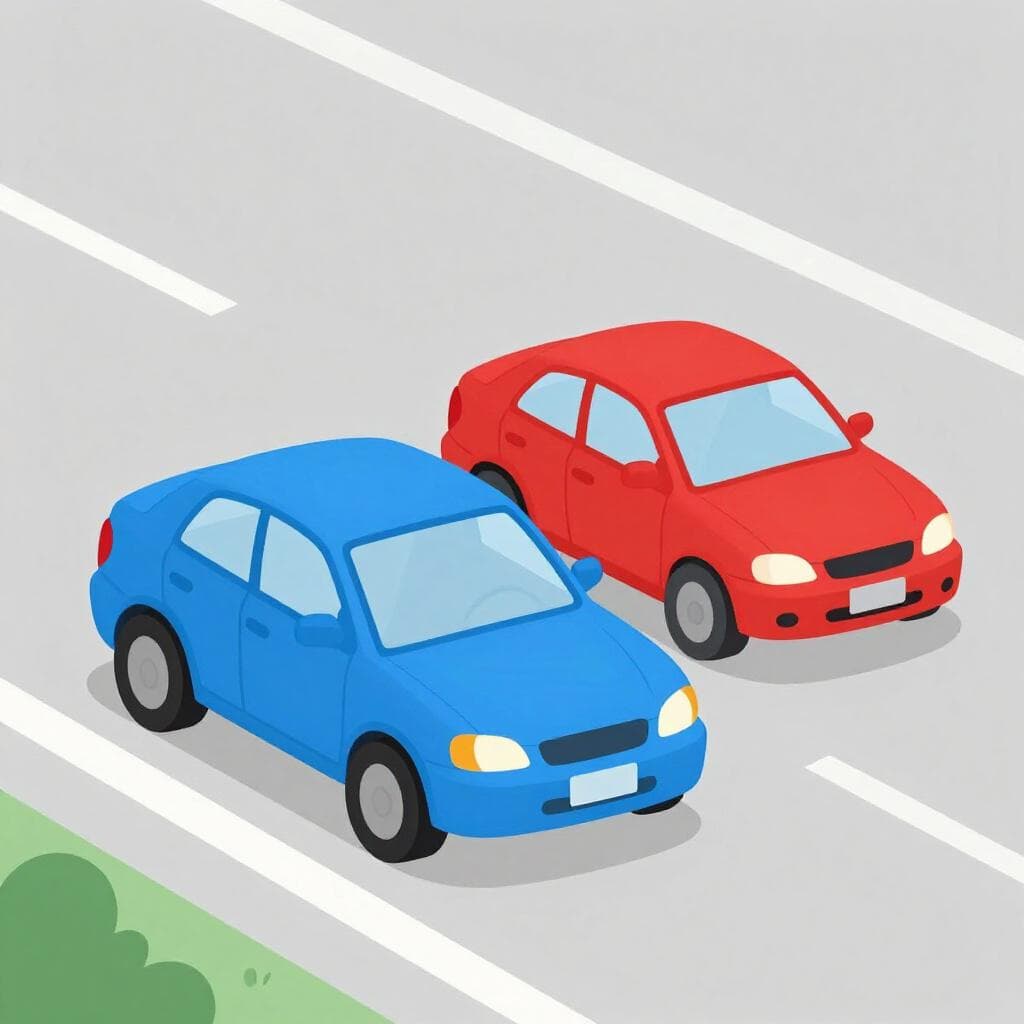
No puedes adelantar en esta curva, es muy peligroso.
You cannot overtake on this curve; it is very dangerous.
El corredor keniano adelantó a todos en la última vuelta.
The Kenyan runner passed everyone on the last lap.
Mi coche es lento y todos me adelantan en la autopista.
My car is slow and everyone overtakes me on the highway.
The Personal 'A'
When you are overtaking a specific person, you must use the word 'a' before their name or the noun. Example: 'Adelanté a María' (I passed María).
Reflexive Use
When you use 'adelantarse', it means someone arrived early or did something before others expected them to.
Passing vs. Moving
Mistake: “Using 'pasar' for overtaking a car.”
Correction: While 'pasar' works, 'adelantar' is the specific, correct term used in driving manuals and signs.
rebasar
ray-bah-SARrebaˈsaɾ

Examples
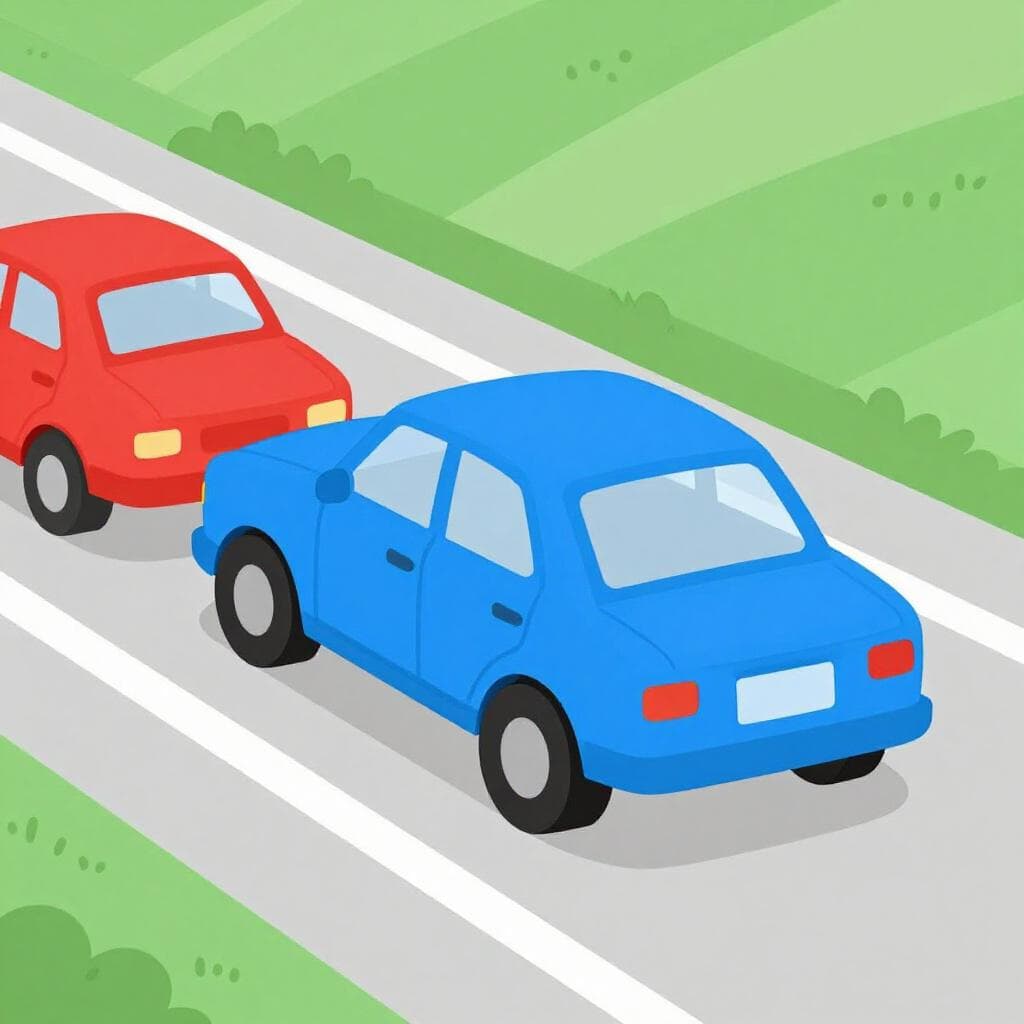
El coche azul rebasó al camión en la autopista.
The blue car overtook the truck on the highway.
Es peligroso rebasar a otros ciclistas sin avisar.
It is dangerous to pass other cyclists without warning.
El corredor rebasó a su rival justo antes de llegar a la meta.
The runner overtook his rival just before reaching the finish line.
Using 'a' with people
When you are overtaking a person, you must put the word 'a' before them, like: 'rebasar a María'. This doesn't happen with cars.
Using it for time
Mistake: “Rebasé la hora de la cita.”
Correction: Se me pasó la hora de la cita.
transcurrir
trahns-koo-reertɾanskuˈriɾ

Examples
Las horas transcurrieron rápidamente mientras hablábamos.
The hours passed quickly while we were talking.
Han transcurrido tres años desde que te vi por última vez.
Three years have gone by since I last saw you.
Deben transcurrir diez días antes de recibir los resultados.
Ten days must elapse before receiving the results.
Time is the subject
This word is almost always used with a time-related word (like 'hours,' 'years,' or 'time') as the thing doing the action.
No Direct Object
You cannot 'transcurrir' something. It is something that happens on its own. You don't say 'I transcurred the day,' but rather 'the day transcurred.'
Confusing with 'Pasar'
Mistake: “Using 'transcurrir' to mean 'to pass an exam' or 'to pass the salt.'”
Correction: Use 'transcurrir' only for the movement of time or the unfolding of an event. For exams or physical objects, use 'pasar.'
correr
koh-REHRkoˈrer

Examples
El agua corre desde la montaña hasta el río.
The water flows from the mountain to the river.
El rumor corrió por toda la oficina en minutos.
The rumor circulated (ran) through the entire office in minutes.
Necesitamos arreglar la tubería porque está corriendo agua.
We need to fix the pipe because water is leaking/running out.
discurrir
dees-koo-reerdiskuˈrir

Examples
El agua discurre mansamente por el arroyo.
The water flows gently through the stream.
Las horas discurrieron sin que nos diéramos cuenta.
The hours passed by without us noticing.
La vida discurre tranquila en este pueblo.
Life passes by quietly in this town.
A Regular -IR Verb
Even though it looks fancy, 'discurrir' follows the standard patterns for verbs ending in -ir like 'vivir'.
Use with Time
When talking about time passing, 'discurrir' is more poetic and formal than simply using 'pasar'.
Spelling confusion
Mistake: “discurir”
Correction: discurrir (with a double 'rr' to maintain the strong 'r' sound between vowels).
dictar
deek-TARdikˈtaɾ

Examples
El juez dictó la sentencia esta mañana.
The judge handed down the sentence this morning.
El gobierno dictó nuevas leyes para el tráfico.
The government issued new laws for traffic.
No dejes que otros dicten tu destino.
Don't let others dictate your destiny.
Abstract Authority
You can use this word when talking about feelings or intuition 'ruling' your actions, just like a judge rules a case (e.g., 'lo que dicte el corazón').
Passing Exams vs. Passing By
Related Translations
Learn Spanish with Inklingo
Interactive stories, personalized learning, and more.