How to Say "to overtake" in Spanish
The most common Spanish word for “to overtake” is “adelantar” — use 'adelantar' when passing a slower vehicle or person, especially in traffic or on the road.
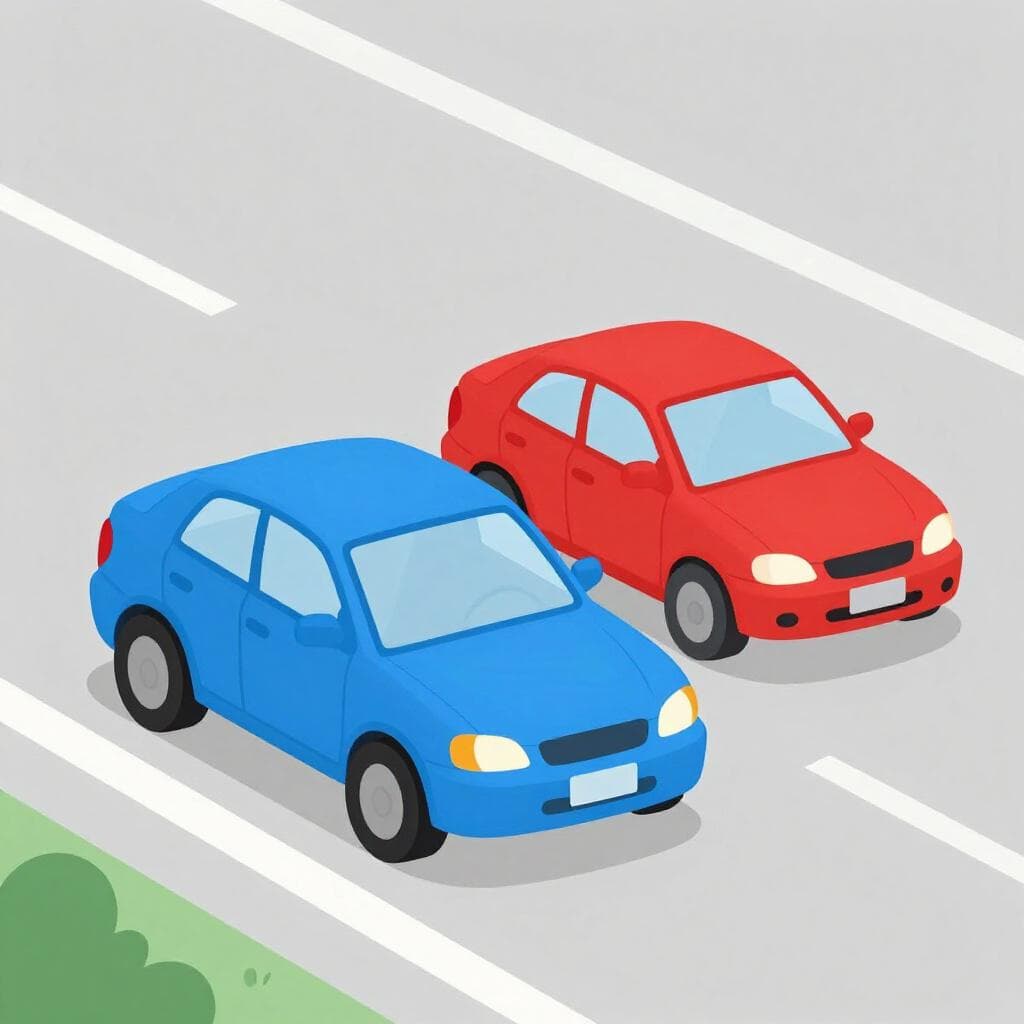
Use 'adelantar' when passing a slower vehicle or person, especially in traffic or on the road.
Learn more →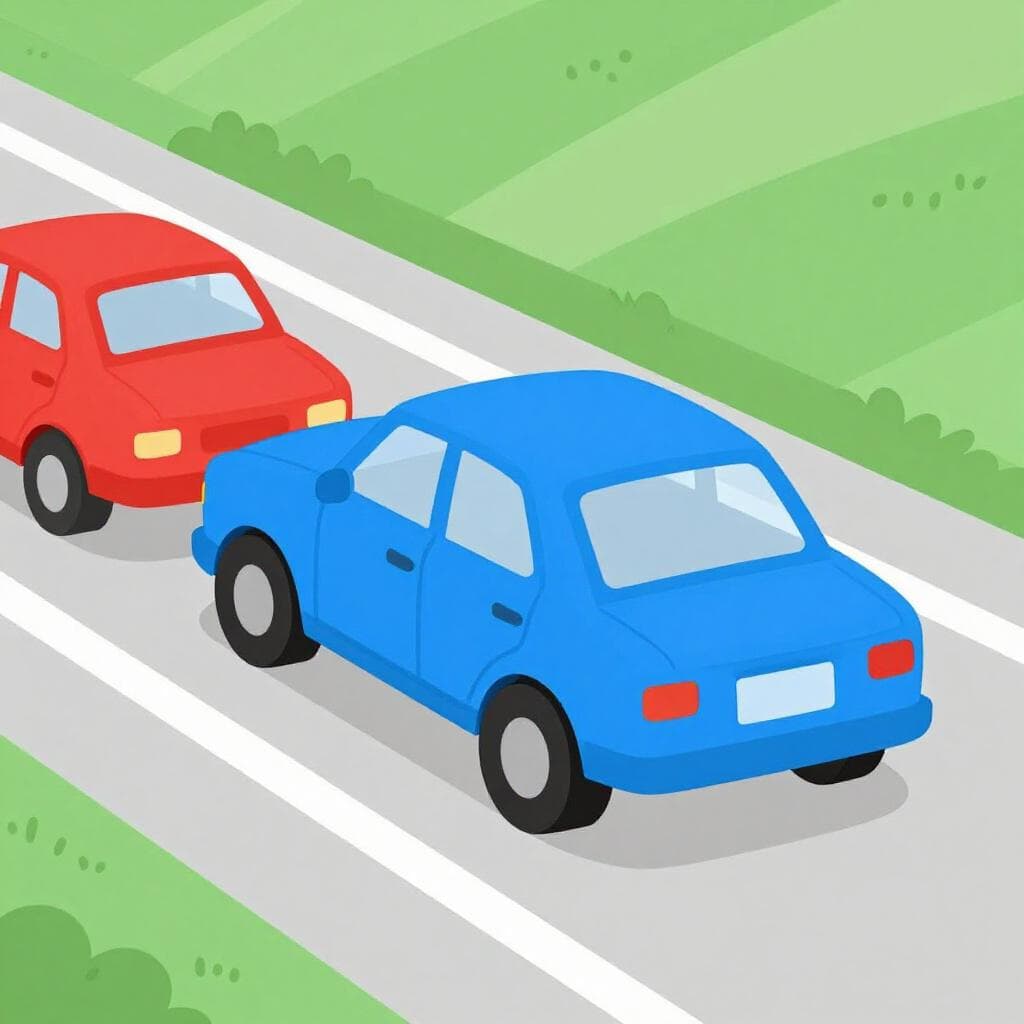
Use 'rebasar' to describe the act of passing a vehicle or person, often implying moving past them.
Learn more →
Use 'sobrepasar' for passing a vehicle or person, but also commonly used for exceeding limits (like speed) or surpassing expectations.
Learn more →
Use 'alcanzar' specifically when 'overtake' means to catch up with someone or a group, often in a competitive context like a race.
Learn more →ah-deh-lahn-tahraðelanˈtaɾ

Examples
No puedes adelantar en esta curva, es muy peligroso.
You cannot overtake on this curve; it is very dangerous.
El corredor keniano adelantó a todos en la última vuelta.
The Kenyan runner passed everyone on the last lap.
Mi coche es lento y todos me adelantan en la autopista.
My car is slow and everyone overtakes me on the highway.
The Personal 'A'
When you are overtaking a specific person, you must use the word 'a' before their name or the noun. Example: 'Adelanté a María' (I passed María).
Reflexive Use
When you use 'adelantarse', it means someone arrived early or did something before others expected them to.
Passing vs. Moving
Mistake: “Using 'pasar' for overtaking a car.”
Correction: While 'pasar' works, 'adelantar' is the specific, correct term used in driving manuals and signs.
ray-bah-SARrebaˈsaɾ

Examples
El coche azul rebasó al camión en la autopista.
The blue car overtook the truck on the highway.
Es peligroso rebasar a otros ciclistas sin avisar.
It is dangerous to pass other cyclists without warning.
El corredor rebasó a su rival justo antes de llegar a la meta.
The runner overtook his rival just before reaching the finish line.
Using 'a' with people
When you are overtaking a person, you must put the word 'a' before them, like: 'rebasar a María'. This doesn't happen with cars.
Using it for time
Mistake: “Rebasé la hora de la cita.”
Correction: Se me pasó la hora de la cita.
so-bre-pa-SARsoβɾepaˈsaɾ
Examples
No debes sobrepasar el límite de velocidad.
You should not exceed the speed limit.
El coche azul sobrepasó al camión en la autopista.
The blue car overtook the truck on the highway.
Tus resultados sobrepasaron nuestras expectativas.
Your results surpassed our expectations.
The Power of 'Sobre-'
The prefix 'sobre-' means 'over' or 'above.' Combined with 'pasar' (to pass), it literally creates the meaning of 'passing over' or 'passing beyond' a point.
Using 'a' with People
When you are overtaking a person or a specific living thing, remember to add 'a' after the verb: 'Sobrepasó a su rival' (He overtook his rival).
Overpassing vs. Just Passing
Mistake: “Using 'sobrepasar' when you just want to say you walked past a building.”
Correction: Use 'pasar por delante de' for walking past something. Use 'sobrepasar' when there is a sense of overcoming a limit or a competitor.
al-kan-SARal.kanˈθaɾ

Examples
Si corres más rápido, podrás alcanzar al grupo.
If you run faster, you will be able to catch up with the group.
El coche pequeño alcanzó y pasó al camión en la curva.
The small car caught up to and passed the truck on the curve.
¡Qué casualidad! Te alcancé en el supermercado.
What a coincidence! I ran into you at the supermarket.
Direct Object Needed
When meaning 'to catch up with,' the person or thing you are catching is the direct object (no preposition needed): alcanzar a alguien.
Adelantar vs. Rebasar
Learners often confuse 'adelantar' and 'rebasar' as they both mean passing a vehicle or person. While generally interchangeable in this context, 'adelantar' can sometimes imply a slightly more gradual or planned maneuver, whereas 'rebasar' can feel more like simply moving past. For exceeding limits, 'sobrepasar' is the correct choice.
Related Translations
Learn Spanish with Inklingo
Interactive stories, personalized learning, and more.