How to Say "upset" in Spanish
The most common Spanish word for “upset” is “molesto” — use this when you are slightly annoyed or bothered by something, like a minor inconvenience.


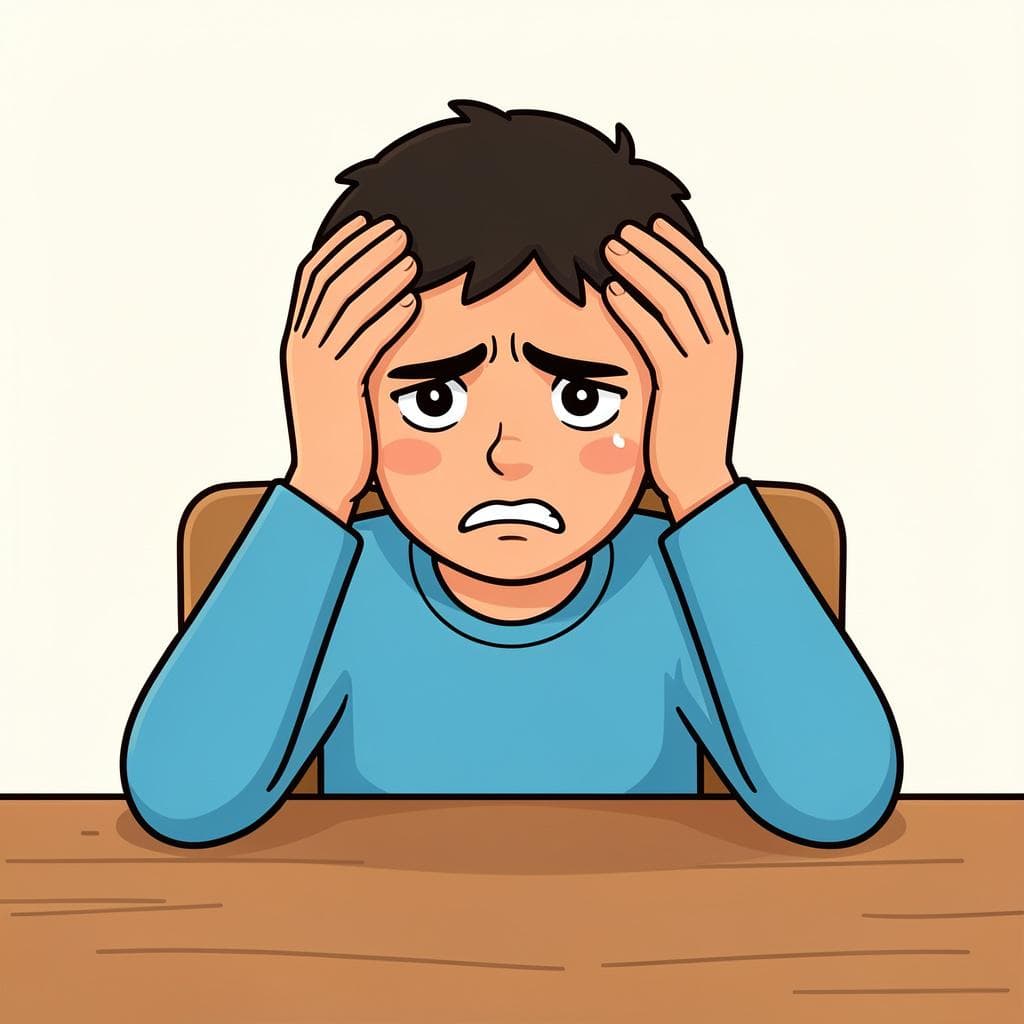





molesto
moh-LEH-stohmoˈlesto

Examples
Estoy molesto porque perdí mis llaves.
I am annoyed because I lost my keys.
¿Estás molesta conmigo? No quise ofenderte.
Are you upset with me? I didn't mean to offend you. (Note: using 'molesta' for a female speaker)
Use with Estar
When describing a person's temporary feeling or state, 'molesto' always pairs with the verb 'estar': 'Ella está molesta' (She is annoyed right now).
Agreement
Like all Spanish adjectives, 'molesto' must match the gender and number of the person feeling the emotion (molesta, molestos, molestas).
Ser vs. Estar Error
Mistake: “Soy molesto.”
Correction: Estoy molesto. Saying 'Soy molesto' means 'I am an annoying person' (Definition 1), which is different from 'I feel annoyed' (Definition 2).
disgustado
dees-goos-TAH-dohdis.ɣus.ˈta.ðo

Examples
Mi padre está disgustado porque llegué tarde.
My father is upset because I arrived late.
Pareces un poco disgustada, ¿pasó algo en el trabajo?
You look a bit annoyed, did something happen at work?
Los vecinos están disgustados con el ruido de la construcción.
The neighbors are displeased with the construction noise.
Matching the Person
This word changes its ending depending on who you are describing. Use 'disgustado' for a man and 'disgustada' for a woman.
Using 'Estar'
Since being upset is a feeling or a temporary state, you should use the verb 'estar' (to be) rather than 'ser'.
The 'False Friend' Trap
Mistake: “Using 'disgustado' to mean you are grossed out by something (like bad food).”
Correction: Use 'asqueado' for physical disgust. 'Disgustado' almost always means upset or annoyed in Spanish.
alterado
al-te-RAH-dohalteˈɾaðo
Examples
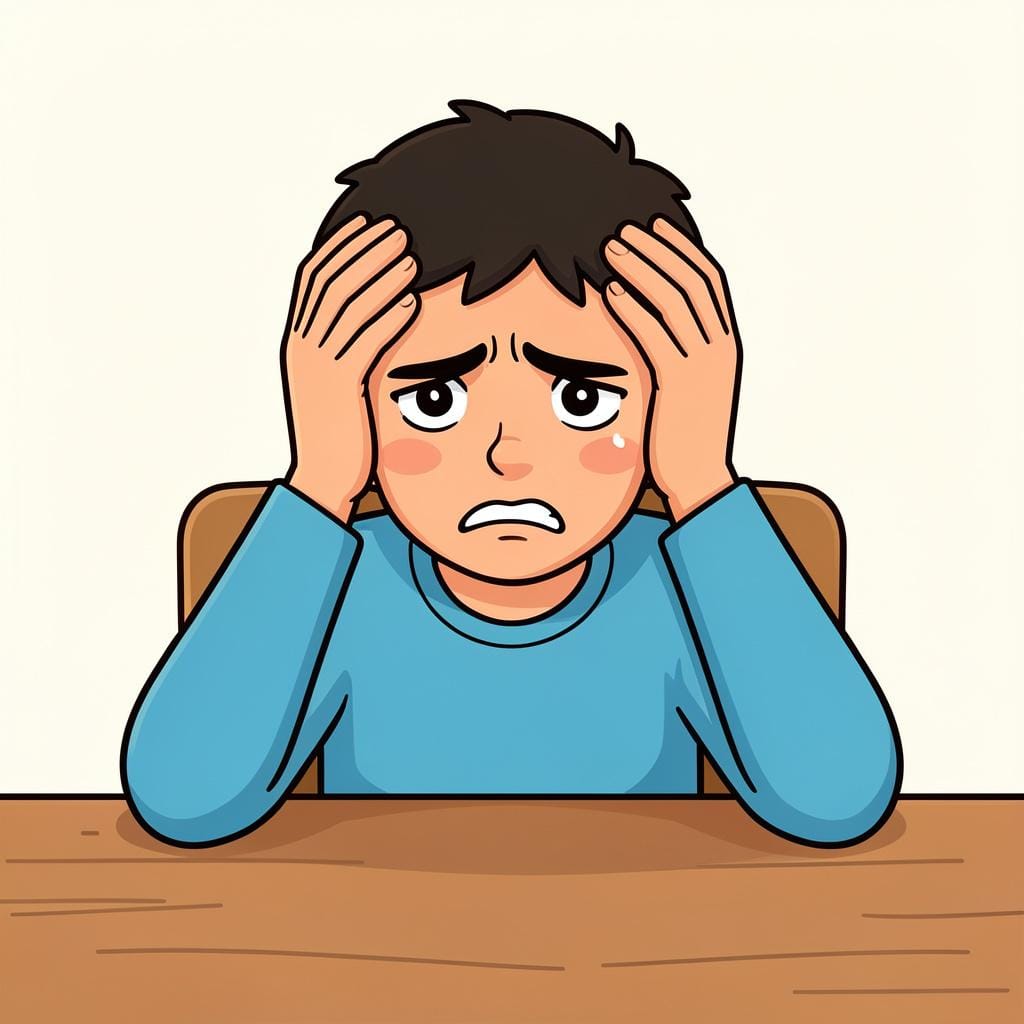
Cálmate un poco, te veo muy alterado.
Calm down a bit, you look very upset.
El cliente se puso alterado porque el vuelo se canceló.
The customer became agitated because the flight was canceled.
Using 'estar' vs 'ser'
Use 'estar' with this word to describe a temporary mood or state of mind. Using 'ser' is very rare and would imply the person is permanently 'changed'.
Not a False Friend for 'Alternative'
Mistake: “Using 'alterado' to mean 'an alternative option'.”
Correction: Use 'alternativo' for options. 'Alterado' always means something has been changed or someone is upset.
afectado
ah-fek-TAH-dohafekˈtaðo

Examples
Las zonas afectadas por la inundación necesitan ayuda.
The areas affected by the flood need help.
Él se sintió muy afectado por la noticia del accidente.
He felt very upset by the news of the accident.
Adjective Agreement
Remember to change the ending to match who or what you are describing: 'afectado' (masculine), 'afectada' (feminine), 'afectados' (plural masculine), and 'afectadas' (plural feminine).
Affected vs. Fan
Mistake: “Using 'afectado' to mean you like a hobby.”
Correction: Use 'aficionado' for 'fan.' Use 'afectado' only for someone impacted by something negative or emotional.
disgusto
dees-GOOS-tohdisˈɡusto

Examples
Mi abuelo se llevó un gran disgusto cuando perdió su reloj.
My grandfather was very upset when he lost his watch.
No quiero darle un disgusto a mi madre con mis notas.
I don't want to cause my mother any trouble with my grades.
Tuvimos un pequeño disgusto por un malentendido.
We had a small falling out over a misunderstanding.
False Friend Alert!
In Spanish, 'disgusto' is usually about sadness or annoyance, not 'disgust' (revulsion). If you want to say something is gross, use 'asco'.
Using 'Dar' vs 'Llevarse'
Use 'dar' when you are the cause of the upset ('I gave him an upset') and 'llevarse' when you are the one experiencing the upset ('I took/received an upset').
Confusing 'Disgusto' with 'Asco'
Mistake: “Esa comida me da disgusto.”
Correction: Esa comida me da asco.
enojo
eh-NOH-hoheˈnoxo

Examples
No pude ocultar mi enojo cuando me mintieron.
I couldn't hide my anger when they lied to me.
Su constante impuntualidad me causa mucho enojo.
Their constant lateness causes me a lot of annoyance.
Hay que aprender a controlar el enojo para vivir mejor.
One must learn to control anger to live better.
Talking about feelings
When you want to say something makes you angry, use 'me da' followed by 'enojo' (It gives me anger).
Nouns vs. Adjectives
'Enojo' is the name of the feeling (the noun). If you want to describe a person who is currently angry, use 'enojado'.
Using 'Estar' with 'Enojo'
Mistake: “Estoy enojo.”
Correction: Say 'Tengo enojo' (I have anger) or 'Estoy enojado' (I am angry). You can't 'be' a noun.
trastorno
tras-TOR-notɾasˈtoɾno

Examples
El psicólogo diagnosticó un trastorno de ansiedad.
The psychologist diagnosed an anxiety disorder.
Perder el tren fue un gran trastorno para nuestro viaje.
Missing the train was a big inconvenience for our trip.
La nueva ley provocó un trastorno en el mercado inmobiliario.
The new law caused an upheaval in the real estate market.
Always Masculine
Even if the person suffering from the disorder is female, the word 'trastorno' always stays masculine: 'Ella tiene un trastorno'.
Verbs to use with it
When talking about life problems, use 'causar' (to cause) or 'suponer' (to involve/mean). Example: 'Esto supone un trastorno' (This is an inconvenience).
Confusing the noun and adjective
Mistake: “Estoy muy trastorno.”
Correction: Estoy muy trastornado (I am very upset/disturbed). Use 'trastorno' for the 'thing' and 'trastornado' for the 'person'.
revuelto
rre-BWEL-tohreˈβwelto

Examples
Prefiero los huevos revueltos con un poco de sal.
I prefer scrambled eggs with a bit of salt.
No encuentro mis llaves porque mi habitación está muy revuelta.
I can't find my keys because my room is very messy.
Después del viaje en barco, tengo el estómago revuelto.
After the boat trip, I have an upset stomach.
Matching Gender and Number
Since this acts as a descriptor, it must match the thing it describes. Use 'revuelto' for masculine things (el cuarto) and 'revuelta' for feminine things (la maleta).
Using with 'Estar'
We almost always use this word with the verb 'estar' because being messy or scrambled is a temporary state, not a permanent character trait.
Mixing up 'Messy' words
Mistake: “Mi cuarto es revuelto.”
Correction: Mi cuarto está revuelto. Use 'estar' because a messy room is a condition that can change.
Adjectives vs. Nouns for 'Upset'
Related Translations
Learn Spanish with Inklingo
Interactive stories, personalized learning, and more.