How to Say "to break" in Spanish
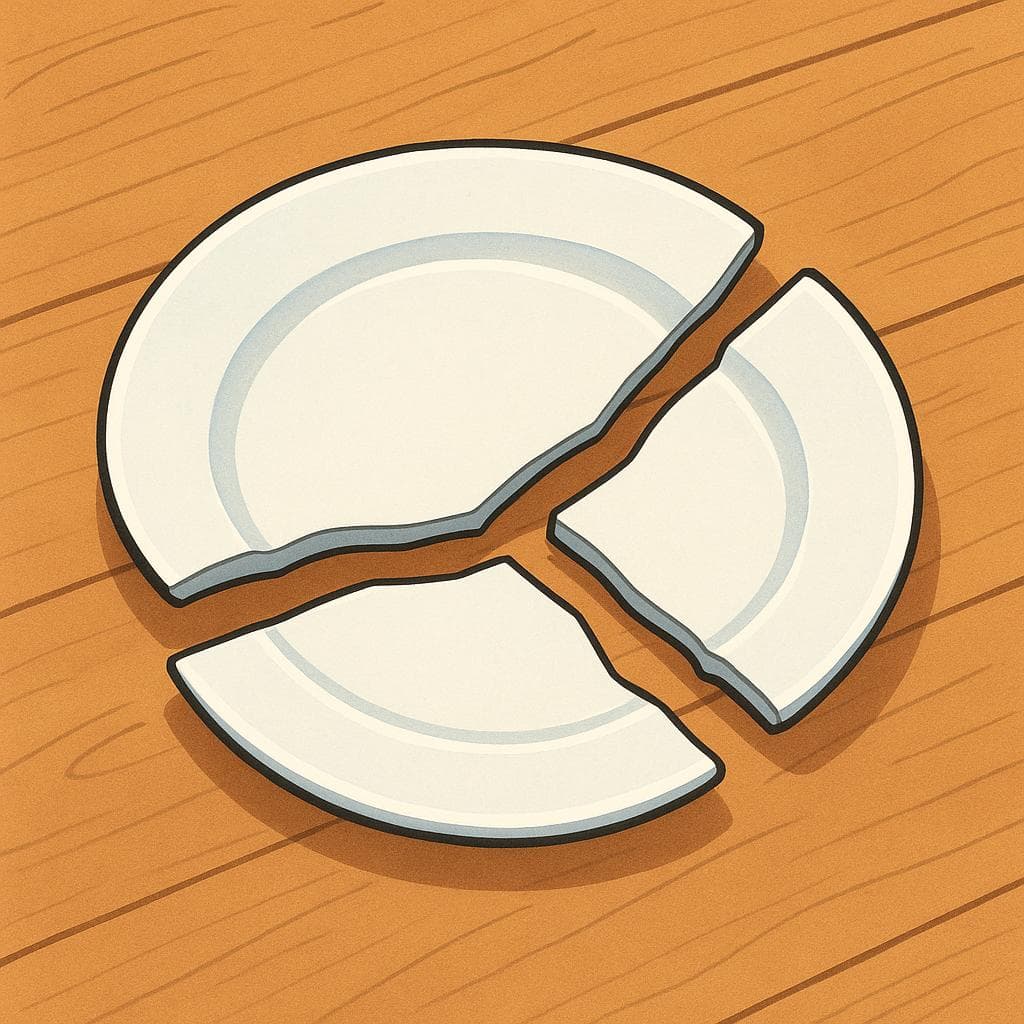
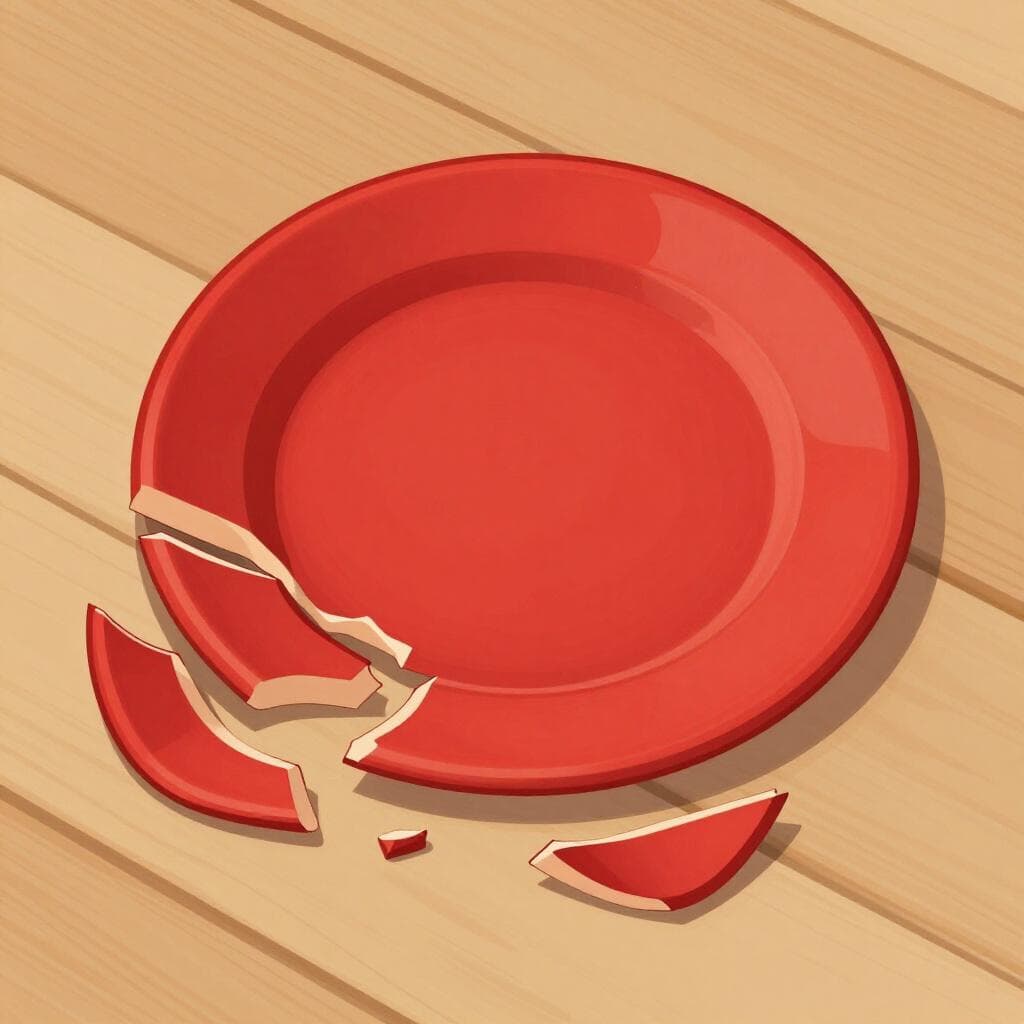
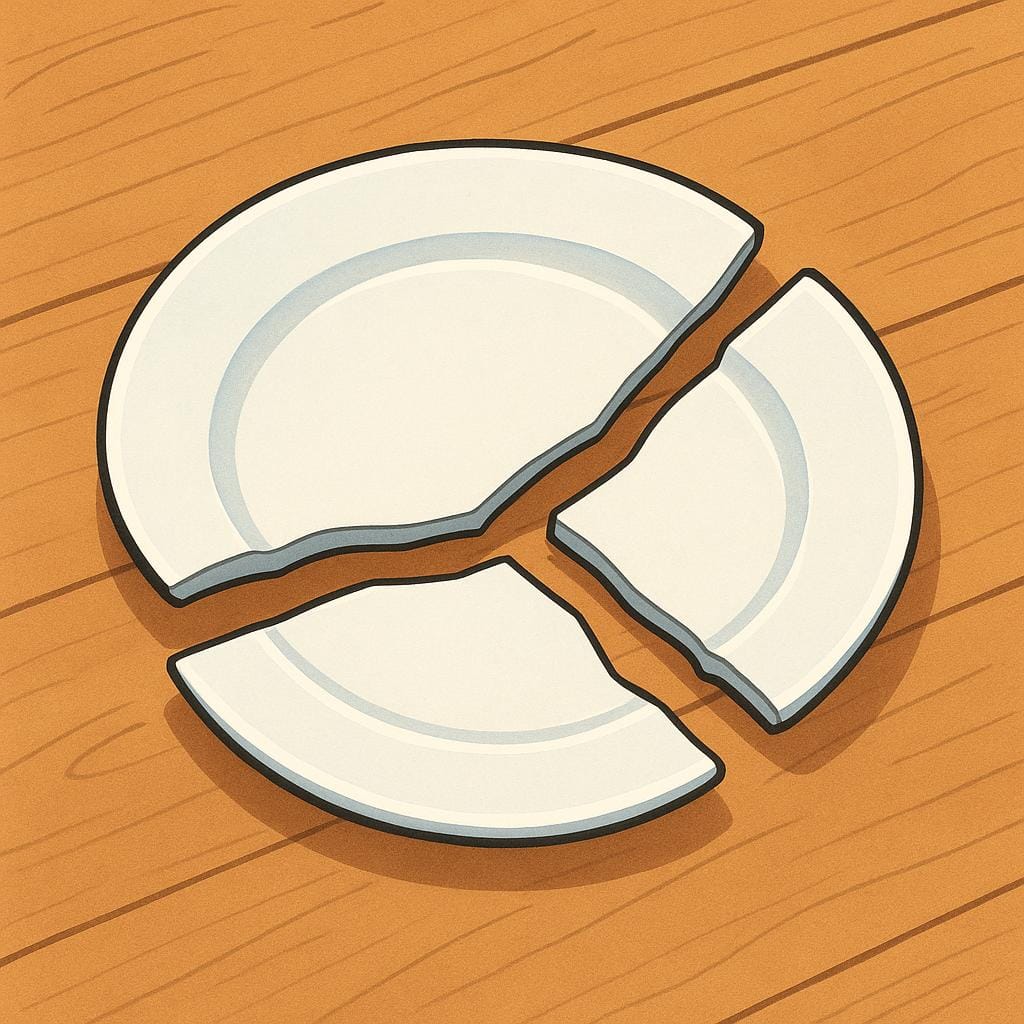
The most common Spanish word for “to break” is “romper” — use this for the general act of breaking a physical object, or for breaking promises, oaths, or codes of conduct.








romper
rrohm-pehrroˈmpeɾ
Examples
Ten cuidado de no romper el jarrón de mi abuela.
Be careful not to break my grandmother's vase.
El niño rompió la ventana con la pelota.
The boy broke the window with the ball.
Si rompes el código de conducta, serás sancionado.
If you violate the code of conduct, you will be penalized.
Ella rompió el silencio con una pregunta incómoda.
She broke the silence with an awkward question.
Using the Past Participle
Unlike most ER verbs, the past participle of 'romper' is irregular: it's roto, not rompido. Use it for compound tenses (e.g., 'He roto' - I have broken).
Transitive Use
In this context, 'romper' requires a direct object—you must break something (a rule, a promise, silence).
Using the Regular Past Participle
Mistake: “La taza ha rompido.”
Correction: La taza ha roto. (The cup has broken.) Remember, *roto* is the correct form.
quebrar
keh-BRAHRkeˈβɾaɾ

Examples
Ten cuidado, no vayas a quebrar el plato de cristal.
Be careful, don't break the glass plate.
La rama se quebró por el peso de la nieve.
The branch snapped under the weight of the snow.
El fuerte viento quebró el mástil del barco.
The strong wind snapped the ship's mast.
The 'E' to 'IE' Change
In many forms, the 'e' in the middle changes to 'ie'. Think of it like this: if you emphasize the middle of the word, it grows an extra 'i'! This happens in the present tense except for 'we' and 'you all' (nosotros/vosotros).
Regularizing the Irregular
Mistake: “Yo quebro el cristal.”
Correction: Yo quiebro el cristal. (The stem must change to 'ie' in the present tense).
partir
par-TEERpaɾˈtiɾ

Examples
Se me partió un plato cuando estaba lavando los trastes.
A plate broke on me when I was washing the dishes.
El chiste fue tan bueno que nos partimos de risa.
The joke was so good that we cracked up laughing.
Ese acontecimiento le partió el alma.
That event broke his spirit (or heart).
Accidental 'Se'
When an object breaks by accident (like a plate), use the structure 'se' + indirect object pronoun (me, te, le, etc.) + verb. Example: 'Se me partió el vaso' (The glass broke on me).
Using 'Partir' for Everything
Mistake: “No puedes partir esa regla (You can't break that rule).”
Correction: No puedes romper esa regla. ('Romper' is better for breaking rules or promises. 'Partir' implies splitting something physically.)
dañar
Examples
El agua puede dañar el teléfono.
Water can damage the phone.
fracturar
frahk-too-RAHRfɾaktuˈɾaɾ

Examples
El jugador se fracturó la pierna durante el partido.
The player broke his leg during the game.
Es posible fracturar un hueso sin sentir mucho dolor al principio.
It is possible to fracture a bone without feeling much pain at first.
La caída fracturó el pavimento de la entrada.
The fall cracked the pavement of the entrance.
Using 'Se' with Injuries
When talking about breaking your own bone, use the word 'se' (reflexive) to show the action happened to you. For example: 'Se fracturó el brazo' (He broke his arm).
The 'El/La' Rule for Body Parts
In Spanish, we don't usually say 'my' or 'his' with body parts when using this verb. Instead of 'mi pierna,' we say 'la pierna' because the 'se' already tells us whose leg it is.
Don't use 'mi' for your own bones
Mistake: “Me fracturé mi brazo.”
Correction: Me fracturé el brazo. (In Spanish, using 'me' already shows it's your own arm, so 'mi' is redundant).
batir
bah-TEERbaˈtiɾ

Examples
El atleta batió el récord mundial ayer.
The athlete broke the world record yesterday.
Nuestro equipo batió al rival en el último minuto.
Our team defeated the rival in the last minute.
El águila bate sus alas con fuerza.
The eagle flaps its wings with force.
The Personal 'A'
When you use 'batir' to mean 'to defeat a person', you must put the word 'a' before the person you defeated. For example: 'Batió a su oponente'.
Breaking Records
Mistake: “Saying 'romper un récord'.”
Correction: While 'romper' is understandable, the more natural and professional way to say 'break a record' in Spanish is 'batir un récord'.
interrumpir
een-teh-rroohm-peerinteˈrrumpiɾ

Examples
La caída del sistema interrumpió la transmisión de datos.
The system crash stopped the data transmission.
El gobierno decidió interrumpir las negociaciones de paz.
The government decided to suspend the peace negotiations.
Tuvimos que interrumpir el rodaje de la película por falta de fondos.
We had to halt the filming of the movie due to lack of funds.
Passive Voice
This meaning is often used in the passive voice, especially when discussing technical issues: 'La electricidad fue interrumpida' (The electricity was interrupted/cut off).
fastidiar
fas-tee-dee-AHRfastiˈðjaɾ

Examples
La lluvia fastidió nuestra excursión.
The rain ruined our trip.
Se me ha fastidiado el ordenador.
My computer has broken down.
No fastidies el secreto.
Don't ruin the secret.
The 'Accidental' Se
To say something broke on its own or by accident, add 'se'. For example, 'Se fastidió la lavadora' (The washing machine broke down).
Ruin vs. Fastidiar
Mistake: “Using 'ruinar' (which isn't a word).”
Correction: Use 'arruinar' or 'fastidiar' when you want to say something was ruined.
violar
bee-oh-LAHRbjoˈlaɾ

Examples
La empresa violó el contrato de exclusividad.
The company broke the exclusivity contract.
Nadie tiene derecho a violar tu privacidad.
Nobody has the right to violate your privacy.
Using the Direct Object
When you use 'violar' to mean breaking a rule, the thing being broken (like 'the law') comes directly after the verb without any special connectors.
Choosing the right 'Break'
Mistake: “Using 'romper' for laws.”
Correction: Use 'violar' or 'quebrantar' for laws and rules; 'romper' is usually for physical objects.
faltar
fal-TARfalˈtaɾ

Examples
No le faltes al respeto a tu abuelo.
Don't be disrespectful to your grandfather.
Él faltó a su palabra y no vino.
He broke his word and didn't come.
Me faltó el respeto delante de todos.
He was rude to me in front of everyone.
Respect is the Object
When saying 'disrespect someone', the phrase is 'faltar al respeto a [person]'. The 'a' appears twice because it belongs to the phrase and then names the person.
ofender
oh-fen-DEHRo.fenˈdeɾ

Examples
El conductor fue multado por ofender las normas de tráfico.
The driver was fined for violating the traffic rules.
La empresa fue acusada de ofender los derechos laborales.
The company was accused of violating labor rights.
Physical Objects vs. Abstract Concepts
Related Translations
Learn Spanish with Inklingo
Interactive stories, personalized learning, and more.