How to Say "to fix" in Spanish
The most common Spanish word for “to fix” is “reparar” — use 'reparar' for general maintenance or fixing something that is broken or not working correctly, like a car or a household appliance.





reparar
reh-pah-RAHRre.paˈɾaɾ
Examples
Necesito reparar mi coche antes del viaje.
I need to repair my car before the trip.
El técnico vino a reparar la lavadora esta mañana.
The technician came to fix the washing machine this morning.
Repararon la silla rota con un poco de pegamento fuerte.
They mended the broken chair with some strong glue.
Direct Action Verb
Like many -ar verbs, 'reparar' describes a direct action on an object (the thing being fixed). You just need the subject (who is fixing) and the direct object (what is being fixed).
Confusing 'reparar' and 'arreglar'
Mistake: “Using 'arreglar' only for physical objects.”
Correction: While both mean 'to fix,' 'arreglar' is more general and informal, used for objects, situations, and even people ('arreglarse' means 'to get ready'). 'Reparar' usually focuses specifically on restoring something broken.
componer
kom-po-nerkompoˈneɾ
Examples
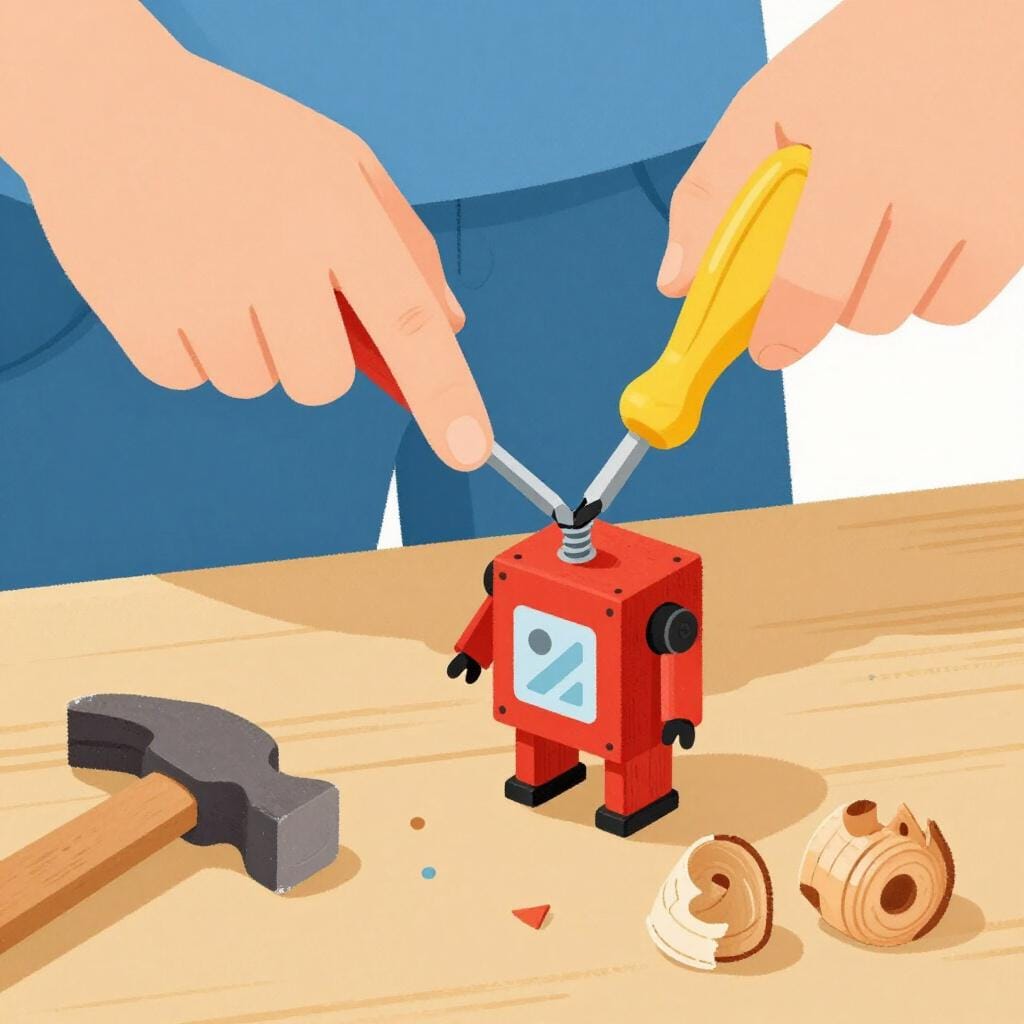
El mecánico pudo componer el motor en una hora.
The mechanic was able to fix the engine in an hour.
Necesito que alguien venga a componer el aire acondicionado.
I need someone to come and repair the air conditioning.
Si se rompe la silla, mi papá la puede componer.
If the chair breaks, my dad can fix it.
Commanding a Fix
To tell someone 'Fix it!', use the short form '¡Compónlo!'. It’s short and punchy, just like 'pon' (put).
Regularizing the Future
Mistake: “Yo componeré la mesa.”
Correction: Yo compondré la mesa. (The 'e' disappears in the future tense.)
corregir
koh-rreh-HEERkoreˈxiɾ

Examples
El profesor está corrigiendo los exámenes ahora mismo.
The teacher is grading the exams right now.
Por favor, corrige los errores en este documento.
Please correct the errors in this document.
Es importante corregir la postura para evitar dolores de espalda.
It is important to fix your posture to avoid back pain.
The 'G' to 'J' Swap
In Spanish, the letter 'g' sounds like an 'h' when followed by 'e' or 'i'. To keep that 'h' sound before an 'o' or 'a', we must change the 'g' to a 'j'. That's why we say 'yo corrijo' instead of 'corrigo'.
Stem-Change Alert
This verb is a 'flipping' verb. The 'e' in the middle changes to an 'i' in most present tense forms (corriges, corrige) and even in the 'he/she' and 'they' forms of the past (corrigió, corrigieron).
Don't say 'Corrigo'
Mistake: “Yo corrigo los errores.”
Correction: Yo corrijo los errores. (Remember the spelling change from G to J to keep the sound correct!)
The 'E' to 'I' slip-up
Mistake: “Él correge la tarea.”
Correction: Él corrige la tarea. (The 'e' must change to 'i' in the present tense).
solucionar
soh-loo-syoh-NARsolusjoˈnaɾ

Examples
Necesitamos solucionar este error antes de enviar el informe.
We need to solve this error before sending the report.
Ella siempre encuentra una manera de solucionar los problemas difíciles.
She always finds a way to resolve difficult problems.
Si no lo solucionamos hoy, tendremos que trabajar el fin de semana.
If we don't fix it today, we will have to work this weekend.
A Regular Verb
This verb is easy! It follows the standard pattern for all verbs ending in '-ar,' so its endings never change unexpectedly.
Transitive Action
Like its English equivalent 'to solve,' 'solucionar' usually needs something to receive the action (a direct object). You solve 'something': 'solucionar el misterio' (solve the mystery).
Confusing 'Solucionar' and 'Resolver'
Mistake: “Usando 'resolver' cuando la palabra 'solución' es más apropiada.”
Correction: 'Solucionar' focuses on finding the answer or fix, while 'resolver' often emphasizes the process or the determination to overcome the issue. They are often interchangeable, but 'solucionar' links directly to the noun 'solución'.
establecer
es-ta-ble-SÉRest̪aβleˈseɾ
Examples
Necesitamos establecer la causa exacta del problema.
We need to determine the exact cause of the problem.
El comité estableció el precio máximo para las entradas.
The committee fixed the maximum price for the tickets.
remediar
reh-meh-dee-ahrremeˈðjaɾ

Examples
Debemos remediar este problema antes de que empeore.
We must remedy this problem before it gets worse.
El gobierno está buscando formas de remediar el desempleo.
The government is looking for ways to solve unemployment.
Siento mucho lo ocurrido, pero ya no se puede remediar.
I'm very sorry about what happened, but it can't be fixed now.
Direct Object Usage
In Spanish, you 'remediar' the problem directly. You don't need a preposition like 'with' or 'of' between the verb and the thing you are fixing.
Abstract vs. Physical
This verb is best for abstract things like situations, errors, or problems. For physical things like a broken car, use 'arreglar' instead.
Misusing 'arreglar'
Mistake: “Using 'arreglar' for deep societal problems in formal writing.”
Correction: Use 'remediar' for more formal or serious contexts involving 'fixing' situations or injustices.
afirmar
ah-fear-MAHRa.fiɾˈmaɾ
Examples
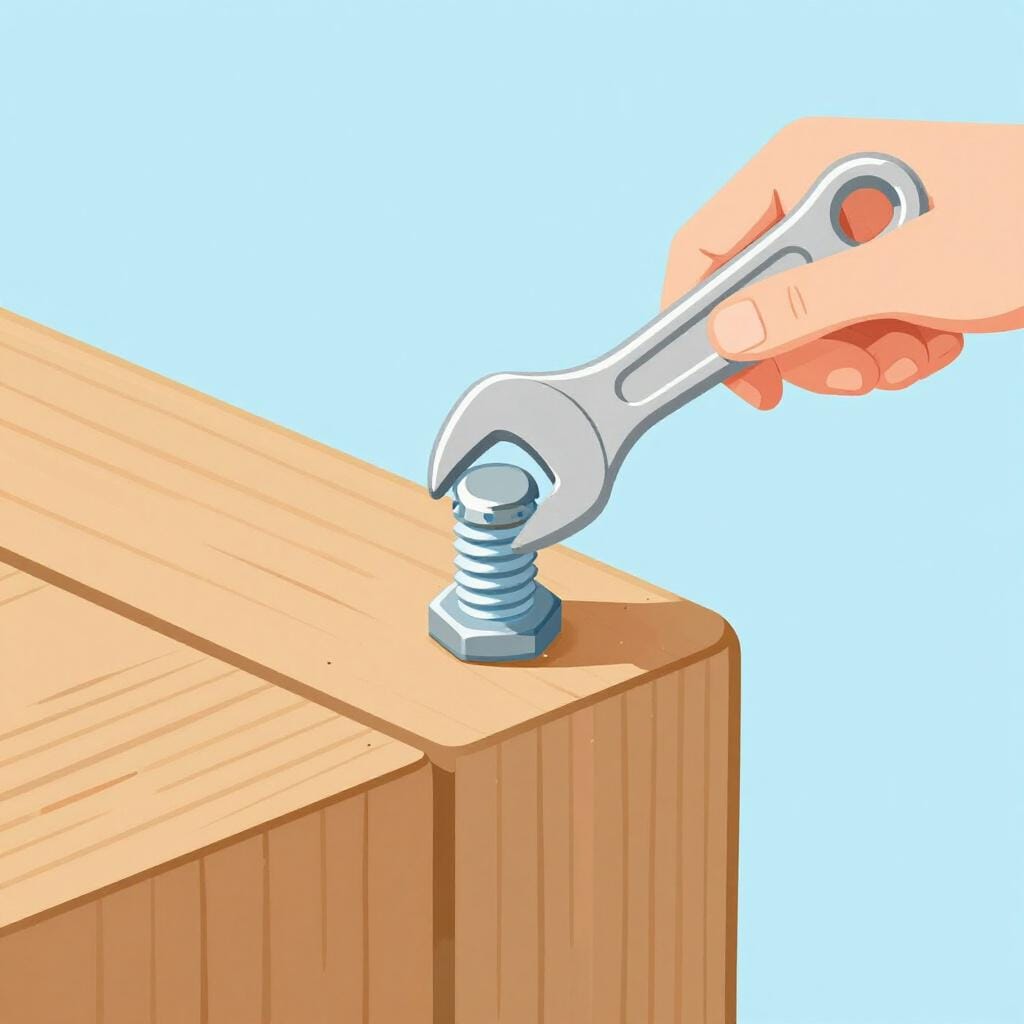
Debes afirmar la estantería a la pared.
You must secure the bookshelf to the wall.
Afirmó el poste con concreto.
He secured the post with concrete.
El piloto afirmó el timón durante la tormenta.
The pilot steadied the rudder during the storm.
Physical vs. Abstract
This meaning is used when something is physically made stable or secure. Think of it like 'making firm' - you can 'afirmar' a ladder against a wall or 'afirmar' your grip on something.
Choosing the wrong word
Mistake: “Using 'afirmar' for abstract concepts when you should use 'asegurar'”
Correction: In everyday speech, 'asegurar' is more commonly used for physical security. Save 'afirmar' for formal or written contexts.
clavar
klah-BAHRklaˈβaɾ

Examples
Ella clavó los ojos en el extraño.
She fixed her eyes on the stranger.
Él clavó la mirada en el suelo de pura vergüenza.
He fixed his gaze on the floor out of pure shame.
Visual Metaphor
Think of this as 'nailing' your eyes to an object so they don't move.
Repair vs. Solve
Related Translations
Learn Spanish with Inklingo
Interactive stories, personalized learning, and more.