How to Say "to notice" in Spanish
The most common Spanish word for “to notice” is “notar” — use this common verb when you perceive something directly with your senses, like seeing, hearing, smelling, tasting, or feeling.

Use this common verb when you perceive something directly with your senses, like seeing, hearing, smelling, tasting, or feeling.
Learn more →This phrase is used when you realize or become aware of a fact or situation, often after some thought or realization.
Learn more →Use this reflexive verb when you want to draw someone's attention to something specific, essentially telling them to 'pay attention to' or 'look at' it.
Learn more →
This verb means to become aware of something, often with a sense of caution or to give a warning.
Learn more →
Use this verb when you become aware of a physical detail or sensation, such as a smell, sound, or visual element, often from a distance.
Learn more →
This verb is used for spotting a specific detail, change, or anomaly, often with a technical or precise connotation.
Learn more →
Similar to 'darse cuenta de', this is used when you realize or become aware of something, specifically when addressing 'you'.
Learn more →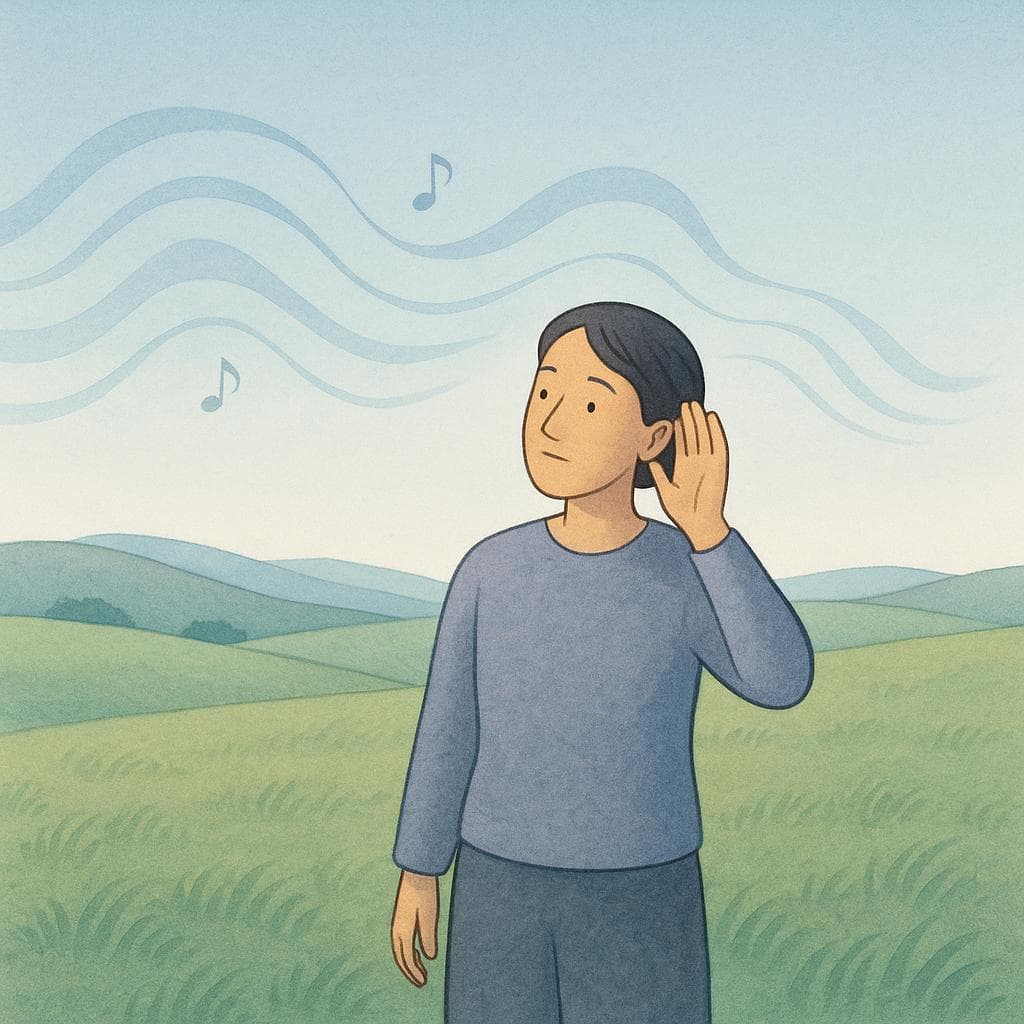
This verb can be used to express noticing something through any of the senses, particularly hearing or feeling.
Learn more →
Use this verb when becoming aware of a subtle detail or quality, often implying a more nuanced or appreciative observation.
Learn more →
This verb implies becoming aware of something through careful observation or realization, often when something has been overlooked.
Learn more →
This phrase means to specifically observe or pay attention to something, often something you might have otherwise missed.
Learn more →
This phrase is used when 'we' realize or become aware of a fact or situation.
Learn more →no-TARnoˈtaɾ

Examples
Noté un olor a café en cuanto entré.
I noticed a smell of coffee as soon as I walked in.
¿Notas el frío aquí?
Do you feel the cold here?
Se nota que estás cansado.
It’s noticeable that you are tired.
Using 'Se Nota'
Use 'se nota' when you want to say something is obvious or clear to everyone, like 'Se nota que te gusta' (It's obvious you like it).
Notar vs. Darse Cuenta
Mistake: “Using 'notar' for sudden realizations.”
Correction: Use 'notar' for physical senses (smell, touch, sight). Use 'darse cuenta' for mental realizations (Oh! I forgot my keys!).
darse cuenta de
Examples
Me di cuenta de que había olvidado las llaves.
I realized that I had forgotten the keys.
fijarse en
Examples
¡Fíjate en esto!
Look at this! / Notice this!
ad-ber-TEERað.βeɾˈtiɾ

Examples
Te advierto que no es fácil.
I warn you (that) it's not easy.
Ella me advirtió sobre el tráfico.
She warned me about the traffic.
No advertí que me mirabas.
I didn't notice (realize) you were watching me.
Two different uses
Advertir has two main uses: (1) to warn someone (requires a person as the receiver), and (2) to notice/realize something (what you become aware of).
Stem change pattern
This verb changes from E to IE in the present tense: yo advierto, tú adviertes, él advierte. But it stays regular in the preterite: yo advertí, él advirtió.
Mixing up tenses
Mistake: “Using the present tense 'advierte' when you mean 'he warned' in the past”
Correction: Use 'advirtió' (preterite) for completed actions in the past. 'Advierte' (present) means 'he/she/it warns' or 'you (informal) warn'.
Missing the accent
Mistake: “Writing 'adverti' without the accent mark”
Correction: Always write 'advertí' (with accent) for the preterite 'I warned.' The accent distinguishes it from the infinitive.
per-see-BEERpeɾθiˈβiɾ

Examples
Desde aquí se puede percibir el olor del mar.
From here you can sense the smell of the sea.
Los gatos pueden percibir sonidos que los humanos no oímos.
Cats can perceive sounds that we humans don't hear.
Apenas pude percibir su voz en medio del ruido.
I could barely notice her voice amidst the noise.
Percibir with physical senses
When you use 'percibir' to talk about facts you are seeing or hearing right now, use regular verb forms. You only use the 'special wish form' (subjunctive) if you are doubting or denying the perception.
Direct objects
Unlike English where we often say 'perceive of', in Spanish you just 'percibir' something directly. No extra preposition needed!
Using 'percibir' for gifts
Mistake: “Percibí un regalo de mi madre.”
Correction: Recibí un regalo de mi madre. Use 'recibir' for physical items given to you, and 'percibir' for things you notice with your senses.
deh-tehk-TAHRdetekˈtaɾ

Examples
El radar puede detectar aviones a gran distancia.
The radar can detect planes at a great distance.
El médico detectó un pequeño problema en los análisis.
The doctor detected a small problem in the tests.
Si detectas algún error en el documento, avísame.
If you notice any error in the document, let me know.
Using 'A' with People
When you detect a person (like a thief), you must put the word 'a' before them: 'Detectaron a un intruso'. If it's an object, like a sound, you don't need it: 'Detectaron un ruido'.
A Friendly Regular Verb
This verb is completely regular! It follows the exact same pattern as 'hablar' or 'cantar' in all its forms.
Detectar vs. Sentir
Mistake: “Detecto cansancio.”
Correction: Siento cansancio. Use 'detectar' for external things you discover, but 'sentir' for internal feelings or physical sensations you have yourself.
DAR-tehˈdaɾte

Examples
Tienes que darte cuenta de que no es tu culpa.
You have to realize that it's not your fault.
Espero que puedas darte cuenta de tu error pronto.
I hope you can realize your mistake soon.
Al leer el libro, vas a darte cuenta de muchas cosas.
By reading the book, you are going to realize many things.
A Set Phrase
'Darse cuenta' is a fixed expression that means 'to realize'. Think of it as one whole idea. The 'se' part changes to match who is realizing something (me doy cuenta, te das cuenta, etc.).
Mixing up 'realizar' and 'darse cuenta'
Mistake: “Tengo que realizar que es tarde.”
Correction: Tengo que darme cuenta de que es tarde. The verb 'realizar' usually means 'to carry out' or 'to achieve', not 'to realize'.
sen-TEERsenˈtiɾ
Examples
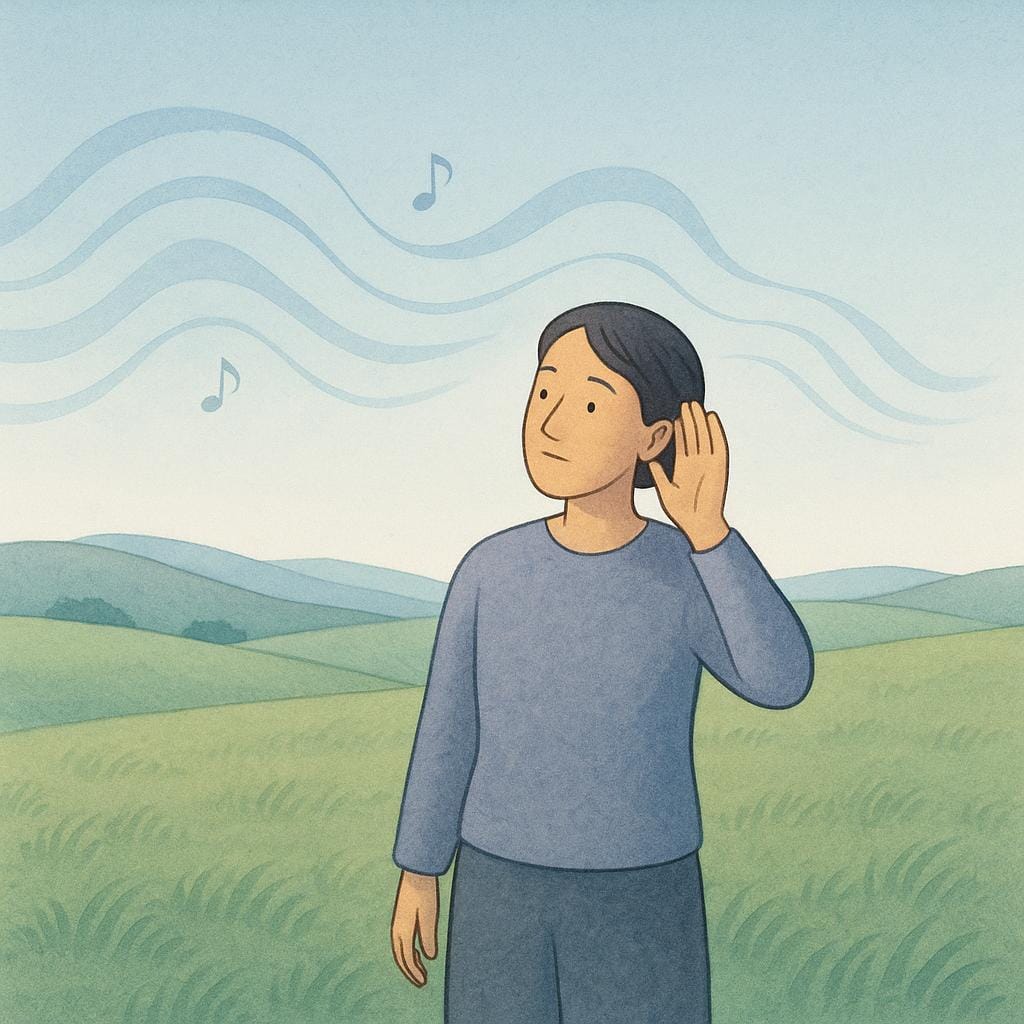
Sentí un ruido en la otra habitación.
I heard a noise in the other room.
A lo lejos, se sentían las campanas de la iglesia.
In the distance, the church bells could be heard.
Apenas sentí el pinchazo de la aguja.
I barely felt the prick of the needle.
ah-preh-SYAHRapɾeˈsjaɾ

Examples
A lo lejos se podía apreciar la silueta de las montañas.
In the distance, one could perceive the silhouette of the mountains.
Se aprecia un ligero cambio en los resultados.
A slight change can be seen in the results.
pair-kah-TARpeɾkaˈtaɾ

Examples
No se percató de que la puerta estaba abierta.
He didn't notice that the door was open.
Al entrar en la sala, me percaté del extraño silencio.
Upon entering the room, I became aware of the strange silence.
Espero que te percates de la importancia de este asunto.
I hope you realize the importance of this matter.
The 'DE' Requirement
In Spanish, this verb almost always needs the word 'de' before you mention what you noticed. Think of it as saying 'to be aware OF' something.
Using Reflexive Pronouns
This verb is used reflexively, meaning you must use pronouns like 'me', 'te', or 'se' before the verb (e.g., 'Me percaté').
Forgetting the 'de'
Mistake: “Se percató el error.”
Correction: Se percató DEL error. (Because you notice 'of' the error in Spanish structure).
Using it like 'Notice' in English
Mistake: “Percaté que llegaste tarde.”
Correction: ME percaté DE que llegaste tarde. (Don't forget the reflexive pronoun and the 'de').
reh-pah-RAHRre.paˈɾaɾ

Examples
No reparó en la ironía de sus palabras.
He didn't notice the irony in his words. (He didn't pay attention to it.)
Si reparas en los detalles, verás que la firma es falsa.
If you pay attention to the details, you will see that the signature is fake.
El director nunca repara en gastos cuando se trata de calidad.
The director never pays attention to (or spares) expenses when it comes to quality.
Requires 'en'
When 'reparar' means 'to notice' or 'to pay attention,' it almost always needs the preposition 'en' immediately before the thing being noticed: 'reparar en la diferencia' (to notice the difference).
Using 'reparar' instead of 'notar'
Mistake: “Using 'Reparo que hace frío' (I notice it's cold).”
Correction: While technically correct, this sounds very formal. Use 'Noto que hace frío' or 'Me doy cuenta de que hace frío' for everyday conversation.
DAR-nosˈdaɾnos

Examples
Es crucial darnos cuenta de lo importante que es el medio ambiente.
It is crucial for us to realize how important the environment is.
Al llegar, empezamos a darnos cuenta del error.
Upon arriving, we started to realize the mistake.
Después de leer el informe, pudimos darnos cuenta de la situación real.
After reading the report, we were able to realize the real situation.
Fixed Phrase
'Darse cuenta' is a fixed phrase, meaning its parts (dar + se + cuenta) must stay together to mean 'to realize'. You cannot separate 'cuenta' from the verb.
Using 'De'
When you realize something specific, you often need the small word 'de' (of) right after 'darnos cuenta': 'darnos cuenta de la verdad'.
Missing the Reflexive Pronoun
Mistake: “Vamos a dar cuenta de (We are going to give account of)”
Correction: Vamos a darnos cuenta de (We are going to realize). The 'nos' is essential here for the meaning 'to realize'.
Notar vs. Darse cuenta de
The most common confusion is between 'notar' and 'darse cuenta de'. 'Notar' is for direct sensory input (I heard, I saw), while 'darse cuenta de' is for realization or becoming aware of a fact (I realized, I understood).
Related Translations
Learn Spanish with Inklingo
Interactive stories, personalized learning, and more.