
THE INKLINGO LANGUAGE GUIDES
15 Chinese Fairy Tales, Fables & Myths to Read
Meet clever animals, impatient farmers and figures who reshape the sky. These fifteen Chinese tales include ancient fables and myths, each tied to an identifiable source. Start with five original A2 adaptations; compare their modern language with the brief classical passages above them.
Start here
- Waiting for a RabbitA man of Song farmed a field; in the field stood a stump.
- Marking the Boat for a Lost SwordA man of Chu was crossing a river when his sword fell from the boat into the water.
- Pulling Up the SeedlingsA man of Song worried that his seedlings were not growing and pulled them upward.
- The Fox and the TigerA tiger sought animals to eat and caught a fox.
- Adding Feet to a SnakeA snake has no feet to begin with; how can you give it feet?
Easy Chinese Fables: Five A2 Retellings
Read one paragraph at a time, then reveal its English translation. Dialogue and connecting details are newly written for learners; the central events follow the cited ancient stories.
Waiting for a Rabbit
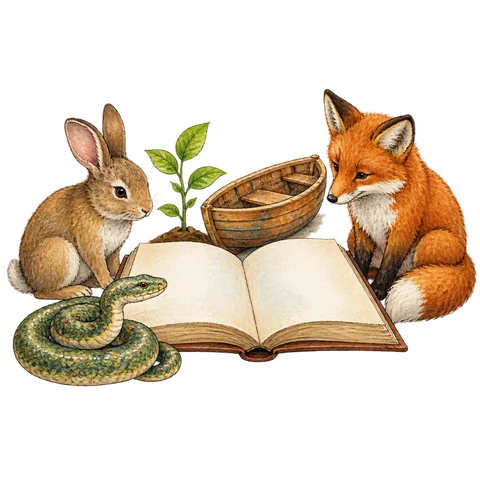
宋人有耕田者,田中有株。
Sòng rén yǒu gēng tián zhě, tián zhōng yǒu zhū.
A man of Song farmed a field; in the field stood a stump.
A farmer gets a rabbit by chance when it runs into a stump. He abandons his tools and waits for the same accident to happen again.
Cultural note: A lucky accident is not a reliable plan. In Han Feizi, the story also criticizes applying old policies without considering a changed world.
An A2 retelling to read and listen to
Original Codex-authored modern Mandarin adaptation of the public-domain narrative. Dialogue, transitions and the closing reflection are new; no modern published retelling is copied.
从前,宋国有一个农民。他家有一块田,田里有一个老桩。每天,他带着出门,在田里。很,工作也很累,可是他知道,要有饭吃,就要好好。
Cóngqián, Sòng guó yǒu yī ge nóngmín. Tā jiā pángbiān yǒu yī kuài tián, tián lǐ yǒu yī ge lǎo shùzhuāng. Měitiān zǎoshang, tā dài zhe gōngjù chūmén, zài tián lǐ gàn huó. Tàiyáng hěn rè, gōngzuò yě hěn lèi, kěshì tā zhīdào, yào yǒu fàn chī, jiù yào hǎohǎo zhòng dì.
一天,他正在田里工作,一只跑过来。跑得很快,没有前面的树桩。它一下撞了上去,倒在地上,不再动了。农民放下,走过去看,发现已经死了。
Yī tiān, tā zhèngzài tián lǐ gōngzuò, hūrán kànjiàn yī zhī tùzi pǎo guòlai. Tùzi pǎo de hěn kuài, méiyǒu kànjiàn qiánmiàn de shùzhuāng. Tā yī xià zhuàng le shàngqu, dǎo zài dì shang, bù zài dòng le. Nóngmín fàngxià gōngjù, zǒu guòqu kàn, fāxiàn tùzi yǐjīng sǐ le.
他拿起,心里很高兴。他想:“今天真走运!我没有追它,也没有找它,自己就来了。要是每天都有这样的,我还要辛苦呢?”他看着树桩,觉得自己找到了一个好办法。
Tā ná qǐ tùzi, xīn lǐ hěn gāoxìng. Tā xiǎng: “Jīntiān zhēn zǒuyùn! Wǒ méiyǒu zhuī tā, yě méiyǒu zhǎo tā, tùzi zìjǐ jiù lái le. Yàoshi měitiān dōu yǒu zhèyàng de hǎoshì, wǒ wèishénme hái yào xīnkǔ gàn huó ne?” Tā kàn zhe shùzhuāng, juéde zìjǐ zhǎodào le yī ge hǎo bànfǎ.
第二天,农民没有。他坐在树桩,认真地看着四周。他等了一会儿,又等了一会儿。在里动,小鸟从天上飞过,可是一只也没有来。他对自己说:“再等一等吧。”
Dì èr tiān zǎoshang, nóngmín méiyǒu ná qǐ gōngjù. Tā zuò zài shùzhuāng pángbiān, rènzhēn de kàn zhe sìzhōu. Tā děng le yī huìr, yòu děng le yī huìr. Cǎo zài fēng lǐ dòng, xiǎoniǎo cóng tiān shang fēi guò, kěshì yī zhī tùzi yě méiyǒu lái. Tā duì zìjǐ shuō: “Zài děng yī děng ba.”
慢慢落下去了,他只好空着手回家。可是天,他又来到同一个。别人忙着照顾田里的,他却只想着下一只。日子过去,他的放在一边,田里的越来越多。
Tàiyáng mànmàn luò xiàqu le, tā zhǐhǎo kōng zhe shǒu huí jiā. Kěshì dì sān tiān, tā yòu láidào tóng yī ge dìfang. Biérén máng zhe zhàogù tián lǐ de zhuāngjia, tā què zhǐ xiǎng zhe xià yī zhī tùzi. Rìzi yī tiān tiān guòqu, tā de gōngjù fàng zài yī biān, tián lǐ de cǎo yuè lái yuè duō.
村里的人知道后,都笑他把一次好运当成了每天会的事。没有再来,他也没有因为等待得到更多。树桩还是那个树桩,改变的只是他自己:原来做的工作,现在不做了。
Cūn lǐ de rén zhīdào hòu, dōu xiào tā bǎ yī cì hǎoyùn dàng chéng le měitiān huì fāshēng de shì. Tùzi méiyǒu zài lái, tā yě méiyǒu yīnwèi děngdài dédào gèng duō shíwù. Shùzhuāng háishi nà ge shùzhuāng, gǎibiàn de zhǐshì tā zìjǐ: yuánlái kěn zuò de gōngzuò, xiànzài bù zuò le.
Hard
The classical source line is more advanced than the graded retelling. Read its translation before comparing the older wording.
 Source note
Marking the Boat for a Lost Sword
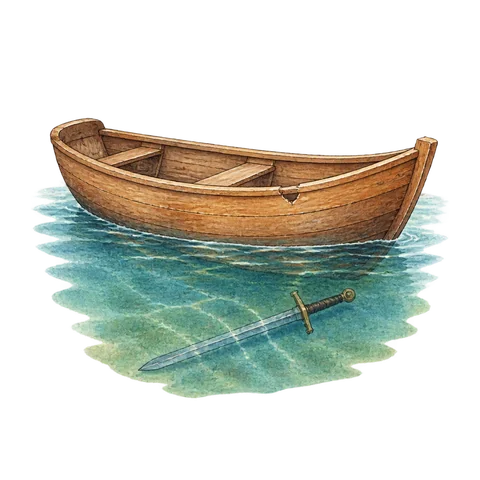
楚人有涉江者,其剑自舟中坠于。
Chǔ rén yǒu shè jiāng zhě, qí jiàn zì zhōu zhōng zhuì yú shuǐ.
A man of Chu was crossing a river when his sword fell from the boat into the water.
A traveler marks the side of his moving boat to remember where his sword fell. When the boat stops elsewhere, the mark cannot show where the sword lies.
Cultural note: A useful method must fit the present situation. The old passage uses this mistake to discuss laws and change.
An A2 retelling to read and listen to
Original Codex-authored modern Mandarin adaptation of the public-domain narrative. Dialogue, transitions and the closing reflection are new; no modern published retelling is copied.
从前,一个楚国人要到对岸去。他带着一把剑,上了一条。船夫把船推离岸边,慢慢划。很深,船轻轻地摇着。这个人坐在船边,一边看,一边和旁边的人说话。
Cóngqián, yī ge Chǔ guó rén yào dào hé duì'àn qù. Tā dài zhe yī bǎ jiàn, shàng le yī tiáo xiǎochuán. Chuánfū bǎ chuán tuī lí ànbiān, mànmàn xiàng qián huá. Héshuǐ hěn shēn, chuán qīngqīng de yáo zhe. Zhè ge rén zuò zài chuán biān, yī biān kàn shuǐ, yī biān hé pángbiān de rén shuōhuà.
,动了一下。他的剑从掉下去,落进了水里。他低头一看,只水面上的小圆圈。旁边的人着急地说:“你的剑掉了!快告诉船夫,看看还能不能找到。”可是他一点也不着急。
Hūrán, xiǎochuán dòng le yī xià. Tā de jiàn cóng chuán biān diào xiàqu, luò jìn le shuǐ lǐ. Tā dī tóu yī kàn, zhǐ kànjiàn shuǐmiàn shang de xiǎo yuánquān. Pángbiān de rén zháojí de shuō: “Nǐ de jiàn diào le! Kuài gàosu chuánfū, kànkan hái néng bù néng zhǎodào.” Kěshì tā yī diǎn yě bù zháojí.
他拿出一把小刀,在剑掉下去的,在船边刻了一个记号。别人问:“你在做什么?”他回答:“我记住就行了。你们看,剑是从这里掉下去的。有了这个记号,我就不会忘记。”
Tā ná chū yī bǎ xiǎodāo, zài jiàn diào xiàqu de dìfang, zài chuán biān kè le yī ge jìhào. Biérén wèn: “Nǐ zài zuò shénme?” Tā huídá: “Wǒ jìzhù dìfang jiù xíng le. Nǐmen kàn, jiàn shì cóng zhèlǐ diào xiàqu de. Yǒu le zhè ge jìhào, wǒ jiù bù huì wàngjì.”
小船继续向前走。岸边的离他们越来越远,前面的岸却越来越近。这个人没有看这些变化,只是时不时摸一摸船上的记号。他觉得自己的办法又简单又聪明,比一直看着水面可靠多了。
Xiǎochuán jìxù xiàng qián zǒu. Ànbiān de shù lí tāmen yuè lái yuè yuǎn, qiánmiàn de àn què yuè lái yuè jìn. Zhè ge rén méiyǒu kàn zhèxiē biànhuà, zhǐshì shí bù shí mō yī mō chuán shang de jìhào. Tā juéde zìjǐ de bànfǎ yòu jiǎndān yòu cōngming, bǐ yīzhí kàn zhe shuǐmiàn kěkào duō le.
到了对岸,船停了。他马上走到记号旁边,准备从那里找剑。船夫问他:“你现在才找?”他着记号说:“因为我知道剑在哪里。这个记号没有变,剑就在下面。”
Dào le duì'àn, chuán zhōngyú tíng le. Tā mǎshàng zǒu dào jìhào pángbiān, zhǔnbèi cóng nàlǐ xià shuǐ zhǎo jiàn. Chuánfū wèn tā: “Nǐ wèishénme xiànzài cái zhǎo?” Tā zhǐ zhe jìhào shuō: “Yīnwèi wǒ zhīdào jiàn zài nǎlǐ. Zhè ge jìhào méiyǒu biàn, jiàn jiù zài xiàmiàn.”
可是,记号跟着船走了,剑却没有跟着船走。他在岸边的水里找了又找,找不到那把剑。记住一个记号,并不等于记住真正的。船上的位置一样,河里的位置早就不一样了。
Kěshì, jìhào gēn zhe chuán zǒu le, jiàn què méiyǒu gēn zhe chuán zǒu. Tā zài ànbiān de shuǐ lǐ zhǎo le yòu zhǎo, dāngrán zhǎo bù dào nà bǎ jiàn. Jìzhù yī ge jìhào, bìng bù děngyú jìzhù zhēnzhèng de dìfang. Chuán shang de wèizhi yīyàng, hé lǐ de wèizhi zǎo jiù bù yīyàng le.
Hard
The classical source line is more advanced than the graded retelling. Read its translation before comparing the older wording.
 Source note
Pulling Up the Seedlings
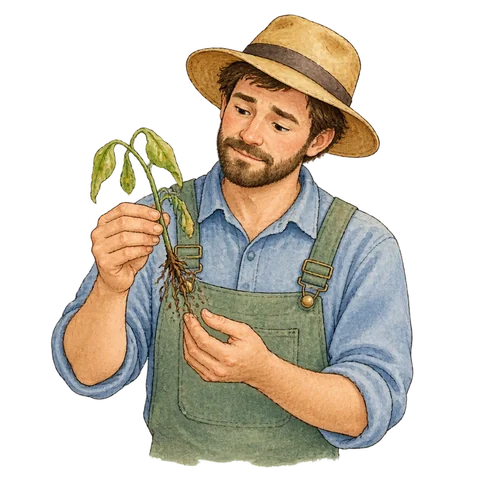
宋人有闵其苗之不而揠之者。
Sòng rén yǒu mǐn qí miáo zhī bù zhǎng ér yà zhī zhě.
A man of Song worried that his seedlings were not growing and pulled them upward.
An impatient farmer tries to make his crop grow faster by pulling each plant up a little. His son discovers that the disturbed seedlings have withered.
Cultural note: Care supports growth; forcing visible results can destroy it. Mencius uses the farming story while discussing moral cultivation.
An A2 retelling to read and listen to
Original Codex-authored modern Mandarin adaptation of the public-domain narrative. Dialogue, transitions and the closing reflection are new; no modern published retelling is copied.
从前,宋国有一个农民。他在田里种下了小苗,希望有很多粮食。每天,他都去田里看一看。他给小苗浇水,他把旁边的草拔掉。他很用心,却总觉得小苗长得太慢。
Cóngqián, Sòng guó yǒu yī ge nóngmín. Tā zài tián lǐ zhòng xià le xiǎomiáo, xīwàng qiūtiān yǒu hěn duō liángshi. Měitiān, tā dōu qù tián lǐ kàn yī kàn. Yǒushí tā gěi xiǎomiáo jiāo shuǐ, yǒushí tā bǎ pángbiān de cǎo bá diào. Tā hěn yòngxīn, què zǒng juéde xiǎomiáo zhǎng de tài màn.
一天,他蹲在田边,看了。“这么高,今天好像还是这么高,”他想,“我已经等了好几天,还没有长大?我不能只是站在这里等,一定得想个办法,它们一把。”
Yī tiān zǎoshang, tā dūn zài tián biān, kàn le hěn jiǔ. “Zuótiān zhème gāo, jīntiān hǎoxiàng háishi zhème gāo,” tā xiǎng, “Wǒ yǐjīng děng le hǎo jǐ tiān, wèishénme hái méiyǒu zhǎng dà? Wǒ bù néng zhǐshì zhàn zài zhèlǐ děng, yīdìng děi xiǎng ge bànfǎ, bāng tāmen yī bǎ.”
他想到一个主意。他用手抓住一棵小苗,轻轻向上拔了一点。小苗果然比刚才高了。他高兴地笑了:“原来这么容易!”于是,他弯着腰,把身边的小苗一棵一棵地往上拔。
Tā hūrán xiǎngdào yī ge zhǔyi. Tā yòng shǒu zhuā zhù yī kē xiǎomiáo, qīngqīng xiàng shàng bá le yī diǎn. Xiǎomiáo guǒrán bǐ gāngcái gāo le. Tā gāoxìng de xiào le: “Yuánlái zhème róngyì!” Yúshì, tā wān zhe yāo, bǎ shēnbiān de xiǎomiáo yī kē yī kē de wǎng shàng bá.
田很大,小苗也很多。他从忙到下午,手累了,背也酸了,可是他不肯来。看见一排排变高的小苗,他觉得这些辛苦都值得。最后,他把整块田里的小苗都拔高了,才慢慢家。
Tián hěn dà, xiǎomiáo yě hěn duō. Tā cóng zǎoshang máng dào xiàwǔ, shǒu lèi le, bèi yě suān le, kěshì tā bù kěn tíng xiàlai. Kànjiàn yī pái pái biàn gāo de xiǎomiáo, tā juéde zhèxiē xīnkǔ dōu zhíde. Zuìhòu, tā bǎ zhěng kuài tián lǐ de xiǎomiáo dōu bá gāo le, cái mànmàn zǒu huí jiā.
家里人问他这么累。他坐下来,得意地说:“今天我做了一件大事。我帮田里的小苗长高了!”儿子听了,觉得很奇怪。怎么能用手拉着长大呢?他没有多说,马上跑到田里去看。
Jiā lǐ rén wèn tā wèishénme zhème lèi. Tā zuò xiàlai, déyì de shuō: “Jīntiān wǒ zuò le yī jiàn dà shì. Wǒ bāng tián lǐ de xiǎomiáo zhǎng gāo le!” Érzi tīng le, juéde hěn qíguài. Zhíwù zěnme néng yòng shǒu lā zhe zhǎng dà ne? Tā méiyǒu duō shuō, mǎshàng pǎo dào tián lǐ qù kàn.
到了田边,儿子停住了。小苗虽然高了一点,却全都低下了头,已经枯了。只注意地上看得见的部分,没有想到地下的根。想小苗长大是,可是小苗需要、阳光和时间,不需要被拔起来。
Dào le tián biān, érzi tíng zhù le. Xiǎomiáo suīrán gāo le yī diǎn, què quán dōu dī xià le tóu, yǐjīng kū le. Fùqīn zhǐ zhùyì dì shang kàn de jiàn de bùfen, méiyǒu xiǎngdào dì xià de gēn. Xiǎng bāng xiǎomiáo zhǎng dà shì hǎoshì, kěshì xiǎomiáo xūyào shuǐ, yángguāng hé shíjiān, bù xūyào bèi bá qǐlai.
Hard
The classical source line is more advanced than the graded retelling. Read its translation before comparing the older wording.
 Source note
The Fox and the Tiger
虎求百兽食之,得狐。
Hǔ qiú bǎi shòu shí zhī, dé hú.
A tiger sought animals to eat and caught a fox.
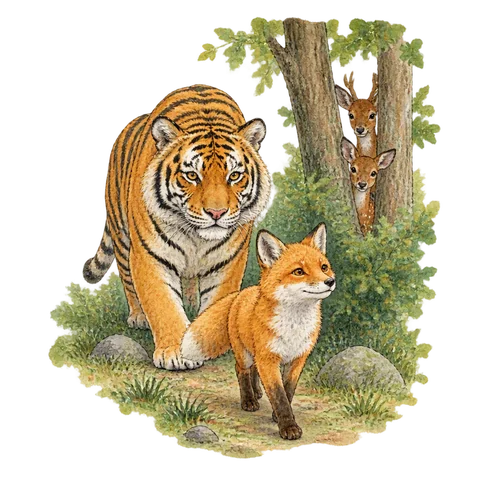
The fox claims that heaven has made it ruler of the animals. It walks ahead of the tiger, then uses the animals' fear of the tiger as supposed proof of its own power.
Cultural note: Look for the real source of someone's authority. The source tradition has several witnesses; the quoted wording here is the Yin Wenzi fragment preserved in Taiping Yulan.
An A2 retelling to read and listen to
Original Codex-authored modern Mandarin adaptation of the public-domain narrative. Dialogue, transitions and the closing reflection are new; no modern published retelling is copied.
有一天,一只老虎在林里找东西吃。它走到一棵大树,看见一只狐狸。老虎一下就抓住了狐狸,张开大说:“今天的有了!”狐狸很害怕,可是它知道,光是求老虎放手没有用。
Yǒu yī tiān, yī zhī lǎohǔ zài shùlín lǐ zhǎo dōngxi chī. Tā zǒu dào yī kē dà shù páng, kànjiàn yī zhī húli. Lǎohǔ yī xià jiù zhuā zhù le húli, zhāng kāi dà zuǐ shuō: “Jīntiān de wǎnfàn yǒu le!” Húli hěn hàipà, kěshì tā zhīdào, guāng shì qiú lǎohǔ fàng shǒu méiyǒu yòng.
狐狸抬起头,装作一点也的样子。“你不能吃我,”它说,“天上的神让我管理这里所有的动物。你要是吃了我,就是不听天上的。”老虎听见这些话,吃了一惊,慢慢放松了爪子。
Húli tái qǐ tóu, zhuāngzuò yī diǎn yě bù pà de yàngzi. “Nǐ bù néng chī wǒ,” tā shuō, “Tiān shang de shén ràng wǒ guǎnlǐ zhèlǐ suǒyǒu de dòngwù. Nǐ yàoshi chī le wǒ, jiù shì bù tīng tiān shang de mìnglìng.” Lǎohǔ tīngjiàn zhèxiē huà, chī le yī jīng, mànmàn fàngsōng le zhuǎzi.
“你这么小,别的动物真的怕你吗?”老虎问。狐狸马上回答:“不相信的话,就跟我走一趟吧。我走在前面,你走在后面。你看看,动物们我,会不会马上跑开。”老虎想了想,答应了。
“Nǐ zhème xiǎo, bié de dòngwù zhēn de pà nǐ ma?” lǎohǔ wèn. Húli mǎshàng huídá: “Bù xiāngxìn de huà, jiù gēn wǒ zǒu yī tàng ba. Wǒ zǒu zài qiánmiàn, nǐ zǒu zài hòumiàn. Nǐ qīnyǎn kànkan, dòngwùmen jiàn dào wǒ, huì bù huì mǎshàng pǎo kāi.” Lǎohǔ xiǎng le xiǎng, dāying le.
狐狸走在前面,抬着头,尾巴轻轻地动着。老虎跟在后面,眼睛看着路的。树林里有几只小动物正在找。它们脚步声,抬起头来,看见狐狸,也看见狐狸那只大老虎。
Húli zǒu zài qiánmiàn, tái zhe tóu, wěiba qīngqīng de dòng zhe. Lǎohǔ gēn zài hòumiàn, yǎnjing kàn zhe lù de liǎng biān. Shùlín lǐ yǒu jǐ zhī xiǎo dòngwù zhèngzài zhǎo shíwù. Tāmen tīngjiàn jiǎobù shēng, tái qǐ tóu lái, kànjiàn húli, yě kànjiàn húli shēnhòu nà zhī dà lǎohǔ.
小动物们什么也没有说,转身就跑。有的跑进里,有的躲到后。狐狸回头看着老虎说:“怎么样?我没有骗你吧。大家我就跑,谁不听我的话?”老虎看着空空的,心里真的相信了。
Xiǎo dòngwùmen shénme yě méiyǒu shuō, zhuǎn shēn jiù pǎo. Yǒu de pǎo jìn cǎo lǐ, yǒu de duǒ dào shù hòu. Húli huí tóu kàn zhe lǎohǔ shuō: “Zěnmeyàng? Wǒ méiyǒu piàn nǐ ba. Dàjiā kànjiàn wǒ jiù pǎo, shéi gǎn bù tīng wǒ de huà?” Lǎohǔ kàn zhe kōngkōng de xiǎolù, xīn lǐ zhēn de xiāngxìn le.
老虎不敢再吃狐狸,让它走了。狐狸很快消失在树林里。其实,小动物害怕的是老虎,根本不是狐狸。狐狸只是借了老虎的。老虎看见了大家逃跑,却没有想清楚:大家到底在怕谁?
Lǎohǔ bù gǎn zài chī húli, ràng tā zǒu le. Húli hěn kuài xiāoshī zài shùlín lǐ. Qíshí, xiǎo dòngwù hàipà de shì lǎohǔ, gēnběn bù shì húli. Húli zhǐshì jiè le lǎohǔ de lìliang. Lǎohǔ kànjiàn le dàjiā táopǎo, què méiyǒu xiǎng qīngchu: dàjiā dàodǐ zài pà shéi?
Hard
The classical source line is more advanced than the graded retelling. Read its translation before comparing the older wording.
 Source note
Adding Feet to a Snake
固无足,子安能为之足。
Shé gù wú zú, zǐ ān néng wèi zhī zú.
A snake has no feet to begin with; how can you give it feet?
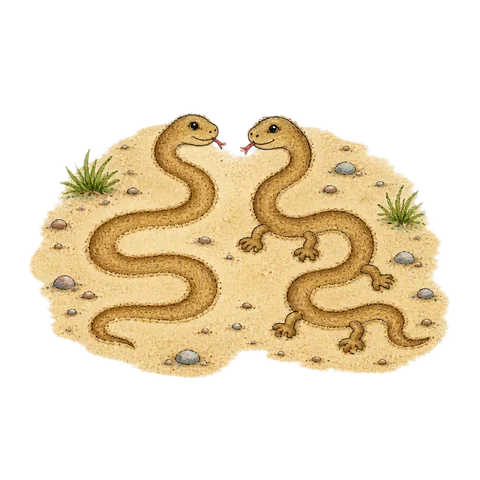
Several men compete to draw a snake for a shared prize of wine. The first finisher adds unnecessary feet and loses the prize to a man who has drawn an actual snake.
Cultural note: Knowing when to stop matters. The tale is told within a diplomatic argument against pursuing another war after a victory.
An A2 retelling to read and listen to
Original Codex-authored modern Mandarin adaptation of the public-domain narrative. Dialogue, transitions and the closing reflection are new; no modern published retelling is copied.
从前,楚国有一个人,把一壶酒送给几个帮他做事的人。大家忙了一天,都很高兴。可是有人看了看酒壶,说:“我们这么多人,这点酒不够大家喝。如果只给一个人,那倒是够了。”
Cóngqián, Chǔ guó yǒu yī ge rén, bǎ yī hú jiǔ sòng gěi jǐ ge bāng tā zuò shì de rén. Dàjiā máng le yī tiān, dōu hěn gāoxìng. Kěshì yǒu rén kàn le kàn jiǔhú, shuō: “Wǒmen zhème duō rén, zhè diǎn jiǔ bù gòu dàjiā hē. Rúguǒ zhǐ gěi yī ge rén, nà dào shì gòu le.”
大家商量了一会儿,决定比赛画。一个人说:“我们就在画。谁先画好一条,谁就喝这壶酒。”别人都说好。于是,每个人拿起一根小树枝,在面前的开始画起来。
Dàjiā shāngliang le yī huìr, juédìng bǐsài huà shé. Yī ge rén shuō: “Wǒmen jiù zài dì shang huà. Shéi xiān huà hǎo yī tiáo shé, shéi jiù hē zhè hú jiǔ.” Biérén dōu shuō hǎo. Yúshì, měi ge rén ná qǐ yī gēn xiǎo shùzhī, zài miànqián de dì shang kāishǐ huà qǐlai.
有一个人画得特别快。别人还在画蛇的身体,他已经画完了头和尾巴。他放下树枝,伸手拿起酒壶,笑着说:“我赢了!”大家抬头看了一眼,又低下头,继续画自己的蛇。
Yǒu yī ge rén huà de tèbié kuài. Biérén hái zài huà shé de shēntǐ, tā yǐjīng huà wán le tóu hé wěiba. Tā fàngxià shùzhī, shēn shǒu ná qǐ jiǔhú, xiào zhe shuō: “Wǒ yíng le!” Dàjiā tái tóu kàn le yī yǎn, yòu dī xià tóu, jìxù huà zìjǐ de shé.
这个人看见大家还没有画好,得意了。他手拿着酒壶,又拿起树枝。“你们画得太慢了,”他说,“我不但能画,还能给加上几只脚呢!”说完,他就在的身体画起脚来。
Zhè ge rén kànjiàn dàjiā hái méiyǒu huà hǎo, gèngjiā déyì le. Tā zuǒ shǒu ná zhe jiǔhú, yòu shǒu yòu ná qǐ shùzhī. “Nǐmen huà de tài màn le,” tā shuō, “Wǒ bùdàn néng huà shé, hái néng gěi shé jiā shàng jǐ zhī jiǎo ne!” Shuō wán, tā jiù zài shé de shēntǐ pángbiān huà qǐ jiǎo lái.
他的脚还没有画完,另一个人已经画好了。那个人站起来,从他手里拿走了酒壶。“等一等!”第一个人说,“明明是我先画完的,你怎么把酒拿走了?”他着地上的画,觉得很不公平。
Tā de jiǎo hái méiyǒu huà wán, lìng yī ge rén yǐjīng huà hǎo le shé. Nà ge rén zhàn qǐlai, cóng tā shǒu lǐ ná zǒu le jiǔhú. “Děng yī děng!” dì yī ge rén shuō, “Míngmíng shì wǒ xiān huà wán de, nǐ zěnme bǎ jiǔ ná zǒu le?” Tā zhǐ zhe dì shang de huà, juéde hěn bù gōngpíng.
第二个人说:“我们比的是画。本来没有脚,你要给它画脚?你现在画的,还一条吗?”说完,他就喝了酒。第一个人看着自己多画的几只脚,再也说不出话来。原来做好的事,多加一点,反而可能做坏。
Dì èr ge rén shuō: “Wǒmen bǐ de shì huà shé. Shé běnlái méiyǒu jiǎo, nǐ wèishénme yào gěi tā huà jiǎo? Nǐ xiànzài huà de, hái suàn shì yī tiáo shé ma?” Shuō wán, tā jiù hē le jiǔ. Dì yī ge rén kàn zhe zìjǐ duō huà de jǐ zhī jiǎo, zài yě shuō bù chū huà lái. Yuánlái yǐjīng zuò hǎo de shì, duō jiā yī diǎn, fǎn'ér kěnéng zuò huài.
Hard
The classical source line is more advanced than the graded retelling. Read its translation before comparing the older wording.
 Source note
Explore these words: Animals (flashcards) · Directions & position (flashcards) · Time & dates (flashcards)
Put these words into context with a story at your level.
Read Chinese storiesChinese Folk Tales About Judgment
These brief tales test a claim, a decision or an assumption. Their old political settings often explain why the narrator tells them.

The Spear and the Shield
吾矛之利,于无不陷也。
Wú máo zhī lì, yú wù wú bù xiàn yě.
My spear is so sharp that there is nothing it cannot pierce.
A seller praises his shield as impossible to pierce and his spear as able to pierce anything. A listener asks what would happen if the spear struck the shield, leaving him unable to answer.
Cultural note: Claims can each sound impressive yet contradict one another. The classical source writes 楯 for the shield; the modern tale title usually uses 盾.
Hard
The classical source line is more advanced than the graded retelling. Read its translation before comparing the older wording.
 Source note
Covering His Ears to Steal a Bell
恐闻之而夺己也,遽揜其耳。
Kǒng rén wén zhī ér duó jǐ yě, jù yǎn qí ěr.
Afraid that others would hear it and take it from him, he quickly covered his ears.
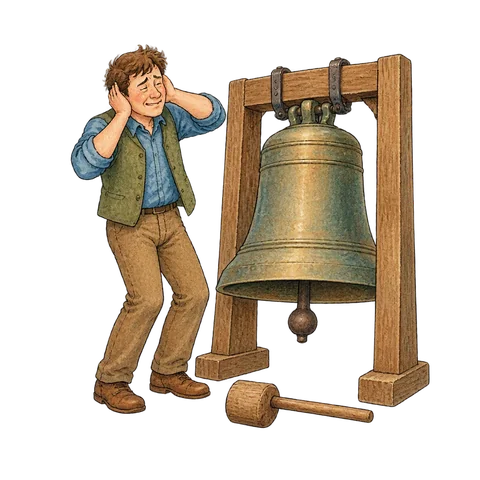
A man finds a bronze bell too large to carry. He strikes it to break it into pieces; when it rings, he covers his own ears as though that could prevent other people hearing.
Cultural note: Ignoring evidence does not change it. The early story has a large bell, 鍾, rather than the little 鈴 found in the later idiom's title.
Hard
The classical source line is more advanced than the graded retelling. Read its translation before comparing the older wording.
 Source note
Mending the Pen After Losing Sheep
亡而牢,未为也。
Wáng yáng ér bǔ láo, wèi wéi chí yě.
After losing sheep, it is not too late to mend the pen.
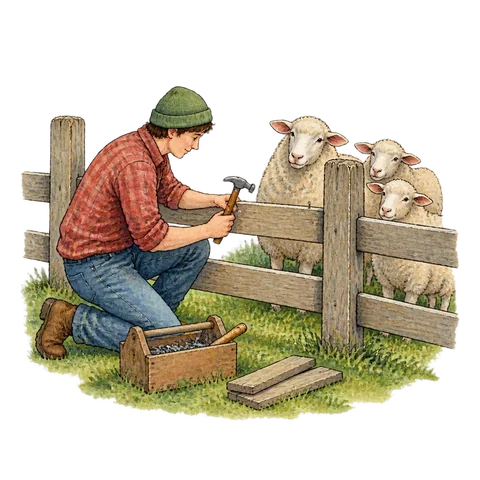
After a ruler ignores a warning and loses territory, his adviser returns with the image of repairing a sheep pen after a loss. The remaining damage can still be prevented.
Cultural note: This early witness is an adviser’s comparison inside a political narrative. The familiar stand-alone farmer story is a later way of expanding the image.
Hard
The classical source line is more advanced than the graded retelling. Read its translation before comparing the older wording.
 Source note
The Snipe and the Clam
两者不肯相舍,渔者得而并禽之。
Liǎng zhě bù kěn xiāng shě, yú zhě dé ér bìng qín zhī.
Neither would release the other, so a fisherman caught them both.
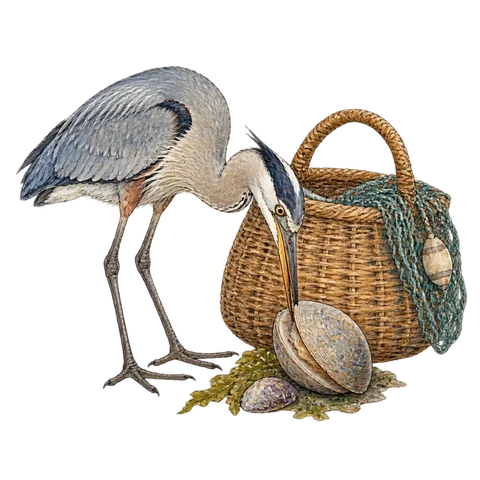
A snipe pecks at an open clam, which closes on its beak. Neither will give way, and a passing fisherman catches both. A diplomat uses the tale to warn two states against exhausting themselves in conflict.
Cultural note: A quarrel can benefit someone watching from outside. The old character 禽 here means to capture, not simply a bird.
Hard
The classical source line is more advanced than the graded retelling. Read its translation before comparing the older wording.
 Source note
Lord She and the Dragon
叶公好,室中雕文尽以为。
Shè gōng hào lóng, shì zhōng diāo wén jìn yǐ wéi lóng.
Lord She loved dragons; the carvings in his rooms were all dragons.
Lord She fills his home with dragon images but flees when a real dragon visits. A disappointed visitor uses the contrast to question a ruler's claimed love of talented people.
Cultural note: Liking an attractive image is different from welcoming the real thing. The name 葉 is read Shè here, and 好 is hào, meaning to like.
Hard
The classical source line is more advanced than the graded retelling. Read its translation before comparing the older wording.
 Source note
Explore these words: Religion & beliefs (flashcards) · Animals (flashcards) · Tools & building (flashcards)
Put these words into context with a story at your level.
Read Chinese storiesChinese Myths About Nature and Persistence
Myths do not share one fixed version. The notes distinguish the cited early account from details added in later popular retellings.
The Old Man Who Moved the Mountains
北愚公者,年且九十,面而居。
Běi shān Yú Gōng zhě, nián qiě jiǔ shí, miàn shān ér jū.
Old Man Yu of the northern mountains was nearly ninety and lived facing the mountains.
An old man and his family begin removing two mountains that block their route. He argues that future generations can continue, and divine helpers eventually carry the mountains away.
Cultural note: The ending includes divine help; it is not a report of ordinary engineering. Readers debate both its persistence and its approach to a huge problem.
Hard
The classical source line is more advanced than the graded retelling. Read its translation before comparing the older wording.
 Source note
Jingwei Tries to Fill the Sea
常衔西之木石,以堙于东。
Cháng xián xī shān zhī mù shí, yǐ yīn yú dōng hǎi.
She continually carries wood and stones from the western mountains to fill the eastern sea.
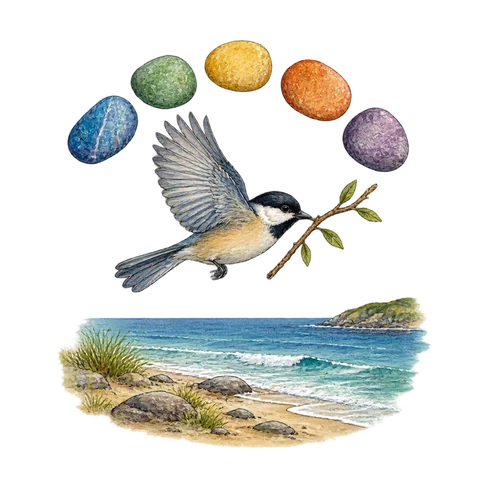
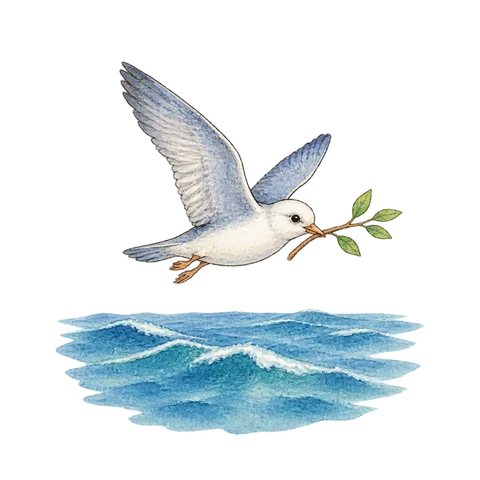
A girl drowns in the eastern sea and becomes the bird Jingwei. The bird repeatedly carries twigs and stones toward the sea that took her life.
Cultural note: The myth holds grief and determination together. It records the bird's continuing effort, without claiming that the sea is finally filled.
Hard
The classical source line is more advanced than the graded retelling. Read its translation before comparing the older wording.
 Source note
Kuafu Chases the Sun
夸父与日逐走,入日。
Kuāfù yǔ rì zhú zǒu, rù rì.
Kuafu raced after the sun and reached its setting place.
Kuafu pursues the sun, becomes terribly thirsty and drinks from great rivers. He dies before reaching another body of water; his abandoned staff becomes a forest.
Cultural note: This version explores a vast ambition and its cost. The source calls the resulting wood Denglin; later explanations often identify it with a peach grove.
Hard
The classical source line is more advanced than the graded retelling. Read its translation before comparing the older wording.
 Source note
Nüwa Repairs the Sky
于是女娲炼色石以补苍天。
Yúshì Nǚwā liàn wǔ sè shí yǐ bǔ cāngtiān.
Then Nüwa smelted stones of five colors to repair the blue heavens.
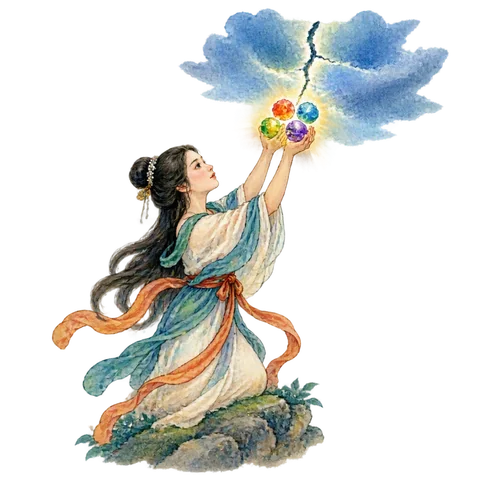
When the world is damaged by fire and flood, Nüwa repairs the sky with colored stones, restores its supports and brings the land back toward order.
Cultural note: This is a restoration myth. The quoted Huainanzi passage does not identify every detail of later popular versions, so it should not be treated as a single universal telling.
Hard
The classical source line is more advanced than the graded retelling. Read its translation before comparing the older wording.
 Source note
Yi and the Ten Suns
逮至尧之时,日并出。
Dài zhì Yáo zhī shí, shí rì bìng chū.
By the time of Yao, ten suns appeared together.
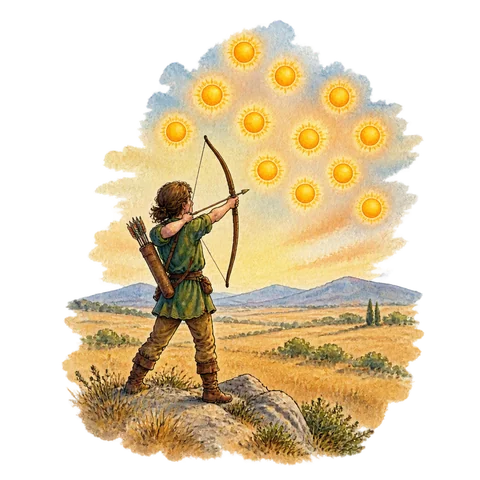
Ten suns scorch the crops, and the archer Yi is sent to confront disasters threatening the people. This early account includes his shooting at the suns alongside struggles with dangerous creatures.
Cultural note: Later tellings commonly specify nine suns falling and one remaining. The short Huainanzi passage quoted here says he shot at ten suns, so the source and later expansion are kept distinct.
Hard
The classical source line is more advanced than the graded retelling. Read its translation before comparing the older wording.
 Source note
Explore these words: Nature & landscape (flashcards) · Numbers (flashcards)
Put these words into context with a story at your level.
Read Chinese storiesChinese fairy tales: frequently asked questions
What are some famous Chinese folk tales?
The fox borrowing the tiger’s power, the farmer waiting for a rabbit and the old man moving mountains are widely retold narratives. This guide also includes Jingwei, Nüwa and Kuafu, with the early source identified for each.
Are Chinese fairy tales the same as fables and myths?
The English search phrase covers several traditions. A fable usually makes a point through a compact story; a myth concerns extraordinary beings or the shape of the world. Each selection here is grouped and explained accordingly.
Which Chinese tales are easiest for beginners?
Start with the five A2 retellings about the rabbit, boat, seedlings, fox and snake drawing. They use modern sentences and paragraph translations. The short original passages use classical Chinese and are considerably harder.
Are these the complete original stories?
Each entry quotes a short primary passage and summarizes its context. Five also offer a newly written graded adaptation. The adaptations are labeled and are not presented as verbatim ancient texts.
Why do different versions change the details?
Stories travel through speech, anthologies and schoolbooks. Names, endings and objects can change. The source note tells you which witness supports the line here; the cultural note points out significant differences.
Which Chinese mythical figures appear here?
Nüwa repairs the sky, Jingwei carries twigs toward the sea, Kuafu pursues the sun and Yi confronts the ten suns. These are figures in particular textual traditions, not a complete list of Chinese mythology.
Make these words part of your day
Explore Chinese stories, listen along, and save vocabulary as you go.
Find a story at your levelSources and verification
English translations and examples were written for this guide. Source notes distinguish documented expressions, original practice sentences, and literary quotations. Literary excerpts retain the language of their original period.
- Han Feizi, Five Vermin, first paragraph — Primary classical text or identified classical quotation, read 2026-10-04. Only the old source is quoted; modern explanatory prose is not copied.
- Lüshi Chunqiu, Shen Da Lan, Cha Jin; primary quotation reproduced by the Ministry of Education — Primary classical text or identified classical quotation, read 2026-10-04. Only the old source is quoted; modern explanatory prose is not copied.
- Mencius, Gong Sun Chou I, section 2 — Primary classical text or identified classical quotation, read 2026-10-04. Only the old source is quoted; modern explanatory prose is not copied.
- Yin Wenzi fragment, quoted in Taiping Yulan 494; Ministry of Education primary-source transcription — Primary classical text or identified classical quotation, read 2026-10-04. Only the old source is quoted; modern explanatory prose is not copied.
- Strategies of the Warring States, Qi II; primary passage reproduced by the Ministry of Education — Primary classical text or identified classical quotation, read 2026-10-04. Only the old source is quoted; modern explanatory prose is not copied.
- Han Feizi, Nan Yi, passage about the man selling spears and shields — Primary classical text or identified classical quotation, read 2026-10-04. Only the old source is quoted; modern explanatory prose is not copied.
- Lüshi Chunqiu, Bu Gou Lun, Zi Zhi; primary passage reproduced by the Ministry of Education — Primary classical text or identified classical quotation, read 2026-10-04. Only the old source is quoted; modern explanatory prose is not copied.
- Strategies of the Warring States, Chu IV, Zhuang Xin's advice; Ministry of Education source extract — Primary classical text or identified classical quotation, read 2026-10-04. Only the old source is quoted; modern explanatory prose is not copied.
- Strategies of the Warring States, Yan II; Ministry of Education primary passage — Primary classical text or identified classical quotation, read 2026-10-04. Only the old source is quoted; modern explanatory prose is not copied.
- Zhuangzi fragment preserved in Taiping Yulan 389; parallel in Xin Xu, Miscellaneous Matters V — Primary classical text or identified classical quotation, read 2026-10-04. Only the old source is quoted; modern explanatory prose is not copied.
- Liezi, Tang Wen; Ministry of Education primary transcription — Primary classical text or identified classical quotation, read 2026-10-04. Only the old source is quoted; modern explanatory prose is not copied.
- Classic of Mountains and Seas, Northern Mountains, Fajiu Mountain passage — Primary classical text or identified classical quotation, read 2026-10-04. Only the old source is quoted; modern explanatory prose is not copied.
- Classic of Mountains and Seas, Overseas Northern Regions — Primary classical text or identified classical quotation, read 2026-10-04. Only the old source is quoted; modern explanatory prose is not copied.
- Huainanzi, Lan Ming Xun, paragraph beginning with the ancient world's collapse — Primary classical text or identified classical quotation, read 2026-10-04. Only the old source is quoted; modern explanatory prose is not copied.
- Huainanzi, Ben Jing Xun, Yao and the ten suns passage — Primary classical text or identified classical quotation, read 2026-10-04. Only the old source is quoted; modern explanatory prose is not copied.
Source notes for all 15 entries
- Waiting for a Rabbit: The cited primary passage was checked directly, either in the original-work transcription or in the education ministry’s explicitly identified classical source quotation. Traditional forms are converted to simplified Chinese; English translations and pinyin are original. [rabbit-source]
- Marking the Boat for a Lost Sword: The cited primary passage was checked directly, either in the original-work transcription or in the education ministry’s explicitly identified classical source quotation. Traditional forms are converted to simplified Chinese; English translations and pinyin are original. [boat-source]
- Pulling Up the Seedlings: The cited primary passage was checked directly, either in the original-work transcription or in the education ministry’s explicitly identified classical source quotation. Traditional forms are converted to simplified Chinese; English translations and pinyin are original. [seedlings-source]
- The Fox and the Tiger: The cited primary passage was checked directly, either in the original-work transcription or in the education ministry’s explicitly identified classical source quotation. Traditional forms are converted to simplified Chinese; English translations and pinyin are original. [fox-source]
- Adding Feet to a Snake: The cited primary passage was checked directly, either in the original-work transcription or in the education ministry’s explicitly identified classical source quotation. Traditional forms are converted to simplified Chinese; English translations and pinyin are original. [snake-source]
- The Spear and the Shield: The cited primary passage was checked directly, either in the original-work transcription or in the education ministry’s explicitly identified classical source quotation. Traditional forms are converted to simplified Chinese; English translations and pinyin are original. [shield-source]
- Covering His Ears to Steal a Bell: The cited primary passage was checked directly, either in the original-work transcription or in the education ministry’s explicitly identified classical source quotation. Traditional forms are converted to simplified Chinese; English translations and pinyin are original. [bell-source]
- Mending the Pen After Losing Sheep: The cited primary passage was checked directly, either in the original-work transcription or in the education ministry’s explicitly identified classical source quotation. Traditional forms are converted to simplified Chinese; English translations and pinyin are original. [sheep-source]
- The Snipe and the Clam: The cited primary passage was checked directly, either in the original-work transcription or in the education ministry’s explicitly identified classical source quotation. Traditional forms are converted to simplified Chinese; English translations and pinyin are original. [snipe-source]
- Lord She and the Dragon: The cited primary passage was checked directly, either in the original-work transcription or in the education ministry’s explicitly identified classical source quotation. Traditional forms are converted to simplified Chinese; English translations and pinyin are original. [lord-she-source]
- The Old Man Who Moved the Mountains: The cited primary passage was checked directly, either in the original-work transcription or in the education ministry’s explicitly identified classical source quotation. Traditional forms are converted to simplified Chinese; English translations and pinyin are original. [mountains-source]
- Jingwei Tries to Fill the Sea: The cited primary passage was checked directly, either in the original-work transcription or in the education ministry’s explicitly identified classical source quotation. Traditional forms are converted to simplified Chinese; English translations and pinyin are original. [jingwei-source]
- Kuafu Chases the Sun: The cited primary passage was checked directly, either in the original-work transcription or in the education ministry’s explicitly identified classical source quotation. Traditional forms are converted to simplified Chinese; English translations and pinyin are original. [kuafu-source]
- Nüwa Repairs the Sky: The cited primary passage was checked directly, either in the original-work transcription or in the education ministry’s explicitly identified classical source quotation. Traditional forms are converted to simplified Chinese; English translations and pinyin are original. [nuwa-source]
- Yi and the Ten Suns: The cited primary passage was checked directly, either in the original-work transcription or in the education ministry’s explicitly identified classical source quotation. Traditional forms are converted to simplified Chinese; English translations and pinyin are original. [archer-source]