
THE INKLINGO LANGUAGE GUIDES
15 Japanese Fairy Tales with 5 Easy Retellings
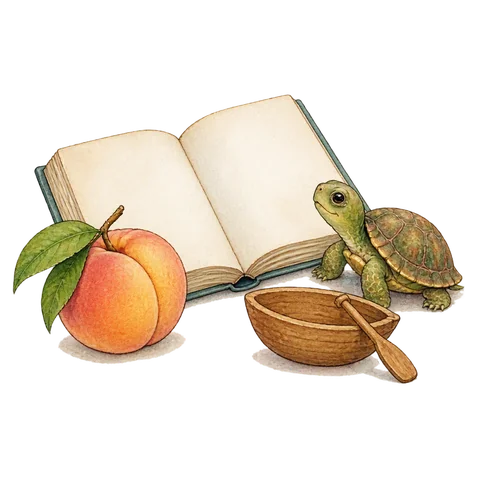
A peach opens, a turtle leads the way, and a tiny traveler sails in a bowl. Explore fifteen Japanese folk tales through sourced lines and cultural notes, then read five original A2 adaptations with ruby, romaji and paragraph-by-paragraph English translations. Older tales can be darker than their modern picture-book versions; each summary makes that clear.
Start here
- Momotarō: The Peach BoyEvery day, the old man went to the mountain to gather brushwood, and the old woman went to the river to wash clothes.
- Urashima TarōYes, yes, I certainly will not open it.
- Issun-bōshi: The One-Inch BoyFather, Mother, I am setting off now.
- The Mouse’s WeddingIt is the cloud.
- The Straw MillionaireWell, well, one piece of straw has become three large oranges.
- Kaguya-hime: The Bamboo Cutter’s TaleLong ago, there was someone called the Old Bamboo Cutter.
- The Old Man Who Made Trees BlossomDig here—woof, woof.
- The Wonderful Tea KettleOh, this is extraordinary! The tea kettle has transformed.
- Kintarō: The Golden BoyLong ago, there was a strong child called Kintarō.
- The Tongue-Cut SparrowTongue-cut sparrow, where is your home?
Japanese Fairy Tales for Beginners: Five Easy Retellings
These five adaptations use short modern sentences and explain the story through concrete actions. They are new learner versions, not quotations from a modern children’s book.
Momotarō: The Peach Boy
、おじいさんはへしば刈りに、おばあさんはへ洗濯に行きました。
Mainichi, ojiisan wa yama e shibakari ni, obaasan wa kawa e sentaku ni ikimashita.
Every day, the old man went to the mountain to gather brushwood, and the old woman went to the river to wash clothes.
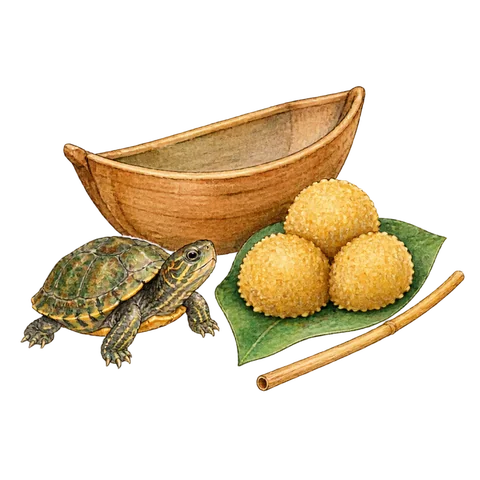
A boy found inside a peach grows strong, shares millet dumplings with a dog, monkey and pheasant, and travels with them to the island of the oni. He returns home with treasure.
Cultural note: The animal companions and millet dumplings are central motifs. Historical versions differ, and some emphasize conquest; our brief adaptation keeps the traditional journey without graphic combat.
An A2 retelling to read and listen to
Original Codex-authored learner adaptation of the cited traditional plot. Dialogue and transitions are newly written in simple modern Japanese; combat is compressed and non-graphic. This is not Kusuyama’s full prose or a copied modern retelling.
昔、おじいさんとおばあさんがいました。ある日、おばあさんがでを洗っていると、大きな桃が流れてきました。「おじいさんと食べましょう。」おばあさんは桃を家へ持って帰りました。二人が桃を見ていると、中から男の子が出てきました。
Mukashi, ojiisan to obaasan ga imashita. Aru hi, obaasan ga kawa de fuku o aratte iru to, ōkina momo ga nagarete kimashita. “Ojiisan to tabemashō.” Obaasan wa momo o ie e motte kaerimashita. Futari ga momo o mite iru to, naka kara otoko no ko ga dete kimashita.
二人は子どもを桃太郎と呼び、大切に育てました。桃太郎はよく食べ、よく働き、強いになりました。あるとき、遠いの鬼が人の宝物を取ると聞きました。「そのへ行きたいです。」二人は心配しましたが、旅のためにきびだんごを作りました。
Futari wa kodomo o Momotarō to yobi, taisetsu ni sodatemashita. Momotarō wa yoku tabe, yoku hataraki, tsuyoi wakamono ni narimashita. Aru toki, tōi shima no oni ga hito no takaramono o toru to kikimashita. “Sono shima e ikitai desu.” Futari wa shinpai shimashita ga, tabi no tame ni kibidango o tsukurimashita.
道でが来ました。「だんごを一つください。」桃太郎がだんごをあげると、は仲間になりました。次に猿ときじにも会いました。桃太郎は二匹にもだんごをあげました。仲間たちは一緒に歩き、のそばで船に乗りました。はまだ遠くにありました。
Michi de inu ga kimashita. “Dango o hitotsu kudasai.” Momotarō ga dango o ageru to, inu wa nakama ni narimashita. Tsugi ni saru to kiji ni mo aimashita. Momotarō wa nihiki ni mo dango o agemashita. Nakamatachi wa issho ni aruki, umi no soba de fune ni norimashita. Shima wa mada tōku ni arimashita.
には大きながありました。きじは空から中を見ました。猿は高いところへ登り、は桃太郎と進みました。みんなが力を合わせると、鬼たちは負けました。「もう悪いことはしません。」鬼の親分はそう言って、宝物を出しました。
Shima ni wa ōkina mon ga arimashita. Kiji wa sora kara naka o mimashita. Saru wa takai tokoro e nobori, inu wa Momotarō to susumimashita. Minna ga chikara o awaseru to, onitachi wa makemashita. “Mō warui koto wa shimasen.” Oni no oyabun wa sō itte, takaramono o dashimashita.
桃太郎たちは宝物を船に積んで、家へ帰りました。おじいさんとおばあさんはへ出て、桃太郎を迎えました。元気な顔を見て、二人は喜びました。も猿もきじもそばにいました。長い旅をしたは、仲間たちと一緒に家の前で休みました。
Momotarōtachi wa takaramono o fune ni tsunde, ie e kaerimashita. Ojiisan to obaasan wa soto e dete, Momotarō o mukaemashita. Genki na kao o mite, futari wa yorokobimashita. Inu mo saru mo kiji mo soba ni imashita. Nagai tabi o shita wakamono wa, nakamatachi to issho ni ie no mae de yasumimashita.
Read the sourced key line, then use the English summary to place it in the story.
 Source note
Urashima Tarō
、、けっしてあけません
Ee, ee, kesshite akemasen.
Yes, yes, I certainly will not open it.
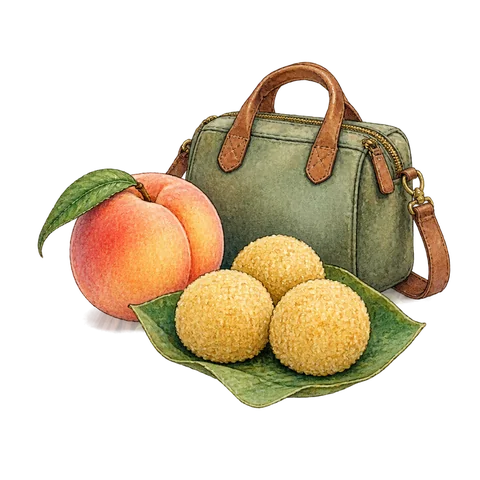
A fisherman rescues a turtle and visits an underwater palace. When he returns, centuries have passed. He opens the forbidden box given to him and becomes an old man.
Cultural note: The story combines kindness with the painful passage of time. The box is not simply an ordinary treasure chest; in Kusuyama’s ending it holds the time of a human life.
An A2 retelling to read and listen to
Original Codex-authored learner adaptation of the cited traditional plot. Dialogue and transitions are newly written in simple modern Japanese; combat is compressed and non-graphic. This is not Kusuyama’s full prose or a copied modern retelling.
のそばに、浦島太郎という若いがいました。ある日、子どもたちが小さなかめをいじめていました。浦島は子どもたちにお金をあげ、かめを助けました。「もう大丈夫だよ。」そう言って、静かにへ帰しました。かめはの中へ泳いでいきました。
Umi no soba ni, Urashima Tarō to iu wakai ryōshi ga imashita. Aru hi, kodomotachi ga chiisana kame o ijimete imashita. Urashima wa kodomotachi ni okane o age, kame o tasukemashita. “Mō daijōbu da yo.” Sō itte, shizuka ni umi e kaeshimashita. Kame wa mizu no naka e oyoide ikimashita.
しばらくして、かめが浦島を迎えに来ました。「お礼に、りゅう宮へ案内します。」浦島はかめの背中に乗りました。二人は青いの中を進みました。魚たちの向こうに、美しいが見えました。の前で、乙姫さまが待っていました。
Shibaraku shite, kame ga Urashima o mukae ni kimashita. “Orei ni, Ryūgū e annai shimasu.” Urashima wa kame no senaka ni norimashita. Futari wa aoi umi no naka o susumimashita. Sakanatachi no mukō ni, utsukushii tatemono ga miemashita. Mon no mae de, Otohime-sama ga matte imashita.
りゅう宮では、おいしい料理が出ました。魚の踊りも見ました。にはの花やの木がありました。が楽しく、時間はすぐに過ぎました。しかし、浦島は父と母のことを思い出しました。「家へ帰りたいです。」乙姫さまはさびしそうでした。
Ryūgū de wa, oishii ryōri ga demashita. Sakana no odori mo mimashita. Niwa ni wa haru no hana ya aki no ki ga arimashita. Mainichi ga tanoshiku, jikan wa sugu ni sugimashita. Shikashi, Urashima wa chichi to haha no koto o omoidashimashita. “Sorosoro ie e kaeritai desu.” Otohime-sama wa sabishisō deshita.
乙姫さまはを渡しました。「これは玉手です。決して開けないでください。」浦島は約束して、海の上へ戻りました。ところが、は前と違いました。知っている人は誰もいません。自分の家もありませんでした。の人は、浦島というはずっと昔の人だと言いました。
Otohime-sama wa hako o watashimashita. “Kore wa tamatebako desu. Kesshite akenaide kudasai.” Urashima wa yakusoku shite, umi no ue e modorimashita. Tokoroga, mura wa mae to chigaimashita. Shitte iru hito wa dare mo imasen. Jibun no ie mo arimasen deshita. Mura no hito wa, Urashima to iu ryōshi wa zutto mukashi no hito da to iimashita.
浦島は浜に座りました。りゅう宮の短い時間の間に、ここでは年も過ぎていたのです。悲しくなり、を忘れてを開けました。中からが出て、顔にかかりました。は白くなり、浦島はおじいさんになりました。は空で、は静かなままでした。
Urashima wa hama ni suwarimashita. Ryūgū no mijikai jikan no aida ni, koko de wa nanbyakunen mo sugite ita no desu. Kanashiku nari, yakusoku o wasurete hako o akemashita. Naka kara kumo ga dete, kao ni kakarimashita. Kami wa shiroku nari, Urashima wa ojiisan ni narimashita. Hako wa kara de, umi wa shizuka na mama deshita.
Read the sourced key line, then use the English summary to place it in the story.
 Source note
Issun-bōshi: The One-Inch Boy
おとうさん、、では行ってまいります。
Otōsan, okāsan, dewa itte mairimasu.
Father, Mother, I am setting off now.
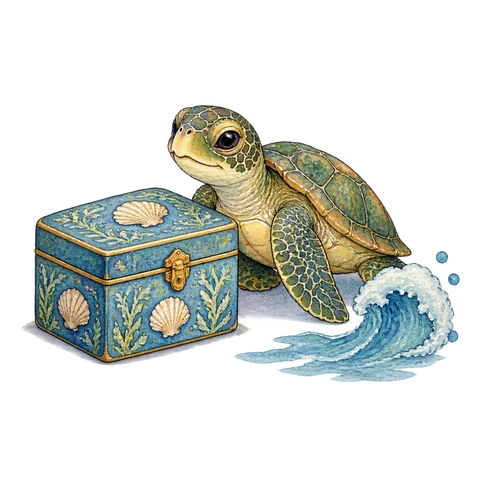
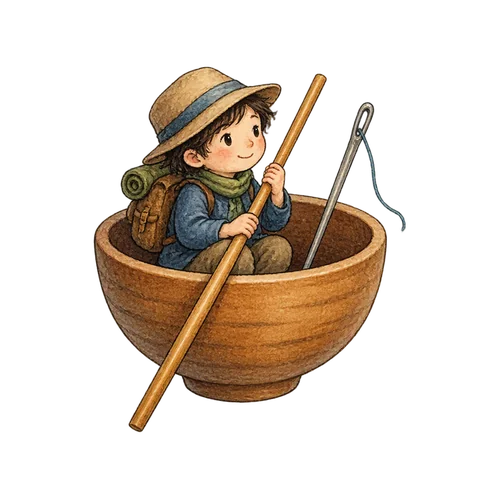
A tiny boy sets out in a bowl with a chopstick paddle and a needle sword. He serves a household in the capital, confronts an oni and gains a magic mallet that lets him grow.
Cultural note: An issun is an old measure of roughly three centimeters. The tale gives a small hero agency before the magical change; size is not a measure of his courage.
An A2 retelling to read and listen to
Original Codex-authored learner adaptation of the cited traditional plot. Dialogue and transitions are newly written in simple modern Japanese; combat is compressed and non-graphic. This is not Kusuyama’s full prose or a copied modern retelling.
昔、子どもがほしい夫婦がいました。二人は様にお願いしました。「ほど小さくてもいいです。」、本当に小さな男の子が生まれました。二人は一寸法師と名づけました。何年たっても体は小さいままでしたが、元気で賢い子に育ちました。
Mukashi, kodomo ga hoshii fūfu ga imashita. Futari wa kamisama ni onegai shimashita. “Yubi hodo chiisakute mo ii desu.” Yagate, hontō ni chiisana otoko no ko ga umaremashita. Futari wa Issun-bōshi to nazukemashita. Nannen tatte mo karada wa chiisai mama deshita ga, genki de kashikoi ko ni sodachimashita.
ある日、一寸法師は都へ行きたいと言いました。お母さんから針をもらい、にしました。おわんを船にし、おで水をかきました。「行ってまいります。」両親に手を振り、小さな船で出発しました。の流れは速く、さえ大きく見えました。
Aru hi, Issun-bōshi wa miyako e ikitai to iimashita. Okāsan kara hari o morai, katana ni shimashita. Owan o fune ni shi, ohashi de mizu o kakimashita. “Itte mairimasu.” Ryōshin ni te o furi, chiisana fune de shuppatsu shimashita. Kawa no nagare wa hayaku, kusa sae ōkiku miemashita.
都に着くと、大きな家を訪ねました。「ここで働かせてください。」主人は小さな声を聞いて、下を見ました。一寸法師は丁寧に頭を下げました。主人は彼を家に置きました。それから一寸法師は働き、家の姫さまとも仲よくなりました。
Miyako ni tsuku to, ōkina ie o tazunemashita. “Koko de hatarakasete kudasai.” Shujin wa chiisana koe o kiite, shita o mimashita. Issun-bōshi wa teinei ni atama o sagemashita. Shujin wa kare o ie ni okimashita. Sore kara Issun-bōshi wa mainichi hataraki, ie no hime-sama to mo nakayoku narimashita.
あるとき、姫さまと出かけると、鬼が現れました。一寸法師は針のを出しましたが、鬼に飲み込まれました。それでもあきらめません。の中から針で刺しました。鬼は痛くて彼を吐き出し、逃げていきました。そこには小さなつちが残っていました。
Aru toki, hime-sama to dekakeru to, oni ga arawaremashita. Issun-bōshi wa hari no katana o dashimashita ga, oni ni nomikomaremashita. Sore demo akiramemasen. Onaka no naka kara hari de sashimashita. Oni wa itakute kare o hakidashi, nigete ikimashita. Soko ni wa chiisana tsuchi ga nokotte imashita.
それは願いをかなえる打ち出の小槌でした。一寸法師はつちを振りました。「大きくなれ。」すると、がだんだん伸びました。姫さまはびっくりしました。二人は結婚し、遠い家にいる両親も呼びました。両親は大きくなったを見て喜び、みんなで暮らしました。
Sore wa negai o kanaeru uchide no kozuchi deshita. Issun-bōshi wa tsuchi o furimashita. “Ōkiku nare.” Suru to, se ga dandan nobimashita. Hime-sama wa bikkuri shimashita. Yagate futari wa kekkon shi, tōi ie ni iru ryōshin mo yobimashita. Ryōshin wa ōkiku natta musuko o mite yorokobi, minna de kurashimashita.
Read the sourced key line, then use the English summary to place it in the story.
 Source note
The Mouse’s Wedding
それはさ。
Sore wa kumo sa.
It is the cloud.
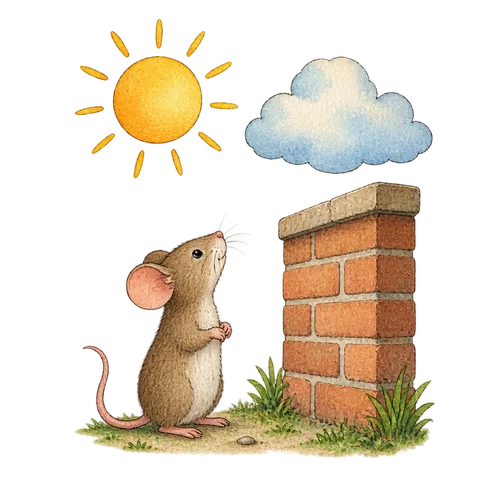
Mouse parents search for the strongest husband for their daughter. Sun, cloud, wind and wall each name something stronger, until the search returns to a mouse.
Cultural note: The circular chain questions the parents’ obsession with status. The traditional version ends with a neighboring mouse; this is a cultural story, not advice that parents should choose a partner for a child.
An A2 retelling to read and listen to
Original Codex-authored learner adaptation of the cited traditional plot. Dialogue and transitions are newly written in simple modern Japanese; combat is compressed and non-graphic. This is not Kusuyama’s full prose or a copied modern retelling.
ある倉に、ねずみのが住んでいました。も麦もたくさんあり、毎日楽しく暮らしていました。娘が大きくなると、父ねずみは言いました。「娘には、世界でいちばん強い相手がいい。」そこで、は高い空のお日さまを訪ねることにしました。
Aru kura ni, nezumi no kazoku ga sunde imashita. Kome mo mugi mo takusan ari, mainichi tanoshiku kurashite imashita. Musume ga ōkiku naru to, chichi nezumi wa iimashita. “Musume ni wa, sekai de ichiban tsuyoi aite ga ii.” Soko de, kazoku wa takai sora no ohisama o tazuneru koto ni shimashita.
父ねずみはお日さまに頭を下げました。「あなたがいちばん強いのですね。娘と結婚してください。」お日さまは笑いました。「私よりが強いよ。が来ると、私の光は下へ届かない。」なるほどと思ったは、大きなのところへ行きました。
Chichi nezumi wa ohisama ni atama o sagemashita. “Anata ga ichiban tsuyoi no desu ne. Musume to kekkon shite kudasai.” Ohisama wa waraimashita. “Watashi yori kumo ga tsuyoi yo. Kumo ga kuru to, watashi no hikari wa shita e todokanai.” Naruhodo to omotta kazoku wa, ōkina kumo no tokoro e ikimashita.
にも同じお願いをしました。しかし、はを振りました。「風が吹くと、私は飛ばされる。風のほうが強い。」は風を探しました。風はびゅうびゅうと吹いていました。「では、あなたがいちばんですね。」父ねずみは今度こそ相手が見つかったと思いました。
Kumo ni mo onaji onegai o shimashita. Shikashi, kumo wa kubi o furimashita. “Kaze ga fuku to, watashi wa tobasareru. Kaze no hō ga tsuyoi.” Kazoku wa kaze o sagashimashita. Kaze wa byūbyū to fuite imashita. “Dewa, anata ga ichiban desu ne.” Chichi nezumi wa kondo koso aite ga mitsukatta to omoimashita.
ところが、風も違うと言いました。「あのを見てごらん。どんなに吹いても動かない。」はに会いに行きました。は困った顔をしました。「私はねずみが苦手だ。小さな歯でを開けてしまうからね。」父ねずみは自分たちの歯を思い出しました。
Tokoroga, kaze mo chigau to iimashita. “Ano kabe o mite goran. Donna ni fuite mo ugokanai.” Kazoku wa kabe ni ai ni ikimashita. Kabe wa komatta kao o shimashita. “Watashi wa nezumi ga nigate da. Chiisana ha de ana o akete shimau kara ne.” Chichi nezumi wa jibuntachi no ha o omoidashimashita.
長い旅の終わりに、は倉へ帰りました。遠くばかり見ていましたが、近くにも立派なねずみがいたのです。、娘は隣のねずみと結婚しました。二人は仲よく暮らしました。お日さまもも風もも、すべてに勝つことはできなかったのです。
Nagai tabi no owari ni, kazoku wa kura e kaerimashita. Tōku bakari mite imashita ga, chikaku ni mo rippa na nezumi ga ita no desu. Yagate, musume wa tonari no nezumi to kekkon shimashita. Futari wa nakayoku kurashimashita. Ohisama mo kumo mo kaze mo kabe mo, subete ni katsu koto wa dekinakatta no desu.
Read the sourced key line, then use the English summary to place it in the story.
 Source note
The Straw Millionaire
おやおや、一本のわらが大きなみかんつに。
Oya oya, ippon no wara ga ōkina mikan mittsu ni natta.
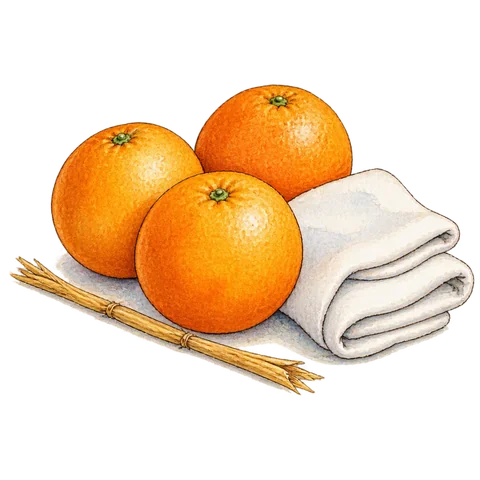
Well, well, one piece of straw has become three large oranges.
A poor young man keeps a straw after a dream at Hasedera. Through a chain of exchanges and help offered to others, he gains cloth, a horse and eventually fields and a home.
Cultural note: Kusuyama’s version includes a horse restored through prayer and a house entrusted by departing travelers. These details vary in later picture books. The graded version follows this exchange chain in simpler language.
An A2 retelling to read and listen to
Original Codex-authored learner adaptation of the cited traditional plot. Dialogue and transitions are newly written in simple modern Japanese; combat is compressed and non-graphic. This is not Kusuyama’s full prose or a copied modern retelling.
昔、貧しいがいました。仕事もなく、食べ物にも困っていました。は寺へ行き、観音さまに祈りました。ある、夢の中で声を聞きました。「へ出て、初めに手に触れたものを大切にしなさい。」は目を覚まし、寺を出ました。
Mukashi, mazushii wakamono ga imashita. Shigoto mo naku, tabemono ni mo komatte imashita. Wakamono wa tera e iki, Kannon-sama ni inorimashita. Aru asa, yume no naka de koe o kikimashita. “Soto e dete, hajime ni te ni fureta mono o taisetsu ni shinasai.” Wakamono wa me o samashi, tera o demashita.
の前で転び、一本のわらをつかみました。「こんなものが役に立つのかな。」それでも捨てずに歩きました。顔のまわりを飛ぶあぶをつかまえ、わらで枝につけました。それを見た子どもがほしがりました。が渡すと、子どものはみかんを三つくれました。
Mon no mae de korobi, ippon no wara o tsukamimashita. “Konna mono ga yaku ni tatsu no kana.” Sore demo sutezu ni arukimashita. Kao no mawari o tobu abu o tsukamae, wara de eda ni tsukemashita. Sore o mita kodomo ga hoshigarimashita. Wakamono ga watasu to, kodomo no haha wa mikan o mittsu kuremashita.
次に、暑さで倒れそうな女の人に会いました。がなく、みんな困っていました。はみかんを全部あげました。女の人は元気になり、お礼に白いをくれました。次の日、道でが倒れました。はの一部とそのを交換しました。
Tsugi ni, atsusa de taoresō na onna no hito ni aimashita. Mizu ga naku, minna komatte imashita. Wakamono wa mikan o zenbu agemashita. Onna no hito wa genki ni nari, orei ni shiroi nuno o kuremashita. Tsugi no hi, michi de uma ga taoremashita. Wakamono wa nuno no ichibu to sono uma o kōkan shimashita.
は動きませんでした。は観音さまに祈り、助けてほしいと願いました。すると、が目を開けました。や食べ物をあげると、立って歩きました。は喜び、と旅を続けました。やがて、遠くへ出かける家の人たちに会いました。
Uma wa ugokimasen deshita. Wakamono wa Kannon-sama ni inori, tasukete hoshii to negaimashita. Suru to, uma ga me o akemashita. Mizu ya tabemono o ageru to, tatte arukimashita. Wakamono wa yorokobi, uma to tabi o tsuzukemashita. Yagate, tōku e dekakeru ie no hitotachi ni aimashita.
その人たちはがほしいと言いました。お金の代わりに田とをくれ、家も預けました。若者はそこに住み、田を大切にしました。にはがたくさんできました。何年たっても家の持ち主は戻らず、約束どおり家も若者のものになりました。一本のわらから、暮らしが変わったのです。
Sono hitotachi wa uma ga hoshii to iimashita. Okane no kawari ni ta to kome o kure, ie mo azukemashita. Wakamono wa soko ni sumi, ta o taisetsu ni shimashita. Aki ni wa kome ga takusan dekimashita. Nannen tatte mo ie no mochinushi wa modorazu, yakusoku dōri ie mo wakamono no mono ni narimashita. Ippon no wara kara, kurashi ga kawatta no desu.
Read the sourced key line, then use the English summary to place it in the story.
 Source note
Explore these words: Nature & landscape (flashcards) · Age & life stages (flashcards) · Animals (flashcards)
Put these words into context with a story at your level.
Read Japanese storiesFamous Japanese Folk Tales of Transformation
Moon visitors, shape-shifting kettles and unexpectedly powerful children show several kinds of Japanese story magic. Follow the cited version rather than assuming every retelling has the same ending.
Kaguya-hime: The Bamboo Cutter’s Tale
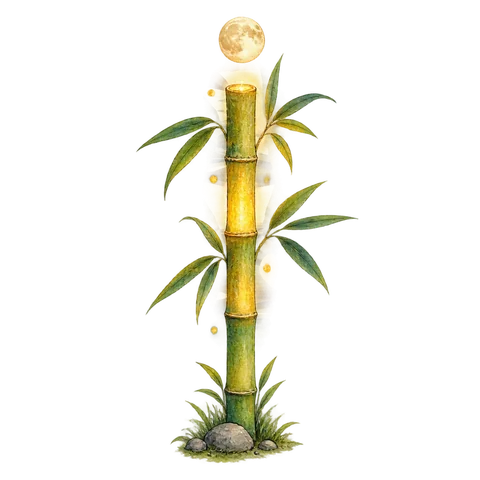
今は取の翁といふものありけり。
Ima wa mukashi taketori no okina to iu mono arikeri.
Long ago, there was someone called the Old Bamboo Cutter.
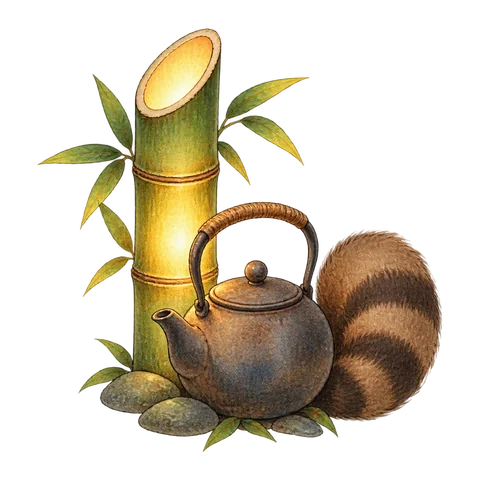
A bamboo cutter discovers a tiny girl in a shining stalk. Kaguya-hime grows up, sets impossible tasks for suitors and eventually reveals that she belongs to the moon, whose people come to take her home.
Cultural note: The Tale of the Bamboo Cutter is an early classical narrative of anonymous authorship. Its sadness and satire exceed the simplified princess story; the quoted opening retains classical grammar and spelling.
Read the sourced key line, then use the English summary to place it in the story.
 Source note
The Wonderful Tea Kettle
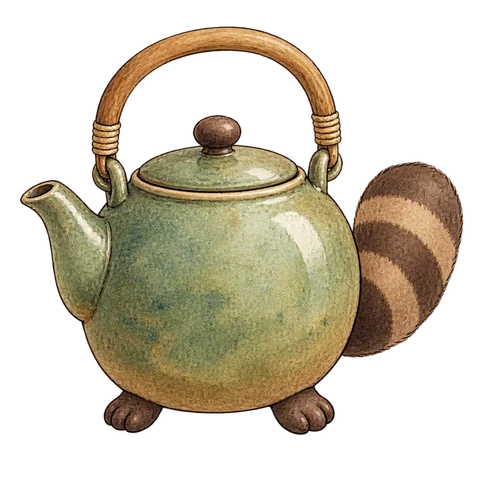
やあ、たいへんだ。がまが化けた。
Yā, taihen da. Chagama ga baketa.
Oh, this is extraordinary! The tea kettle has transformed.
A temple kettle sprouts a tanuki’s head, legs and tail. A secondhand dealer treats it kindly, and the creature performs for audiences before retiring as a treasured object at the temple.
Cultural note: A tanuki is a Japanese raccoon dog, not a raccoon. This version is tied to Morinji in Tatebayashi and ends in retirement rather than endless performances.
Read the sourced key line, then use the English summary to place it in the story.
 Source note
The Old Man Who Lost His Lump
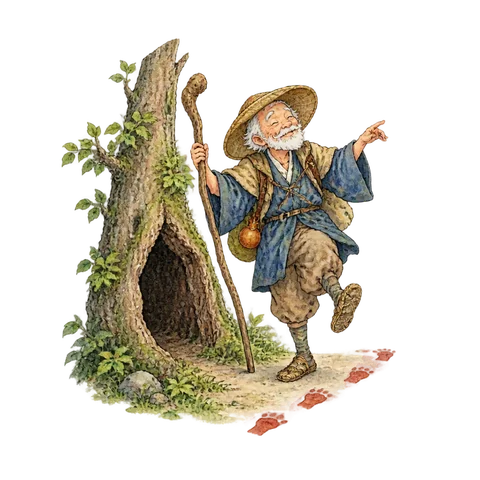
右のほおにぶらぶら大きな瘤をぶら下げて、始終じゃまにしていました。
Migi no hō ni burabura ōkina kobu o burasagete, shijū jama sō ni shite imashita.
A large lump hung loosely from his right cheek and always seemed to get in his way.
An old man shelters in a tree and joins an oni dance. Delighted, the oni take his cheek lump as a pledge that he will return. A neighbor tries to repeat his success but receives the saved lump instead.
Cultural note: The two visits invite comparison, but a facial difference is not a moral failing. The story’s supernatural reward and punishment belong to its folklore setting.
Read the sourced key line, then use the English summary to place it in the story.
 Source note
Kintarō: The Golden Boy
むかし、金太郎という強いがありました。
Mukashi, Kintarō to iu tsuyoi kodomo ga arimashita.
Long ago, there was a strong child called Kintarō.
A powerful mountain child wrestles with animals and shows extraordinary strength. A warrior notices him, and he eventually joins Minamoto no Yorimitsu’s household as Sakata no Kintoki.
Cultural note: This is a legendary childhood attached to a named warrior, not a reliable biography. Mount Ashigara, the axe and animal companions are familiar visual motifs.
Read the sourced key line, then use the English summary to place it in the story.
 Source note
The Snail Son
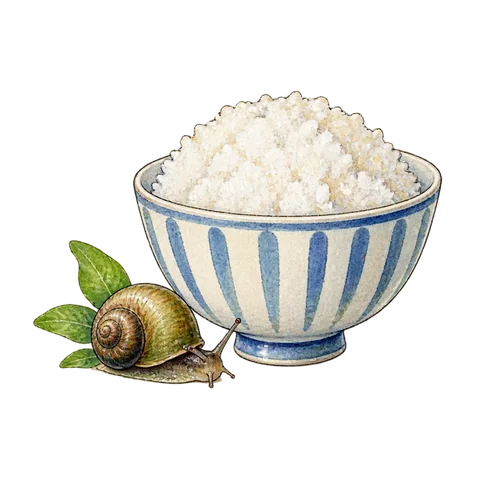
さま、さま、子どもをひとりおさずけまし。
Kami-sama, kami-sama, dōzo kodomo o hitori osazuke kudasaimashi.
Dear deity, please grant us one child.
A poor couple receive a child in the form of a tiny freshwater snail. He proves capable despite his size, marries a kind young woman and is finally released from his shell through her sincere prayer.
Cultural note: The snail child motif appears in several traditions. This Japanese version connects the family’s hopes and the final transformation to the water deity.
Read the sourced key line, then use the English summary to place it in the story.
 Source note
Explore these words: Religion & beliefs (flashcards) · Greetings & polite phrases · Time & dates (flashcards)
Put these words into context with a story at your level.
Read Japanese storiesJapanese Tales About Kindness, Greed and Consequences
These familiar tales include revenge, animal cruelty or threats to family members in older versions. Read the notes before choosing one for a young child.

The Old Man Who Made Trees Blossom
ここほれ、ワン、ワン。
Koko hore, wan, wan.
Dig here—woof, woof.
A beloved dog leads its kind owners to treasure. A greedy neighbor harms the dog and destroys a miraculous mortar, but ashes from it let the kind old man make bare trees bloom.
Cultural note: Older versions include the dog’s death and harsh punishment. The famous digging call belongs to this particular source wording; modern retellings may change its spelling or rhythm.
Read the sourced key line, then use the English summary to place it in the story.
 Source note
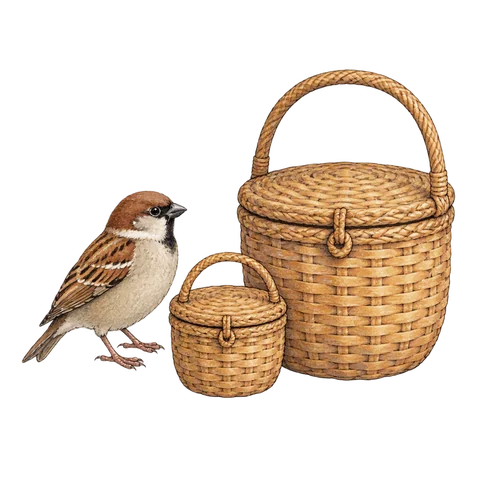
The Tongue-Cut Sparrow
舌切りすずめ、お宿はどこだ、
Shitakiri suzume, oyado wa doko da,
Tongue-cut sparrow, where is your home?
An old man searches for a sparrow injured by his wife. Welcomed into the sparrows’ home, he chooses a small gift basket; his greedy wife later chooses a large basket filled with frightening creatures.
Cultural note: The traditional story includes cruelty to an animal. The small and large baskets provide a memorable contrast between affection and greed; the injured sparrow is not blamed for the violence done to it.
Read the sourced key line, then use the English summary to place it in the story.
 Source note
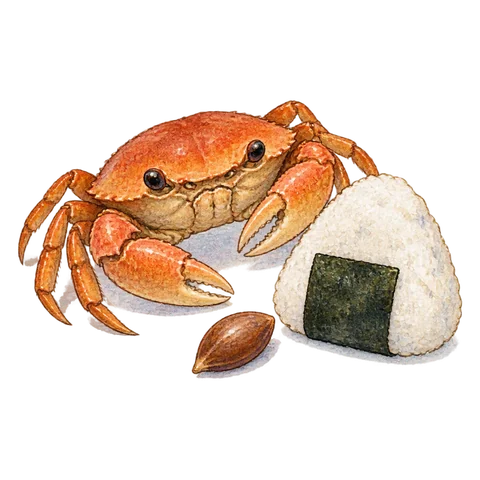
The Monkey and the Crab
だ、この柿の種と取りかえっこをしないか。
Dō da, kono kaki no tane to torikaekko o shinai ka.
How about trading for this persimmon seed?
A monkey trades a persimmon seed for a crab’s rice ball, then mistreats the crab when the tree bears fruit. The crab’s young recruit a chestnut, bee, mortar and other allies for revenge.
Cultural note: This is a revenge tale with a violent older ending. The seed and rice ball introduce questions about promises and unequal exchanges; the tale should not be presented as a gentle story in every version.
Read the sourced key line, then use the English summary to place it in the story.
 Source note
Kachi-Kachi Mountain
だ、のは軽くって速かろう。
Dō da, ki no fune wa karukutte hayakarō.
See how light and fast a wooden boat is!
After a tanuki kills an old woman, a rabbit avenges her through a series of tricks involving fire, stinging medicine and a clay boat that falls apart in the water.
Cultural note: Kachi-kachi imitates the striking of a fire starter. Kusuyama’s version is dark and includes death; it is listed for cultural familiarity, not recommended as a first bedtime tale for small children.
Read the sourced key line, then use the English summary to place it in the story.
 Source note
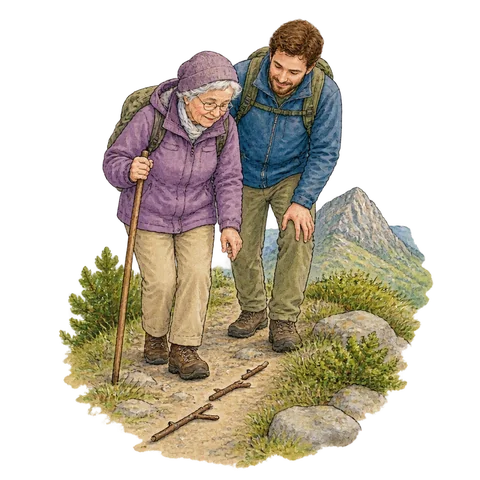
The Old Mother and the Mountain
、そんなことをするのです。
Okāsan, naze sonna koto o suru no desu.
Mother, why are you doing that?
A ruler orders older people banished. A son cannot abandon his mother and hides her. Her answers to difficult challenges save the country and persuade the ruler to end the cruel order.
Cultural note: The title Ubasuteyama is associated with abandonment legends. This version explicitly values older people’s wisdom; the legend is not evidence that such a law universally existed in historical Japan.
Read the sourced key line, then use the English summary to place it in the story.
 Source note
Explore these words: Question words · Shapes, sizes & materials (flashcards) · Transport (flashcards)
Put these words into context with a story at your level.
Read Japanese storiesJapanese fairy tales: frequently asked questions
What are the most famous Japanese fairy tales?
Momotarō, Urashima Tarō and Kaguya-hime are widely familiar starting points. Issun-bōshi, The Tongue-Cut Sparrow and The Old Man Who Made Trees Blossom are also commonly retold. This guide gives fifteen examples rather than claiming a definitive ranking.
Which Japanese folk tales are easiest for beginners?
The five graded adaptations here are designed around short modern sentences. The Mouse’s Wedding has a repeated question-and-answer pattern, while Momotarō introduces a small set of recurring characters.
What does mukashi mukashi mean?
It means long ago, long ago and functions like once upon a time. A traditional opening signals a story world; it is not evidence that the narrated events actually happened.
Are these stories suitable for children?
Some are, with an appropriate version and guidance. Older versions of Kachi-Kachi Mountain, The Monkey and the Crab and The Tongue-Cut Sparrow contain violence. Their notes identify this instead of treating every folk tale as gentle bedtime reading.
Are oni and tanuki real animals?
Oni are supernatural figures often translated as ogres or demons. A tanuki is a real Japanese raccoon dog, but folklore gives some tanuki the ability to transform. The magical kettle belongs to that story tradition.
Why do different books tell different endings?
Folk tales circulated in oral and written versions and were adapted for different audiences. This page identifies a specific textual source for each quoted line and distinguishes those lines from its own graded adaptations.
Do the Japanese retellings include translations and readings?
Yes. Each paragraph has an original English translation, Hepburn romaji and ruby for kanji. Read once for the plot, then listen and reread a paragraph without opening the translation.
Are these the complete original literary texts?
No. Each tale has a short sourced opening or key line and a summary. Five include complete newly written learner adaptations. Follow the source links to read the longer original versions.
Make these words part of your day
Explore Japanese stories, listen along, and save vocabulary as you go.
Find a story at your levelSources and verification
English translations and examples were written for this guide. Source notes distinguish documented expressions, original practice sentences, and literary quotations. Literary excerpts retain the language of their original period.
- Masao Kusuyama: Momotarō: The Peach Boy — Exact short line from Masao Kusuyama’s named retelling at Aozora Bunko. English summaries, notes and translations are newly written; any graded retelling below is an original adaptation.
- Masao Kusuyama: Urashima Tarō — Exact short line from Masao Kusuyama’s named retelling at Aozora Bunko. English summaries, notes and translations are newly written; any graded retelling below is an original adaptation.
- Masao Kusuyama: Issun-bōshi: The One-Inch Boy — Exact short line from Masao Kusuyama’s named retelling at Aozora Bunko. English summaries, notes and translations are newly written; any graded retelling below is an original adaptation.
- Masao Kusuyama: The Mouse’s Wedding — Exact short line from Masao Kusuyama’s named retelling at Aozora Bunko. English summaries, notes and translations are newly written; any graded retelling below is an original adaptation.
- Masao Kusuyama: The Straw Millionaire — Exact short line from Masao Kusuyama’s named retelling at Aozora Bunko. English summaries, notes and translations are newly written; any graded retelling below is an original adaptation.
- Anonymous: The Tale of the Bamboo Cutter — Exact short opening from the anonymous classical Tale of the Bamboo Cutter; historical kana retained, with a conventional modern reading.
- Masao Kusuyama: The Wonderful Tea Kettle — Exact short line from Masao Kusuyama’s named retelling at Aozora Bunko. English summaries, notes and translations are newly written; any graded retelling below is an original adaptation.
- Masao Kusuyama: The Old Man Who Lost His Lump — Exact short line from Masao Kusuyama’s named retelling at Aozora Bunko. English summaries, notes and translations are newly written; any graded retelling below is an original adaptation.
- Masao Kusuyama: Kintarō: The Golden Boy — Exact short line from Masao Kusuyama’s named retelling at Aozora Bunko. English summaries, notes and translations are newly written; any graded retelling below is an original adaptation.
- Masao Kusuyama: The Snail Son — Exact short line from Masao Kusuyama’s named retelling at Aozora Bunko. English summaries, notes and translations are newly written; any graded retelling below is an original adaptation.
- Masao Kusuyama: The Old Man Who Made Trees Blossom — Exact short line from Masao Kusuyama’s named retelling at Aozora Bunko. English summaries, notes and translations are newly written; any graded retelling below is an original adaptation.
- Masao Kusuyama: The Tongue-Cut Sparrow — Exact short line from Masao Kusuyama’s named retelling at Aozora Bunko. English summaries, notes and translations are newly written; any graded retelling below is an original adaptation.
- Masao Kusuyama: The Monkey and the Crab — Exact short line from Masao Kusuyama’s named retelling at Aozora Bunko. English summaries, notes and translations are newly written; any graded retelling below is an original adaptation.
- Masao Kusuyama: Kachi-Kachi Mountain — Exact short line from Masao Kusuyama’s named retelling at Aozora Bunko. English summaries, notes and translations are newly written; any graded retelling below is an original adaptation.
- Masao Kusuyama: The Old Mother and the Mountain — Exact short line from Masao Kusuyama’s named retelling at Aozora Bunko. English summaries, notes and translations are newly written; any graded retelling below is an original adaptation.
Source notes for all 15 entries
- Momotarō: The Peach Boy: Exact short line from Masao Kusuyama’s named retelling at Aozora Bunko. English summaries, notes and translations are newly written; any graded retelling below is an original adaptation. [momotaro]
- Urashima Tarō: Exact short line from Masao Kusuyama’s named retelling at Aozora Bunko. English summaries, notes and translations are newly written; any graded retelling below is an original adaptation. [urashima]
- Issun-bōshi: The One-Inch Boy: Exact short line from Masao Kusuyama’s named retelling at Aozora Bunko. English summaries, notes and translations are newly written; any graded retelling below is an original adaptation. [issun]
- The Mouse’s Wedding: Exact short line from Masao Kusuyama’s named retelling at Aozora Bunko. English summaries, notes and translations are newly written; any graded retelling below is an original adaptation. [mouse]
- The Straw Millionaire: Exact short line from Masao Kusuyama’s named retelling at Aozora Bunko. English summaries, notes and translations are newly written; any graded retelling below is an original adaptation. [straw]
- Kaguya-hime: The Bamboo Cutter’s Tale: Exact short opening from the anonymous classical Tale of the Bamboo Cutter; historical kana retained, with a conventional modern reading. [kaguya]
- The Wonderful Tea Kettle: Exact short line from Masao Kusuyama’s named retelling at Aozora Bunko. English summaries, notes and translations are newly written; any graded retelling below is an original adaptation. [teakettle]
- The Old Man Who Lost His Lump: Exact short line from Masao Kusuyama’s named retelling at Aozora Bunko. English summaries, notes and translations are newly written; any graded retelling below is an original adaptation. [lump]
- Kintarō: The Golden Boy: Exact short line from Masao Kusuyama’s named retelling at Aozora Bunko. English summaries, notes and translations are newly written; any graded retelling below is an original adaptation. [kintaro]
- The Snail Son: Exact short line from Masao Kusuyama’s named retelling at Aozora Bunko. English summaries, notes and translations are newly written; any graded retelling below is an original adaptation. [tanishi]
- The Old Man Who Made Trees Blossom: Exact short line from Masao Kusuyama’s named retelling at Aozora Bunko. English summaries, notes and translations are newly written; any graded retelling below is an original adaptation. [flower]
- The Tongue-Cut Sparrow: Exact short line from Masao Kusuyama’s named retelling at Aozora Bunko. English summaries, notes and translations are newly written; any graded retelling below is an original adaptation. [sparrow]
- The Monkey and the Crab: Exact short line from Masao Kusuyama’s named retelling at Aozora Bunko. English summaries, notes and translations are newly written; any graded retelling below is an original adaptation. [crab]
- Kachi-Kachi Mountain: Exact short line from Masao Kusuyama’s named retelling at Aozora Bunko. English summaries, notes and translations are newly written; any graded retelling below is an original adaptation. [kachi]
- The Old Mother and the Mountain: Exact short line from Masao Kusuyama’s named retelling at Aozora Bunko. English summaries, notes and translations are newly written; any graded retelling below is an original adaptation. [old-mother]