
THE INKLINGO LANGUAGE GUIDES
10 French Poems With English Translations
Read ten complete French poems with an original English translation beside every line. Start with short poems by Verlaine and Rimbaud, then discover Hugo, Apollinaire, Desbordes-Valmore and La Fontaine. Each text comes from an identified historical edition; the reading notes explain imagery and older language.

Start here
- Autumn SongThe long sobs
- SensationOn blue summer evenings I will walk the paths,
- Tears in My HeartThere is weeping in my heart
- The Weather Has Shed Its CoatThe weather has shed its coat
- The Roses of SaadiThis morning I wanted to bring you roses;
- Tomorrow, at DawnTomorrow, at dawn, when the countryside turns pale,
- The Mirabeau BridgeBeneath the Mirabeau Bridge flows the Seine
- The Cicada and the AntThe cicada, having sung
- The Crow and the FoxMaster Crow, perched in a tree,
- The Sleeper in the ValleyIt is a hollow of greenery where a river sings,
Short French Poems About Nature
Clear images of rain, wind, paths and spring make useful starting points, even when the speaker’s feelings are complex.

Autumn Song
Full public-domain text · Paul Verlaine died in 1896; the cited text was published in 1866, before 1930. Original English translation by Inklingo.
Intermediate
— Paul Verlaine (1844–1896), Chanson d’automne, Poèmes saturniens (1866), pp. 57–58
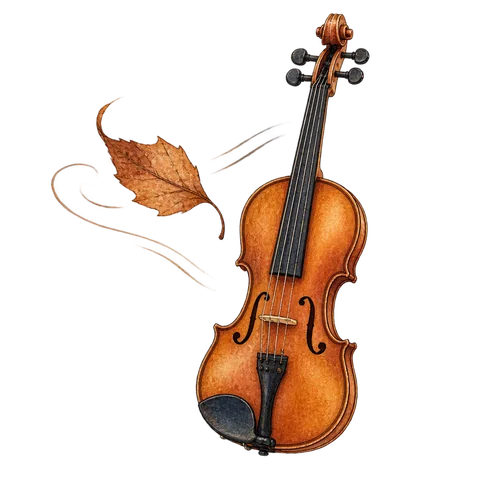
Short lines and repeated nasal sounds imitate a sustained lament. Deçà, delà means here and there; the speaker finally becomes like a windblown leaf.
 Source note
Tears in My Heart
Full public-domain text · Paul Verlaine died in 1896; the cited text was published in 1891, before 1930. Original English translation by Inklingo.
Intermediate
— Paul Verlaine (1844–1896), Il pleure dans mon cœur, Romances sans paroles (1891), pp. 6–7
The near-echo of pleure and pleut links private sadness to rain. S’ennuyer here suggests weariness or melancholy, not merely having nothing to do. The separately printed Rimbaud epigraph is omitted.
 Source note
Sensation
Full public-domain text · Arthur Rimbaud died in 1891; the cited text was published in 1895, before 1930. Original English translation by Inklingo.
Intermediate
— Arthur Rimbaud (1854–1891), Sensation, Poésies complètes, Vanier (1895), p. 53
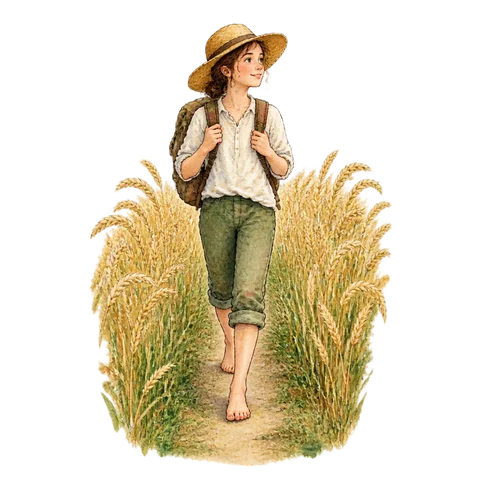
The future tense turns a walk into an imagined freedom. Bohémien is translated here for its literary wandering image; the historical word also carries an ethnic association.
 Source note
The Weather Has Shed Its Coat
Full public-domain text · Charles d’Orléans died in 1465; the cited text was published in 1915, before 1930. Original English translation by Inklingo.
Intermediate
— Charles d’Orléans (1394–1465), Rondeau LXIII, Poésies complètes, Flammarion (1915), p. 115
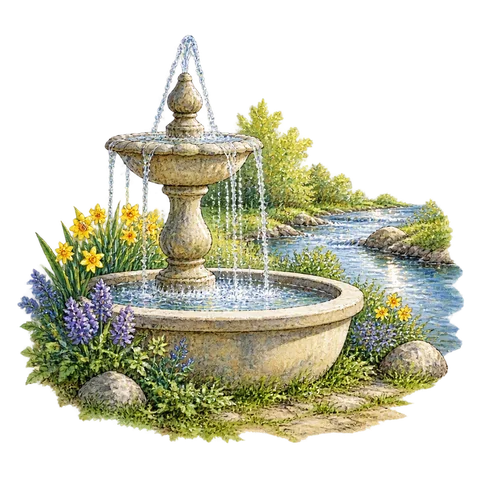
The medieval spelling is preserved: laissié = laissé, pluye = pluie, vestu = vêtu, chascun = chacun. A returning line is the rondeau’s refrain. Le temps means the weather here.
 Source note
Explore these words: Weather (flashcards) · Clothes (flashcards) · Plants & trees (flashcards)
Put these words into context with a story at your level.
Read French storiesFrench Poems About Love and Memory
These poems connect remembered love with a journey, flowers or a flowing river.

Tomorrow, at Dawn
Full public-domain text · Victor Hugo died in 1885; the cited text was published in 1856, before 1930. Original English translation by Inklingo.
Intermediate
— Victor Hugo (1802–1885), Demain, dès l’aube, Les Contemplations (1856), book IV, XIV
The destination is revealed only near the end: this is a visit to a grave, not an ordinary meeting with a living lover. The poem belongs to Hugo’s mourning for his daughter.
 Source note
The Roses of Saadi
Full public-domain text · Marceline Desbordes-Valmore died in 1859; the cited text was published in 1860, before 1930. Original English translation by Inklingo.
Intermediate
— Marceline Desbordes-Valmore (1786–1859), Les Roses de Saadi, Poésies inédites (1860), p. 15
The lost flowers remain through scent. Ceintures refers to sashes or waistbands holding the roses; Respires-en retains the historical printed form.
 Source note
The Mirabeau Bridge
Full public-domain text · Guillaume Apollinaire died in 1918; the cited text was published in 1920, before 1930. Original English translation by Inklingo.
Intermediate
— Guillaume Apollinaire (1880–1918), Le Pont Mirabeau, Alcools, third edition (1920), pp. 16–17
The unpunctuated lines connect river, love and passing time. The refrain opposes movement with je demeure, “I remain.” This follows the 1920 edition, not a newly punctuated rewrite.
 Source note
Explore these words: Time & dates (flashcards) · Nature & landscape (flashcards) · Directions & position (flashcards)
Put these words into context with a story at your level.
Read French storiesFrench Story Poems and Fables
Two animal fables are often learned at school. The final sonnet is a serious poem about a dead soldier.

The Cicada and the Ant
Full public-domain text · Jean de La Fontaine died in 1695; the cited text was published in 1897, before 1930. Original English translation by Inklingo.
Intermediate
— Jean de La Fontaine (1621–1695), La Cigale et la Fourmi, Fables, Mame (1897), book I, 1
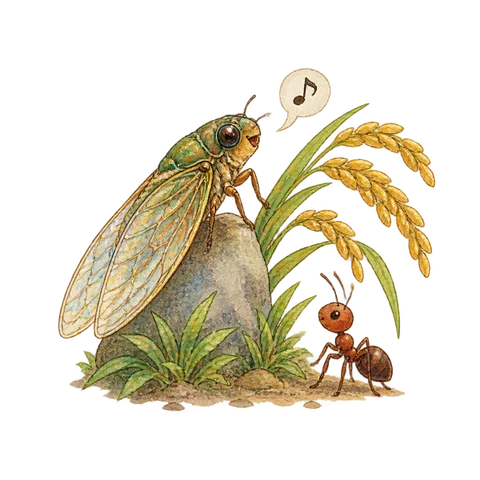
The fable invites discussion of planning and of the ant’s lack of generosity. L’oût is an old term for harvest season; paîrai is an old form of paierai. It is an animal fable, not a biology lesson.
 Source note
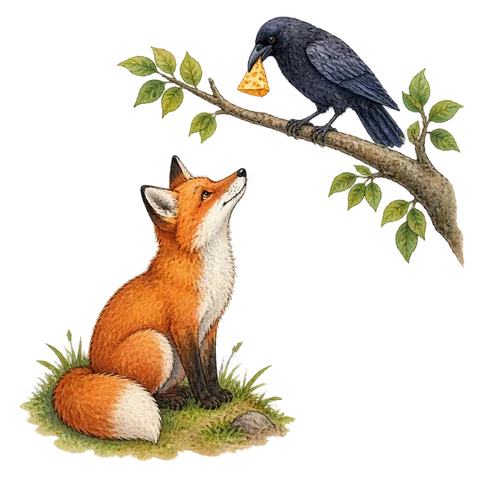
The Crow and the Fox
Full public-domain text · Jean de La Fontaine died in 1695; the cited text was published in 1897, before 1930. Original English translation by Inklingo.
Intermediate
— Jean de La Fontaine (1621–1695), Le Corbeau et le Renard, Fables, Mame (1897), book I, 2
Ramage means birdsong and plumage means feathers. The flattering “phoenix” presents the crow as uniquely excellent; the fox profits when the crow believes it.
 Source note
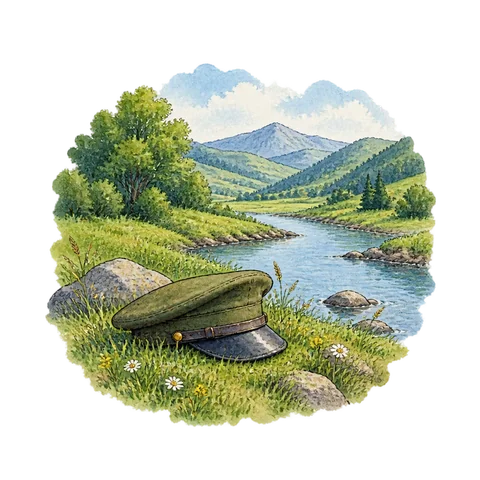
The Sleeper in the Valley
Full public-domain text · Arthur Rimbaud died in 1891; the cited text was published in 1895, before 1930. Original English translation by Inklingo.
Intermediate
— Arthur Rimbaud (1854–1891), Le Dormeur du val, Poésies complètes, Vanier (1895), p. 84
The beautiful setting gradually reveals a soldier’s death. The repeated dort initially suggests sleep; the final line changes the meaning of everything before it.
 Source note
Explore these words: Emotions & feelings (flashcards) · Nature & landscape (flashcards) · Time & dates (flashcards)
Put these words into context with a story at your level.
Read French storiesFrench poems: frequently asked questions
Which French poems are good for beginners?
Verlaine’s Chanson d’automne has very short lines, while Rimbaud’s Sensation uses concrete images of grass, wind and summer paths. Read the translation first, then listen and repeat a few lines.
Who are famous French-language poets?
This selection includes Victor Hugo, Paul Verlaine, Arthur Rimbaud, Jean de La Fontaine, Guillaume Apollinaire, Marceline Desbordes-Valmore and Charles d’Orléans.
Are these complete poems or quotations?
All ten are complete poems. The source notes identify the edition used; the introductory epigraph before Verlaine’s Il pleure dans mon cœur is not part of its sixteen-line poem and is not included.
Which French poems are suitable for children?
La Fontaine’s two animal fables are familiar school texts, though their language needs explanation. Adults should choose by topic: Demain, dès l’aube concerns bereavement, and Le Dormeur du val ends with the discovery of a dead soldier.
Why does French poetry sound different from conversation?
Meter and rhyme can make a normally silent final e audible, and poets may use older vocabulary or unusual word order. The text preserves its literary wording instead of rewriting the original as modern prose.
Can I use these English translations to understand each line?
Yes. These are new meaning-focused translations written for this guide. They follow the imagery and sentence connections across lines rather than forcing English rhyme or copying an existing published translation.
Make these words part of your day
Explore French stories, listen along, and save vocabulary as you go.
Find a story at your levelSources and verification
English translations and examples were written for this guide. Source notes distinguish documented expressions, original practice sentences, and literary quotations. Literary excerpts retain the language of their original period.
- Chanson d’automne, Poèmes saturniens (1866), pp. 57–58 — Historical source text, cited edition 1866. The date describes the edition used, not necessarily first publication.
- Il pleure dans mon cœur, Romances sans paroles (1891), pp. 6–7 — Historical source text, cited edition 1891. The date describes the edition used, not necessarily first publication.
- Sensation, Poésies complètes, Vanier (1895), p. 53 — Historical source text, cited edition 1895. The date describes the edition used, not necessarily first publication.
- Rondeau LXIII, Poésies complètes, Flammarion (1915), p. 115 — Historical source text, cited edition 1915. The date describes the edition used, not necessarily first publication.
- Demain, dès l’aube, Les Contemplations (1856), book IV, XIV — Historical source text, cited edition 1856. The date describes the edition used, not necessarily first publication.
- Les Roses de Saadi, Poésies inédites (1860), p. 15 — Historical source text, cited edition 1860. The date describes the edition used, not necessarily first publication.
- Le Pont Mirabeau, Alcools, third edition (1920), pp. 16–17 — Historical source text, cited edition 1920. The date describes the edition used, not necessarily first publication.
- La Cigale et la Fourmi, Fables, Mame (1897), book I, 1 — Historical source text, cited edition 1897. The date describes the edition used, not necessarily first publication.
- Le Corbeau et le Renard, Fables, Mame (1897), book I, 2 — Historical source text, cited edition 1897. The date describes the edition used, not necessarily first publication.
- Le Dormeur du val, Poésies complètes, Vanier (1895), p. 84 — Historical source text, cited edition 1895. The date describes the edition used, not necessarily first publication.
Source notes for all 10 entries
- Autumn Song: Complete poem from the cited 1866 edition; linebreaks retained, typographic spacing normalized. English translation by Inklingo. [fr-poem-autumn] [fr-author-Paul_Verlaine]
- Tears in My Heart: Complete poem from the cited 1891 edition; linebreaks retained, typographic spacing normalized. English translation by Inklingo. [fr-poem-rain] [fr-author-Paul_Verlaine]
- Sensation: Complete poem from the cited 1895 edition; linebreaks retained, typographic spacing normalized. English translation by Inklingo. [fr-poem-sensation] [fr-author-Arthur_Rimbaud]
- The Weather Has Shed Its Coat: Complete poem from the cited 1915 edition; linebreaks retained, typographic spacing normalized. English translation by Inklingo. [fr-poem-spring] [fr-author-Charles_d’Orléans]
- Tomorrow, at Dawn: Complete poem from the cited 1856 edition; linebreaks retained, typographic spacing normalized. English translation by Inklingo. [fr-poem-dawn] [fr-author-Victor_Hugo]
- The Roses of Saadi: Complete poem from the cited 1860 edition; linebreaks retained, typographic spacing normalized. English translation by Inklingo. [fr-poem-roses] [fr-author-Marceline_Desbordes-Valmore]
- The Mirabeau Bridge: Complete poem from the cited 1920 edition; linebreaks retained, typographic spacing normalized. English translation by Inklingo. [fr-poem-mirabeau] [fr-author-Guillaume_Apollinaire]
- The Cicada and the Ant: Complete poem from the cited 1897 edition; linebreaks retained, typographic spacing normalized. English translation by Inklingo. [fr-fable-01] [fr-author-Jean_de_La_Fontaine]
- The Crow and the Fox: Complete poem from the cited 1897 edition; linebreaks retained, typographic spacing normalized. English translation by Inklingo. [fr-fable-02] [fr-author-Jean_de_La_Fontaine]
- The Sleeper in the Valley: Complete poem from the cited 1895 edition; linebreaks retained, typographic spacing normalized. English translation by Inklingo. [fr-poem-dormeur] [fr-author-Arthur_Rimbaud]