
THE INKLINGO LANGUAGE GUIDES
15 French Fairy Tales & Fables for Learners
Explore 15 French fairy tales and fables through a short original passage, an English summary and a cultural note. Five complete A2 adaptations let you read the story in simple French, one translated paragraph at a time.
Start here
- The Crow and the FoxMaster Crow, perched in a tree, Held a cheese in his beak.
- The Hare and the TortoiseRunning is no use; you must set off at the right time.
- CinderellaThe king’s son happened to give a ball.
- Puss in BootsA miller left his three children no property but his mill, his donkey and his cat.
- The FairiesOnce there was a widow who had two daughters.
- Little Red Riding HoodPull the little peg, and the latch will fall.
- Sleeping BeautyOnce there were a king and queen who were so unhappy to have no children that words could not express it.
- Little ThumbOnce there were a woodcutter and his wife who had seven children, all boys.
- The Lion and the RatWe often need someone smaller than ourselves.
- The Cicada and the AntThe cicada, having sung All summer, Found herself with nothing When the cold north wind arrived.
Classic French Fairy Tales
Meet the fairy helpers, enchanted palaces and difficult choices in Perrault’s stories.

Cinderella
Il arriva que le du roi donna un
The king’s son happened to give a ball.
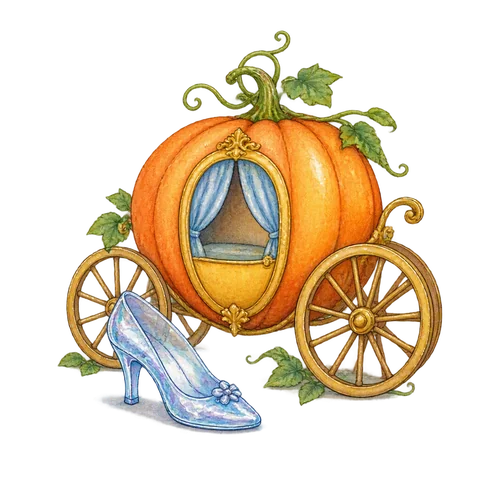
A mistreated young woman attends a royal ball with magical help. A glass slipper lets the prince find her after she flees at midnight.
Cultural note: Perrault combines kindness, social advantage and a fairy godmother’s help; the ending is not simply a reward for beauty.
An A2 retelling to read and listen to
Original Inklingo graded retelling of the cited tale, with simplified present-tense narration and an English translation for each paragraph.
Cendrillon habite avec son père, sa belle-mère et ses deux sœurs. Chaque jour, elle les chambres, prépare les et lave la vaisselle. Ses sœurs portent de belles robes. Elle porte des habits simples. Le , elle se repose près du feu. Malgré cette vie , elle reste douce avec les autres.
Un jour, le prince invite les jeunes femmes du à un . Les deux sœurs choisissent leurs bijoux et leurs . Cendrillon les aide à se préparer. Elle aimerait venir aussi, mais ses sœurs se moquent d’elle. Quand elles partent, elle reste seule dans la cuisine et commence à .
Sa marraine arrive. C’est une ! Elle transforme une citrouille en carrosse et des souris en . Elle donne à Cendrillon une et des de verre. Mais elle explique une règle : « Tu dois rentrer avant . Après , la . » Cendrillon promet de faire attention et part au .
Au , le prince danse avec elle. Personne ne reconnaît la jeune fille. Le temps passe très vite. Soudain, Cendrillon entend l’. Elle court vers la porte et perd une dans l’escalier. Le prince la . Il veut retrouver la jeune femme, mais il ne connaît même pas son nom.
Le lendemain, un messager apporte la dans toutes les maisons. Les sœurs essaient de la mettre, sans . Cendrillon demande à essayer aussi. La lui va parfaitement. Elle montre alors la . Le prince la retrouve, et ils se marient. Cendrillon pardonne à ses sœurs : sa nouvelle ne change pas sa bonté.
Intermediate
— Charles Perrault (1628–1703), Cendrillon ou la petite Pantoufle de verre
 Source note
Sleeping Beauty
Il était une un roi et une qui étaient si fâchés de n’ point d’enfants, si fâchés qu’on ne saurait dire.
Once there were a king and queen who were so unhappy to have no children that words could not express it.
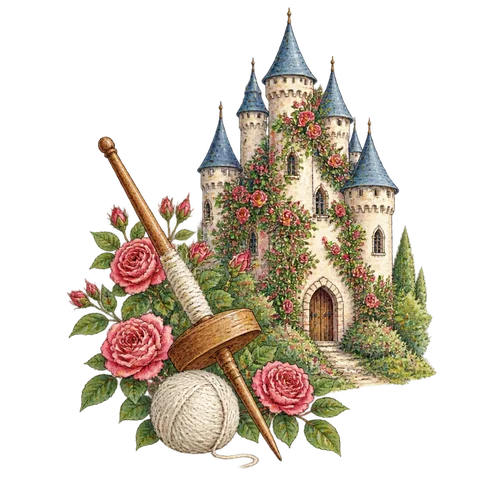
A princess falls into a century-long sleep after pricking her hand on a spindle. A prince reaches the sleeping palace when the appointed time has passed.
Cultural note: Perrault continues the story after the awakening with an ogress mother-in-law; many familiar adaptations omit that second part.
Intermediate
— Charles Perrault (1628–1703), La Belle au Bois dormant
 Source note
The Fairies
Il était une une veuve qui
Once there was a widow who had two daughters.
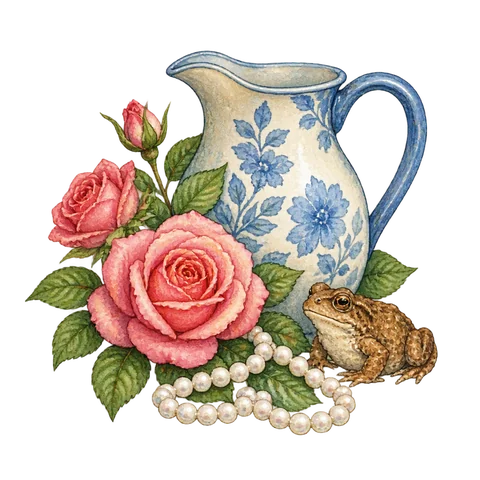
A fairy rewards a courteous daughter with flowers and jewels that appear when she speaks. Her rude sister receives snakes and toads instead.
Cultural note: The magical gifts make speech and behavior visible. The source’s honnêteté refers to courteous conduct, not only truthfulness.
An A2 retelling to read and listen to
Original Inklingo graded retelling of the cited tale, with simplified present-tense narration and an English translation for each paragraph.
Une veuve vit avec ses deux filles. Elle préfère l’aînée, qui lui ressemble beaucoup. La plus jeune est douce, mais elle doit faire tous les travaux de la maison. Chaque et chaque , elle va chercher de l’eau à une assez loin du . Elle porte une grande cruche, lourde quand elle est pleine.
Un jour, une vieille femme lui demande à . La jeune fille rince sa cruche et choisit l’eau la plus claire. Elle tient le récipient pour la femme à . Elle ne demande rien en échange. La vieille femme sourit : c’est une qui veut découvrir comment la jeune fille traite les autres.
La lui offre un . À chaque parole, des ou des pierres précieuses vont sortir de sa bouche. De retour à la maison, la jeune fille raconte son aventure. Des roses et des tombent devant sa . La veuve d’envoyer sa fille à la pour le même .
L’aînée part avec un beau flacon d’argent. Cette fois, la prend l’apparence d’une riche. Elle demande un peu d’eau, mais la jeune fille refuse et parle méchamment. La lui donne alors un autre pouvoir : des serpents et des crapauds sortiront de sa bouche. La fille revient très en colère chez sa .
La accuse injustement sa fille cadette. Celle-ci quitte la maison et rencontre un prince dans la forêt. Elle lui explique sa , et il découvre sa bonté. Ils se marient. L’histoire transforme les paroles en : les mots des , tandis que les paroles cruelles des animaux inquiétants.
Intermediate
— Charles Perrault (1628–1703), Les Fées
 Source note
Ricky of the Tuft
J’oubliais de dire qu’il avait une petite houppe de sur la
I forgot to say that he had a small tuft of hair on his head.
A witty prince and a beautiful princess can each give the other a quality they seem to lack. Their promise leads to a debate about love and perception.
Cultural note: The old story contrasts appearance and intelligence using assumptions that readers can question; its ending allows love itself to explain the transformation.
Intermediate
— Charles Perrault (1628–1703), Riquet à la Houppe
 Source note
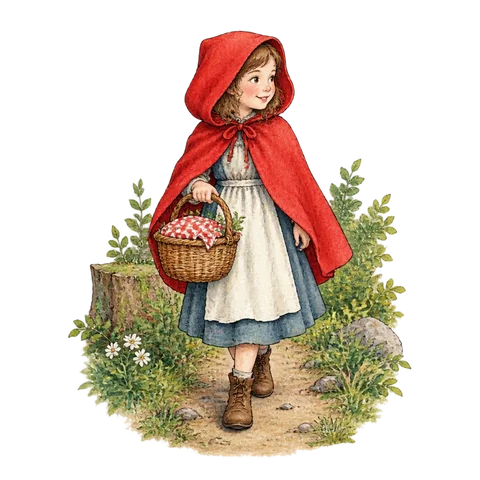
Little Red Riding Hood
la chevillette, la bobinette cherra.
Pull the little peg, and the latch will fall.
A wolf learns where a girl’s grandmother lives, arrives first and disguises himself in bed. The girl mistakes the danger for a familiar face.
Cultural note: This Perrault version ends with the wolf eating the girl. The later hunter rescue belongs to other versions. The quoted door formula uses old vocabulary.
Intermediate
— Charles Perrault (1628–1703), Le petit Chaperon rouge
 Source note
Explore these words: Time & dates (flashcards) · Clothes (flashcards) · Family & relationships (flashcards)
Put these words into context with a story at your level.
Read French storiesClever Heroes and Dangerous Promises
These stories turn on quick thinking, words and promises. Historical versions can contain frightening events.
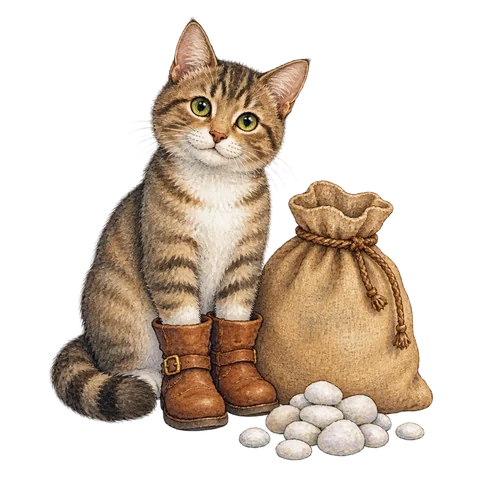
Puss in Boots
Un ne laissa pour tous biens, à trois enfants qu’il avait, que son , son âne et son .
A miller left his three children no property but his mill, his donkey and his cat.
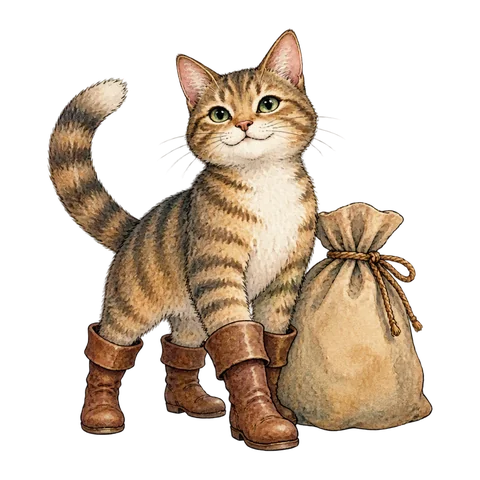
The youngest son inherits a cat that uses boots, gifts and elaborate tricks to turn its master into a wealthy nobleman.
Cultural note: The cat’s cleverness also depends on deception. The story invites discussion of appearances and social status, not just an uncomplicated moral.
An A2 retelling to read and listen to
Original Inklingo graded retelling of the cited tale, with simplified present-tense narration and an English translation for each paragraph.
Un vieux laisse ses biens à ses trois . Le premier reçoit le . Le reçoit un âne. Le troisième reçoit seulement un chat. Le jeune homme regarde l’animal avec tristesse. Il n’a ni argent ni maison. Il se demande comment il va avec un si petit héritage.
Mais le chat sait parler. Il demande un sac et une paire de . Son maître est surpris, mais il accepte. Avec son sac, le chat attrape un lapin. Il l’apporte au roi et dit : « Voici un de mon maître, le marquis de Carabas. » En réalité, son maître n’est pas marquis.
Le chat apporte encore plusieurs au . Un , il apprend que le roi va passer près de la avec sa fille. Il demande à son maître de se baigner. Puis il cache ses et appelle au secours. Il raconte au roi que des voleurs ont pris les habits du marquis.
Le roi donne de beaux au jeune homme. Pendant ce temps, le chat court jusqu’au château d’un ogre. Cet ogre peut un animal. Le chat admire son pouvoir, puis demande : « Pouvez-vous une toute petite souris ? » L’ogre veut montrer son . Il une souris, et le chat le mange.
Quand le roi arrive, le chat l’accueille dans le château du marquis de Carabas. Le jeune homme riche et épouse la princesse. Le chat vit dans le confort. Son intelligence a tout changé. Pourtant, il a aussi beaucoup . Le peut donc admirer ses idées tout en discutant ses méthodes.
Intermediate
— Charles Perrault (1628–1703), Le maître Chat ou le Chat botté
 Source note
Little Thumb
Il était une un bûcheron et une bûcheronne qui enfants, tous garçons.
Once there were a woodcutter and his wife who had seven children, all boys.
The smallest of seven brothers follows white pebbles home, later loses a trail of crumbs and outwits an ogre. Seven-league boots change his fortunes.
Cultural note: The story begins in famine and abandonment. The youngest child succeeds because he listens and notices what others overlook.
Intermediate
— Charles Perrault (1628–1703), Le Petit Poucet
 Source note
Bluebeard
Il était une un qui de belles à la ville et à la campagne
Once there was a man who had fine houses in town and in the country.
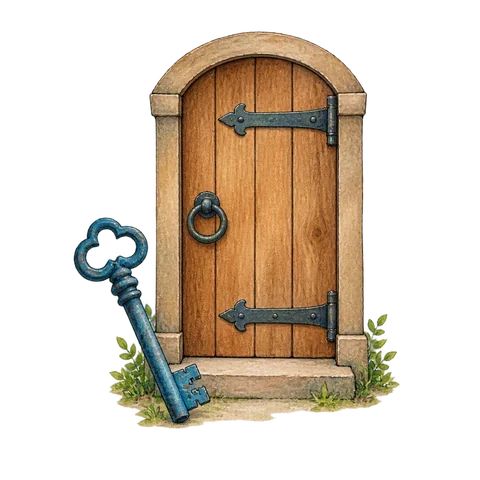
A new wife opens a forbidden room and discovers that her wealthy husband killed his previous wives. She delays him until her brothers arrive.
Cultural note: This dark tale concerns coercion and hidden danger. The bloody key is a sign of the crime; curiosity does not make the wife responsible for his violence.
Intermediate
— Charles Perrault (1628–1703), La Barbe-Bleue
 Source note
Explore these words: Time & dates (flashcards) · Clothes (flashcards) · Jobs & work (flashcards)
Put these words into context with a story at your level.
Read French storiesFrench Animal Fables
La Fontaine gives animals human voices to test pride, kindness, patience and power.
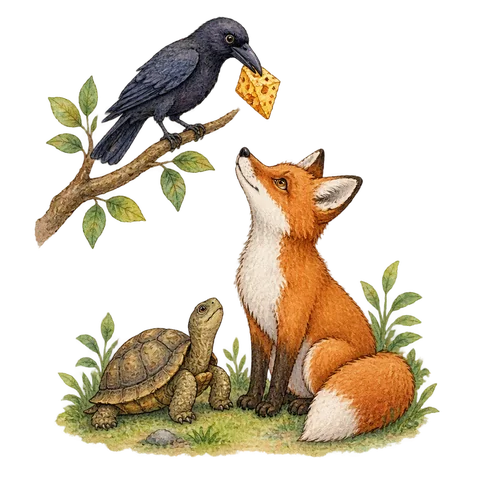
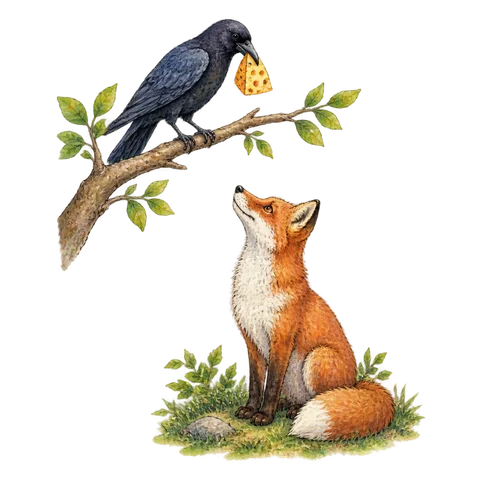
The Crow and the Fox
corbeau, sur un perché, Tenait en son bec un .
Master Crow, perched in a tree, Held a cheese in his beak.
A fox praises a crow’s beauty and imagined singing. When the crow opens its beak to perform, the cheese drops into the fox’s reach.
Cultural note: The lesson targets flattery that serves the flatterer’s appetite. La Fontaine adapts an older fable tradition.
An A2 retelling to read and listen to
Original Inklingo graded retelling of the cited tale, with simplified present-tense narration and an English translation for each paragraph.
Dans une forêt, un corbeau trouve un beau . Il le prend dans son bec et se pose sur une . L’ est haut, et le corbeau pense que son est en sécurité. Il regarde les feuilles, le ciel et le chemin. Il ne veut pas partager son avec les autres animaux.
Un renard passe sous l’. Il a faim et sent tout de suite le . Il lève la tête et aperçoit le corbeau. Il ne peut pas monter jusqu’à lui. Alors, il cherche une autre . Il connaît une des animaux, et des humains aussi : ils aiment entendre qu’ils sont extraordinaires.
Le renard le corbeau avec une grande politesse. « Bonjour ! Comme vous êtes beau ! Vos plumes sont . Si votre voix est aussi belle, vous êtes le meilleur de cette forêt. » Le corbeau écoute avec plaisir. Personne ne lui parle de cette façon. Il oublie de regarder le dans son bec.
Il veut montrer sa voix. Il ouvre donc le bec pour chanter. , le tombe de la . Le renard le prend avant même qu’il touche le sol. Le corbeau comprend enfin le . Les compliments n’étaient pas un : le renard voulait seulement obtenir son sans dans l’.
Avant de partir, le renard donne une leçon au corbeau : il faut réfléchir quand quelqu’un vous flatte. Le corbeau est . Il promet de ne plus tomber dans le même . Le est perdu, mais il garde cette expérience. La fois, il pourra écouter les belles paroles tout en protégeant ce qui lui appartient.
Intermediate
— Jean de La Fontaine (1621–1695), Le Corbeau et le Renard
 Source note
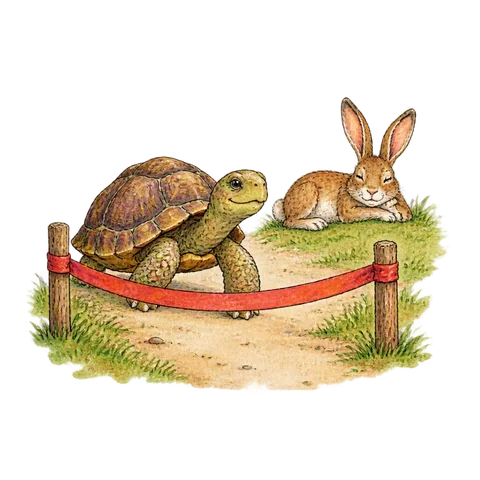
The Hare and the Tortoise
Rien ne de courir ; il faut partir à point
Running is no use; you must set off at the right time.
A hare assumes it can easily outrun a tortoise and postpones the race. The tortoise keeps moving and reaches the finish first.
Cultural note: La Fontaine emphasizes starting in time and persisting; the hare wastes its natural advantage through pride.
An A2 retelling to read and listen to
Original Inklingo graded retelling of the cited tale, with simplified present-tense narration and an English translation for each paragraph.
Un lièvre rencontre une tortue sur un chemin. Il regarde ses petites pattes et sa lourde maison. Il trouve sa marche très . Lui, il peut traverser un en quelques . La tortue avance , mais elle ne s’arrête pas. Un jour, elle propose au lièvre de faire une course jusqu’à un .
Le lièvre rit. Comment cette petite tortue pourrait-elle gagner contre lui ? , il accepte. Les deux animaux choisissent le point d’arrivée et se préparent. La tortue commence à marcher. Elle ne regarde ni à droite ni à gauche. Elle sait qu’elle doit tout son temps, car ses pas sont petits.
Le lièvre, au contraire, pense qu’il a beaucoup de temps. Il mange de l’herbe, écoute le et se repose. Pourquoi courir maintenant ? Il lui suffit de quelques grands sauts pour rejoindre la tortue. Il préfère attendre. Il veut même lui laisser une grande avance pour rendre sa plus impressionnante devant les autres.
La tortue continue. Le chemin est long et elle est , mais elle avance encore. Elle voit enfin l’ devant elle. Le lièvre ouvre les yeux et comprend son erreur. Il se lève d’un bond et court aussi vite que possible. Cette fois, il toute sa vitesse. Mais il commence beaucoup trop tard.
La tortue arrive la première. Elle regarde le lièvre et lui demande à quoi sa vitesse lui a servi. Elle a gagné avec de petits pas réguliers. Le lièvre n’a pas perdu parce qu’il était : il a perdu parce qu’il a attendu. Le récit nous rappelle qu’un bon départ et un effort continu comptent beaucoup.
Intermediate
— Jean de La Fontaine (1621–1695), Le Lièvre et la Tortue
 Source note
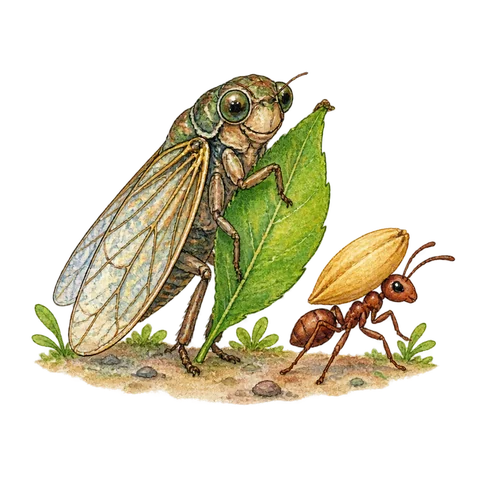
The Cicada and the Ant
La cigale, ayant Tout l’, Se trouva fort dépourvue la bise fut venue
The cicada, having sung All summer, Found herself with nothing When the cold north wind arrived.
A hungry cicada asks an ant for a loan after spending summer singing. The ant refuses and tells her to dance instead.
Cultural note: Often read as a lesson in preparation, the fable also exposes the ant’s lack of generosity. Cigale means cicada, not grasshopper.
Intermediate
— Jean de La Fontaine (1621–1695), La Cigale et la Fourmi
 Source note
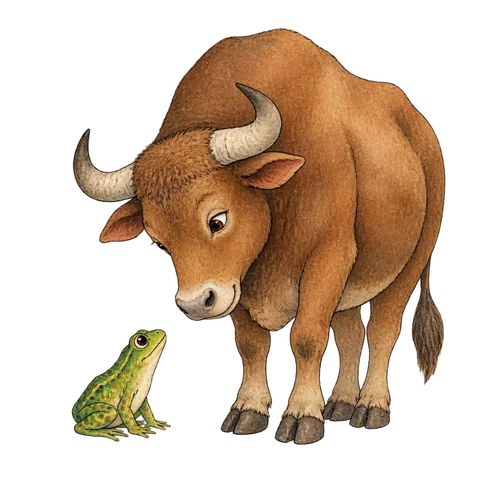
The Frog and the Ox
Une grenouille un bœuf Qui lui sembla de belle taille.
A frog saw an ox That seemed impressively large.
A frog tries to swell until it matches an ox. It ignores repeated evidence that it is still small and bursts.
Cultural note: The final lines connect the frog’s envy to people who imitate the rank and display of the powerful.
Intermediate
— Jean de La Fontaine (1621–1695), La Grenouille qui se veut faire aussi grosse que le Bœuf
 Source note
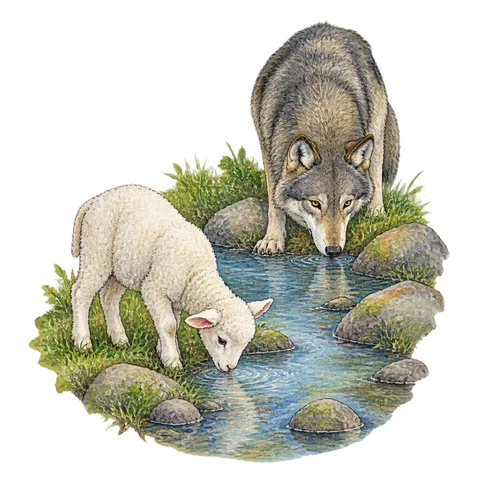
The Wolf and the Lamb
Un se désaltérait Dans le courant d’une onde pure.
A lamb was quenching its thirst In a stream of clear water.
A wolf invents accusations against a lamb drinking downstream. The lamb answers each charge logically, but the wolf eats it anyway.
Cultural note: The fable criticizes power pretending to be justice. Its famous opening describes how force wins; it does not endorse that outcome.
Intermediate
— Jean de La Fontaine (1621–1695), Le Loup et l’Agneau
 Source note
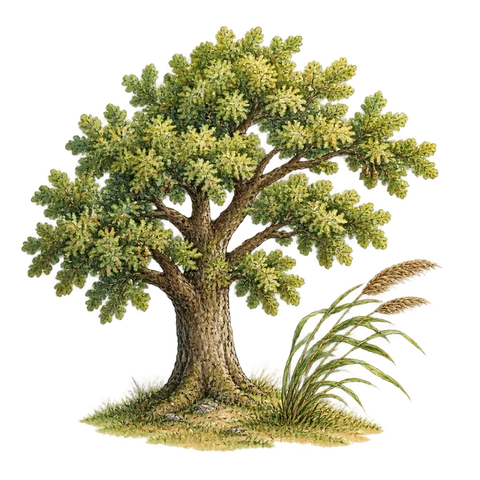
The Oak and the Reed
Je plie, et ne romps pas.
I bend and do not break.
An oak boasts of its strength and pities a flexible reed. A storm bends the reed but uproots the oak.
Cultural note: The reed’s line praises resilience through flexibility. The oak’s apparent strength conceals its inability to yield.
Intermediate
— Jean de La Fontaine (1621–1695), Le Chêne et le Roseau
 Source note
The Lion and the Rat
On d’un plus petit que soi.
We often need someone smaller than ourselves.
A lion spares a rat. Later, when the lion is caught in a net, the rat gnaws through the ropes and frees it.
Cultural note: Help can come from someone with little apparent power; kindness creates obligations that strength alone cannot secure.
Intermediate
— Jean de La Fontaine (1621–1695), Le Lion et le Rat
 Source note
Explore these words: Plants & trees (flashcards) · Food & cooking (flashcards) · Nature & landscape (flashcards)
Put these words into context with a story at your level.
Read French storiesFrench fairy tales: frequently asked questions
Which fairy tales are French?
Perrault’s 1697 collection includes Cinderella, Puss in Boots, Little Red Riding Hood and Sleeping Beauty. Their story patterns also occur in other countries; a French printed version does not establish a single national origin.
Was Cinderella originally French?
Cinderella has many older and geographically diverse relatives. Perrault’s French version is especially associated with the fairy godmother, pumpkin coach and glass slipper.
Are these original texts or simplified stories?
The short quoted line comes from the source named below it. The five longer A2 readings are new Inklingo adaptations with simpler sentences, not altered quotations.
Are these French fairy tales suitable for children?
The five graded readings avoid graphic detail. The historical summaries identify violence or dark endings where relevant. Perrault’s Little Red Riding Hood has no hunter rescue.
How do fairy tales differ from fables?
Fairy tales often involve magic and human adventures. Fables are usually shorter, often use talking animals and end in a moral or an ironic observation.
What should a beginner read first?
Start with The Crow and the Fox or The Hare and the Tortoise. Their small casts, concrete objects and repeated actions make the A2 readings easier to follow.
Make these words part of your day
Explore French stories, listen along, and save vocabulary as you go.
Find a story at your levelSources and verification
English translations and examples were written for this guide. Source notes distinguish documented expressions, original practice sentences, and literary quotations. Literary excerpts retain the language of their original period.
- Charles Perrault, Cendrillon ou la petite Pantoufle de verre — Primary historical text. Perrault selections use the explicitly adapted Féron school edition (1902); fables use the cited 1897 or 1874 edition.
- Charles Perrault, La Belle au Bois dormant — Primary historical text. Perrault selections use the explicitly adapted Féron school edition (1902); fables use the cited 1897 or 1874 edition.
- Charles Perrault, Les Fées — Primary historical text. Perrault selections use the explicitly adapted Féron school edition (1902); fables use the cited 1897 or 1874 edition.
- Charles Perrault, Riquet à la Houppe — Primary historical text. Perrault selections use the explicitly adapted Féron school edition (1902); fables use the cited 1897 or 1874 edition.
- Charles Perrault, Le petit Chaperon rouge — Primary historical text. Perrault selections use the explicitly adapted Féron school edition (1902); fables use the cited 1897 or 1874 edition.
- Charles Perrault, Le maître Chat ou le Chat botté — Primary historical text. Perrault selections use the explicitly adapted Féron school edition (1902); fables use the cited 1897 or 1874 edition.
- Charles Perrault, Le Petit Poucet — Primary historical text. Perrault selections use the explicitly adapted Féron school edition (1902); fables use the cited 1897 or 1874 edition.
- Charles Perrault, La Barbe-Bleue — Primary historical text. Perrault selections use the explicitly adapted Féron school edition (1902); fables use the cited 1897 or 1874 edition.
- Jean de La Fontaine, Le Corbeau et le Renard — Primary historical text. Perrault selections use the explicitly adapted Féron school edition (1902); fables use the cited 1897 or 1874 edition.
- Jean de La Fontaine, Le Lièvre et la Tortue — Primary historical text. Perrault selections use the explicitly adapted Féron school edition (1902); fables use the cited 1897 or 1874 edition.
- Jean de La Fontaine, La Cigale et la Fourmi — Primary historical text. Perrault selections use the explicitly adapted Féron school edition (1902); fables use the cited 1897 or 1874 edition.
- Jean de La Fontaine, La Grenouille qui se veut faire aussi grosse que le Bœuf — Primary historical text. Perrault selections use the explicitly adapted Féron school edition (1902); fables use the cited 1897 or 1874 edition.
- Jean de La Fontaine, Le Loup et l’Agneau — Primary historical text. Perrault selections use the explicitly adapted Féron school edition (1902); fables use the cited 1897 or 1874 edition.
- Jean de La Fontaine, Le Chêne et le Roseau — Primary historical text. Perrault selections use the explicitly adapted Féron school edition (1902); fables use the cited 1897 or 1874 edition.
- Jean de La Fontaine, Le Lion et le Rat — Primary historical text. Perrault selections use the explicitly adapted Féron school edition (1902); fables use the cited 1897 or 1874 edition.
Source notes for all 15 entries
- Cinderella: Opening or key line from Cendrillon ou la petite Pantoufle de verre. Whitespace and typographic apostrophes normalized; English translation by Inklingo. [fr-tale-06]
- Sleeping Beauty: Opening or key line from La Belle au Bois dormant. Whitespace and typographic apostrophes normalized; English translation by Inklingo. [fr-tale-04]
- The Fairies: Opening or key line from Les Fées. Whitespace and typographic apostrophes normalized; English translation by Inklingo. [fr-tale-05]
- Ricky of the Tuft: Opening or key line from Riquet à la Houppe. Whitespace and typographic apostrophes normalized; English translation by Inklingo. [fr-tale-07]
- Little Red Riding Hood: Opening or key line from Le petit Chaperon rouge. Whitespace and typographic apostrophes normalized; English translation by Inklingo. [fr-tale-01]
- Puss in Boots: Opening or key line from Le maître Chat ou le Chat botté. Whitespace and typographic apostrophes normalized; English translation by Inklingo. [fr-tale-03]
- Little Thumb: Opening or key line from Le Petit Poucet. Whitespace and typographic apostrophes normalized; English translation by Inklingo. [fr-tale-08]
- Bluebeard: Opening or key line from La Barbe-Bleue. Whitespace and typographic apostrophes normalized; English translation by Inklingo. [fr-tale-02]
- The Crow and the Fox: Opening or key line from Le Corbeau et le Renard. Whitespace and typographic apostrophes normalized; English translation by Inklingo. [fr-fable-02]
- The Hare and the Tortoise: Opening or key line from Le Lièvre et la Tortue. Whitespace and typographic apostrophes normalized; English translation by Inklingo. [fr-fable-05]
- The Cicada and the Ant: Opening or key line from La Cigale et la Fourmi. Whitespace and typographic apostrophes normalized; English translation by Inklingo. [fr-fable-01]
- The Frog and the Ox: Opening or key line from La Grenouille qui se veut faire aussi grosse que le Bœuf. Whitespace and typographic apostrophes normalized; English translation by Inklingo. [fr-fable-03]
- The Wolf and the Lamb: Opening or key line from Le Loup et l’Agneau. Whitespace and typographic apostrophes normalized; English translation by Inklingo. [fr-fable-04]
- The Oak and the Reed: Opening or key line from Le Chêne et le Roseau. Whitespace and typographic apostrophes normalized; English translation by Inklingo. [fr-fable-06]
- The Lion and the Rat: Opening or key line from Le Lion et le Rat. Whitespace and typographic apostrophes normalized; English translation by Inklingo. [fr-fable-07]