
THE INKLINGO LANGUAGE GUIDES
90 German Idioms & Proverbs (Meanings + Audio)
Explore 80 German idioms and 10 traditional proverbs with literal translations, natural English meanings and original example sentences. Begin with the essential 20, then choose a theme that matches the conversation you want to have.

Essential 20
- Nur Bahnhof verstehenIt’s all Greek to me.
- Schwein habenTo get lucky
- Jemandem die Daumen drückenTo keep your fingers crossed for someone
- Die Nase voll habenTo be fed up
- Tomaten auf den Augen habenTo be blind to the obvious
- Aus einer Mücke einen Elefanten machenTo make a mountain out of a molehill
- Den Nagel auf den Kopf treffenTo hit the nail on the head
- Alles in ButterAll is well.
- Das ist mir Wurst.It’s all the same to me.
- Das ist nicht mein Bier.That’s not my business.
- Ein KatzensprungA stone’s throw
- Die Katze im Sack kaufenTo buy a pig in a poke
- Jemandem fällt ein Stein vom Herzen.A weight is lifted from someone’s mind.
- Jemandem unter die Arme greifenTo lend someone a hand
- Etwas auf die lange Bank schiebenTo put something on the back burner
- Den Faden verlierenTo lose your train of thought
- Ins Fettnäpfchen tretenTo put your foot in it
- Den Gürtel enger schnallenTo tighten your belt
- Alles unter einen Hut bringenTo juggle everything
- Auf Nummer sicher gehenTo play it safe
20 essential German idioms
Start with these versatile expressions. Read the literal image, then use the example to hear the intended meaning.

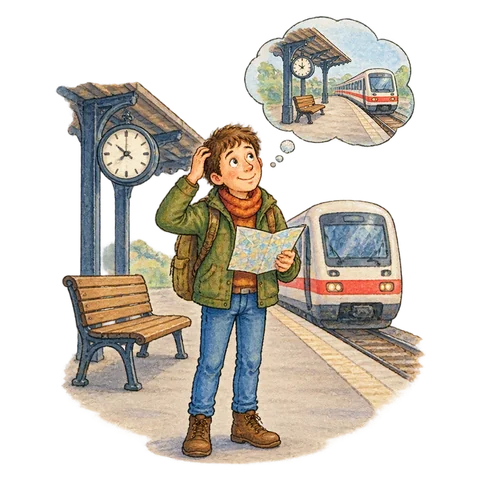
Nur Bahnhof
It’s all Greek to me.
Literally: To understand only train station
Meaning: To understand nothing of an explanation or conversation.
Closest English expression: It’s all Greek to me.
Informal; no real station is involved. · Standard German; usage varies by speaker and setting.
In a sentence
 Source note
Schwein
To get lucky
Literally: To have pig
Meaning: To be fortunate, especially when things could easily have gone wrong.
Closest English expression: To get lucky
Informal; no article before Schwein. · Standard German; usage varies by speaker and setting.
In a sentence
 Source note
Jemandem die Daumen drücken
To keep your fingers crossed for someone
Literally: To press your thumbs for someone
Meaning: To wish someone luck and hope for a good outcome.
Closest English expression: To keep your fingers crossed for someone
Conversational; the person takes the dative, as in dir. · Standard German; usage varies by speaker and setting.
In a sentence
 Source note
Die
To be fed up
Literally: To have your nose full
Meaning: To have had enough of an unpleasant situation.
Closest English expression: To be fed up
Informal; von introduces what annoys you. · Standard German; usage varies by speaker and setting.
In a sentence
 Source note
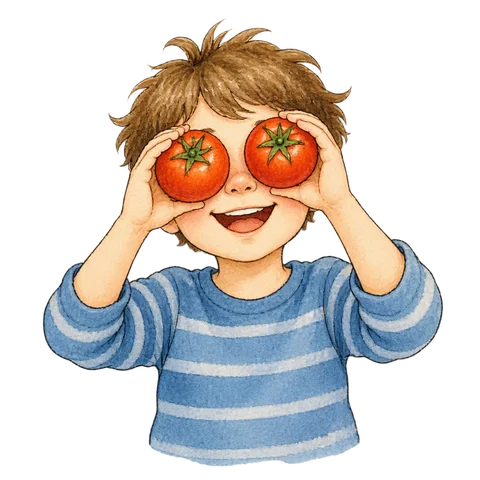
auf den haben
To be blind to the obvious
Literally: To have tomatoes on your eyes
Meaning: To fail to notice something clearly visible.
Closest English expression: To be blind to the obvious
Informal; can be insulting when directed at someone. · Standard German; usage varies by speaker and setting.
In a sentence
 Source note
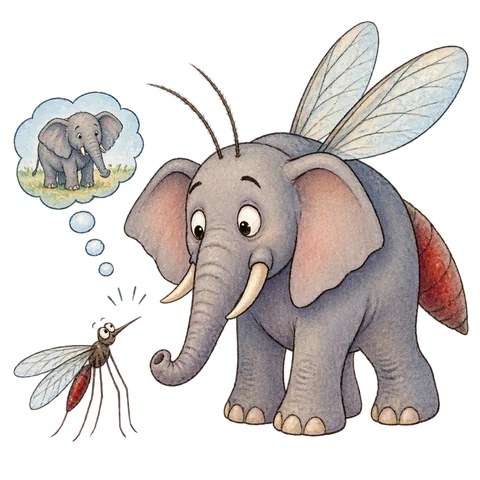
Aus einer Mücke einen machen
To make a mountain out of a molehill
Literally: To make an elephant out of a mosquito
Meaning: To exaggerate a minor issue into a major problem.
Closest English expression: To make a mountain out of a molehill
Conversational; the example shortens the established image in context. · Standard German; usage varies by speaker and setting.
In a sentence
 Source note
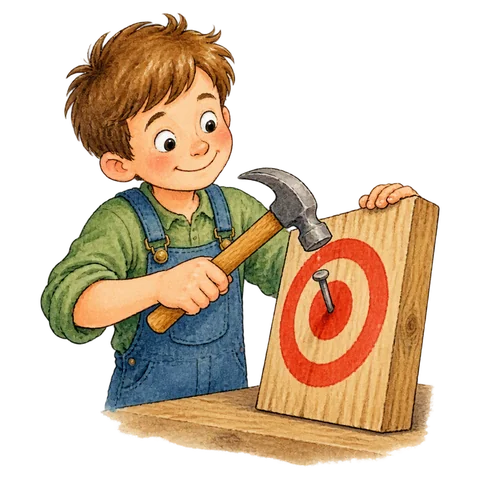
Den auf den
To hit the nail on the head
Literally: To hit the nail on the head
Meaning: To identify or describe something exactly right.
Closest English expression: To hit the nail on the head
Neutral conversational. · Standard German; usage varies by speaker and setting.
In a sentence
 Source note
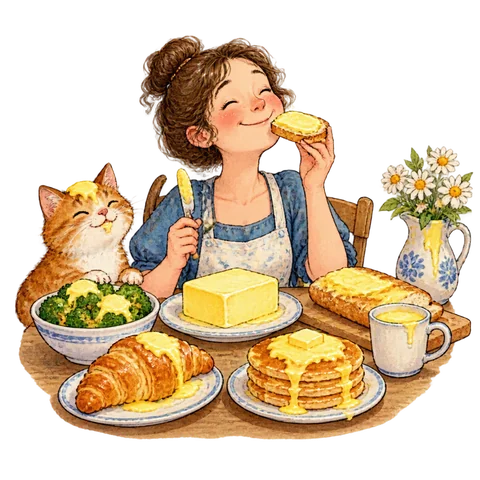
Alles in
All is well.
Literally: Everything in butter
Meaning: Everything is fine or in order.
Closest English expression: All is well.
Informal; reassuring. · Standard German; usage varies by speaker and setting.
In a sentence
 Source note
Das ist mir .
It’s all the same to me.
Literally: That is sausage to me.
Meaning: The alternatives make no difference to the speaker.
Closest English expression: It’s all the same to me.
Informal; can sound indifferent rather than friendly. · Standard German; usage varies by speaker and setting.
In a sentence
 Source note
Das ist nicht mein Bier.
That’s not my business.
Literally: That is not my beer.
Meaning: The matter is outside the speaker’s responsibility or concern.
Closest English expression: That’s not my business.
Informal; potentially dismissive. · Standard German; usage varies by speaker and setting.
In a sentence
 Source note
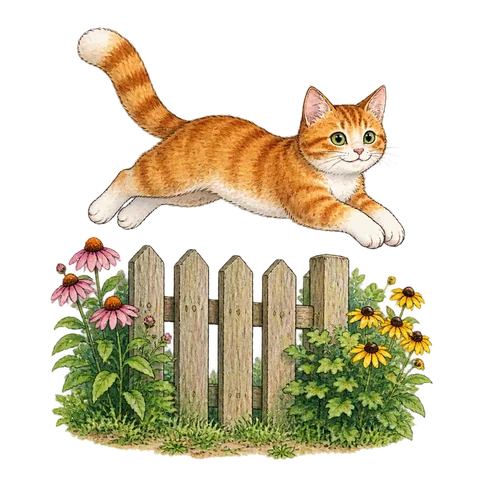
Ein Katzensprung
A stone’s throw
Literally: A cat’s jump
Meaning: A very short distance.
Closest English expression: A stone’s throw
Conversational; a noun phrase. · Standard German; usage varies by speaker and setting.
In a sentence
 Source note
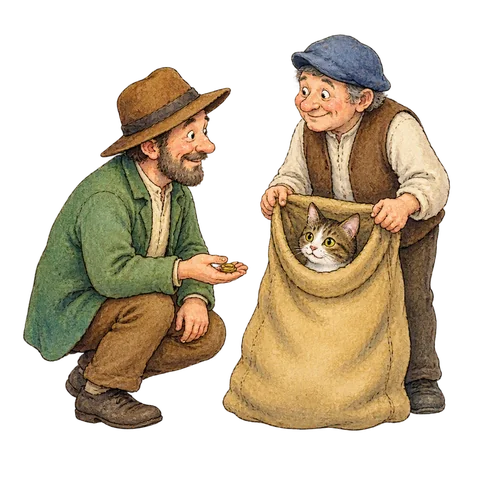
Die im Sack
To buy a pig in a poke
Literally: To buy the cat in the sack
Meaning: To commit to a purchase without checking what you will receive.
Closest English expression: To buy a pig in a poke
Neutral conversational. · Standard German; usage varies by speaker and setting.
In a sentence
 Source note
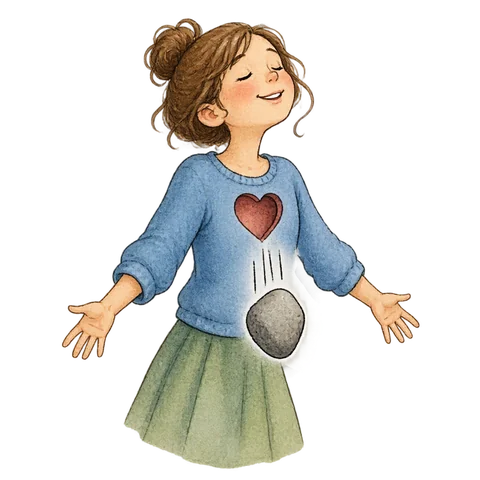
Jemandem ein vom Herzen.
A weight is lifted from someone’s mind.
Literally: A stone falls from someone’s heart.
Meaning: Someone feels strong relief after a worry is removed.
Closest English expression: A weight is lifted from someone’s mind.
Conversational; the relieved person takes the dative. · Standard German; usage varies by speaker and setting.
In a sentence
 Source note
Jemandem unter die greifen
To lend someone a hand
Literally: To reach under someone’s arms
Meaning: To give someone practical or financial support.
Closest English expression: To lend someone a hand
Neutral conversational; person in the dative. · Standard German; usage varies by speaker and setting.
In a sentence
 Source note
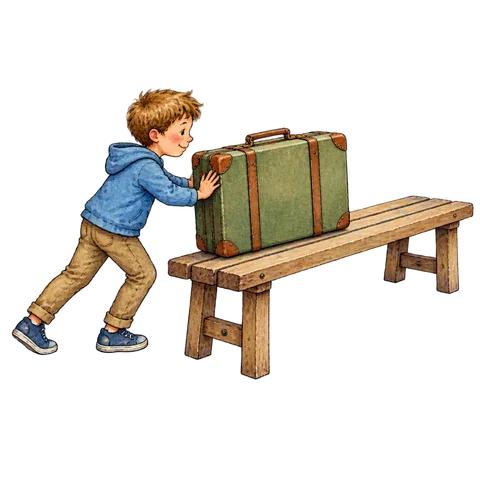
Etwas auf die lange
To put something on the back burner
Literally: To push something onto the long bench
Meaning: To postpone a task instead of dealing with it.
Closest English expression: To put something on the back burner
Conversational; often critical of delay. · Standard German; usage varies by speaker and setting.
In a sentence
 Source note
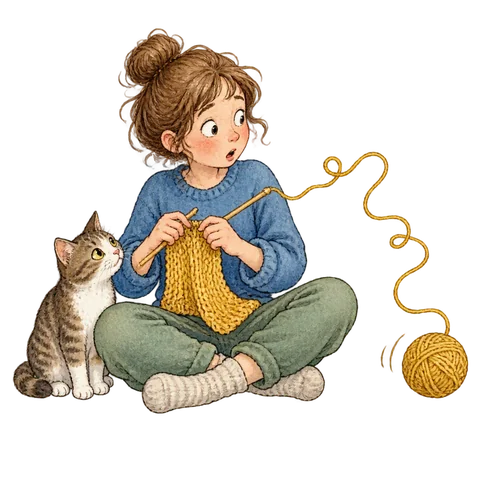
Den Faden verlieren
To lose your train of thought
Literally: To lose the thread
Meaning: To lose track of what you were saying or thinking.
Closest English expression: To lose your train of thought
Neutral conversational. · Standard German; usage varies by speaker and setting.
In a sentence
 Source note
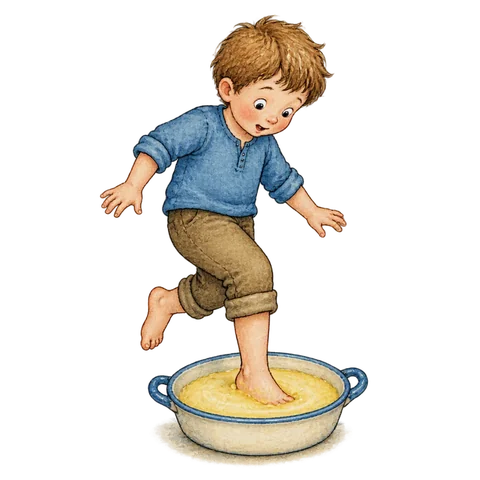
Ins Fettnäpfchen
To put your foot in it
Literally: To step into the little dish of fat
Meaning: To cause embarrassment by saying or doing something tactless.
Closest English expression: To put your foot in it
Informal; social awkwardness. · Standard German; usage varies by speaker and setting.
In a sentence
 Source note
Den Gürtel schnallen
To tighten your belt
Literally: To fasten the belt more tightly
Meaning: To reduce spending when money is limited.
Closest English expression: To tighten your belt
Neutral conversational. · Standard German; usage varies by speaker and setting.
In a sentence
 Source note
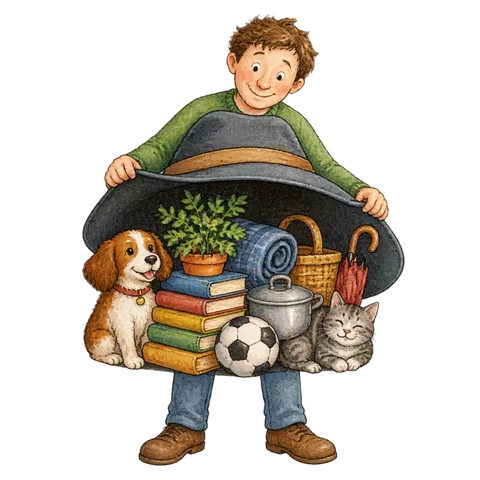
Alles unter einen bringen
To juggle everything
Literally: To bring everything under one hat
Meaning: To coordinate several commitments or interests successfully.
Closest English expression: To juggle everything
Conversational; often work and family responsibilities. · Standard German; usage varies by speaker and setting.
In a sentence
 Source note
Auf gehen
To play it safe
Literally: To go for the safe number
Meaning: To choose a cautious option to avoid risk.
Closest English expression: To play it safe
Neutral conversational. · Standard German; usage varies by speaker and setting.
In a sentence
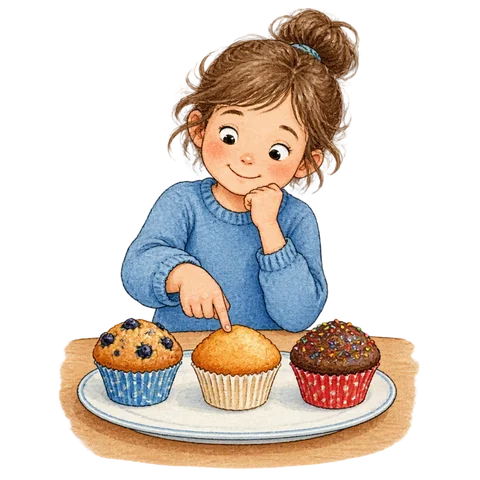 Source note
Explore these words: Body parts (flashcards) · Time & dates (flashcards) · Tools & building (flashcards)
Put these words into context with a story at your level.
Read German storiesGerman idioms for feelings and reactions
These expressions describe mood, surprise and emotional pressure. Tone matters, especially when describing another person.

Auf sein
To be on cloud nine
Literally: To be on cloud seven
Meaning: To feel blissfully happy, often because of love.
Closest English expression: To be on cloud nine
Conversational; often romantic. · Standard German; usage varies by speaker and setting.
In a sentence
Jemanden auf die Palme bringen
To drive someone up the wall
Literally: To bring someone up the palm tree
Meaning: To make someone very angry or exasperated.
Closest English expression: To drive someone up the wall
Informal; person in the accusative. · Standard German; usage varies by speaker and setting.
In a sentence
Jemandem die auf den .
To feel cooped up
Literally: The ceiling falls on someone’s head.
Meaning: Someone feels confined and restless after staying indoors too long.
Closest English expression: To feel cooped up
Informal; usually a need to get out. · Standard German; usage varies by speaker and setting.
In a sentence
Kein zutun
To not sleep a wink
Literally: Not to close an eye
Meaning: To get no sleep.
Closest English expression: To not sleep a wink
Conversational; zutun is separable. · Standard German; usage varies by speaker and setting.
In a sentence
Aus dem Häuschen sein
To be beside yourself with excitement
Literally: To be out of the little house
Meaning: To be extremely excited or delighted.
Closest English expression: To be beside yourself with excitement
Conversational; often joyful. · Standard German; usage varies by speaker and setting.
In a sentence
Den verlieren
To lose your head
Literally: To lose your head
Meaning: To panic and stop thinking clearly.
Closest English expression: To lose your head
Neutral conversational. · Standard German; usage varies by speaker and setting.
In a sentence
Mit dem Fuß aufstehen
To get up on the wrong side of the bed
Literally: To get up with the left foot
Meaning: To begin the day in an irritable mood.
Closest English expression: To get up on the wrong side of the bed
Conversational, often self-deprecating. · Standard German; usage varies by speaker and setting.
In a sentence
Kalte Füße
To get cold feet
Literally: To get cold feet
Meaning: To become afraid and hesitate before a commitment.
Closest English expression: To get cold feet
Conversational; not literal temperature. · Standard German; usage varies by speaker and setting.
In a sentence
und sein
To be fired up
Literally: To be fire and flame
Meaning: To be enthusiastic about an idea or activity.
Closest English expression: To be fired up
Conversational; für introduces the focus. · Standard German; usage varies by speaker and setting.
In a sentence
Die Fassung verlieren
To lose your composure
Literally: To lose composure
Meaning: To become unable to stay calm after an emotional shock.
Closest English expression: To lose your composure
Neutral; also suitable in writing. · Standard German; usage varies by speaker and setting.
In a sentence
Explore these words: Body parts (flashcards) · Time & dates (flashcards) · Weather (flashcards)
Put these words into context with a story at your level.
Read German storiesGerman idioms about people and relationships
Use these phrases to recognize personality and social dynamics. Critical descriptions can sound unkind when directed at someone.

Auf einer Wellenlänge sein
To be on the same wavelength
Literally: To be on the same wavelength
Meaning: To think similarly and understand each other easily.
Closest English expression: To be on the same wavelength
Conversational; relationships or collaboration. · Standard German; usage varies by speaker and setting.
In a sentence
Die .
The chemistry is right.
Literally: The chemistry is right.
Meaning: People get along naturally or feel mutual attraction.
Closest English expression: The chemistry is right.
Conversational; not only romantic. · Standard German; usage varies by speaker and setting.
In a sentence
Jemanden hängen lassen
To let someone down
Literally: To leave someone hanging
Meaning: To fail to support someone when they rely on you.
Closest English expression: To let someone down
Informal; person in the accusative. · Standard German; usage varies by speaker and setting.
In a sentence
Mit offenen Karten
To put your cards on the table
Literally: To play with open cards
Meaning: To be honest about intentions and relevant information.
Closest English expression: To put your cards on the table
Neutral conversational. · Standard German; usage varies by speaker and setting.
In a sentence
Unter die Haube kommen
To tie the knot
Literally: To come under the bonnet
Meaning: To get married.
Closest English expression: To tie the knot
Colloquial and somewhat old-fashioned; historically associated with women. · Standard German; usage varies by speaker and setting.
In a sentence
Jemandem einen
To turn someone down
Literally: To give someone a basket
Meaning: To reject someone’s romantic invitation or advances.
Closest English expression: To turn someone down
Conversational; the rejected person takes the dative. · Standard German; usage varies by speaker and setting.
In a sentence
Mit allen Wassern gewaschen sein
To know all the tricks
Literally: To be washed with all waters
Meaning: To be experienced and shrewd, so difficult to deceive.
Closest English expression: To know all the tricks
Conversational; may suggest cunning as well as experience. · Standard German; usage varies by speaker and setting.
In a sentence
Das Herz auf dem rechten Fleck
To have your heart in the right place
Literally: To have the heart in the right place
Meaning: To be kind and well-intentioned despite imperfections.
Closest English expression: To have your heart in the right place
Conversational praise. · Standard German; usage varies by speaker and setting.
In a sentence
Jemandem ums Maul schmieren
To butter someone up
Literally: To smear honey around someone’s mouth
Meaning: To flatter someone, usually to gain an advantage.
Closest English expression: To butter someone up
Informal; Maul makes the wording blunt. · Standard German; usage varies by speaker and setting.
In a sentence
Den Bock zum Gärtner machen
To put the fox in charge of the henhouse
Literally: To make the goat the gardener
Meaning: To put someone in charge whose interests or habits make them unsuitable.
Closest English expression: To put the fox in charge of the henhouse
Conversational; strongly critical of the appointment. · Standard German; usage varies by speaker and setting.
In a sentence
Explore these words: Opinions & agreeing (flashcards) · Math & science (flashcards) · Exclamations
Put these words into context with a story at your level.
Read German storiesGerman idioms for work and decisions
These expressions make effort, progress and choices concrete. Practice them with a real task in mind.

Etwas mit machen
To do something with one hand tied behind your back
Literally: To do something with the left hand
Meaning: To do something easily, without much effort.
Closest English expression: To do something with one hand tied behind your back
Informal; sometimes boastful. · Standard German; usage varies by speaker and setting.
In a sentence
Viel um die Ohren haben
To have a lot on your plate
Literally: To have a lot around the ears
Meaning: To be busy with many demands or responsibilities.
Closest English expression: To have a lot on your plate
Conversational. · Standard German; usage varies by speaker and setting.
In a sentence
Ins kalte
To jump in at the deep end
Literally: To jump into cold water
Meaning: To begin an unfamiliar task without much preparation.
Closest English expression: To jump in at the deep end
Conversational; stresses unfamiliarity. · Standard German; usage varies by speaker and setting.
In a sentence
Auf Herz und Nieren prüfen
To put through its paces
Literally: To test heart and kidneys
Meaning: To examine something or someone very thoroughly.
Closest English expression: To put through its paces
Neutral; often technical or professional. · Standard German; usage varies by speaker and setting.
In a sentence
Über den Tellerrand schauen
To broaden your horizons
Literally: To look beyond the edge of your plate
Meaning: To consider perspectives outside your usual field or experience.
Closest English expression: To broaden your horizons
Neutral conversational. · Standard German; usage varies by speaker and setting.
In a sentence
Einen ins bringen
To get the ball rolling
Literally: To set a stone rolling
Meaning: To start a process that leads to further developments.
Closest English expression: To get the ball rolling
Neutral; can have positive or negative consequences. · Standard German; usage varies by speaker and setting.
In a sentence
Etwas in die Wege leiten
To set something in motion
Literally: To direct something into the paths
Meaning: To arrange the first steps needed to make something happen.
Closest English expression: To set something in motion
Neutral; common in work communication. · Standard German; usage varies by speaker and setting.
In a sentence
Die vorn haben
To have the lead
Literally: To have your nose in front
Meaning: To be ahead of a competitor.
Closest English expression: To have the lead
Conversational; vorn and vorne both occur. · Standard German; usage varies by speaker and setting.
In a sentence
In die Bresche
To step into the breach
Literally: To jump into the breach
Meaning: To step in when someone else cannot fulfill a role.
Closest English expression: To step into the breach
Neutral; practical support at a difficult moment. · Standard German; usage varies by speaker and setting.
In a sentence
In trockenen Tüchern sein
To be in the bag
Literally: To be in dry cloths
Meaning: To be securely settled or completed.
Closest English expression: To be in the bag
Conversational; often agreements and plans. · Standard German; usage varies by speaker and setting.
In a sentence
Explore these words: Directions & position (flashcards) · Time & dates (flashcards) · Sports & fitness (flashcards)
Put these words into context with a story at your level.
Read German storiesGerman idioms about food, money and daily life
Everyday objects become memorable images for spending, habits and social life. The English equivalents give the sense rather than a word-for-word match.
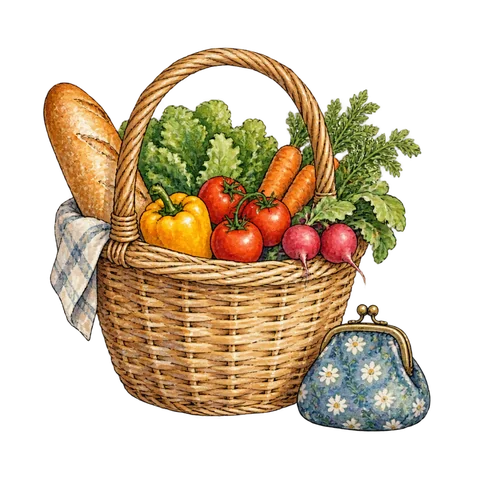
Einen Bärenhunger
To be ravenous
Literally: To have a bear’s hunger
Meaning: To feel extremely hungry.
Closest English expression: To be ravenous
Conversational exaggeration. · Standard German; usage varies by speaker and setting.
In a sentence
steppt der Bär.
That’s where the action is.
Literally: The bear tap-dances there.
Meaning: A place is lively and full of activity or partying.
Closest English expression: That’s where the action is.
Informal; humorous rather than a literal promise. · Standard German; usage varies by speaker and setting.
In a sentence
Etwas auf die hohe legen
To put money aside
Literally: To put something on the high edge
Meaning: To save money for later.
Closest English expression: To put money aside
Conversational; amount can remain unspecified. · Standard German; usage varies by speaker and setting.
In a sentence
Einen Kater haben
To have a hangover
Literally: To have a tomcat
Meaning: To have the unpleasant aftereffects of drinking alcohol.
Closest English expression: To have a hangover
Conversational; context distinguishes the animal meaning. · Standard German; usage varies by speaker and setting.
In a sentence
Alle Jubeljahre
Once in a blue moon
Literally: Every jubilee year
Meaning: Very rarely, with long gaps between occurrences.
Closest English expression: Once in a blue moon
Conversational; no exact interval is intended. · Standard German; usage varies by speaker and setting.
In a sentence
Im Handumdrehen
In no time
Literally: In a turn of the hand
Meaning: Very quickly and with little apparent effort.
Closest English expression: In no time
Neutral conversational. · Standard German; usage varies by speaker and setting.
In a sentence
Auf den letzten Drücker
At the last minute
Literally: At the final push
Meaning: At the last possible moment.
Closest English expression: At the last minute
Informal; often suggests unnecessary delay. · Standard German; usage varies by speaker and setting.
In a sentence
Wie aus dem gepellt
As neat as a pin
Literally: As if peeled out of an egg
Meaning: Neatly and impeccably dressed or presented.
Closest English expression: As neat as a pin
Conversational; polished appearance. · Standard German; usage varies by speaker and setting.
In a sentence
wie Heu haben
To have money to burn
Literally: To have money like hay
Meaning: To have a great deal of money.
Closest English expression: To have money to burn
Informal exaggeration. · Standard German; usage varies by speaker and setting.
In a sentence
Auf eigenen Beinen
To stand on your own two feet
Literally: To stand on your own legs
Meaning: To live or function independently, especially financially.
Closest English expression: To stand on your own two feet
Neutral conversational. · Standard German; usage varies by speaker and setting.
In a sentence
Explore these words: Directions & position (flashcards) · Money & banking (flashcards) · Meals & restaurants (flashcards)
Put these words into context with a story at your level.
Read German storiesGerman idioms for speaking and understanding
These phrases concern tact, attention, suspicion and the way a conversation develops. The examples supply the grammatical frame.

Die Ohren spitzen
To prick up your ears
Literally: To point your ears
Meaning: To listen attentively for information.
Closest English expression: To prick up your ears
Conversational; active attention. · Standard German; usage varies by speaker and setting.
In a sentence
aufs Herz!
Be honest!
Literally: Hand on the heart!
Meaning: An invitation to answer honestly or admit something.
Closest English expression: Be honest!
Conversational; often followed by a direct question. · Standard German; usage varies by speaker and setting.
In a sentence
See it in a story: Die Loreley, die dem Schiffer seinen wahren Namen zurückgab (B2)
Source notevon etwas bekommen
To get wind of something
Literally: To get wind of something
Meaning: To learn about something, especially something not openly announced.
Closest English expression: To get wind of something
Conversational; von plus dative. · Standard German; usage varies by speaker and setting.
In a sentence
Etwas die
To hint at something
Literally: To say something through the flower
Meaning: To communicate a criticism or message indirectly.
Closest English expression: To hint at something
Conversational; tactful or evasive depending on context. · Standard German; usage varies by speaker and setting.
In a sentence
Aus dem Nähkästchen plaudern
To share insider stories
Literally: To chat out of the sewing box
Meaning: To share private or inside information in a relaxed way.
Closest English expression: To share insider stories
Conversational; often entertaining personal detail. · Standard German; usage varies by speaker and setting.
In a sentence
Um den heißen Brei herumreden
To beat around the bush
Literally: To talk around the hot porridge
Meaning: To avoid stating the main point directly.
Closest English expression: To beat around the bush
Conversational; direct instruction can sound impatient. · Standard German; usage varies by speaker and setting.
In a sentence
Etwas an die hängen
To broadcast something
Literally: To hang something on the big bell
Meaning: To publicize something widely, often unnecessarily.
Closest English expression: To broadcast something
Conversational; often used in negation. · Standard German; usage varies by speaker and setting.
In a sentence
Die aus dem Sack lassen
To let the cat out of the bag
Literally: To let the cat out of the sack
Meaning: To reveal information that has been kept secret.
Closest English expression: To let the cat out of the bag
Conversational; deliberate revelation is common. · Standard German; usage varies by speaker and setting.
In a sentence
Jemandem einen Bären aufbinden
To pull someone’s leg
Literally: To tie a bear onto someone
Meaning: To fool someone with an invented story.
Closest English expression: To pull someone’s leg
Informal; the person fooled takes the dative. · Standard German; usage varies by speaker and setting.
In a sentence
Mit der ins
To come straight out with it
Literally: To fall into the house with the door
Meaning: To bring up a matter abruptly without an introduction.
Closest English expression: To come straight out with it
Conversational; often a preface softens a direct request. · Standard German; usage varies by speaker and setting.
In a sentence
Explore these words: Weather (flashcards) · Directions & position (flashcards) · Animals (flashcards)
Put these words into context with a story at your level.
Read German storiesGerman idioms for problems and setbacks
Use these when something goes wrong or a situation becomes hard to manage. Avoid treating humorous exaggeration as a literal description.

Da der Wurm drin.
Something just keeps going wrong.
Literally: The worm is in it.
Meaning: Something keeps going wrong in a task or process.
Closest English expression: Something just keeps going wrong.
Informal; repeated mishaps. · Standard German; usage varies by speaker and setting.
In a sentence
In den sauren
To bite the bullet
Literally: To bite into the sour apple
Meaning: To accept an unpleasant necessity.
Closest English expression: To bite the bullet
Conversational; a reluctant but necessary action. · Standard German; usage varies by speaker and setting.
In a sentence
Die Suppe auslöffeln
To face the consequences
Literally: To spoon out the soup
Meaning: To deal with the consequences of a problem, often one you helped cause.
Closest English expression: To face the consequences
Conversational; reproachful when addressed directly. · Standard German; usage varies by speaker and setting.
In a sentence
Den in den stecken
To bury your head in the sand
Literally: To stick your head in the sand
Meaning: To avoid acknowledging a problem.
Closest English expression: To bury your head in the sand
Neutral conversational. · Standard German; usage varies by speaker and setting.
In a sentence
Die Flinte ins Korn werfen
To throw in the towel
Literally: To throw the rifle into the grain
Meaning: To give up after encountering difficulty.
Closest English expression: To throw in the towel
Conversational; figurative military image. · Standard German; usage varies by speaker and setting.
In a sentence
Auf keinen Zweig kommen
To get nowhere
Literally: To reach no green branch
Meaning: To make little progress or fail to achieve stability or success.
Closest English expression: To get nowhere
Conversational; a continuing lack of progress. · Standard German; usage varies by speaker and setting.
In a sentence
Den Teufel an die malen
To paint a gloomy picture
Literally: To paint the devil on the wall
Meaning: To imagine or predict the worst outcome too readily.
Closest English expression: To paint a gloomy picture
Conversational; challenges pessimism. · Standard German; usage varies by speaker and setting.
In a sentence
Den vor lauter nicht
To not see the wood for the trees
Literally: To not see the forest because of all the trees
Meaning: To lose sight of the overall issue by focusing on details.
Closest English expression: To not see the wood for the trees
Neutral conversational. · Standard German; usage varies by speaker and setting.
In a sentence
Mit dem
To play with fire
Literally: To play with fire
Meaning: To take a risk that may have serious consequences.
Closest English expression: To play with fire
Neutral; figurative warning. · Standard German; usage varies by speaker and setting.
In a sentence
Ein vor dem haben
To have a mental block
Literally: To have a board in front of your head
Meaning: To be temporarily unable to understand something obvious.
Closest English expression: To have a mental block
Informal; self-description is gentler than accusing someone else. · Standard German; usage varies by speaker and setting.
In a sentence
Explore these words: Nature & landscape (flashcards) · Time & dates (flashcards) · Body parts (flashcards)
Put these words into context with a story at your level.
Read German stories10 traditional German proverbs and sayings
A proverb normally makes a complete observation, whereas an idiom often fits inside a sentence. These sayings express perspectives, not rules that are always true.

Aller ist .
Getting started is hard.
Literally: Every beginning is difficult.
Meaning: Starting an unfamiliar activity is often the hardest part.
Closest English expression: Getting started is hard.
Traditional reassurance to a beginner. · Standard German; usage varies by speaker and setting.
In a sentence
Übung macht den Meister.
Practice makes perfect.
Literally: Practice makes the master.
Meaning: Skill develops through repeated practice.
Closest English expression: Practice makes perfect.
Traditional encouragement; not a promise of instant mastery. · Standard German; usage varies by speaker and setting.
In a sentence
Ohne Fleiß kein Preis.
No gain without effort.
Literally: Without diligence, no prize.
Meaning: Worthwhile results generally require effort.
Closest English expression: No gain without effort.
Traditional proverb; Fleiß is diligence. · Standard German; usage varies by speaker and setting.
In a sentence
Ende gut, alles gut.
All’s well that ends well.
Literally: End good, all good.
Meaning: A satisfactory ending can put earlier problems in perspective.
Closest English expression: All’s well that ends well.
Traditional; can be lighthearted. · Standard German; usage varies by speaker and setting.
In a sentence
Wer wagt, gewinnt.
Nothing ventured, nothing gained.
Literally: Whoever dares wins.
Meaning: Taking a considered risk can make success possible.
Closest English expression: Nothing ventured, nothing gained.
Traditional encouragement; outcomes are not guaranteed. · Standard German; usage varies by speaker and setting.
In a sentence
Wo ein Wille ist, da ist auch ein .
Where there’s a will, there’s a way.
Literally: Where there is a will, there is also a way.
Meaning: Determination can help find a solution.
Closest English expression: Where there’s a will, there’s a way.
Traditional encouragement, not a denial of real constraints. · Standard German; usage varies by speaker and setting.
In a sentence
Es nicht alles , was glänzt.
All that glitters is not gold.
Literally: Not everything that shines is gold.
Meaning: An attractive appearance may hide a lack of real value.
Closest English expression: All that glitters is not gold.
Traditional caution about appearances. · Standard German; usage varies by speaker and setting.
In a sentence
Lügen haben kurze Beine.
Lies don’t get you far.
Literally: Lies have short legs.
Meaning: Dishonesty tends to be discovered and cannot carry you far.
Closest English expression: Lies don’t get you far.
Traditional moral saying; often addressed to children. · Standard German; usage varies by speaker and setting.
In a sentence
Reden ist , ist .
Silence is golden.
Literally: Speech is silver, silence is gold.
Meaning: Sometimes restraint is wiser than speaking impulsively.
Closest English expression: Silence is golden.
Traditional; use according to context, not as a universal rule. · Standard German; usage varies by speaker and setting.
In a sentence
Morgenstund hat im .
The early bird catches the worm.
Literally: The morning hour has gold in its mouth.
Meaning: An early start can offer useful time and opportunities.
Closest English expression: The early bird catches the worm.
Traditional; Morgenstund is the fixed shortened form. · Standard German; usage varies by speaker and setting.
In a sentence
Explore these words: Shapes, sizes & materials (flashcards) · Time & dates (flashcards) · Numbers (flashcards)
Put these words into context with a story at your level.
Read German storiesGerman idioms: frequently asked questions
What are German idioms?
Idioms are established expressions whose intended meaning is not simply the sum of their words. Learn the whole phrase with its grammatical frame and a situation where it fits.
Which German idioms should beginners learn first?
Start with the essential 20. Choose three that describe your own routine, read the examples aloud, then reuse the same sentence pattern with details from your life.
What is the difference between an idiom and a proverb?
An idiom usually fills a role within a sentence. A proverb is usually a complete saying that offers a general observation or advice. The last section separates proverbs from the 80 idioms.
Can I translate an English idiom word for word?
Usually that loses the meaning. Compare the literal image with the natural English equivalent, then learn the target-language expression on its own terms.
Are these expressions formal or informal?
Many belong to conversation, while some also fit neutral writing. Each entry gives a register note; teasing or critical expressions need more care than neutral descriptions.
Do all speakers use every expression?
No. Recognition, frequency and personal preference differ across regions, generations and situations. This is a learning selection, not a measured frequency ranking.
Should I change the words in an idiom?
Conjugate verbs and adjust pronouns as the sentence requires, but keep the fixed image intact. The example shows one natural use; changing a key noun can destroy the idiom.
How can I remember idioms?
Picture the literal scene, connect it to the figurative meaning, and recall one example. Review a few at a time and notice them in stories or conversation rather than forcing many into one exchange.
Is “Dummkopf” an insult?
Yes. It calls someone a fool or stupid person and can offend them. It is not a neutral everyday greeting. Humorous expressions also depend on trust and tone, so pay attention to the register notes before using an idiom about another person.
Make these words part of your day
Explore German stories, listen along, and save vocabulary as you go.
Find a story at your levelSources and verification
English translations and examples were written for this guide. Source notes distinguish documented expressions, original practice sentences, and literary quotations. Literary excerpts retain the language of their original period.
- Deutale — 100 Common German Idioms — Contemporary attestation. Duplicates, transparent sentences and questionable entries in the source are excluded; our selection is not a frequency ranking.
- Deutschwunder — German idioms and expressions — Contemporary corroboration of familiar expressions; explanations and examples here are independently written.
- German Cheat Sheet — Idioms — Supplementary attestation, not an authority for origins. Erroneous forms such as Das Kind beim Schopfe packen and other unsuitable entries are excluded.
- M. B. Lambert — Handbook of German Idioms (1910) — Public-domain reference for explicitly linked established expressions. Historical spellings are modernized; dated expressions are not selected solely because they appear here.
- José Antonio Calañas Continente — Los refranes en la enseñanza del alemán como lengua extranjera, Paremia 8 (1999), p. 75 — Scholarly discussion with a documented list of German proverbs. Our translations and examples are original; the underlying traditional sayings are not new author-created quotations.
Source notes for all 90 entries
- Nur Bahnhof verstehen: Expression and sense attested in the linked reference. Literal translation, explanation and example sentence written by Inklingo; no claim of a single inventor or precise origin. [deutale] [wunder] [sheet]
- Schwein haben: Expression and sense attested in the linked reference. Literal translation, explanation and example sentence written by Inklingo; no claim of a single inventor or precise origin. [deutale] [wunder] [sheet]
- Jemandem die Daumen drücken: Expression and sense attested in the linked reference. Literal translation, explanation and example sentence written by Inklingo; no claim of a single inventor or precise origin. [deutale] [wunder] [sheet]
- Die Nase voll haben: Expression and sense attested in the linked reference. Literal translation, explanation and example sentence written by Inklingo; no claim of a single inventor or precise origin. [deutale] [wunder] [sheet]
- Tomaten auf den Augen haben: Expression and sense attested in the linked reference. Literal translation, explanation and example sentence written by Inklingo; no claim of a single inventor or precise origin. [deutale] [wunder] [sheet]
- Aus einer Mücke einen Elefanten machen: Expression and sense attested in the linked reference. Literal translation, explanation and example sentence written by Inklingo; no claim of a single inventor or precise origin. [deutale] [sheet]
- Den Nagel auf den Kopf treffen: Expression and sense attested in the linked reference. Literal translation, explanation and example sentence written by Inklingo; no claim of a single inventor or precise origin. [deutale] [wunder] [sheet]
- Alles in Butter: Expression and sense attested in the linked reference. Literal translation, explanation and example sentence written by Inklingo; no claim of a single inventor or precise origin. [deutale] [sheet]
- Das ist mir Wurst.: Expression and sense attested in the linked reference. Literal translation, explanation and example sentence written by Inklingo; no claim of a single inventor or precise origin. [deutale] [wunder] [sheet]
- Das ist nicht mein Bier.: Expression and sense attested in the linked reference. Literal translation, explanation and example sentence written by Inklingo; no claim of a single inventor or precise origin. [deutale] [wunder]
- Ein Katzensprung: Expression and sense attested in the linked reference. Literal translation, explanation and example sentence written by Inklingo; no claim of a single inventor or precise origin. [deutale]
- Die Katze im Sack kaufen: Expression and sense attested in the linked reference. Literal translation, explanation and example sentence written by Inklingo; no claim of a single inventor or precise origin. [deutale] [wunder] [sheet]
- Jemandem fällt ein Stein vom Herzen.: Expression and sense attested in the linked reference. Literal translation, explanation and example sentence written by Inklingo; no claim of a single inventor or precise origin. [deutale]
- Jemandem unter die Arme greifen: Expression and sense attested in the linked reference. Literal translation, explanation and example sentence written by Inklingo; no claim of a single inventor or precise origin. [deutale] [sheet] [lambert]
- Etwas auf die lange Bank schieben: Expression and sense attested in the linked reference. Literal translation, explanation and example sentence written by Inklingo; no claim of a single inventor or precise origin. [deutale] [wunder] [sheet] [lambert]
- Den Faden verlieren: Expression and sense attested in the linked reference. Literal translation, explanation and example sentence written by Inklingo; no claim of a single inventor or precise origin. [wunder] [sheet]
- Ins Fettnäpfchen treten: Expression and sense attested in the linked reference. Literal translation, explanation and example sentence written by Inklingo; no claim of a single inventor or precise origin. [sheet]
- Den Gürtel enger schnallen: Expression and sense attested in the linked reference. Literal translation, explanation and example sentence written by Inklingo; no claim of a single inventor or precise origin. [sheet]
- Alles unter einen Hut bringen: Expression and sense attested in the linked reference. Literal translation, explanation and example sentence written by Inklingo; no claim of a single inventor or precise origin. [deutale]
- Auf Nummer sicher gehen: Expression and sense attested in the linked reference. Literal translation, explanation and example sentence written by Inklingo; no claim of a single inventor or precise origin. [sheet]
- Auf Wolke sieben sein: Expression and sense attested in the linked reference. Literal translation, explanation and example sentence written by Inklingo; no claim of a single inventor or precise origin. [deutale] [sheet]
- Jemanden auf die Palme bringen: Expression and sense attested in the linked reference. Literal translation, explanation and example sentence written by Inklingo; no claim of a single inventor or precise origin. [deutale] [sheet]
- Jemandem fällt die Decke auf den Kopf.: Expression and sense attested in the linked reference. Literal translation, explanation and example sentence written by Inklingo; no claim of a single inventor or precise origin. [deutale]
- Kein Auge zutun: Expression and sense attested in the linked reference. Literal translation, explanation and example sentence written by Inklingo; no claim of a single inventor or precise origin. [deutale]
- Aus dem Häuschen sein: Expression and sense attested in the linked reference. Literal translation, explanation and example sentence written by Inklingo; no claim of a single inventor or precise origin. [deutale] [sheet]
- Den Kopf verlieren: Expression and sense attested in the linked reference. Literal translation, explanation and example sentence written by Inklingo; no claim of a single inventor or precise origin. [deutale]
- Mit dem linken Fuß aufstehen: Expression and sense attested in the linked reference. Literal translation, explanation and example sentence written by Inklingo; no claim of a single inventor or precise origin. [deutale] [sheet]
- Kalte Füße bekommen: Expression and sense attested in the linked reference. Literal translation, explanation and example sentence written by Inklingo; no claim of a single inventor or precise origin. [sheet]
- Feuer und Flamme sein: Expression and sense attested in the linked reference. Literal translation, explanation and example sentence written by Inklingo; no claim of a single inventor or precise origin. [sheet]
- Die Fassung verlieren: Expression and sense attested in the linked reference. Literal translation, explanation and example sentence written by Inklingo; no claim of a single inventor or precise origin. [deutale]
- Auf einer Wellenlänge sein: Expression and sense attested in the linked reference. Literal translation, explanation and example sentence written by Inklingo; no claim of a single inventor or precise origin. [deutale]
- Die Chemie stimmt.: Expression and sense attested in the linked reference. Literal translation, explanation and example sentence written by Inklingo; no claim of a single inventor or precise origin. [deutale]
- Jemanden hängen lassen: Expression and sense attested in the linked reference. Literal translation, explanation and example sentence written by Inklingo; no claim of a single inventor or precise origin. [deutale]
- Mit offenen Karten spielen: Expression and sense attested in the linked reference. Literal translation, explanation and example sentence written by Inklingo; no claim of a single inventor or precise origin. [deutale]
- Unter die Haube kommen: Expression and sense attested in the linked reference. Literal translation, explanation and example sentence written by Inklingo; no claim of a single inventor or precise origin. [sheet] [lambert]
- Jemandem einen Korb geben: Expression and sense attested in the linked reference. Literal translation, explanation and example sentence written by Inklingo; no claim of a single inventor or precise origin. [sheet] [lambert]
- Mit allen Wassern gewaschen sein: Expression and sense attested in the linked reference. Literal translation, explanation and example sentence written by Inklingo; no claim of a single inventor or precise origin. [sheet]
- Das Herz auf dem rechten Fleck haben: Expression and sense attested in the linked reference. Literal translation, explanation and example sentence written by Inklingo; no claim of a single inventor or precise origin. [lambert]
- Jemandem Honig ums Maul schmieren: Expression and sense attested in the linked reference. Literal translation, explanation and example sentence written by Inklingo; no claim of a single inventor or precise origin. [deutale] [sheet]
- Den Bock zum Gärtner machen: Expression and sense attested in the linked reference. Literal translation, explanation and example sentence written by Inklingo; no claim of a single inventor or precise origin. [sheet]
- Etwas mit links machen: Expression and sense attested in the linked reference. Literal translation, explanation and example sentence written by Inklingo; no claim of a single inventor or precise origin. [deutale]
- Viel um die Ohren haben: Expression and sense attested in the linked reference. Literal translation, explanation and example sentence written by Inklingo; no claim of a single inventor or precise origin. [deutale]
- Ins kalte Wasser springen: Expression and sense attested in the linked reference. Literal translation, explanation and example sentence written by Inklingo; no claim of a single inventor or precise origin. [deutale] [sheet]
- Auf Herz und Nieren prüfen: Expression and sense attested in the linked reference. Literal translation, explanation and example sentence written by Inklingo; no claim of a single inventor or precise origin. [sheet]
- Über den Tellerrand schauen: Expression and sense attested in the linked reference. Literal translation, explanation and example sentence written by Inklingo; no claim of a single inventor or precise origin. [sheet]
- Einen Stein ins Rollen bringen: Expression and sense attested in the linked reference. Literal translation, explanation and example sentence written by Inklingo; no claim of a single inventor or precise origin. [sheet]
- Etwas in die Wege leiten: Expression and sense attested in the linked reference. Literal translation, explanation and example sentence written by Inklingo; no claim of a single inventor or precise origin. [sheet]
- Die Nase vorn haben: Expression and sense attested in the linked reference. Literal translation, explanation and example sentence written by Inklingo; no claim of a single inventor or precise origin. [sheet]
- In die Bresche springen: Expression and sense attested in the linked reference. Literal translation, explanation and example sentence written by Inklingo; no claim of a single inventor or precise origin. [sheet]
- In trockenen Tüchern sein: Expression and sense attested in the linked reference. Literal translation, explanation and example sentence written by Inklingo; no claim of a single inventor or precise origin. [deutale] [sheet]
- Einen Bärenhunger haben: Expression and sense attested in the linked reference. Literal translation, explanation and example sentence written by Inklingo; no claim of a single inventor or precise origin. [deutale]
- Da steppt der Bär.: Expression and sense attested in the linked reference. Literal translation, explanation and example sentence written by Inklingo; no claim of a single inventor or precise origin. [deutale] [sheet]
- Etwas auf die hohe Kante legen: Expression and sense attested in the linked reference. Literal translation, explanation and example sentence written by Inklingo; no claim of a single inventor or precise origin. [sheet]
- Einen Kater haben: Expression and sense attested in the linked reference. Literal translation, explanation and example sentence written by Inklingo; no claim of a single inventor or precise origin. [sheet]
- Alle Jubeljahre: Expression and sense attested in the linked reference. Literal translation, explanation and example sentence written by Inklingo; no claim of a single inventor or precise origin. [sheet]
- Im Handumdrehen: Expression and sense attested in the linked reference. Literal translation, explanation and example sentence written by Inklingo; no claim of a single inventor or precise origin. [deutale]
- Auf den letzten Drücker: Expression and sense attested in the linked reference. Literal translation, explanation and example sentence written by Inklingo; no claim of a single inventor or precise origin. [deutale]
- Wie aus dem Ei gepellt: Expression and sense attested in the linked reference. Literal translation, explanation and example sentence written by Inklingo; no claim of a single inventor or precise origin. [sheet]
- Geld wie Heu haben: Expression and sense attested in the linked reference. Literal translation, explanation and example sentence written by Inklingo; no claim of a single inventor or precise origin. [lambert]
- Auf eigenen Beinen stehen: Expression and sense attested in the linked reference. Literal translation, explanation and example sentence written by Inklingo; no claim of a single inventor or precise origin. [deutale]
- Die Ohren spitzen: Expression and sense attested in the linked reference. Literal translation, explanation and example sentence written by Inklingo; no claim of a single inventor or precise origin. [deutale] [sheet]
- Hand aufs Herz!: Expression and sense attested in the linked reference. Literal translation, explanation and example sentence written by Inklingo; no claim of a single inventor or precise origin. [deutale]
- Wind von etwas bekommen: Expression and sense attested in the linked reference. Literal translation, explanation and example sentence written by Inklingo; no claim of a single inventor or precise origin. [deutale]
- Etwas durch die Blume sagen: Expression and sense attested in the linked reference. Literal translation, explanation and example sentence written by Inklingo; no claim of a single inventor or precise origin. [sheet]
- Aus dem Nähkästchen plaudern: Expression and sense attested in the linked reference. Literal translation, explanation and example sentence written by Inklingo; no claim of a single inventor or precise origin. [sheet]
- Um den heißen Brei herumreden: Expression and sense attested in the linked reference. Literal translation, explanation and example sentence written by Inklingo; no claim of a single inventor or precise origin. [sheet]
- Etwas an die große Glocke hängen: Expression and sense attested in the linked reference. Literal translation, explanation and example sentence written by Inklingo; no claim of a single inventor or precise origin. [sheet]
- Die Katze aus dem Sack lassen: Expression and sense attested in the linked reference. Literal translation, explanation and example sentence written by Inklingo; no claim of a single inventor or precise origin. [sheet]
- Jemandem einen Bären aufbinden: Expression and sense attested in the linked reference. Literal translation, explanation and example sentence written by Inklingo; no claim of a single inventor or precise origin. [sheet]
- Mit der Tür ins Haus fallen: Expression and sense attested in the linked reference. Literal translation, explanation and example sentence written by Inklingo; no claim of a single inventor or precise origin. [sheet]
- Da ist der Wurm drin.: Expression and sense attested in the linked reference. Literal translation, explanation and example sentence written by Inklingo; no claim of a single inventor or precise origin. [deutale]
- In den sauren Apfel beißen: Expression and sense attested in the linked reference. Literal translation, explanation and example sentence written by Inklingo; no claim of a single inventor or precise origin. [deutale]
- Die Suppe auslöffeln: Expression and sense attested in the linked reference. Literal translation, explanation and example sentence written by Inklingo; no claim of a single inventor or precise origin. [deutale]
- Den Kopf in den Sand stecken: Expression and sense attested in the linked reference. Literal translation, explanation and example sentence written by Inklingo; no claim of a single inventor or precise origin. [sheet]
- Die Flinte ins Korn werfen: Expression and sense attested in the linked reference. Literal translation, explanation and example sentence written by Inklingo; no claim of a single inventor or precise origin. [sheet]
- Auf keinen grünen Zweig kommen: Expression and sense attested in the linked reference. Literal translation, explanation and example sentence written by Inklingo; no claim of a single inventor or precise origin. [sheet] [lambert]
- Den Teufel an die Wand malen: Expression and sense attested in the linked reference. Literal translation, explanation and example sentence written by Inklingo; no claim of a single inventor or precise origin. [sheet]
- Den Wald vor lauter Bäumen nicht sehen: Expression and sense attested in the linked reference. Literal translation, explanation and example sentence written by Inklingo; no claim of a single inventor or precise origin. [sheet]
- Mit dem Feuer spielen: Expression and sense attested in the linked reference. Literal translation, explanation and example sentence written by Inklingo; no claim of a single inventor or precise origin. [sheet]
- Ein Brett vor dem Kopf haben: Expression and sense attested in the linked reference. Literal translation, explanation and example sentence written by Inklingo; no claim of a single inventor or precise origin. [lambert] [sheet]
- Aller Anfang ist schwer.: Expression and sense attested in the linked reference. Literal translation, explanation and example sentence written by Inklingo; no claim of a single inventor or precise origin. [calanas]
- Übung macht den Meister.: Expression and sense attested in the linked reference. Literal translation, explanation and example sentence written by Inklingo; no claim of a single inventor or precise origin. [calanas]
- Ohne Fleiß kein Preis.: Expression and sense attested in the linked reference. Literal translation, explanation and example sentence written by Inklingo; no claim of a single inventor or precise origin. [calanas]
- Ende gut, alles gut.: Expression and sense attested in the linked reference. Literal translation, explanation and example sentence written by Inklingo; no claim of a single inventor or precise origin. [calanas]
- Wer wagt, gewinnt.: Expression and sense attested in the linked reference. Literal translation, explanation and example sentence written by Inklingo; no claim of a single inventor or precise origin. [calanas]
- Wo ein Wille ist, da ist auch ein Weg.: Expression and sense attested in the linked reference. Literal translation, explanation and example sentence written by Inklingo; no claim of a single inventor or precise origin. [calanas]
- Es ist nicht alles Gold, was glänzt.: Expression and sense attested in the linked reference. Literal translation, explanation and example sentence written by Inklingo; no claim of a single inventor or precise origin. [calanas]
- Lügen haben kurze Beine.: Expression and sense attested in the linked reference. Literal translation, explanation and example sentence written by Inklingo; no claim of a single inventor or precise origin. [calanas]
- Reden ist Silber, Schweigen ist Gold.: Expression and sense attested in the linked reference. Literal translation, explanation and example sentence written by Inklingo; no claim of a single inventor or precise origin. [calanas]
- Morgenstund hat Gold im Mund.: Expression and sense attested in the linked reference. Literal translation, explanation and example sentence written by Inklingo; no claim of a single inventor or precise origin. [calanas]