
THE INKLINGO LANGUAGE GUIDES
German Riddles with Answers and Wordplay
Solve nineteen attested German riddles from Johann Peter Hebel’s historical collection. Each has an English translation, a clue and its checked printed answer. Start with everyday objects, then try the wordplay. The original spelling is retained, with old meanings explained after the reveal.
Start here
- Mein Körper ist von Holz, sehr leicht zu brechen, Mein Herz kann ohne Stimme mit euch sprechen.My body is wood, very easy to break; My heart can speak to you without a voice.
- Ein rothes Vorlegschloß hängt mir am Mund, Sonst thät ich euch was Neues kund.A red padlock hangs at my mouth; Otherwise I would tell you something new.
- Ich hab’ ein Ding im Sinn, Wohl lieben es die Mädchen traut, Es liegt um ihre zarte Haut, Doch stecken Nägel drin.I have a thing in mind; Young women dearly love it, It lies around their tender skin, Yet there are nails inside.
- Dem Knaben bin ich oft zum Spielen gut, Dem Zornigen dien ich zur Kühlung seiner Wuth, Den Angegriff’nen kann ich schützen, Den müden Greisen unterstützen.I am often good for a boy to play with; I help the angry person vent his rage; I can protect someone being attacked, And support a tired old man.
- Durch Hitze, nicht durch Frost vom Norden, Bin ich aus Wasser Schnee geworden.Through heat, not through frost from the north, I have turned from water into snow.
- Wer kann mir meinen Namen sagen, Bald bin ich blau, bald roth, bald grün. Wem ich zu Theil geworden bin, Der darf mich in dem Knopfloch tragen. Ich ziere fürstliches Gewand, Doch trägt mich auch der Bauer auf dem Land.Who can tell me my name? Now I am blue, now red, now green. Whoever has been given me May wear me in a buttonhole. I adorn a prince’s clothing, But the farmer in the country wears me too.
- Arabien ist mein Vaterland, In Deutschland werd ich braun gebrannt, In einer Mühle klein gemahlen, Dann fühl’ ich heiße Wassers-Qualen, Zuletzt gießt man noch Milch mir zu, Trinkt mich, und raucht Tabak dazu.Arabia is my homeland; In Germany I am roasted brown, Ground small in a mill; Then I feel the torment of hot water; Finally milk is poured into me, I am drunk, with tobacco smoked alongside.
- Meine Mutter ist ein dummes Thier, Aber große Weisheit fließt aus mir.My mother is a foolish animal, But great wisdom flows from me.
- Ich helfe Kisten laden, Doch mach ich auch Charaden.I help load crates, Yet I also make charades.
- Wer hoch will steh’n, wie ich, Nimmt oft zum Muster mich; Es gehe wie es will, Ich bin zu Allem still, Am hellen Tage blind, Und dreh mich nach dem Wind.Whoever wishes to stand high, like me, Often takes me as a model; Whatever may happen, I remain silent about everything, Blind in broad daylight, And turn with the wind.
Short German Riddles for Beginners
These short riddles describe an object without naming it. Start with the two-line pencil or letter puzzle.

Mein ist von , sehr zu brechen, Mein Herz kann ohne mit euch sprechen.
My body is wood, very easy to break; My heart can speak to you without a voice.
Easy
— Johann Peter Hebel (1760–1826),
Source noteEin rothes Vorlegschloß hängt mir am , Sonst thät ich euch was Neues kund.
A red padlock hangs at my mouth; Otherwise I would tell you something new.
Easy
— Johann Peter Hebel (1760–1826),
Source noteIch hab’ ein Ding im Sinn, Wohl lieben es die Mädchen traut, Es um ihre zarte , Doch stecken Nägel .
I have a thing in mind; Young women dearly love it, It lies around their tender skin, Yet there are nails inside.
Easy
— Johann Peter Hebel (1760–1826),
Source noteDem Knaben bin ich zum gut, Dem Zornigen dien ich zur Kühlung seiner Wuth, Den Angegriff’nen kann ich , Den müden Greisen unterstützen.
I am often good for a boy to play with; I help the angry person vent his rage; I can protect someone being attacked, And support a tired old man.
Easy
— Johann Peter Hebel (1760–1826),
Source note, nicht Frost vom Norden, Bin ich aus geworden.
Through heat, not through frost from the north, I have turned from water into snow.
Easy
— Johann Peter Hebel (1760–1826),
Source note’ ich von Todten, Und geh’ ich, wie Boten.
I always stand surrounded by the dead, And I always go, like other messengers.
Intermediate
— Johann Peter Hebel (1760–1826),
Source noteExplore these words: Directions & position (flashcards) · Time & dates (flashcards) · Body parts (flashcards)
Put these words into context with a story at your level.
Read German storiesGerman Riddles About Everyday Objects
Tools and food become people with bodies and habits. Look for the practical object behind the picture.
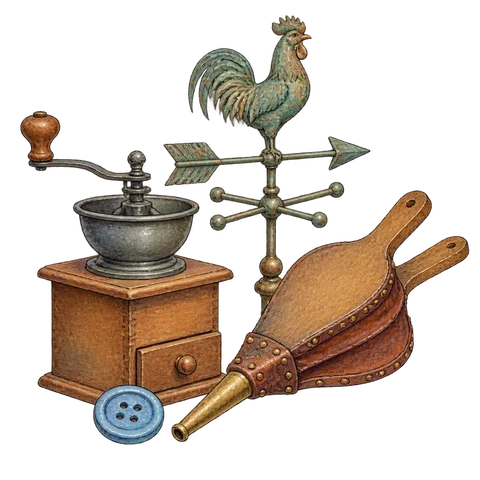
Wer kann mir meinen sagen, Bald bin ich blau, bald roth, bald grün. Wem ich zu Theil geworden bin, Der darf mich in dem Knopfloch tragen. Ich ziere fürstliches Gewand, Doch trägt mich auch der auf dem .
Who can tell me my name? Now I am blue, now red, now green. Whoever has been given me May wear me in a buttonhole. I adorn a prince’s clothing, But the farmer in the country wears me too.
Easy
— Johann Peter Hebel (1760–1826),
Source noteArabien ist mein Vaterland, In Deutschland werd ich braun gebrannt, In einer Mühle klein gemahlen, Dann fühl’ ich heiße Wassers-Qualen, Zuletzt gießt man noch mir zu, Trinkt mich, und raucht Tabak dazu.
Arabia is my homeland; In Germany I am roasted brown, Ground small in a mill; Then I feel the torment of hot water; Finally milk is poured into me, I am drunk, with tobacco smoked alongside.
Intermediate
— Johann Peter Hebel (1760–1826),
Source noteMein ist ; Lang ist mein Bein; Mein Fuß ist spitzig, Macht Manchen witzig; Der Mägdlein Ist meine Lust; Der Mich missen kann.
My head is small; My leg is long; My foot is pointed, And makes many a person clever; A young woman’s chest Is my delight; The serious man Can do without me.
Intermediate
— Johann Peter Hebel (1760–1826),
Source noteWer hoch will ’n, wie ich, Nimmt zum Muster mich; Es gehe wie es will, Ich zu Allem still, Am hellen Tage , Und dreh mich nach dem .
Whoever wishes to stand high, like me, Often takes me as a model; Whatever may happen, I remain silent about everything, Blind in broad daylight, And turn with the wind.
Intermediate
— Johann Peter Hebel (1760–1826),
Source noteLeer bin ich so schwer, als ob ich wär. bin ich so schwer, als wenn ich leer wär.
Empty, I am as heavy as if I were full. Full, I am as heavy as if I were empty.
Intermediate
— Johann Peter Hebel (1760–1826),
Source noteKein Kluger hält mich für gering, Ich bin ein unverträglich Ding; Drum bringt mich nicht in eure Taschen, Wollt ihr noch etwas drin erhaschen; Sonst freß ich’s weg, und werde doch nicht satt, Ich fresse immer mehr, je länger man mich hat.
No clever person considers me unimportant; I am an incompatible thing; So do not put me in your pockets If you still want to find something there; Otherwise I eat it away, yet never grow full, I eat more and more the longer one has me.
Intermediate
— Johann Peter Hebel (1760–1826),
Source noteExplore these words: Drinks (flashcards) · Body parts (flashcards) · Jobs & work (flashcards)
Put these words into context with a story at your level.
Read German storiesGerman Wordplay Riddles With Explanations
Some solutions depend on a German word having two meanings. An English translation alone cannot reveal every clue.
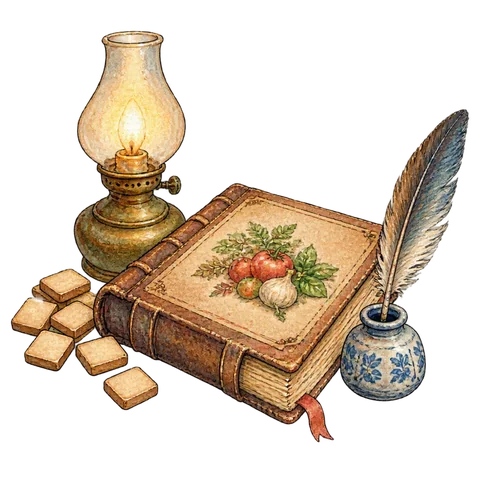
Wer frevelnd die bricht, Dem droht ein strafendes ; Wer kann nun ein Gesetzbuch nennen, Das mit Gerichten lohnt, die sich zu ihm bekennen? Kluge Frauen schreibens, Brave treibens.
Whoever wickedly breaks the laws Faces a punishing court; Who can name a book of laws That rewards its followers with dishes? Clever women write it, Good girls practice it.
Hard
— Johann Peter Hebel (1760–1826),
Source noteDen Reichen das Thierlein den Koth; Das Pflänzlein ißt der Arme auf dem Brod.
The little animal carries the rich man through the mud; The little plant is eaten by the poor man on bread.
Hard
— Johann Peter Hebel (1760–1826),
Source noteMeine ist ein dummes Thier, Aber Weisheit fließt aus mir.
My mother is a foolish animal, But great wisdom flows from me.
Intermediate
— Johann Peter Hebel (1760–1826),
Source noteNehmt immer mir den Kopf und setzt ihn an den Schwanz, Ich bleib, wie der Polyp, dasselbe Ding und ganz. Ihr kennt mich wohl; in stiller Nacht Wenn nur der treue Wächter wacht, Umstrahlt mich milder .
Take my head and put it at my tail; Like a polyp, I remain the same thing, whole. You know me well; in the quiet night, When only the faithful watchman is awake, A gentle radiance shines around me.
Hard
— Johann Peter Hebel (1760–1826),
Source noteIch helfe Kisten , Doch mach ich auch Charaden.
I help load crates, Yet I also make charades.
Intermediate
— Johann Peter Hebel (1760–1826),
Source noteDeine Weisheit du auf Papier, Was daran zu viel ist, schenkst du mir, Dennoch ’ ich, bist du mir gehässig, Denn du tränkest mich mit schwarzem Essig.
You carry your wisdom on paper; What is too much on it, you give to me; Yet I say you bear me a grudge, For you soak me in black vinegar.
Hard
— Johann Peter Hebel (1760–1826),
Source noteHerr Cajus bläst mich , Herr Titus bläst mich leer, Dem schaff ich süßen , dem süße Düfte her.
Mr. Caius blows me full, Mr. Titus blows me empty; For one I provide a sweet sound, for the other sweet scents.
Intermediate
— Johann Peter Hebel (1760–1826),
Source noteExplore these words: Crime & law (flashcards) · Age & life stages (flashcards) · Directions & position (flashcards)
Put these words into context with a story at your level.
Read German storiesGerman riddles: frequently asked questions
What is the German word for riddle?
Das Rätsel is the standard word; its plural is also Rätsel. A Scherzfrage is a joke or trick question, while a Charade often asks you to combine parts of a word.
Which German riddles are good for beginners?
The pencil, sealed letter and glove riddles are short and use concrete objects. The hints give you a direction without immediately naming the solution.
Are the answers to these German riddles verified?
Yes. The questions and the separate printed answer key were checked in volume 2 of Johann Peter Hebel’s collected works, published in 1834. Entry notes give the original numbers.
Why do these riddles use old German spelling?
The historical text is preserved. Spellings such as roth, Thier, Todten and Brod correspond to modern rot, Tier, Toten and Brot. Several puzzles also refer to objects once common, such as sealing wax and writing sand.
Do German riddles translate directly into English?
Some visual riddles do, but a puzzle based on Gericht, Feder or Hebel needs its German double meaning. The explanations identify that wordplay rather than pretending that the English text works in exactly the same way.
How can I use riddles to learn German vocabulary?
Try to identify the object from the German first. Use the hint if necessary, then compare the answer and its explanation. Say a new sentence with the answer word so you practice its ordinary meaning as well as the puzzle.
Make these words part of your day
Explore German stories, listen along, and save vocabulary as you go.
Find a story at your levelSources and verification
English translations and examples were written for this guide. Source notes distinguish documented expressions, original practice sentences, and literary quotations. Literary excerpts retain the language of their original period.
- Johann Peter Hebel, Räthsel, Charaden und Logogriphen (1834) — Sämmtliche Werke, volume 2, pp. 207–257; original spelling preserved, page and printed line numbers removed.
- Hebel, printed solutions (1834) — Printed answer key, pp. 258–262, checked against the number of each selected riddle.
Source notes for all 19 entries
- Mein Körper ist von Holz, sehr leicht zu brechen, Mein Herz kann ohne Stimme mit euch sprechen.: Hebel, Sämmtliche Werke, volume 2 (1834), riddle 13 and matching printed solution; historical spelling retained, line and page numbers omitted. [hebel-riddles] [hebel-answers]
- Ein rothes Vorlegschloß hängt mir am Mund, Sonst thät ich euch was Neues kund.: Hebel, Sämmtliche Werke, volume 2 (1834), riddle 4 and matching printed solution; historical spelling retained, line and page numbers omitted. [hebel-riddles] [hebel-answers]
- Ich hab’ ein Ding im Sinn, Wohl lieben es die Mädchen traut, Es liegt um ihre zarte Haut, Doch stecken Nägel drin.: Hebel, Sämmtliche Werke, volume 2 (1834), riddle 84 and matching printed solution; historical spelling retained, line and page numbers omitted. [hebel-riddles] [hebel-answers]
- Dem Knaben bin ich oft zum Spielen gut, Dem Zornigen dien ich zur Kühlung seiner Wuth, Den Angegriff’nen kann ich schützen, Den müden Greisen unterstützen.: Hebel, Sämmtliche Werke, volume 2 (1834), riddle 103 and matching printed solution; historical spelling retained, line and page numbers omitted. [hebel-riddles] [hebel-answers]
- Durch Hitze, nicht durch Frost vom Norden, Bin ich aus Wasser Schnee geworden.: Hebel, Sämmtliche Werke, volume 2 (1834), riddle 101 and matching printed solution; historical spelling retained, line and page numbers omitted. [hebel-riddles] [hebel-answers]
- Immer steh’ ich umgeben von Todten, Und immer geh’ ich, wie andere Boten.: Hebel, Sämmtliche Werke, volume 2 (1834), riddle 82 and matching printed solution; historical spelling retained, line and page numbers omitted. [hebel-riddles] [hebel-answers]
- Arabien ist mein Vaterland, In Deutschland werd ich braun gebrannt, In einer Mühle klein gemahlen, Dann fühl’ ich heiße Wassers-Qualen, Zuletzt gießt man noch Milch mir zu, Trinkt mich, und raucht Tabak dazu.: Hebel, Sämmtliche Werke, volume 2 (1834), riddle 41 and matching printed solution; historical spelling retained, line and page numbers omitted. [hebel-riddles] [hebel-answers]
- Mein Kopf ist klein; Lang ist mein Bein; Mein Fuß ist spitzig, Macht Manchen witzig; Der Mägdlein Brust Ist meine Lust; Der ernste Mann Mich missen kann.: Hebel, Sämmtliche Werke, volume 2 (1834), riddle 51 and matching printed solution; historical spelling retained, line and page numbers omitted. [hebel-riddles] [hebel-answers]
- Wer hoch will steh’n, wie ich, Nimmt oft zum Muster mich; Es gehe wie es will, Ich bin zu Allem still, Am hellen Tage blind, Und dreh mich nach dem Wind.: Hebel, Sämmtliche Werke, volume 2 (1834), riddle 52 and matching printed solution; historical spelling retained, line and page numbers omitted. [hebel-riddles] [hebel-answers]
- Leer bin ich so schwer, als ob ich voll wär. Voll bin ich so schwer, als wenn ich leer wär.: Hebel, Sämmtliche Werke, volume 2 (1834), riddle 109 and matching printed solution; historical spelling retained, line and page numbers omitted. [hebel-riddles] [hebel-answers]
- Kein Kluger hält mich für gering, Ich bin ein unverträglich Ding; Drum bringt mich nicht in eure Taschen, Wollt ihr noch etwas drin erhaschen; Sonst freß ich’s weg, und werde doch nicht satt, Ich fresse immer mehr, je länger man mich hat.: Hebel, Sämmtliche Werke, volume 2 (1834), riddle 92 and matching printed solution; historical spelling retained, line and page numbers omitted. [hebel-riddles] [hebel-answers]
- Wer frevelnd die Gesetze bricht, Dem droht ein strafendes Gericht; Wer kann nun ein Gesetzbuch nennen, Das mit Gerichten lohnt, die sich zu ihm bekennen? Kluge Frauen schreibens, Brave Mädchen treibens.: Hebel, Sämmtliche Werke, volume 2 (1834), riddle 15 and matching printed solution; historical spelling retained, line and page numbers omitted. [hebel-riddles] [hebel-answers]
- Den Reichen trägt das Thierlein durch den Koth; Das Pflänzlein ißt der Arme auf dem Brod.: Hebel, Sämmtliche Werke, volume 2 (1834), riddle 28 and matching printed solution; historical spelling retained, line and page numbers omitted. [hebel-riddles] [hebel-answers]
- Meine Mutter ist ein dummes Thier, Aber große Weisheit fließt aus mir.: Hebel, Sämmtliche Werke, volume 2 (1834), riddle 40 and matching printed solution; historical spelling retained, line and page numbers omitted. [hebel-riddles] [hebel-answers]
- Nehmt immer mir den Kopf und setzt ihn an den Schwanz, Ich bleib, wie der Polyp, dasselbe Ding und ganz. Ihr kennt mich wohl; in stiller Nacht Wenn nur der treue Wächter wacht, Umstrahlt mich milder Glanz.: Hebel, Sämmtliche Werke, volume 2 (1834), riddle 79 and matching printed solution; historical spelling retained, line and page numbers omitted. [hebel-riddles] [hebel-answers]
- Ich helfe Kisten laden, Doch mach ich auch Charaden.: Hebel, Sämmtliche Werke, volume 2 (1834), riddle 85 and matching printed solution; historical spelling retained, line and page numbers omitted. [hebel-riddles] [hebel-answers]
- Deine Weisheit trägst du auf Papier, Was daran zu viel ist, schenkst du mir, Dennoch sag’ ich, bist du mir gehässig, Denn du tränkest mich mit schwarzem Essig.: Hebel, Sämmtliche Werke, volume 2 (1834), riddle 99 and matching printed solution; historical spelling retained, line and page numbers omitted. [hebel-riddles] [hebel-answers]
- Herr Cajus bläst mich voll, Herr Titus bläst mich leer, Dem schaff ich süßen Ton, dem süße Düfte her.: Hebel, Sämmtliche Werke, volume 2 (1834), riddle 110 and matching printed solution; historical spelling retained, line and page numbers omitted. [hebel-riddles] [hebel-answers]