
THE INKLINGO LANGUAGE GUIDES
120 Common Russian Phrases
These 120 Russian phrases cover greetings, food, transport and the moments when you need help. Start with the survival list, then use the short dialogues to practise taking both sides of a conversation.

Survival 25
- Здра́вствуйте!Hello!
- Приве́т!Hi!
- До́брое у́тро!Good morning!
- До́брый день!Good afternoon!
- До́брый ве́чер!Good evening!
- До свида́ния!Goodbye!
- Как вас зову́т?What is your name?
- Меня́ зову́т А́нна.My name is Anna.
- Я из Кана́ды.I am from Canada.
- Пожа́луйста.Please. / You are welcome.
- Спаси́бо.Thank you.
- Большо́е спаси́бо.Thank you very much.
- Извини́те.Excuse me. / Sorry.
- Мо́жно меню́, пожа́луйста?May I have the menu, please?
- Мне во́ду, пожа́луйста.Water for me, please.
- Ско́лько э́то сто́ит?How much does this cost?
- Мо́жно оплати́ть ка́ртой?Can I pay by card?
- Где туале́т?Where is the toilet?
- Где вокза́л?Where is the railway station?
- У меня́ есть бронь.I have a reservation.
- Помоги́те!Help!
- Мне ну́жен врач.I need a doctor.
- Вызови́те ско́рую по́мощь!Call an ambulance!
- Я не понима́ю.I do not understand.
- Повтори́те, пожа́луйста.Please repeat that.
Russian greetings and goodbyes
Start with a greeting, then leave space for the reply.

Здра́вствуйте!
Zdrávstvujte!
Hello!
Polite; also plural
See it in a story: Торт для соседки, которая переехала вчера (A2)
Source note!
Privét!
Hi!
Informal
See it in a story: Друг идёт домой (A0)
See it in a story: Голосовое сообщение для старого друга (A1)
Source noteДо́брое !
Dóbroe útro!
Good morning!
Neutral; polite address where a person is addressed
Source noteДо́брый !
Dóbryj denʹ!
Good afternoon!
Neutral; polite address where a person is addressed
Source noteДо́брый !
Dóbryj véčer!
Good evening!
Neutral; polite address where a person is addressed
See it in a story: Соседка, которая стучит три раза (A1)
See it in a story: Свет в окне нежилого дома (A2)
Source noteДо свида́ния!
Do svidánija!
Goodbye!
Neutral; polite address where a person is addressed
Source note!
Poká!
Bye!
Informal
See it in a story: Камень Алёнушки, который нельзя считать (A2)
See it in a story: Место у окна для бывшей подруги (A2)
Source note!
Spokójnoj nóči!
Good night!
Said before sleep
See it in a story: Печь, которую нельзя топить в полночь (A1)
Source noteКак дела́?
Kak delá?
How are things?
Conversational
See it in a story: Слова, которые слышали через стену (B2)
Source noteХорошо́, .
Khorošó, spasíbo.
Fine, thank you.
Neutral; polite address where a person is addressed
See it in a story: Обещание, данное на вокзале (A2)
Source noteExplore these words: Greetings & polite phrases · Time & dates (flashcards)
Put these words into context with a story at your level.
Read Russian storiesIntroducing yourself in Russian
Names and origins are useful first steps; give only the details you want to share.

вас зову́т?
Kak vas zovút?
What is your name?
Polite or plural
Informal singular
Меня́ зову́т А́нна.
Menjá zovút Ánna.
My name is Anna.
Neutral; polite address where a person is addressed
Source noteО́чень прия́тно.
Óčenʹ prijátno.
Pleased to meet you.
Neutral; polite address where a person is addressed
Source noteвы?
Otkúda vy?
Where are you from?
Polite or plural
Informal singular
Я из Кана́ды.
Ja iz Kanády.
I am from Canada.
Neutral; polite address where a person is addressed
Source noteГде вы ?
Gde vy živëte?
Where do you live?
Polite or plural
Informal singular
Я живу́ в Ло́ндоне.
Ja živú v Lóndone.
I live in London.
Neutral; polite address where a person is addressed
Source noteКем вы рабо́таете?
Kem vy rabótaete?
What do you do for work?
Polite or plural
Source noteЯ .
Ja studént.
I am a student.
Male speaker; see variant
Female speaker
Я .
Ja izučáju rússkij jazýk.
I am studying Russian.
Neutral; polite address where a person is addressed
Source noteExplore these words: Countries & languages (flashcards) · House & rooms (flashcards) · School & university (flashcards)
Put these words into context with a story at your level.
Read Russian storiesPolite Russian phrases for requests and replies
A short thank-you or apology can do more than a long explanation.

.
Požálujsta.
Please. / You are welcome.
Neutral; polite address where a person is addressed
See it in a story: Кот и дерево (A0)
See it in a story: Два яблока (A0)
Source note.
Spasíbo.
Thank you.
Neutral; polite address where a person is addressed
See it in a story: Мяч в воде (A0)
See it in a story: Сумка у двери (A0)
Source note.
Bolʹšóe spasíbo.
Thank you very much.
Neutral; polite address where a person is addressed
Source noteИзвини́те.
Izviníte.
Excuse me. / Sorry.
Polite or plural
Informal singular
See it in a story: Чужая шапка в плацкарте (A2)
See it in a story: Свет в окне нежилого дома (A2)
Source noteПрости́те меня́.
Prostíte menjá.
Forgive me. / I am sorry.
Polite or plural
Informal singular
See it in a story: Торт для соседки, которая переехала вчера (A2)
Source noteНичего́ стра́шного.
Ničegó strášnogo.
It is all right.
Neutral; polite address where a person is addressed
See it in a story: Ключ соседа и чужая дверь (A2)
Source noteНе за что.
Ne za čto.
You are welcome.
Neutral; polite address where a person is addressed
Source note?
Móžno?
May I? / Is it allowed?
Neutral; polite address where a person is addressed
See it in a story: Паром на Куршскую косу ушёл без рюкзака (A1)
See it in a story: Ёлка, которую разрешили снова (A1)
Source note.
Konéčno.
Of course.
Neutral; polite address where a person is addressed
See it in a story: Ключ от камеры хранения с завтрашней датой (A2)
See it in a story: Ключ соседа и чужая дверь (A2)
Source note, .
Nét, spasíbo.
No, thank you.
Neutral; polite address where a person is addressed
Source noteExplore these words: Greetings & polite phrases · Exclamations
Put these words into context with a story at your level.
Read Russian storiesRussian restaurant phrases and ordering food
Order clearly and state allergies directly before choosing a dish.
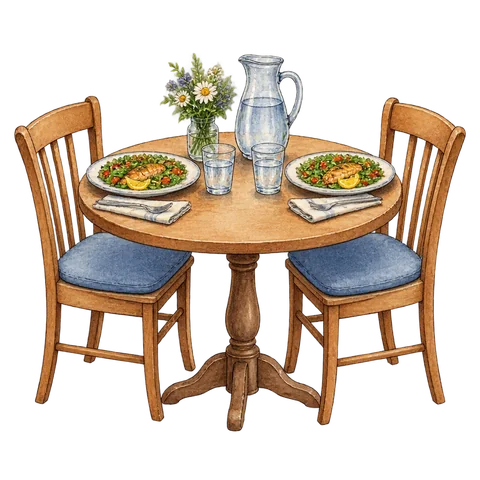
Мо́жно , пожа́луйста?
Móžno menjú, požálujsta?
May I have the menu, please?
Neutral; polite address where a person is addressed
Source noteЧто вы рекоменду́ете?
Čto vy rekomendúete?
What do you recommend?
Polite or plural
Source noteМне , пожа́луйста.
Mne vódu, požálujsta.
Water for me, please.
Neutral; polite address where a person is addressed
Source noteМне чай без са́хара.
Mne čaj bez sákhara.
Tea without sugar for me.
Neutral; polite address where a person is addressed
Source noteЯ не мя́со.
Ja ne em mjáso.
I do not eat meat.
Neutral; polite address where a person is addressed
Source noteУ меня́ аллерги́я на .
U menjá allergíja na orékhi.
I have a nut allergy.
Neutral; polite address where a person is addressed
Source noteЭ́то ?
È́to óstroe?
Is this spicy?
Neutral; polite address where a person is addressed
Source noteО́чень вку́сно!
Óčenʹ vkúsno!
It is delicious!
Neutral; polite address where a person is addressed
See it in a story: Соль, которую не дали соседке (A2)
Source note, пожа́луйста.
Sčët, požálujsta.
The bill, please.
Neutral; polite address where a person is addressed
Source noteМо́жно с собо́й?
Móžno s sobój?
Can I have it to go?
Neutral; polite address where a person is addressed
Source noteExplore these words: Food & cooking (flashcards) · Drinks (flashcards) · Fruits (flashcards)
Put these words into context with a story at your level.
Read Russian storiesRussian shopping phrases and prices
Ask about price, size and payment before agreeing to buy.

Ско́лько э́то ?
Skólʹko è́to stóit?
How much does this cost?
Neutral; polite address where a person is addressed
Source noteЭ́то сли́шком до́рого.
È́to slíškom dórogo.
This is too expensive.
Neutral; polite address where a person is addressed
Source noteУ вас есть друго́й ?
U vas estʹ drugój razmér?
Do you have another size?
Neutral; polite address where a person is addressed
Source noteМо́жно приме́рить?
Móžno priméritʹ?
May I try it on?
Neutral; polite address where a person is addressed
Source noteМо́жно ?
Móžno oplatítʹ kártoj?
Can I pay by card?
Neutral; polite address where a person is addressed
Source noteТо́лько нали́чными.
Tólʹko nalíčnymi.
Cash only.
Neutral; polite address where a person is addressed
Source noteЯ возьму́ э́то.
Ja vozʹmú è́to.
I will take this.
Neutral; polite address where a person is addressed
Source noteМне ну́жен .
Mne núžen pakét.
I need a bag.
Neutral; polite address where a person is addressed
Source noteДа́йте чек, пожа́луйста.
Dájte ček, požálujsta.
Please give me a receipt.
Polite or plural
Source noteЯ смотрю́.
Ja tólʹko smotrjú.
I am just looking.
Neutral; polite address where a person is addressed
Source noteExplore these words: Shopping (flashcards) · Money & banking · Clothes (flashcards)
Put these words into context with a story at your level.
Read Russian storiesRussian travel phrases and asking for directions
Combine a destination with a direction question; repeat the answer to check it.

Где туале́т?
Gde tualét?
Where is the toilet?
Neutral; polite address where a person is addressed
Source noteГде вокза́л?
Gde vokzál?
Where is the railway station?
Neutral; polite address where a person is addressed
Source noteКак в центр?
Kak projtí v centr?
How do I walk to the centre?
Neutral; polite address where a person is addressed
Source noteИди́те пря́мо.
Idíte prjámo.
Go straight ahead.
Polite or plural
Source noteПоверни́те .
Poverníte naprávo.
Turn right.
Polite or plural
Source noteПоверни́те .
Poverníte nalévo.
Turn left.
Polite or plural
Source noteОди́н , пожа́луйста.
Odín bilét, požálujsta.
One ticket, please.
Neutral; polite address where a person is addressed
Source noteотправля́ется по́езд?
Kogdá otpravljáetsja póezd?
When does the train leave?
Neutral; polite address where a person is addressed
Source noteОстанови́те , пожа́луйста.
Ostanovíte zdesʹ, požálujsta.
Please stop here.
To a driver; polite
Source noteЯ .
Ja zabludílsja.
I am lost.
Male speaker; see variant
Female speaker
Explore these words: Directions & position (flashcards) · Travel & hotels (flashcards) · Transport (flashcards)
Put these words into context with a story at your level.
Read Russian storiesUseful Russian phrases for hotels
A reservation, a room request and a check-out time cover many first conversations.

У меня́ есть бронь.
U menjá estʹ bronʹ.
I have a reservation.
Neutral; polite address where a person is addressed
Source noteНа ка́кое ?
Na kákoe ímja?
Under what name?
Neutral; polite address where a person is addressed
Source noteНа А́нны.
Na ímja Ánny.
Under the name Anna.
Neutral; polite address where a person is addressed
Source noteМне ну́жен но́мер на одну́ ночь.
Mne núžen nómer na odnú nočʹ.
I need a room for one night.
Neutral; polite address where a person is addressed
Source noteЗа́втрак включён?
Závtrak vključën?
Is breakfast included?
Neutral; polite address where a person is addressed
Source noteВо ско́лько вы́езд?
Vo skólʹko výezd?
What time is check-out?
Neutral; polite address where a person is addressed
Source noteГде лифт?
Gde lift?
Where is the lift?
Neutral; polite address where a person is addressed
Source noteМо́жно , пожа́луйста?
Móžno ključ, požálujsta?
May I have the key, please?
Neutral; polite address where a person is addressed
Source noteВ но́мере не рабо́тает душ.
V nómere ne rabótaet duš.
The shower in the room does not work.
Neutral; polite address where a person is addressed
Source noteМо́жно бага́ж?
Móžno ostávitʹ zdesʹ bagáž?
May I leave my luggage here?
Neutral; polite address where a person is addressed
Source noteExplore these words: House & rooms (flashcards) · Directions & position (flashcards)
Put these words into context with a story at your level.
Read Russian storiesRussian conversation phrases for small talk
Weather, free time and tomorrow’s plans help a conversation continue.

Как у вас дела́?
Kak u vas delá?
How are you?
Polite
Source noteВсё хорошо́.
Vsë khorošó.
Everything is fine.
Neutral; polite address where a person is addressed
See it in a story: Электричка до конечной (A1)
See it in a story: Рация на дрейфующей льдине (A1)
Source noteХоро́шая .
Khoróšaja pogóda segódnja.
The weather is nice today.
Neutral; polite address where a person is addressed
Source note.
Segódnja khólodno.
It is cold today.
Neutral; polite address where a person is addressed
Source noteЧто вы лю́бите де́лать?
Čto vy ljúbite délatʹ?
What do you like doing?
Polite or plural
Source noteЯ люблю́ чита́ть.
Ja ljubljú čitátʹ.
I like reading.
Neutral; polite address where a person is addressed
Source noteУ вас есть вре́мя?
U vas estʹ vrémja?
Do you have time?
Polite or plural
Source noteУви́димся .
Uvídimsja závtra.
See you tomorrow.
Neutral; polite address where a person is addressed
Source noteВо ско́лько встре́тимся?
Vo skólʹko vstrétimsja?
What time shall we meet?
Neutral; polite address where a person is addressed
Source noteВ .
V tri časá.
At three o’clock.
Neutral; polite address where a person is addressed
See it in a story: Автобус, который не останавливается в дождь (A2)
See it in a story: Плов на сорок человек в незнакомом дворе (B1)
Source noteExplore these words: Time & dates (flashcards) · Weather (flashcards) · Numbers (flashcards)
Put these words into context with a story at your level.
Read Russian storiesExpressing feelings and everyday needs in Russian
Learn short statements for your physical needs as well as emotions.

Я .
Ja rad.
I am happy. / I am glad.
Male speaker; see variant
Female speaker
Я .
Ja ustál.
I am tired.
Male speaker; see variant
Female speaker
Я го́лоден.
Ja góloden.
I am hungry.
Male speaker; see variant
Female speaker
Я хочу́ .
Ja khočú pitʹ.
I am thirsty.
Neutral; polite address where a person is addressed
Source noteМне .
Mne khólodno.
I am cold.
Neutral; polite address where a person is addressed
Source noteМне жа́рко.
Mne žárko.
I am hot.
Neutral; polite address where a person is addressed
Source noteМне гру́стно.
Mne grústno.
I feel sad.
Neutral; polite address where a person is addressed
Source noteЯ .
Ja volnújusʹ.
I am worried. / I am nervous.
Neutral; polite address where a person is addressed
See it in a story: Соседка, которая стучит три раза (A1)
Source noteЯ тебя́ .
Ja tebjá ljubljú.
I love you.
Familiar singular
Source noteЯ по тебе́.
Ja skučáju po tebé.
I miss you.
Familiar singular
Source noteExplore these words: Emotions & feelings (flashcards) · Health & medicine (flashcards) · Drinks (flashcards)
Put these words into context with a story at your level.
Read Russian storiesRussian emergency phrases and getting help
Use short direct sentences. Point to a location or written information when words are difficult.

!
Pomogíte!
Help!
Polite/plural command, conventional urgent call
Source noteМне ну́жен .
Mne núžen vrač.
I need a doctor.
Neutral; polite address where a person is addressed
Source noteВызови́те ско́рую по́мощь!
Vyzovíte skóruju pómoščʹ!
Call an ambulance!
Polite or plural
Source noteПозвони́те в !
Pozvoníte v políciju!
Call the police!
Polite or plural
Source noteГде больни́ца?
Gde bolʹníca?
Where is the hospital?
Neutral; polite address where a person is addressed
Source noteМне .
Mne plókho.
I feel unwell.
Neutral; polite address where a person is addressed
Source noteУ меня́ голова́.
U menjá bolít golová.
My head hurts.
Neutral; polite address where a person is addressed
Source noteЯ потеря́л .
Ja poterjál pásport.
I have lost my passport.
Male speaker; see variant
Female speaker
Оста́вьте меня́ в поко́е.
Ostávʹte menjá v pokóe.
Leave me alone.
Polite/plural form; firm request
Source noteЭ́то сро́чно.
È́to sróčno.
This is urgent.
Neutral; polite address where a person is addressed
Source noteExplore these words: Health & medicine (flashcards) · Travel & hotels (flashcards) · Jobs & work (flashcards)
Put these words into context with a story at your level.
Read Russian storiesRussian phrases for phone calls and messages
Confirm whether the other person can hear you and when you will reply.
Алло́!
Alló!
Hello!
Answering the phone
See it in a story: Записка под дверью незнакомца (A1)
Source noteВы меня́ слы́шите?
Vy menjá slýšite?
Can you hear me?
Polite or plural
Source noteЯ вас не слы́шу.
Ja vas ne slýšu.
I cannot hear you.
Polite or plural
Source noteПлоха́я связь.
Plokhája svjazʹ.
The connection is bad.
Neutral; polite address where a person is addressed
Source noteЯ перезвоню́.
Ja perezvonjú.
I will call back.
Neutral; polite address where a person is addressed
Source noteНапиши́те мне, пожа́луйста.
Napišíte mne, požálujsta.
Please write to me.
Polite or plural
Source noteПришли́те мне .
Prišlíte mne ádres.
Send me the address.
Polite or plural
Source noteЯ отпра́вил .
Ja otprávil soobščénie.
I have sent a message.
Male speaker; see variant
Female speaker
Вы моё ?
Vy polučíli moë soobščénie?
Did you receive my message?
Polite or plural
Source noteЯ отвечу́ .
Ja otvečú pózže.
I will reply later.
Neutral; polite address where a person is addressed
Source noteExplore these words: Technology & phones (flashcards) · City & places (flashcards) · Time & dates (flashcards)
Put these words into context with a story at your level.
Read Russian storiesRussian classroom phrases and language learning
Asking for repetition is part of speaking a language, not a failure.

Я не .
Ja ne ponimáju.
I do not understand.
Neutral; polite address where a person is addressed
Source noteПовтори́те, пожа́луйста.
Povtoríte, požálujsta.
Please repeat that.
Polite or plural
Source note, пожа́луйста.
Govoríte medlénnee, požálujsta.
Please speak more slowly.
Polite or plural
Source noteЧто э́то ?
Čto è́to znáčit?
What does this mean?
Neutral; polite address where a person is addressed
See it in a story: Пирог, который испекли всего один раз (A2)
See it in a story: Шайба, которая не пересекла черту (B1)
Source noteКак э́то пи́шется?
Kak è́to píšetsja?
How is this written?
Neutral; polite address where a person is addressed
Source noteКак э́то по-ру́сски?
Kak è́to skazátʹ po-rússki?
How do you say this in Russian?
Neutral; polite address where a person is addressed
Source noteМо́жно зада́ть ?
Móžno zadátʹ voprós?
May I ask a question?
Neutral; polite address where a person is addressed
Source noteУ меня́ есть .
U menjá estʹ voprós.
I have a question.
Neutral; polite address where a person is addressed
Source noteЯ .
Ja ponjál.
I understand now. / I have understood.
Male speaker; see variant
Female speaker
See it in a story: Звонок Пастернаку из Кремля (B2)
Source noteза .
Spasíbo za pómoščʹ.
Thank you for your help.
Neutral; polite address where a person is addressed
Source noteExplore these words: Greetings & polite phrases
Put these words into context with a story at your level.
Read Russian storiesTurn a list into a conversation
- Choose one situation and learn three phrases that you can use today.
- Read the dialogue as A, then repeat it as B. Pause before checking the translation.
- Change one detail, such as a name, drink or destination, while keeping the same sentence pattern.
- Find a story at your level and notice who speaks politely, who speaks casually and how the other person answers.
Russian common phrases: frequently asked questions
Which Russian phrases should I learn first?
Start with hello, please, thank you, I do not understand and I need help. Add the phrases from the situation you will face next.
How many Russian phrases should I study each day?
Five useful phrases are a manageable starting point. Reuse yesterday’s phrases in a short exchange before adding new ones.
Should I memorise full sentences?
Learn a complete phrase first so that you can use it immediately. Then notice the words that can change, such as a destination or an item you want.
How can I practise without a partner?
Take both parts of the dialogues. Read one turn, cover the next turn and try to answer before looking.
Can I use these phrases while travelling?
Yes: the food, hotel, shopping and transport sections are designed for common travel situations. A reply may be longer than your question, so learn how to ask for repetition too.
What should I do when I do not understand the answer?
Say that you do not understand, ask the person to speak more slowly and ask them to write the important word or place name. Avoid pretending to understand directions or urgent information.
When should I use ты and вы?
Use вы with adult strangers, in service situations and when addressing several people. Use ты with a friend or child; let a new adult acquaintance suggest switching to ты. The variants show both forms where useful.
Why are there accent marks in the Russian?
They show the stressed syllable for learners. Most Russian writing omits them; ё already identifies a stressed vowel. The mark is not a separate sound.
Make these words part of your day
Explore Russian stories, listen along, and save vocabulary as you go.
Find a story at your levelSources and verification
English translations and examples were written for this guide. Source notes distinguish documented expressions, original practice sentences, and literary quotations. Literary excerpts retain the language of their original period.
- Omniglot: useful Russian phrases — Reference for conventional greetings, politeness and personal questions; additional productive sentences and all dialogues are original editorial compositions.
- Defense Language Institute: Russian SOLT, Module 1 — Government language-course reference for introductions, polite address and basic sentence patterns.
Source notes for all 120 entries
- Здра́вствуйте!: A conventional phrase or original sentence built from standard language patterns; see the reference for the relevant greeting, request or question construction. [phrase-reference]
- Приве́т!: A conventional phrase or original sentence built from standard language patterns; see the reference for the relevant greeting, request or question construction. [phrase-reference]
- До́брое у́тро!: A conventional phrase or original sentence built from standard language patterns; see the reference for the relevant greeting, request or question construction. [phrase-reference]
- До́брый день!: A conventional phrase or original sentence built from standard language patterns; see the reference for the relevant greeting, request or question construction. [phrase-reference]
- До́брый ве́чер!: A conventional phrase or original sentence built from standard language patterns; see the reference for the relevant greeting, request or question construction. [phrase-reference]
- До свида́ния!: A conventional phrase or original sentence built from standard language patterns; see the reference for the relevant greeting, request or question construction. [phrase-reference]
- Пока́!: A conventional phrase or original sentence built from standard language patterns; see the reference for the relevant greeting, request or question construction. [phrase-reference]
- Споко́йной но́чи!: A conventional phrase or original sentence built from standard language patterns; see the reference for the relevant greeting, request or question construction. [phrase-reference]
- Как дела́?: A conventional phrase or original sentence built from standard language patterns; see the reference for the relevant greeting, request or question construction. [phrase-reference]
- Хорошо́, спаси́бо.: A conventional phrase or original sentence built from standard language patterns; see the reference for the relevant greeting, request or question construction. [phrase-reference]
- Как вас зову́т?: A conventional phrase or original sentence built from standard language patterns; see the reference for the relevant greeting, request or question construction. [phrase-reference]
- Меня́ зову́т А́нна.: A conventional phrase or original sentence built from standard language patterns; see the reference for the relevant greeting, request or question construction. [phrase-reference]
- О́чень прия́тно.: A conventional phrase or original sentence built from standard language patterns; see the reference for the relevant greeting, request or question construction. [phrase-reference]
- Отку́да вы?: A conventional phrase or original sentence built from standard language patterns; see the reference for the relevant greeting, request or question construction. [phrase-reference]
- Я из Кана́ды.: A conventional phrase or original sentence built from standard language patterns; see the reference for the relevant greeting, request or question construction. [phrase-reference]
- Где вы живёте?: A conventional phrase or original sentence built from standard language patterns; see the reference for the relevant greeting, request or question construction. [phrase-reference]
- Я живу́ в Ло́ндоне.: A conventional phrase or original sentence built from standard language patterns; see the reference for the relevant greeting, request or question construction. [phrase-reference]
- Кем вы рабо́таете?: A conventional phrase or original sentence built from standard language patterns; see the reference for the relevant greeting, request or question construction. [phrase-reference]
- Я студе́нт.: A conventional phrase or original sentence built from standard language patterns; see the reference for the relevant greeting, request or question construction. [phrase-reference]
- Я изуча́ю ру́сский язы́к.: A conventional phrase or original sentence built from standard language patterns; see the reference for the relevant greeting, request or question construction. [phrase-reference]
- Пожа́луйста.: A conventional phrase or original sentence built from standard language patterns; see the reference for the relevant greeting, request or question construction. [phrase-reference]
- Спаси́бо.: A conventional phrase or original sentence built from standard language patterns; see the reference for the relevant greeting, request or question construction. [phrase-reference]
- Большо́е спаси́бо.: A conventional phrase or original sentence built from standard language patterns; see the reference for the relevant greeting, request or question construction. [phrase-reference]
- Извини́те.: A conventional phrase or original sentence built from standard language patterns; see the reference for the relevant greeting, request or question construction. [phrase-reference]
- Прости́те меня́.: A conventional phrase or original sentence built from standard language patterns; see the reference for the relevant greeting, request or question construction. [phrase-reference]
- Ничего́ стра́шного.: A conventional phrase or original sentence built from standard language patterns; see the reference for the relevant greeting, request or question construction. [phrase-reference]
- Не за что.: A conventional phrase or original sentence built from standard language patterns; see the reference for the relevant greeting, request or question construction. [phrase-reference]
- Мо́жно?: A conventional phrase or original sentence built from standard language patterns; see the reference for the relevant greeting, request or question construction. [phrase-reference]
- Коне́чно.: A conventional phrase or original sentence built from standard language patterns; see the reference for the relevant greeting, request or question construction. [phrase-reference]
- Не́т, спаси́бо.: A conventional phrase or original sentence built from standard language patterns; see the reference for the relevant greeting, request or question construction. [phrase-reference]
- Мо́жно меню́, пожа́луйста?: A conventional phrase or original sentence built from standard language patterns; see the reference for the relevant greeting, request or question construction. [phrase-reference]
- Что вы рекоменду́ете?: A conventional phrase or original sentence built from standard language patterns; see the reference for the relevant greeting, request or question construction. [phrase-reference]
- Мне во́ду, пожа́луйста.: A conventional phrase or original sentence built from standard language patterns; see the reference for the relevant greeting, request or question construction. [phrase-reference]
- Мне чай без са́хара.: A conventional phrase or original sentence built from standard language patterns; see the reference for the relevant greeting, request or question construction. [phrase-reference]
- Я не ем мя́со.: A conventional phrase or original sentence built from standard language patterns; see the reference for the relevant greeting, request or question construction. [phrase-reference]
- У меня́ аллерги́я на оре́хи.: A conventional phrase or original sentence built from standard language patterns; see the reference for the relevant greeting, request or question construction. [phrase-reference]
- Э́то о́строе?: A conventional phrase or original sentence built from standard language patterns; see the reference for the relevant greeting, request or question construction. [phrase-reference]
- О́чень вку́сно!: A conventional phrase or original sentence built from standard language patterns; see the reference for the relevant greeting, request or question construction. [phrase-reference]
- Счёт, пожа́луйста.: A conventional phrase or original sentence built from standard language patterns; see the reference for the relevant greeting, request or question construction. [phrase-reference]
- Мо́жно с собо́й?: A conventional phrase or original sentence built from standard language patterns; see the reference for the relevant greeting, request or question construction. [phrase-reference]
- Ско́лько э́то сто́ит?: A conventional phrase or original sentence built from standard language patterns; see the reference for the relevant greeting, request or question construction. [phrase-reference]
- Э́то сли́шком до́рого.: A conventional phrase or original sentence built from standard language patterns; see the reference for the relevant greeting, request or question construction. [phrase-reference]
- У вас есть друго́й разме́р?: A conventional phrase or original sentence built from standard language patterns; see the reference for the relevant greeting, request or question construction. [phrase-reference]
- Мо́жно приме́рить?: A conventional phrase or original sentence built from standard language patterns; see the reference for the relevant greeting, request or question construction. [phrase-reference]
- Мо́жно оплати́ть ка́ртой?: A conventional phrase or original sentence built from standard language patterns; see the reference for the relevant greeting, request or question construction. [phrase-reference]
- То́лько нали́чными.: A conventional phrase or original sentence built from standard language patterns; see the reference for the relevant greeting, request or question construction. [phrase-reference]
- Я возьму́ э́то.: A conventional phrase or original sentence built from standard language patterns; see the reference for the relevant greeting, request or question construction. [phrase-reference]
- Мне ну́жен паке́т.: A conventional phrase or original sentence built from standard language patterns; see the reference for the relevant greeting, request or question construction. [phrase-reference]
- Да́йте чек, пожа́луйста.: A conventional phrase or original sentence built from standard language patterns; see the reference for the relevant greeting, request or question construction. [phrase-reference]
- Я то́лько смотрю́.: A conventional phrase or original sentence built from standard language patterns; see the reference for the relevant greeting, request or question construction. [phrase-reference]
- Где туале́т?: A conventional phrase or original sentence built from standard language patterns; see the reference for the relevant greeting, request or question construction. [phrase-reference]
- Где вокза́л?: A conventional phrase or original sentence built from standard language patterns; see the reference for the relevant greeting, request or question construction. [phrase-reference]
- Как пройти́ в центр?: A conventional phrase or original sentence built from standard language patterns; see the reference for the relevant greeting, request or question construction. [phrase-reference]
- Иди́те пря́мо.: A conventional phrase or original sentence built from standard language patterns; see the reference for the relevant greeting, request or question construction. [phrase-reference]
- Поверни́те напра́во.: A conventional phrase or original sentence built from standard language patterns; see the reference for the relevant greeting, request or question construction. [phrase-reference]
- Поверни́те нале́во.: A conventional phrase or original sentence built from standard language patterns; see the reference for the relevant greeting, request or question construction. [phrase-reference]
- Оди́н биле́т, пожа́луйста.: A conventional phrase or original sentence built from standard language patterns; see the reference for the relevant greeting, request or question construction. [phrase-reference]
- Когда́ отправля́ется по́езд?: A conventional phrase or original sentence built from standard language patterns; see the reference for the relevant greeting, request or question construction. [phrase-reference]
- Останови́те здесь, пожа́луйста.: A conventional phrase or original sentence built from standard language patterns; see the reference for the relevant greeting, request or question construction. [phrase-reference]
- Я заблуди́лся.: A conventional phrase or original sentence built from standard language patterns; see the reference for the relevant greeting, request or question construction. [phrase-reference]
- У меня́ есть бронь.: A conventional phrase or original sentence built from standard language patterns; see the reference for the relevant greeting, request or question construction. [phrase-reference]
- На ка́кое и́мя?: A conventional phrase or original sentence built from standard language patterns; see the reference for the relevant greeting, request or question construction. [phrase-reference]
- На и́мя А́нны.: A conventional phrase or original sentence built from standard language patterns; see the reference for the relevant greeting, request or question construction. [phrase-reference]
- Мне ну́жен но́мер на одну́ ночь.: A conventional phrase or original sentence built from standard language patterns; see the reference for the relevant greeting, request or question construction. [phrase-reference]
- За́втрак включён?: A conventional phrase or original sentence built from standard language patterns; see the reference for the relevant greeting, request or question construction. [phrase-reference]
- Во ско́лько вы́езд?: A conventional phrase or original sentence built from standard language patterns; see the reference for the relevant greeting, request or question construction. [phrase-reference]
- Где лифт?: A conventional phrase or original sentence built from standard language patterns; see the reference for the relevant greeting, request or question construction. [phrase-reference]
- Мо́жно ключ, пожа́луйста?: A conventional phrase or original sentence built from standard language patterns; see the reference for the relevant greeting, request or question construction. [phrase-reference]
- В но́мере не рабо́тает душ.: A conventional phrase or original sentence built from standard language patterns; see the reference for the relevant greeting, request or question construction. [phrase-reference]
- Мо́жно оста́вить здесь бага́ж?: A conventional phrase or original sentence built from standard language patterns; see the reference for the relevant greeting, request or question construction. [phrase-reference]
- Как у вас дела́?: A conventional phrase or original sentence built from standard language patterns; see the reference for the relevant greeting, request or question construction. [phrase-reference]
- Всё хорошо́.: A conventional phrase or original sentence built from standard language patterns; see the reference for the relevant greeting, request or question construction. [phrase-reference]
- Хоро́шая пого́да сего́дня.: A conventional phrase or original sentence built from standard language patterns; see the reference for the relevant greeting, request or question construction. [phrase-reference]
- Сего́дня хо́лодно.: A conventional phrase or original sentence built from standard language patterns; see the reference for the relevant greeting, request or question construction. [phrase-reference]
- Что вы лю́бите де́лать?: A conventional phrase or original sentence built from standard language patterns; see the reference for the relevant greeting, request or question construction. [phrase-reference]
- Я люблю́ чита́ть.: A conventional phrase or original sentence built from standard language patterns; see the reference for the relevant greeting, request or question construction. [phrase-reference]
- У вас есть вре́мя?: A conventional phrase or original sentence built from standard language patterns; see the reference for the relevant greeting, request or question construction. [phrase-reference]
- Уви́димся за́втра.: A conventional phrase or original sentence built from standard language patterns; see the reference for the relevant greeting, request or question construction. [phrase-reference]
- Во ско́лько встре́тимся?: A conventional phrase or original sentence built from standard language patterns; see the reference for the relevant greeting, request or question construction. [phrase-reference]
- В три часа́.: A conventional phrase or original sentence built from standard language patterns; see the reference for the relevant greeting, request or question construction. [phrase-reference]
- Я рад.: A conventional phrase or original sentence built from standard language patterns; see the reference for the relevant greeting, request or question construction. [phrase-reference]
- Я уста́л.: A conventional phrase or original sentence built from standard language patterns; see the reference for the relevant greeting, request or question construction. [phrase-reference]
- Я го́лоден.: A conventional phrase or original sentence built from standard language patterns; see the reference for the relevant greeting, request or question construction. [phrase-reference]
- Я хочу́ пить.: A conventional phrase or original sentence built from standard language patterns; see the reference for the relevant greeting, request or question construction. [phrase-reference]
- Мне хо́лодно.: A conventional phrase or original sentence built from standard language patterns; see the reference for the relevant greeting, request or question construction. [phrase-reference]
- Мне жа́рко.: A conventional phrase or original sentence built from standard language patterns; see the reference for the relevant greeting, request or question construction. [phrase-reference]
- Мне гру́стно.: A conventional phrase or original sentence built from standard language patterns; see the reference for the relevant greeting, request or question construction. [phrase-reference]
- Я волну́юсь.: A conventional phrase or original sentence built from standard language patterns; see the reference for the relevant greeting, request or question construction. [phrase-reference]
- Я тебя́ люблю́.: A conventional phrase or original sentence built from standard language patterns; see the reference for the relevant greeting, request or question construction. [phrase-reference]
- Я скуча́ю по тебе́.: A conventional phrase or original sentence built from standard language patterns; see the reference for the relevant greeting, request or question construction. [phrase-reference]
- Помоги́те!: A conventional phrase or original sentence built from standard language patterns; see the reference for the relevant greeting, request or question construction. [phrase-reference]
- Мне ну́жен врач.: A conventional phrase or original sentence built from standard language patterns; see the reference for the relevant greeting, request or question construction. [phrase-reference]
- Вызови́те ско́рую по́мощь!: A conventional phrase or original sentence built from standard language patterns; see the reference for the relevant greeting, request or question construction. [phrase-reference]
- Позвони́те в поли́цию!: A conventional phrase or original sentence built from standard language patterns; see the reference for the relevant greeting, request or question construction. [phrase-reference]
- Где больни́ца?: A conventional phrase or original sentence built from standard language patterns; see the reference for the relevant greeting, request or question construction. [phrase-reference]
- Мне пло́хо.: A conventional phrase or original sentence built from standard language patterns; see the reference for the relevant greeting, request or question construction. [phrase-reference]
- У меня́ боли́т голова́.: A conventional phrase or original sentence built from standard language patterns; see the reference for the relevant greeting, request or question construction. [phrase-reference]
- Я потеря́л па́спорт.: A conventional phrase or original sentence built from standard language patterns; see the reference for the relevant greeting, request or question construction. [phrase-reference]
- Оста́вьте меня́ в поко́е.: A conventional phrase or original sentence built from standard language patterns; see the reference for the relevant greeting, request or question construction. [phrase-reference]
- Э́то сро́чно.: A conventional phrase or original sentence built from standard language patterns; see the reference for the relevant greeting, request or question construction. [phrase-reference]
- Алло́!: A conventional phrase or original sentence built from standard language patterns; see the reference for the relevant greeting, request or question construction. [phrase-reference]
- Вы меня́ слы́шите?: A conventional phrase or original sentence built from standard language patterns; see the reference for the relevant greeting, request or question construction. [phrase-reference]
- Я вас не слы́шу.: A conventional phrase or original sentence built from standard language patterns; see the reference for the relevant greeting, request or question construction. [phrase-reference]
- Плоха́я связь.: A conventional phrase or original sentence built from standard language patterns; see the reference for the relevant greeting, request or question construction. [phrase-reference]
- Я перезвоню́.: A conventional phrase or original sentence built from standard language patterns; see the reference for the relevant greeting, request or question construction. [phrase-reference]
- Напиши́те мне, пожа́луйста.: A conventional phrase or original sentence built from standard language patterns; see the reference for the relevant greeting, request or question construction. [phrase-reference]
- Пришли́те мне а́дрес.: A conventional phrase or original sentence built from standard language patterns; see the reference for the relevant greeting, request or question construction. [phrase-reference]
- Я отпра́вил сообще́ние.: A conventional phrase or original sentence built from standard language patterns; see the reference for the relevant greeting, request or question construction. [phrase-reference]
- Вы получи́ли моё сообще́ние?: A conventional phrase or original sentence built from standard language patterns; see the reference for the relevant greeting, request or question construction. [phrase-reference]
- Я отвечу́ по́зже.: A conventional phrase or original sentence built from standard language patterns; see the reference for the relevant greeting, request or question construction. [phrase-reference]
- Я не понима́ю.: A conventional phrase or original sentence built from standard language patterns; see the reference for the relevant greeting, request or question construction. [phrase-reference]
- Повтори́те, пожа́луйста.: A conventional phrase or original sentence built from standard language patterns; see the reference for the relevant greeting, request or question construction. [phrase-reference]
- Говори́те медле́ннее, пожа́луйста.: A conventional phrase or original sentence built from standard language patterns; see the reference for the relevant greeting, request or question construction. [phrase-reference]
- Что э́то зна́чит?: A conventional phrase or original sentence built from standard language patterns; see the reference for the relevant greeting, request or question construction. [phrase-reference]
- Как э́то пи́шется?: A conventional phrase or original sentence built from standard language patterns; see the reference for the relevant greeting, request or question construction. [phrase-reference]
- Как э́то сказа́ть по-ру́сски?: A conventional phrase or original sentence built from standard language patterns; see the reference for the relevant greeting, request or question construction. [phrase-reference]
- Мо́жно зада́ть вопро́с?: A conventional phrase or original sentence built from standard language patterns; see the reference for the relevant greeting, request or question construction. [phrase-reference]
- У меня́ есть вопро́с.: A conventional phrase or original sentence built from standard language patterns; see the reference for the relevant greeting, request or question construction. [phrase-reference]
- Я поня́л.: A conventional phrase or original sentence built from standard language patterns; see the reference for the relevant greeting, request or question construction. [phrase-reference]
- Спаси́бо за по́мощь.: A conventional phrase or original sentence built from standard language patterns; see the reference for the relevant greeting, request or question construction. [phrase-reference]