
Confusing Spanish Verb Pairs
Master 179 confusing confusing verbs pairs with clear rules and examples.
Confusing Verbs
Spanish verb pairs like "ser" vs. "estar" and "saber" vs. "conocer" are among the trickiest aspects of the language for learners. While English often uses a single verb, Spanish draws nuanced distinctions that change meaning entirely. Mastering these pairs is essential for accurate communication—choosing the wrong verb can make your sentence confusing or even offensive to native speakers.
Most Confusing Confusing Verbs Pairs
Start with the pairs that trip up learners most often.


All Confusing Verbs Pairs
aburrirse vs cansarse
Aburrirse = mental state (bored). Cansarse = physical state (tired).
aceptar vs admitir
Aceptar = receive willingly. Admitir = confess or grant entry.

acordar vs acordarse de
Acordar = to agree. Acordarse de = to remember.
acostumbrar vs acostumbrarse a
Acostumbrar = To make SOMEONE ELSE used to something. Acostumbrarse a = To get used to something YOURSELF.
advertir vs avisar
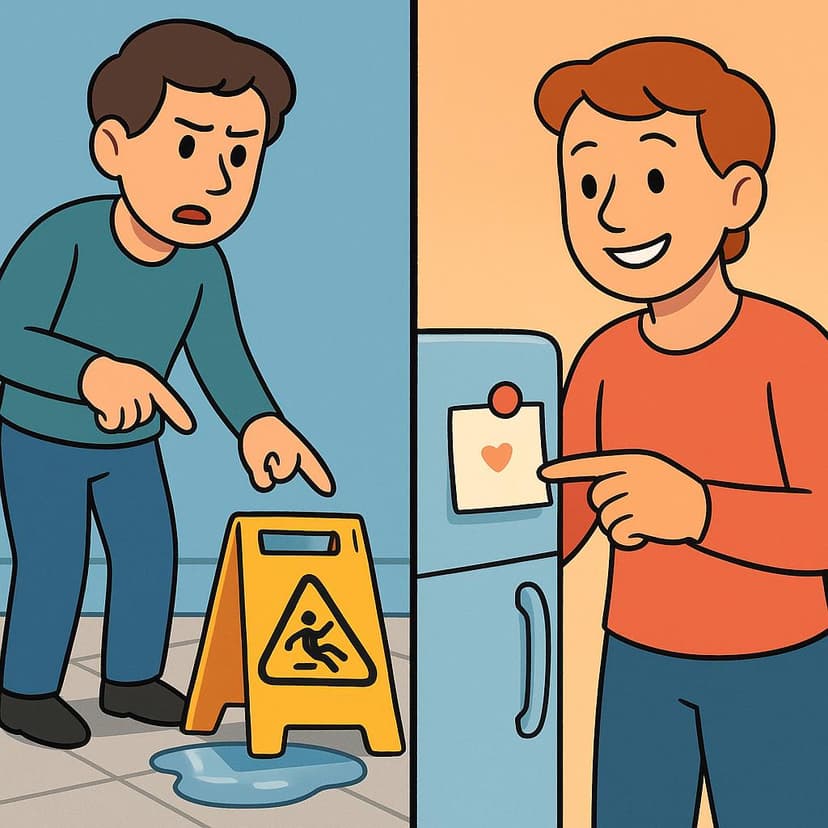
Advertir = to warn of a danger. Avisar = to inform or give a heads-up.
agarrar vs coger
When in doubt, use 'agarrar'. It means 'to grab' everywhere. 'Coger' is common in Spain but is a vulgar word in most of Latin America.
alcanzar vs llegar
Llegar = arriving at a destination. Alcanzar = reaching for something or catching up.
alegrar vs alegrarse
Alegrar = something makes someone else happy. Alegrarse = you become happy.
alzar vs levantar
Levantar is your everyday 'lift' or 'pick up'. Alzar is a more formal, upward 'raise' or 'erect'.
aplicar vs solicitar
Use `solicitar` for jobs & applications. Use `aplicar` to put something on, like lotion or a rule.
apoyar vs soportar
Apoyar = emotional or financial support (to back). Soportar = physical support (to bear) OR to put up with.
aprovechar vs disfrutar
Aprovechar = make the most of an opportunity. Disfrutar = enjoy the feeling.
arreglar vs organizar
Arreglar = to fix or tidy up. Organizar = to structure or plan.
asistir vs ayudar
Use 'asistir' for attending an event and 'ayudar' for helping someone.
asustar vs asustarse
Asustar is what you DO to someone. Asustarse is what you FEEL.
atender vs asistir
Atender = to attend TO (serve, pay attention). Asistir = to attend (be present).
atreverse vs osar
Use `atreverse` for everyday daring. Use `osar` for dramatic, literary, or formal daring.
avisar vs informar
Avisar is a casual heads-up or warning. Informar is a formal report or official statement.
bajar vs bajarse
Bajar = to lower something else. Bajarse = to get yourself down/off.
bañar vs bañarse
Bañar = to bathe someone/something else. Bañarse = to bathe yourself.
beber vs beberse
Beber = the general act of drinking. Beberse = drinking it all up.
buscar vs encontrar
Buscar = The Search. Encontrar = The Success.
caber vs entrar
Caber is about 'if' it fits (space/capacity). Entrar is about the 'act' of going in.
caer vs caerse
Caer = to fall (like rain or leaves). Caerse = to fall down (like a person or a vase).
calentar vs calentarse
Calentar = you heat something else. Calentarse = something (or someone) gets hot/angry.
cambiar vs cambiarse
Cambiar = to change SOMETHING. Cambiarse = to change YOURSELF.
cocinar vs cocer
Cocinar is the general act of cooking a meal. Cocer is a specific method: to boil or to bake.
coger vs tomar
Coger = to grab/catch. Tomar = to take/drink. When in doubt, always use tomar.
colgar vs tender
Colgar = hang from a point (hook, hanger). Tender = spread out to dry (clothesline).
comer vs comerse
Use `comer` for the general act of eating. Use `comerse` to emphasize eating something specific completely.
confiar en vs fiarse de
Confiar en = deep trust (faith). Fiarse de = practical trust (reliability).
confundir vs confundirse
Confundir = to confuse someone/something else. Confundirse = to get confused yourself.
conocer vs reunirse
Conocer = meet for the first time. Reunirse = meet up with people you already know.
contratar vs emplear
Contratar = the event of hiring. Emplear = the state of being employed.
convertir vs convertirse en
Convertir = to change a thing. Convertirse en = to become a new thing.
cortar vs romper
Cortar is a clean split with a tool. Romper is to break or tear, often by force.
crear vs creer
Crear is to create (make something new). Creer is to believe (think something is true).
crecer vs cultivar
Crecer is what things do on their own; cultivar is what you do to them.
cuidar vs atender
Cuidar = care FOR someone/something. Atender = attend TO a person/task.
cumplir vs realizar
Use **cumplir** to *fulfill* a duty, promise, or age. Use **realizar** to *make real* a project or dream.
dar vs darse
Dar = to give something OUT. Darse = something happens TO you.
deber vs deber de
Deber = Obligation (must/should). Deber de = Probability (must be/probably).
deber vs tener que
Deber = should (moral duty/advice). Tener que = have to (necessity/strong obligation).
decidir vs decidirse
Decidir = WHAT you decide. Decidirse = to MAKE UP your mind.
dedicar vs dedicarse a
Dedicar = you give SOMETHING. Dedicarse a = you give YOURSELF to an activity (like a job).
dejar de vs parar de
Dejar de = quit a habit. Parar de = stop an action.
dejar vs salir
Use `dejar` for leaving *things* or *people* behind. Use `salir` for leaving *places*.
demostrar vs mostrar
Mostrar = to show. Demostrar = to show *proof*.
depender de vs contar con
Depender de = It hinges on (a condition). Contar con = I can count on (a resource or person).
despedir vs despedirse
Despedir = to fire someone. Despedirse = to say goodbye.
despertar vs despertarse
Despertar is to wake someone else up. Despertarse is to wake yourself up.
devolver vs regresar
Devolver = give something back. Regresar = go back yourself.
disculpar vs perdonar
Disculpar = Excuse me (for a small oops). Perdonar = Forgive me (for a real hurt).
discutir vs argumentar
Discutir = to argue or debate (often with heat). Argumentar = to make an argument (with logic).
disfrutar de vs gozar de
Disfrutar = you enjoy doing it. Gozar = you enjoy having it.
dormir vs dormirse
Dormir = to sleep (the whole action). Dormirse = to fall asleep (the moment it starts).
durar vs tardar
Durar = how long something lasts. Tardar = how long someone/something takes.
echar vs echarse
Echar is to throw OUT, echarse is to throw yourself IN (to a place or an action).
emocionar vs emocionarse
Emocionar = to excite someone else. Emocionarse = to get excited yourself.
encender vs prender
Encender is for electronics & emotions. Prender is for fire & 'catching on'.
encontrar vs encontrarse
Encontrar = to find something (like keys). Encontrarse = to find yourself (somewhere), to feel (a certain way), or to meet someone.
enfriar vs enfriarse
Enfriar = you cool something else. Enfriarse = something gets cold on its own.
enojar vs enojarse
Enojar = to make someone else angry. Enojarse = to get angry yourself.
enseñar vs aprender
Enseñar is to GIVE knowledge (teach). Aprender is to GET knowledge (learn).
enterarse vs saber
Saber = to know (a fact). Enterarse = to find out (the news).
entregar vs dar
Dar = to give (general). Entregar = to deliver or hand over (formal/transactional).
equivocar vs equivocarse
Equivocar = to mistake X for Y. Equivocarse = to BE mistaken (to make a mistake).
escapar vs escaparse
Escapar = Something leaks out or is missed. Escaparse = Someone (or something acting like a someone) flees or gets away.
esforzarse vs intentar
Esforzarse = the *effort* you put in. Intentar = the *attempt* you make.
esperar vs desear
Esperar = to expect or wait. Desear = to wish or want.
estudiar vs aprender
Estudiar is the effort (the 'how'). Aprender is the result (the 'what').
evitar vs prevenir
Evitar = dodge a problem. Prevenir = stop a problem before it starts.
explicar vs aclarar
Explicar is to teach or give details. Aclarar is to untangle a confusion.
faltar vs sobrar
Faltar = what's missing. Sobrar = what's left over.
fijar vs fijarse
Fijar = to attach something. Fijarse = to notice something.
funcionar vs trabajar
Funcionar is for things (how they work). Trabajar is for people (their jobs or effort).
ganar vs ganarse
Ganar = win/earn something external. Ganarse = earn something personal through effort.
ganar vs vencer
Ganar is to WIN a prize or game. Vencer is to DEFEAT an opponent or obstacle.
gastar vs pasar
Use gastar for resources you 'use up' (like money or energy). Use pasar for time that simply 'passes by'.
guardar vs ahorrar
Guardar = to keep/put away. Ahorrar = to save up (money, resources).
guardar vs salvar
Guardar = to keep or put away. Salvar = to rescue from danger.
gustar vs encantar
Gustar is for 'like,' encantar is for 'love' (for things, not people).
haber (impersonal) vs existir
Use 'haber' (hay) for 'there is/are'. Use 'existir' to talk about existence itself, often in a more philosophical or emphatic way.
haber vs tener
Haber for existence ('there is/are') or as a helper verb. Tener for possession.
hablar vs decir
Hablar is the ACTION of talking. Decir is the MESSAGE you're telling.
hacer vs hacerse
Hacer = to do/make. Hacerse = to become (through effort or change).
hacer vs realizar
Hacer = to do/make (general, hands-on). Realizar = to accomplish/fulfill (formal, abstract).
huir vs escapar
Huir is fleeing *from* something. Escapar is getting *out of* something.
importar vs interesar
Importar = it matters (importance/concern). Interesar = it's interesting (curiosity/engagement).
intentar vs tratar de
Use 'intentar' for the effort. Use 'tratar de' for the goal. In many cases, they are interchangeable.
ir vs irse
Ir = go TO a destination. Irse = LEAVE from a place.
ir vs venir
Ir is to 'go' there (away). Venir is to 'come' here (towards).
jugar vs tocar
Jugar is for games and sports. Tocar is for musical instruments and physical touch.
lamentar vs arrepentirse
Lamentar = regret a situation (feel bad FOR something). Arrepentirse = regret an action (feel bad ABOUT what YOU did).
lavar vs lavarse
Lavar = wash something else. Lavarse = wash yourself.
levantar vs levantarse
Levantar = to lift something else. Levantarse = to lift yourself (to get up).
llamar vs llamarse
Llamar = to call someone. Llamarse = to call yourself (your name).
llegar vs venir
Llegar is to arrive 'there'. Venir is to come 'here'.
llevar vs llevarse
Llevar = to carry or wear. Llevarse = to take away or get along.
lograr vs conseguir
Lograr = achieve through effort. Conseguir = obtain or get.
manejar vs conducir
Manejar = to 'handle' or drive (common in Latin America). Conducir = to 'conduct' or drive (standard in Spain).
mantener vs mantenerse
Mantener = to maintain/support *something else*. Mantenerse = to maintain/support *yourself*.
marchar vs marcharse
Marchar = to march or function. Marcharse = to leave.
meter vs meterse
Meter = to put something IN. Meterse = to get yourself INTO something.
meter vs poner
Poner = to put/place (on). Meter = to put (in).
mirar vs ver
Mirar is to look (the action). Ver is to see (the result).
morir vs morirse
Morir = to die (the factual event). Morirse = to pass away (the personal process).
mover vs moverse
Mover = move an object. Moverse = move your body.
mudarse vs moverse
Mudarse = change your home. Moverse = change your position.
negar vs negarse
Negar = Deny a fact. Negarse = Refuse an action.
notar vs darse cuenta
Notar = notice with your senses. Darse cuenta = realize in your mind.
obligar vs forzar
Obligar = make someone do their duty. Forzar = use physical force or pressure.
ocupar vs ocuparse
Ocupar = to take up space. Ocuparse = to take care of something.
oír vs escuchar
Oír is to hear (passive). Escuchar is to listen (active).
olvidar vs olvidarse de
Olvidar = to forget (you take the blame). Olvidarse de = it was forgotten (it was an accident).
parar vs detenerse
Parar = stop an activity. Detenerse = stop moving.
parar vs pararse
Parar = stop something/someone. Pararse = stop yourself (or stand up).
parecer vs aparecer
Parecer = to seem/look like. Aparecer = to appear/show up.
parecer vs parecerse
Parecer = to seem (an opinion). Parecerse = to look like (a comparison).
pasar vs pasarse
Pasar = to pass or happen. Pasarse = to go too far or cross a limit.
pasar vs suceder
Pasar is for casual 'what's happening?'. Suceder is for specific, often formal, 'what occurred?'.
pedir vs preguntar
Pedir = to ask FOR something. Preguntar = to ask a QUESTION.
pegar vs golpear
Use `golpear` for a forceful blow (a punch, a crash). Use `pegar` for a general hit, a slap, or to stick something.
pelear vs luchar
Pelear = a direct fight (physical or verbal). Luchar = a struggle for a cause or goal.
pensar en vs pensar de
Pensar EN = THINK ABOUT (on your mind). Pensar DE = THINK OF (your opinion).
pensar vs creer
Pensar = to think (a process). Creer = to believe (a conviction).
perder vs perderse
Perder is to lose an object. Perderse is to get lost or miss out on an experience.
permitir vs dejar
Permitir = official permission. Dejar = casual letting or leaving something behind.
pertenecer vs corresponder
Pertenecer = ownership (to belong TO). Corresponder = what's fitting or whose turn it is (to be up TO).
poder vs saber
Poder = can (ability/permission). Saber = know (information/skill).
poner vs ponerse
Poner = to put something somewhere. Ponerse = to put something on yourself (or to become an emotion).
ponerse a vs empezar a
Ponerse a = a sudden start. Empezar a = a general start.
preferir vs elegir
Preferir = to like more. Elegir = to pick one.
preguntar vs preguntarse
Preguntar = to ask someone. Preguntarse = to ask yourself (to wonder).
preocupar vs preocuparse
Preocupar = Something worries someone. Preocuparse = Someone worries about something.
probar vs tratar
Probar = to test or taste. Tratar = to attempt or treat.
prohibir vs impedir
Prohibir is about RULES. Impedir is about REALITY.
prometer vs comprometerse
Prometer = to promise an action. Comprometerse = to commit to a responsibility.
proponer vs sugerir
Proponer is for a formal plan. Sugerir is for a casual idea.
quedar en vs quedarse en
Quedar en = to agree/arrange to meet. Quedarse en = to stay/remain in a place.
quedar vs quedarse
Quedar = to be left/remain. Quedarse = to stay/keep.
quejar vs quejarse
Always use `quejarse` for 'to complain'. `Quejar` is a rare, literary verb meaning 'to afflict' or 'to cause grief'.
quejarse vs reclamar
Quejarse = vent your feelings. Reclamar = demand a solution.
quemar vs arder
Quemar = to burn *something* (an action). Arder = to *be* on fire (a state).
querer vs amar
Querer is for friends, family, and things you 'want'. Amar is for deep, romantic love.
quitar vs eliminar
Quitar = to move or take off. Eliminar = to get rid of completely.
realizar vs darse cuenta
Realizar = to make something REAL (achieve, carry out). Darse cuenta = to REALIZE in your head.
recibir vs aceptar
Recibir is just getting something. Aceptar is saying 'yes' to it.
recoger vs recolectar
Recoger = to pick up (everyday). Recolectar = to collect (systematically).
recordar vs acordarse
Recordar is direct: 'I remember the thing'. Acordarse needs a partner: 'I remember *de* the thing'.
referir vs referirse
Referir = to tell a story. Referirse = to point to a topic.
reír vs reírse
Use `reírse` for laughing out loud. Use `reír` for the abstract concept of laughter.
renunciar vs dimitir
Renunciar = giving up anything. Dimitir = quitting a high-level position.
revelar vs rebelar
Revelar (with a V) is to reveal a vision. Rebelar (with a B) is to battle authority.
robar vs hurtar
Robar = by force or threat. Hurtar = by stealth.
romper vs quebrar
Romper = general 'to break'. Quebrar = to snap, shatter, or 'go broke'.
saber + infinitive vs poder + infinitive
Saber = know-how. Poder = can-do.
saber vs conocer
Saber = facts & skills. Conocer = people & places.
sacar vs quitar
Sacar = take OUT. Quitar = take OFF or AWAY.
saltar vs saltarse
Saltar = to jump. Saltarse = to skip.
seguir vs perseguir
Seguir = to follow a path. Perseguir = to chase a target.
sentar vs sentarse
Sentar = to seat someone/something. Sentarse = to sit yourself down.
sentir vs sentirse
Sentir + noun (what you feel). Sentirse + adjective/adverb (how you feel).

ser vs estar
Use 'ser' for WHAT something is (its identity). Use 'estar' for HOW it is (its condition).
servir vs atender
Servir = to provide a function or thing. Atender = to give attention to a person.
soler vs acostumbrar
Soler = what you usually DO. Acostumbrar = what you are USED TO.
solicitar vs pedir
Solicitar is for formal requests. Pedir is for everyday asks.
soportar vs aguantar
Soportar = to physically support a weight. Aguantar = to mentally/physically endure a situation.
sorprender vs sorprenderse
Sorprender = YOU surprise someone. Sorprenderse = YOU get surprised.
subir vs subirse
Subir = to go up or lift up. Subirse = to get on or climb onto.
suponer vs asumir
Suponer = to suppose/guess (think 'what if?'). Asumir = to assume/take on (think 'take charge').
tirar vs tirarse
Tirar is to throw *something*. Tirarse is to throw *yourself*.
tomar vs tomarse
Tomar = the action. Tomarse = the personal experience or completion.
traer vs llevar
Traer is to bring HERE. Llevar is to take THERE.
tratar de vs tratarse de
Tratar de = someone tries to do something. Tratarse de = something is about something.
valer vs costar
Costar = price tag (money or effort). Valer = inherent worth or value.
vestir vs vestirse
Vestir = dress someone/something else. Vestirse = dress yourself.
volver vs regresar
Use either for 'to return'. 'Volver' is more common and can also mean 'to do again'.
volver vs volverse
Volver = return to a place. Volverse = become something else.
FAQ: Confusing Verbs Pairs
Why does Spanish have two verbs where English has one?
Spanish evolved from Latin, which made finer semantic distinctions than English. For example, Latin had "esse" (permanent being) and "stare" (temporary state), which became "ser" and "estar." These distinctions allow Spanish speakers to convey nuance in a single word that English needs an entire phrase to express.
What are the most commonly confused Spanish verb pairs?
The most commonly confused pairs are ser/estar (to be), saber/conocer (to know), por/para (for/by), pedir/preguntar (to ask), ir/venir (to go/to come), llevar/traer (to carry/bring), and ser/ir in the preterite tense. Each pair has distinct rules governing when to use which verb.
Want to explore more confusing pairs? Browse all confusing pairs.
All Pair Categories
Master Every Confusing Spanish Pair
Explore all 179+ confusing pairs with rules, examples, and practice exercises.
Browse All Pairs